
Travel destination
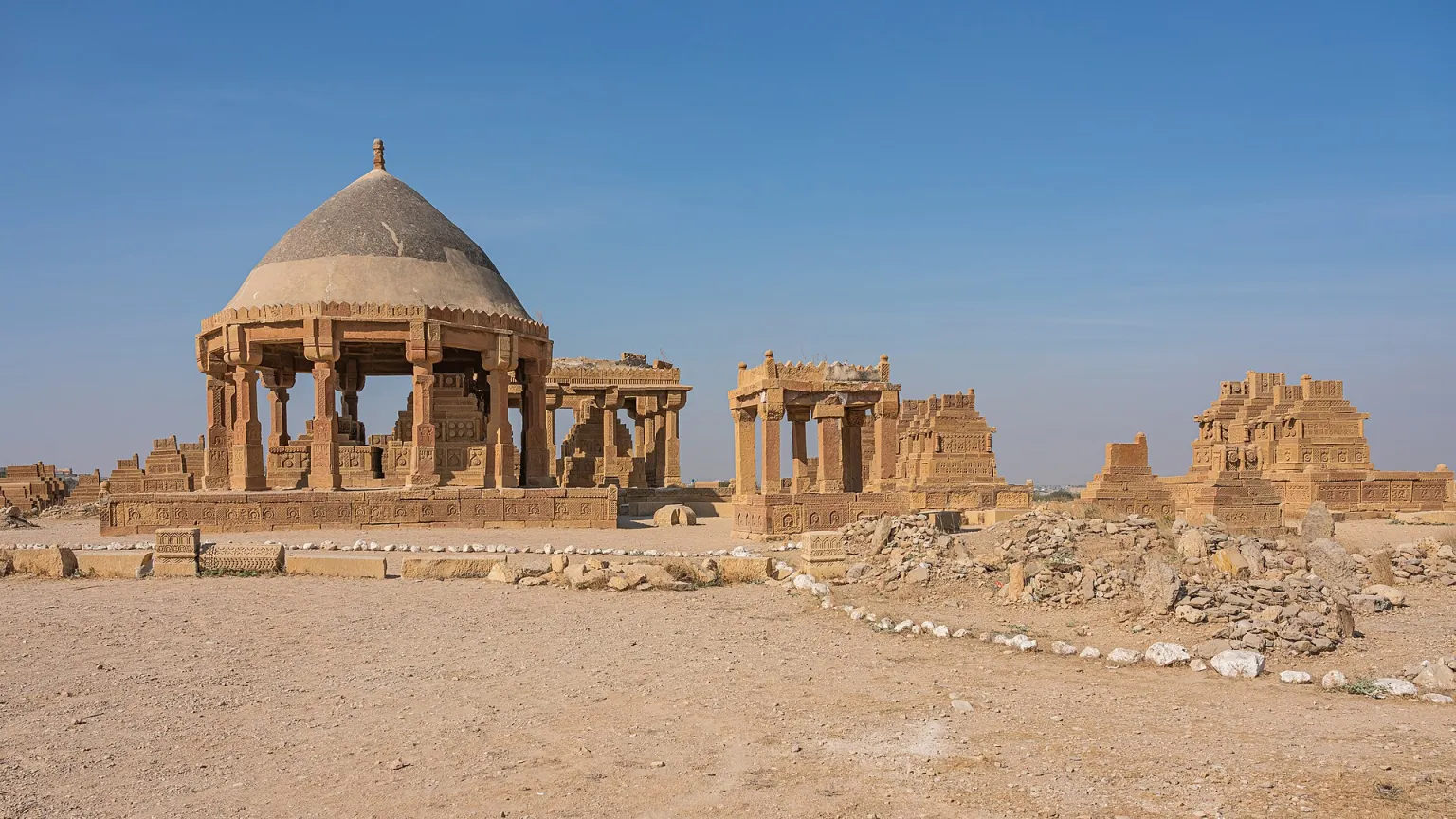
Chaukhandi Tombs: Carved Sandstone Graves East of Karachi
A vast graveyard of 17th and 18th-century sandstone tombs on Karachi's eastern edge, famous for carved horsemen, weapons and jewellery on the stone.
- Eastern Karachi, Sindh
- 17th-18th centuries
- Best season November to March
Chaukhandi Tombs, eastern Karachi
About the Chaukhandi Tombs
On the eastern outskirts of Karachi, near Landhi, a field of buff-coloured sandstone tombs stretches across the dry ground. This is the Chaukhandi graveyard, one of the most distinctive pieces of funerary art in South Asia. UNESCO's tentative-list description puts it about 40 km east of Karachi and says the tombs date to the 17th and 18th centuries, although precise dating is hard because few carry inscribed dates. The cemetery covers a large area, and the tombs are of a type found in this part of lower Sindh and into Balochistan.
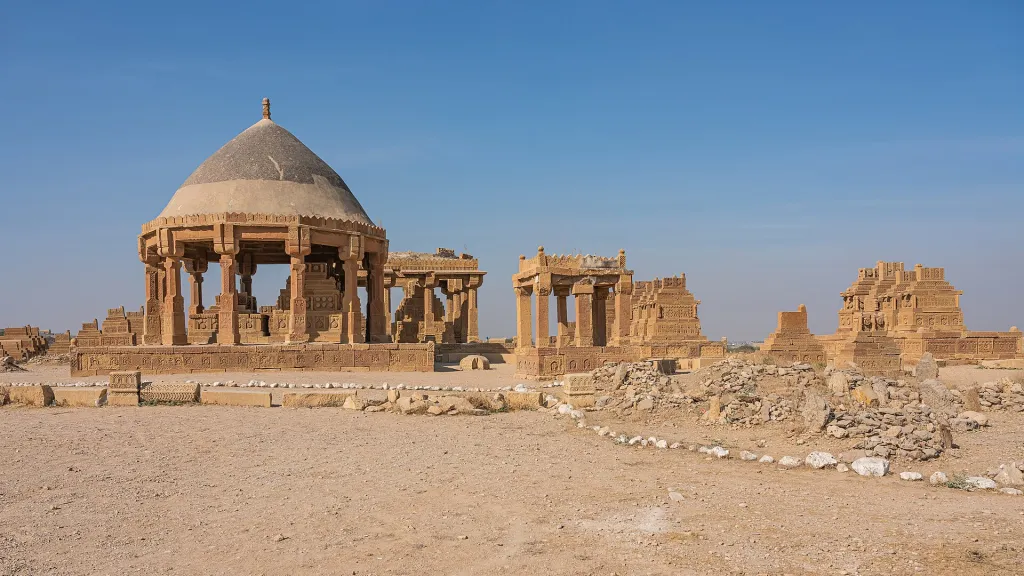
Each grave is built as a tall stack of stone slabs. A typical tomb stands on a raised platform; its sides are made of vertical slabs, topped by a smaller pyramid-like box and more slabs, and capped at the northern end by a rounded or crown-like knob. UNESCO notes that on male graves the knob was meant to hold the dead man's turban. Many tombs stand singly, others in groups on a shared platform, and a few have pillared canopies of a style that shows Hindu architectural influence.
What makes Chaukhandi memorable is the carving. The slabs are covered in geometric patterns, rosettes and bands of ornament; on men's graves the panels often show a mounted warrior with a shield, sword, bow and arrow, while women's graves show necklaces, bracelets, rings and anklets. The tombs are generally attributed to the Jokhio and related Sindhi and Baloch tribes who lived in the area; scholars disagree about whether to label them Baloch, Sindhi or both, and UNESCO's description speaks of the families of 'Saloch' warriors. The labels matter less than what the stones themselves record: a warrior culture that expressed status through horses, arms and ornament.
Read the tombs as a family album in stone: horsemen on one side, jewellery on the other.
What to Look For
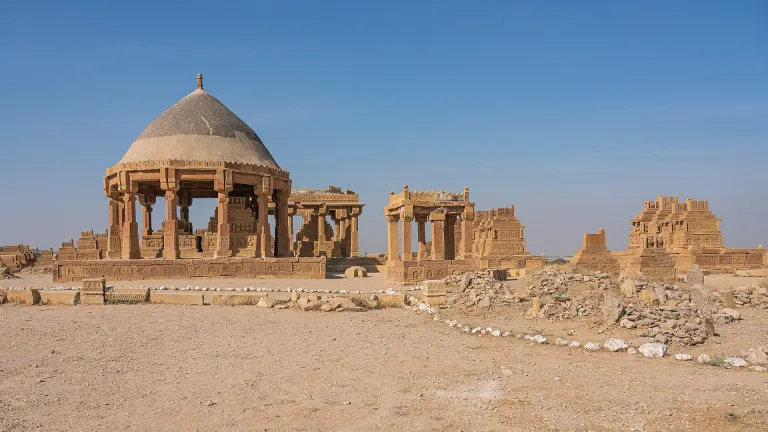 Stacked sandstone tombsTombs rise in tiers of slabs on raised platforms, topped by a pyramid-shaped box and a crown knob. Sandstone has survived well in Karachi's dry climate.
Context and Conservation
Chaukhandi lies within the Karachi urban area, and the surrounding land has seen growing settlement and industry. The tombs were included in a list of protected monuments in 1922 under the Ancient Monuments Preservation Act of 1904, and they remain a Sindh heritage property. Like many exposed monuments, the carved stone is vulnerable to weathering, salt, vandalism and encroachment, and conditions on site can vary. The graveyard is still regarded as a burial ground by local communities, so it is both an archaeological monument and a place of respect for the dead.
Chaukhandi is often grouped with the stone tombs of Makli near Thatta, but the two are different: Makli is a sprawling UNESCO World Heritage necropolis of royal and noble tombs spanning several centuries, while Chaukhandi's carved sandstone graves belong to a rural, tribal tradition. Seeing them in a single day is a good way to understand the range of Sindhi funerary architecture.
Plan Your Visit
Best Time to Visit
November to March
Cool, dry weather is best. Summers are hot and humid, and there is little shade; the low sun of early morning and late afternoon brings out the carving.
How to Reach
From Karachi by road
The site is on Karachi's eastern side, near Landhi and Shah Latif Town, and is easily reached by car or ride-hailing. It lies in the same direction as Bhambore, Thatta and Makli, so many visitors combine them.
Where to Stay
Karachi
Stay in Karachi; the site is a short half-day outing and has no visitor accommodation.
Etiquette
A burial ground
Dress modestly, keep voices low, and do not climb on or lean against tombs. Do not take rubbings or touch carvings; oils and pressure damage soft sandstone.
Photography
Low light is best
Photograph the carving in raking light. Ask before photographing local people, and check whether any photography or drone rules apply on site.
Advisories
Confirm locally
Access arrangements, opening practice and local conditions around eastern Karachi can change. Check current advisories and local authority guidance, and consider visiting with a local guide or tour operator.
Itinerary Ideas
- 1
Half-day from Karachi
Visit Chaukhandi in the morning light, then return to the city for lunch.
- 2
One-day Sindh heritage loop
Leave early for Chaukhandi, continue east to Bhambore (about 65 km from Karachi) for the ruins and museum, then on to Thatta's Shah Jahan Mosque and Makli. Return to Karachi in the evening.
- 3
Add a lake
In winter, add Haleji Lake for birdwatching on the same side of Karachi.
Visit Responsibly
- Treat the graveyard as a cemetery: no climbing, picnicking on graves or loud music.
- Never rub, trace, wet or chalk the carvings; do not remove stones or take souvenirs.
- Report damage or encroachment to the Sindh Culture, Tourism and Antiquities Department rather than ignoring it.
- Take your litter with you and carry water.
- Hire local guides where available so that visits support the community.
Nearby Places
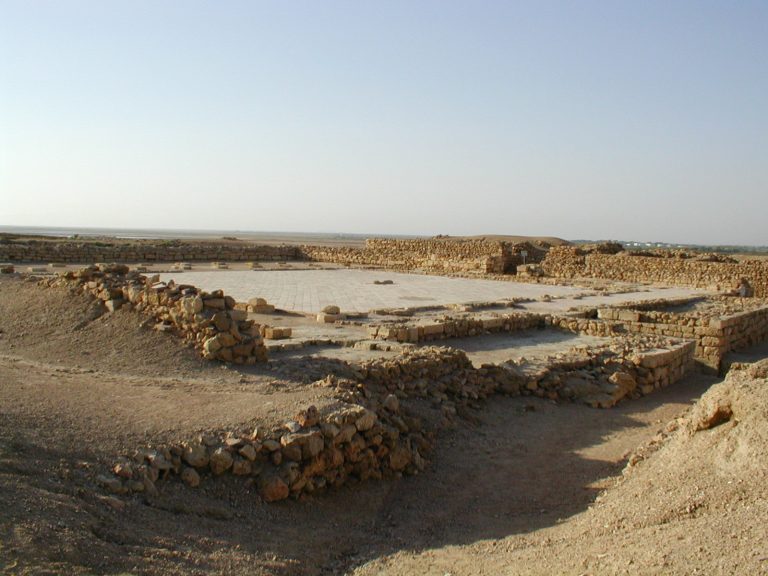 BhamboreRuins of an ancient and early Islamic port on Gharo Creek, with a museum.
 Makli NecropolisUNESCO-listed necropolis of royal tombs on the ridge above Thatta.
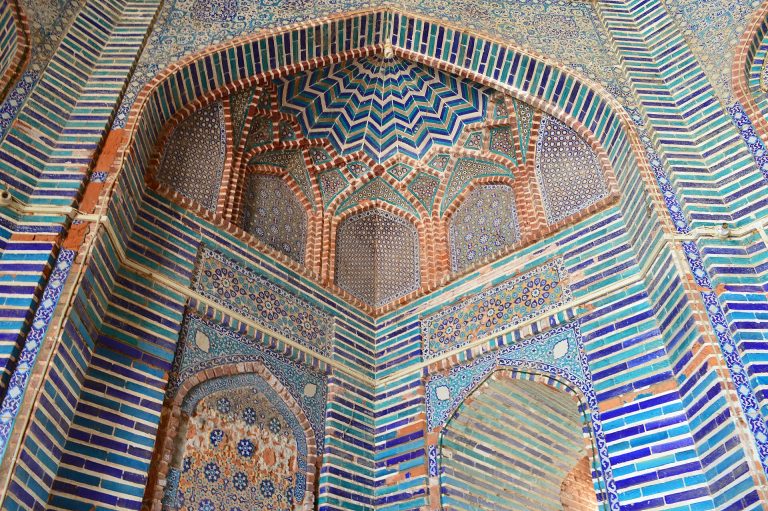 Shah Jahan MosqueThatta's 17th-century tiled mosque with 93 domes.
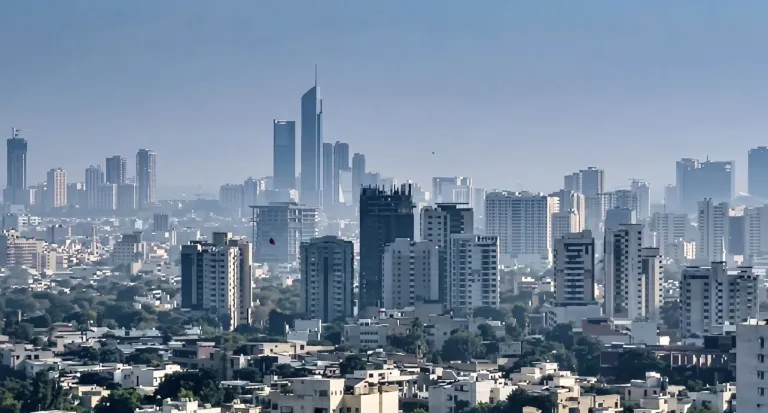 Karachi coast and CliftonThe city's seafront, Mohatta Palace and beaches.
Frequently Asked Questions
How old are the Chaukhandi tombs?
UNESCO's tentative-list description dates them to the 17th and 18th centuries; one tomb carries a date equivalent to 1756 CE, but most are undated, so exact ages are uncertain.
Who is buried at Chaukhandi?
The graves are generally attributed to the Jokhio and related tribes of the area; some sources call them Baloch tombs. Scholars debate the labels.
Is Chaukhandi a UNESCO World Heritage Site?
No. It has been on Pakistan's Tentative List since 1993 (reference 1287), which is a preliminary step.
What do the carvings show?
Men's graves show horsemen, weapons and hunting scenes; women's graves show jewellery. Many panels are purely geometric.
Can I visit it with Makli on the same day?
Yes. Chaukhandi, Bhambore, Thatta and Makli lie in the same direction east of Karachi and are often combined in one long day.
Keep Exploring
Related places and stories on DailyLife.pk
BhamboreVisit Bhambore (Banbhore), the ruined port on Gharo Creek near Karachi Makli NecropolisVisit Makli Necropolis near Thatta, Sindh: Jam Nizamuddin IIShah Jahan Mosque, ThattaShah Jahan Mosque, Thatta: built 1644-1647 with 93 domes, blue tilework and famous acoustics.Karachi Coast and CliftonKarachi's coast: Mohatta Palace Museum, Clifton Beach and Sea View, Abdullah Shah Ghazi shrine, Do Darya
 Haleji LakeHaleji Lake near Thatta: Ramsar wetland and bird sanctuary, winter waterbirds, how it was made
 KarachiKarachi travel guide: Mazar-e-Quaid, Mohatta Palace, Clifton, Burns Road, bazaars, neighbourhoods, Green Line BRT
How we know this
- Type Travel guide
- Sources 3 (2 official/academic)
- Reviewed October 2026
- Disputed points None
Rules and fees change, confirm with the official links below before you act.
3 sources
- Chaukhandi Tombs, Karachi, UNESCO World Heritage Centre - Tentative List
- Chaukhandi tombs, Wikipedia (used to locate primary sources)
- Pakistan - World Heritage properties and Tentative List, UNESCO World Heritage Centre
Photo credits (5)
- PK Chaukhandi Necropolis near Karachi asv2020-02 img08.jpg, A.Savin, FAL, via Wikimedia Commons
- Makli hills thatta sindh - UNESCO World Heritage Site.jpg, Yasir Dora, CC BY-SA 4.0, via Wikimedia Commons
- Shahjahan Mosque Thatta Sindh 1.JPG, Ghazimemon, CC BY-SA 4.0, via Wikimedia Commons
- Grand Mosque at Banbhore.jpg, Mwaqas at English Wikipedia, CC BY-SA 3.0, via Wikimedia Commons
- Clifton Karachi View.jpg, Ktownboy103, CC0, via Wikimedia Commons
