
Places to visit
Allama Iqbal’s Tomb: a practical visitor guide
Visit Allama Iqbal’s Tomb: what to see, historical context, getting there, a realistic plan, families and official access checks.
Allama Iqbal Tomb in Lahore
A short visit that deserves its own attention
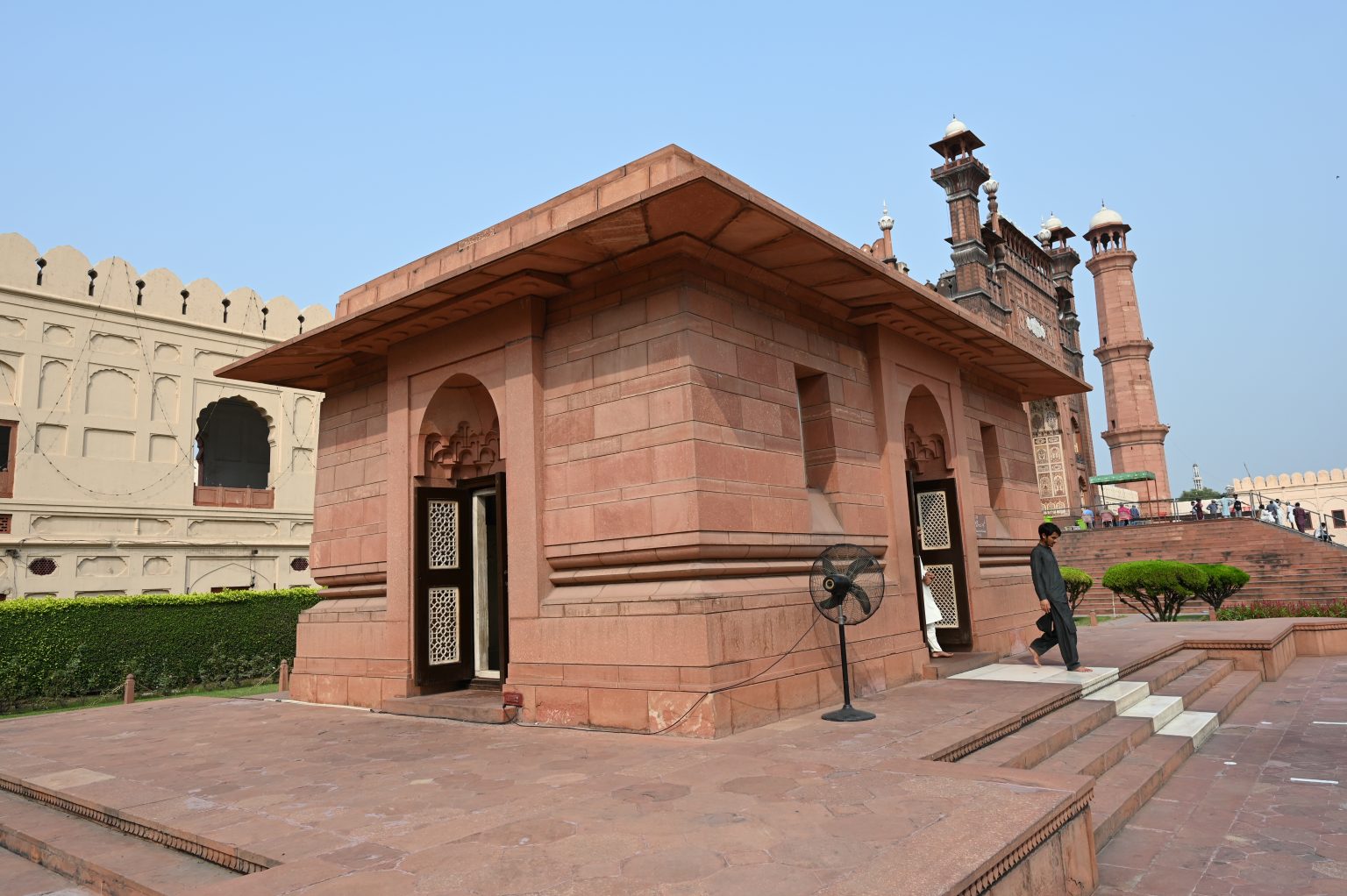
Allama Iqbal's Tomb is a place of remembrance in Lahore's major historic precinct near Badshahi Mosque and Hazuri Bagh. Its modest scale contrasts with the monumental buildings around it, which makes it easy to pass too quickly. Allow about twenty to forty minutes for a respectful visit if access is available, as an editorial estimate. This is not a large museum visit or a substitute for reading Iqbal's work. The attraction lies in the memorial's design, its setting and the act of giving a nationally important writer a quieter moment within a crowded sightseeing day.
The tomb and the poet belong to different dates
The federal heritage inventory dates the red-sandstone tomb building to 1951. Iqbal died in 1938, so the visible memorial should not be described as a structure completed during his lifetime. That distinction helps explain how commemoration develops after a person's death. The inventory identifies the tomb's position at the south-west of Hazuri Bagh beside the Badshahi Mosque setting. Its location places a twentieth-century memorial within a much older monumental landscape. A useful visit considers both the individual being remembered and the later architectural decisions through which public memory was expressed.
Materials communicate at a small scale
The official description identifies red sandstone outside and a marble cenotaph with coloured panels and a translucent marble headstone. It records the Afghan government's gift of the cenotaph and associated work. Look at how a compact building can create dignity through material and proportion rather than height. If close viewing is permitted, examine the contrast between sandstone and marble without touching surfaces or leaning over barriers. The visitor does not need to inspect an actual burial chamber to appreciate the memorial. A cenotaph is a commemorative marker and should not automatically be described as the location of remains beneath the visible surface.
Explore the places and guides mentioned
Photographs show the linked places or guide subjects. Open each page for its own visiting and planning information.


A memorial gives poetry a public setting
A poem read privately can be revisited at any pace; an inscription is encountered within a particular place, material and public ritual. Iqbal's tomb makes that difference visible. The building, headstone and surrounding precinct guide how a visitor approaches the words, even before they are read. This is a useful question for someone interested in literature without assuming a detailed knowledge of every poem.
If a translation is available from an authoritative source, compare the text's subject with the memorial's design without claiming that one architectural feature illustrates one line. Such a connection needs evidence of intent, not simply an appealing association. A careful visit can acknowledge what the inscription says and what the setting invites you to think about as two related but distinct things. That gives the short stop intellectual depth while keeping its respectful commemorative atmosphere intact.
Read inscriptions without inventing a translation
The inventory describes couplets on the headstone connected with Iqbal's ideas. If you can read the language, take time to engage with the text. If you cannot, use an authoritative translation or interpretation instead of guessing from a photograph or relying on an unverified social-media caption. A visit can still be meaningful through the memorial's setting and design. With companions, discuss how poetry can function differently when read on a page and when inscribed on a public monument. Do not turn a partial line or a paraphrase into a direct quotation attributed to the poet.
Approach through the correct precinct route
Use Iqbal's Tomb beside Badshahi Mosque and Hazuri Bagh as the destination. Javed Manzil, the Iqbal house museum, is a separate Lahore site, and an imprecise request can send a driver there instead. Confirm the current pedestrian approach and the place where visitors may be dropped and collected. Large precincts have several recognisable buildings, so agree a precise return point rather than simply saying 'outside'. If someone needs a short step-free approach, ask about the route from the actual gate in use, not only the location of the tomb on a map.
A visit plan that preserves the memorial atmosphere
Begin by pausing before taking photographs and reading whatever current instructions are posted. Move through the permitted route, allowing others space to pay respects. Spend the central part looking at the materials, inscriptions and relation to the surrounding architecture. Keep group conversation low and avoid turning the entrance into a portrait session. Finish with a wider view if it is permitted and does not obstruct other visitors. This short sequence is enough. The tomb's value is not measured by the time needed to exhaust activities, and there is no reason to invent an elaborate programme around a compact memorial.
Ceremonies, access and permissions
No current daily timetable, admission charge or ceremony schedule is verified in this guide. Official occasions or precinct controls can affect access, so confirm directly if a particular date matters to you. Do not assume you will see a guard ceremony or be admitted to an inner area merely because photographs of one exist online. Ask before filming and follow all current directions. Visitors with mobility needs should clarify steps, surfaces, queues and the space available for turning or resting. A small building may still involve a substantial approach through the surrounding precinct.
Use the official attraction information as your starting point for the enquiries above.
Link the memorial with a separate literary visit
Javed Manzil provides a useful companion because it is a house museum associated with Iqbal's final years, whereas the tomb presents public commemoration. Plan its journey and opening separately rather than rushing between the two. Read the Lahore city guide and DailyLife's existing fort-and-mosque guide for the broader day. For children, explain simply that a person can be remembered in several kinds of place: a home, a text and a memorial. Encourage one thoughtful question instead of requiring a biographical quiz. That leaves room for respect and curiosity without making unsupported claims about private life or historical intent.
For related planning, read Lahore Fort and Badshahi Mosque.
Continue planning your trip
Frequently Asked Questions
Is this Javed Manzil?
No. The tomb is beside the Badshahi Mosque–Hazuri Bagh precinct. Javed Manzil is a separate house museum on Allama Iqbal Road.
Was the present tomb built during Iqbal’s life?
No. The federal inventory dates the memorial building to 1951, after Iqbal’s death in 1938.
Will I see a ceremony?
No ceremony schedule is confirmed here. Check current official arrangements and do not assume special occasions permit ordinary access.
How long should I allow?
Twenty to forty minutes is an editorial allowance for a focused respectful visit, excluding the precinct approach or other monuments.
How we know this
- Type Travel guide
- Sources 1 (1 official/academic)
- Reviewed October 2026
- Disputed points None
Rules and fees change, confirm with the official links below before you act.
1 sources
- Allama Iqbal’s Tomb — official information, Government of Pakistan
Photo credits (3)
- Allama Iqbal Tomb Lahore.jpg, Mhtoori, CC BY-SA 4.0, via Wikimedia Commons
- Night View of Badshahi Mosque (King’s Mosque).jpg, Muhammad Ashar, CC BY-SA 3.0, via Wikimedia Commons
- Wide angle view of Badshahi Mosque.jpg, Mishel Ijaz, CC BY-SA 4.0, via Wikimedia Commons
