
Things to do
Look at Carved Woodwork and Compare Furniture in Chiniot
Chiniot’s furniture tradition provides an outing for people interested in how material, construction and ornament work together. The district’s.
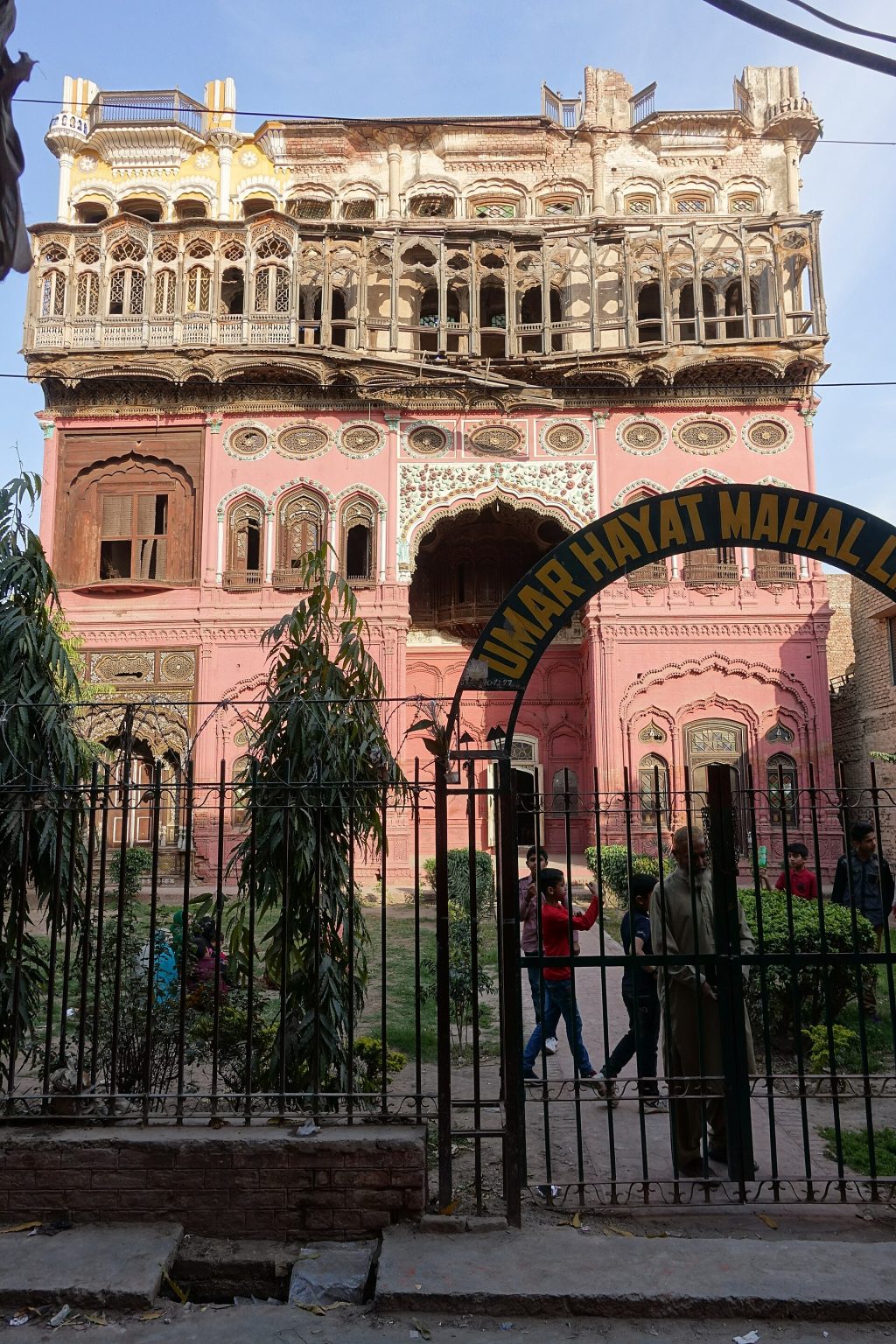
Carved wooden balconies at Omar Hayat Mahal in Chiniot, a heritage reference for the woodwork comparison.
Who this experience suits
Chiniot’s furniture tradition provides an outing for people interested in how material, construction and ornament work together. The district’s official history connects the city with woodworking, while Omar Hayat Mahal offers a heritage reference where visitor access is confirmed. A contemporary showroom comparison can then turn admiration into better questions about a potential purchase.
Choose the actual stops
Omar Hayat Mahal if open to visitors; a furniture showroom arranged in advance; a second showroom for comparison rather than an uninvited factory entry.
The main activity
At the heritage stop, notice how carving relates to a door, ceiling or balcony. In a showroom, ask about timber species, seasoning, joinery, finish and transport. Weight and elaborate carving do not automatically establish durable construction. Request specifications in writing for an expensive order.
Carving catches the eye, but construction determines whether furniture will work in a home. Ask to see a joint or underside where the seller permits it. Find out whether the named timber applies to the whole item or selected visible parts. Discuss finish, maintenance and the expected effect of changes in humidity. Avoid a simple test based on weight or a seller’s dramatic demonstration; neither replaces clear specifications.
Explore the places and guides mentioned
Photographs show the linked places or guide subjects. Open each page for its own visiting and planning information.

A realistic suggested sequence
Begin with the heritage reference if access is confirmed, then travel to one arranged furniture stop. Allow enough time to sit, compare details and discuss delivery. A second seller is useful only when specifications can be compared fairly; a crowded sequence of workshops makes meaningful assessment harder.
Make the experience more rewarding
Custom orders need especially careful communication. A photograph can show style while hiding dimensions, internal construction and finish. Agree a drawing or written specification, delivery access, payment stages and what counts as acceptance. This is a shopping activity rather than a recommendation to commission furniture from an unverified maker. Visitors who are not buying can still learn by comparing two pieces and explaining which details they would ask about. At the heritage stop, keep that commercial comparison respectful: historic carved surfaces should be observed, never handled as sample material.
A heritage-and-showroom pairing works only when each stop has a different job. At Omar Hayat Mahal, observe how ornament belongs to an architectural setting. At a showroom, evaluate an object for a present-day room and use. Do not assume contemporary furniture should reproduce a historic interior or that a dense carved surface is appropriate for every home.
Before a purchase discussion, measure the route the object must take into the destination building. Doorways, lifts, stair turns and access for delivery can matter as much as the room itself. Ask whether a piece can be assembled on site and who is responsible for that work. A seller’s willingness to deliver does not establish that the item can pass through a narrow stairwell.
If no purchase is intended, a comparison exercise can still make the day worthwhile. Choose two pieces and explain which questions would determine the decision: fit, construction, maintenance, finish or provenance. Keep those observations respectful and avoid treating a working showroom as a free storage space for a long group discussion. Thank the host, return samples as requested and leave the premises without disrupting other customers.
Getting there and returning
Confirm the location of the heritage stop and the chosen furniture showroom separately. A showroom address is not necessarily the workshop where an item is made. Agree vehicle waiting time in advance and do not allow a tight return schedule to pressure the group into a purchase or unsafe loading.
Season and weather decisions
Cooler weather is more comfortable for transfers and dusty market areas. Avoid a schedule that leaves older relatives waiting outside in summer heat. Rain may affect loading and transport of purchased furniture.
Families, comfort and preparation
Historic interiors can involve stairs and fragile surfaces; showrooms may have narrow aisles. Ask for ground-floor options, seating and vehicle drop-off details before committing.
Carry dimensions of the intended room, doorway and staircase at home, a tape measure if appropriate and a notebook for written quotations.
Costs to check before committing
For furniture, compare a written specification rather than a photograph and a headline price. Timber, construction, finish, dimensions, delivery, installation and payment stages all affect the total. Heritage-site admission or guide charges should be checked separately. If you are browsing for education, say so when arranging the visit. Do not place an expensive custom order under time pressure simply because the return vehicle is waiting.
Leave the place and people respected
Ask before photographing designs and keep children away from tools and machinery. Do not buy architectural fragments or objects presented as salvaged antiques without reliable lawful provenance.
Continue planning your trip
Frequently Asked Questions
Does heavy furniture mean better quality?
Weight alone is not a reliable test. Ask about timber, seasoning, construction, finish and maintenance.
Can I tour a workshop after browsing?
Only if the business explicitly agrees and can host the visit safely.
What measurements matter besides the room?
Check doorways, lifts, stairs and delivery access before ordering a large piece.
How we know this
- Type Practical guide
- Sources 3 (2 official/academic)
- Reviewed October 2026
- Disputed points None
Rules and fees change, confirm with the official links below before you act.
3 sources
- Important Places, Chiniot District Government
- Our History, Chiniot District Government
- Home Page — Chiniot, Municipal Committee Chiniot
Photo credits (3)
- Omar Hayat Mahal in Chiniot.jpg, Marsmux, CC BY-SA 4.0, via Wikimedia Commons
- Making Lassi (White Beer) in Pakistan.jpg, Tahsin Shah, CC BY-SA 4.0, via Wikimedia Commons
- Alamgiri Gate - Main entrance to Lahore Fort.jpg, S.hassanjawad, CC BY-SA 3.0, via Wikimedia Commons
