
City guide
Chiniot: Carvers' Town on the Chenab
A riverside town of master woodcarvers, a Mughal-era mosque and a crumbling 1920s palace, between rocky hills and the Chenab in central Punjab.
- Left bank of the Chenab
- Famous for carved furniture
- Mughal-era Shahi Mosque
- Best season: November–March
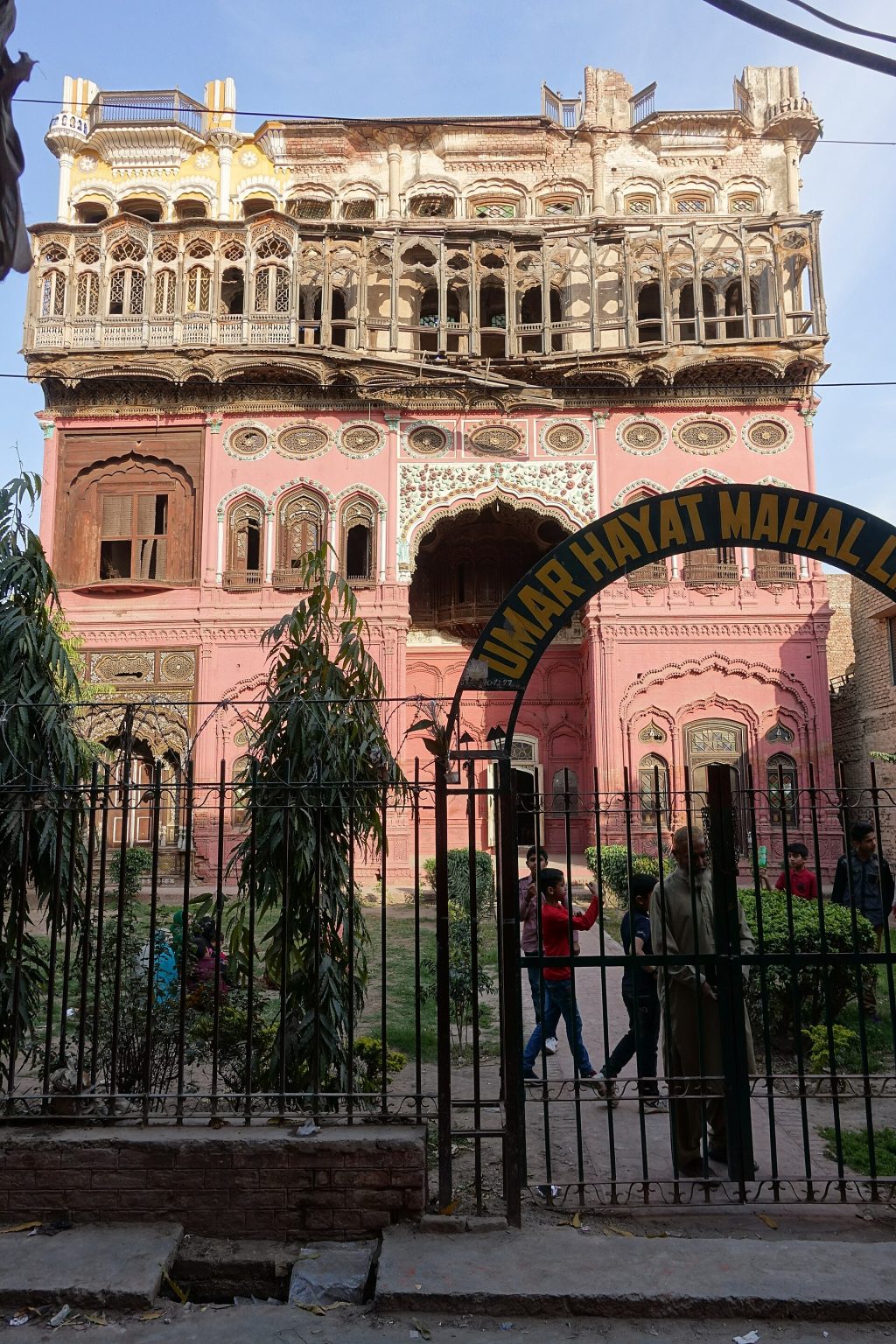
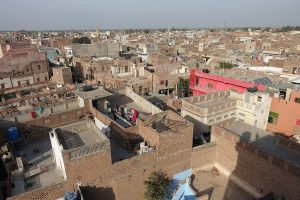
Omar Hayat Mahal, Chiniot
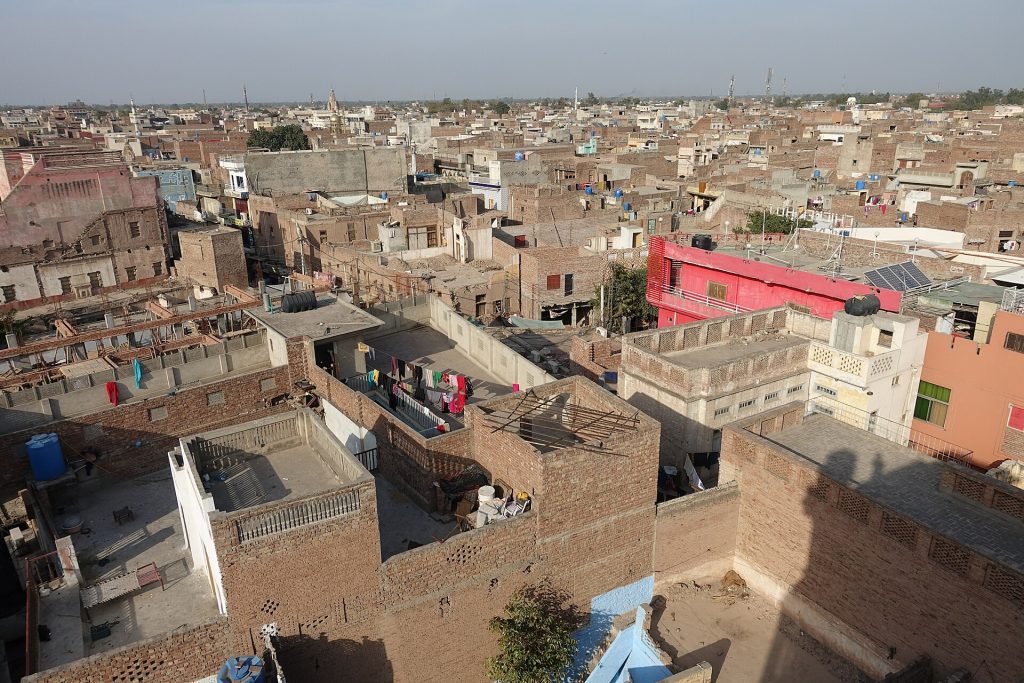
Chiniot at a Glance
About Chiniot
Chiniot stands on the left bank of the Chenab, where low rocky hills break the flat Punjab plain, a short drive from Faisalabad. Its origins are obscure; one old account credits a princess named Chandan with founding a settlement called Chandaniot, later shortened to Chiniot. The town reached its height under the Mughal emperor Shah Jahan, when Nawab Saadullah Khan, a son of the town who rose to be grand vizier, governed it between 1640 and 1656.
The 2023 Census counted 318,165 people in Chiniot city and 1,563,024 in Chiniot District, which was formerly part of Jhang District. The town has been a municipality since the British period.
Chiniot is synonymous with woodwork. Timber from Kashmir was once floated down the Chenab to the town, and its carpenters became famous for carved doors, furniture and screens decorated with floral and geometric patterns. Local tradition holds that Chinioti craftsmen worked on great Mughal monuments, including the Taj Mahal and Lahore's Wazir Khan Mosque. Today the furniture bazaars are the town's best-known attraction.
In Chiniot, wood is not just a trade but a family inheritance.
Things to See
Mughal brickwork, a merchant's palace and the river below the hills.
 Shahi MosqueBuilt in the 17th century during Saadullah Khan's governorship, the mosque's stone and brick prayer hall is the town's finest Mughal monument. Shops now occupy halls on its lower level.
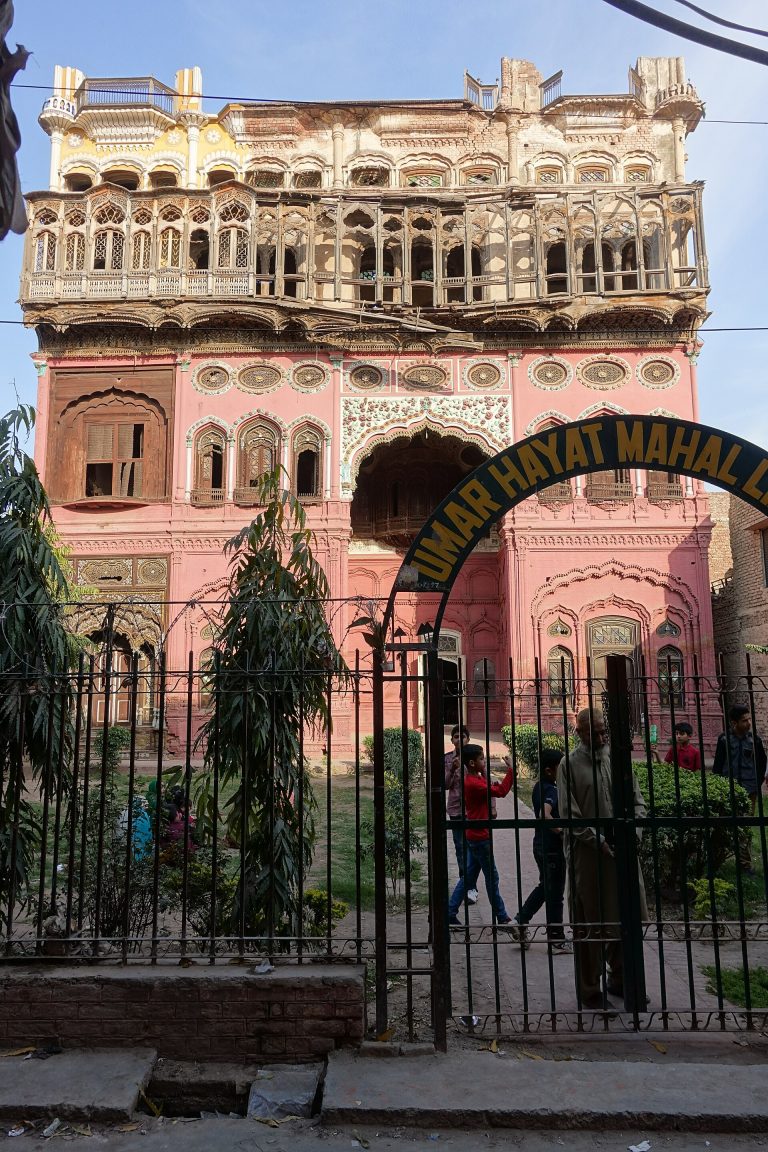 Omar Hayat MahalA tall wood-and-brick mansion built between 1923 and 1930 for Umar Hayat, a Chinioti merchant who made his fortune in Calcutta. Its carved woodwork and frescoes are remarkable, though the top floors were demolished in 1970 and the building is fragile.
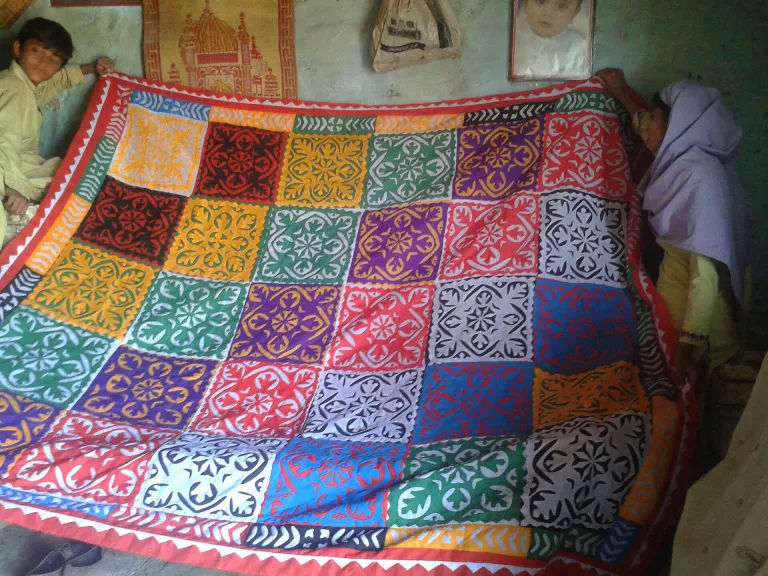 Furniture bazaarsWorkshops and showrooms sell carved beds, chests, doors and chairs, from heavy traditional pieces to modern designs. Watching carvers at work is the highlight of any visit.
 The Chenab bridge and riverThe river sweeps past the town below rocky outcrops; a Sufi chilla-gah associated with Bu Ali Shah Qalandar stands on an island in the stream.


A Short History of Chiniot
Ancient
Chandaniot
Tradition credits a princess named Chandan with founding the settlement on the Chenab.
1640–1656
Mughal zenith
Nawab Saadullah Khan governs Chiniot under Shah Jahan; the Shahi Mosque is built.
18th century
Sials and Sikhs
After Mughal power wanes, the Sials of Jhang and then the Sikh Bhangi misl control the town.
1803
Ranjit Singh
The town is taken into Ranjit Singh's Sikh state.
1849
British rule
The British annex Punjab; Chiniot becomes a municipality in 1862.
1923–1930
Omar Hayat Mahal
A Calcutta-made fortune funds the town's most elaborate private mansion.
1989
Into public care
The district administration takes Omar Hayat Mahal into official custody; it is later used as a library.
Getting There and Around
By road
From Faisalabad
Chiniot is a short drive from Faisalabad, with roads onward to Sargodha, Jhang and Lahore.
Nearest airport
Faisalabad
Faisalabad International Airport is the closest, with Lahore offering many more flights.
By rail
Chiniot station
Branch-line services only; road is usually quicker. Check with Pakistan Railways.
In town
On foot and by rickshaw
The old town is compact; walk between the mosque, the mahal and the bazaars.
Plan Your Visit
Best time to visit
November to March
Cool weather for walking the old town; summers are very hot.
Buying furniture
Check and compare
Inspect the wood, joints and finish, compare several workshops and agree delivery arrangements in writing.
Photography
Ask first
Ask before photographing craftsmen and inside private buildings.
How long
Half a day to a day
Most visitors come as a day trip from Faisalabad.
Frequently Asked Questions
What is the population of Chiniot?
The 2023 Census counted 318,165 people in Chiniot city and 1,563,024 in Chiniot District.
Why is Chiniot famous?
For carved wooden furniture and woodwork, its Mughal-era Shahi Mosque, Omar Hayat Mahal and its setting on the Chenab.
Who built the Shahi Mosque in Chiniot?
It dates from the 17th century and is associated with Nawab Saadullah Khan, a Chiniot native who governed the town for Shah Jahan between 1640 and 1656.
Can you visit Omar Hayat Mahal?
The building has been in public custody and used as a library; its condition is fragile, so check access locally before you go.
Keep Exploring
Related places and stories on DailyLife.pk
 FaisalabadFaisalabad city guide: the Clock Tower and its eight bazaars, textile industry, Lyallpur Museum, food, history
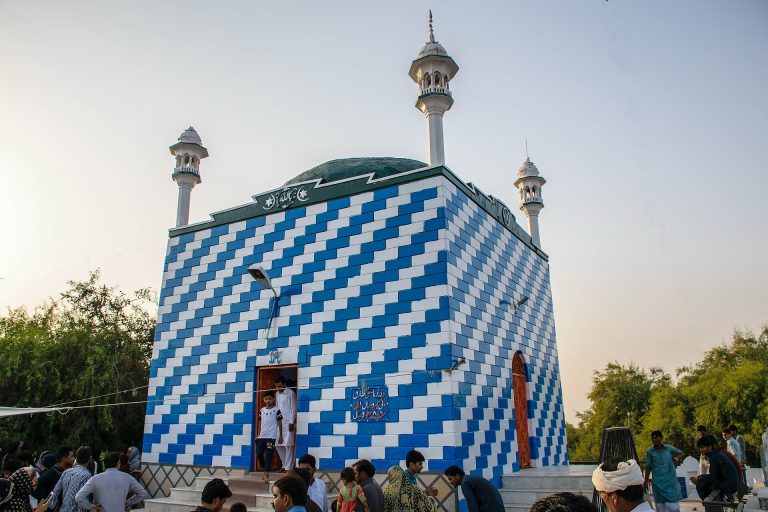 JhangJhang city guide: Heer's tomb, the shrine of Sultan Bahu, the Chenab and Trimmu
 LahoreLahore travel guide: Badshahi Mosque, Lahore Fort, Shalimar Gardens, the Walled City, food streets, neighbourhoods, metroThe Mughal EraThe Mughal Empire in Pakistan: Babur to Aurangzeb, Lahore Fort, Shalamar GardensHandicrafts of PakistanA guide to Pakistani handicrafts: Multani blue pottery, camel-skin lamps, ajrak, rilli, phulkari, Chiniot woodwork
 Architecture of PakistanPakistan's architecture: Indus cities, Gandhara monasteries, Multan tombs, Mughal Lahore, Makli, mountain forts
How we know this
- Type Place guide
- Sources 6 (2 official/academic)
- Reviewed October 2026
- Disputed points None
6 sources
- Table 1: Area, population by sex, sex ratio, density, urban proportion: Punjab districts (Census 2023), Pakistan Bureau of Statistics
- Pakistan: Cities and Municipalities: 2023 Census, City Population (Thomas Brinkhoff), from PBS data
- Our History, District Chiniot, Government of the Punjab
- History, Municipal Committee Chiniot
- Umar Hayat Mahal: Chiniot's dying 'wonder', Dawn
- Chiniot (overview used to locate primary sources, incl. Jhang District Gazetteer 1884), Wikipedia
Photo credits (10)
- Making Lassi (White Beer) in Pakistan.jpg, Tahsin Shah, CC BY-SA 4.0, via Wikimedia Commons
- Halwa Puri, a traditional food made in Walled City of Lahore.jpg, Tahsin Shah, CC BY-SA 4.0, via Wikimedia Commons
- Omar Hayat Mahal in Chiniot.jpg, Marsmux, CC BY-SA 4.0, via Wikimedia Commons
- Chiniot seen from Omar Hayat Mahal.jpg, Marsmux, CC BY-SA 4.0, via Wikimedia Commons
- Badshahi Mosque, Lahore VI.jpg, Fassifarooq, CC BY-SA 4.0, via Wikimedia Commons
- Ralli made by young girl.jpg, Irssa1111, CC BY-SA 4.0, via Wikimedia Commons
- Indus River Skardu Pakistan.jpg, Akhtar Bashir Nigyaal, CC BY-SA 4.0, via Wikimedia Commons
- Sarson Ka Saag (illustration), DailyLife.pk, Illustrative image
- Clocktower Faisalabad, Panorama.jpg, Minhajian, CC BY-SA 4.0, via Wikimedia Commons
- Mahi Heer Tomb, Jhang, Punjab.jpg, Umar Jamshaid, CC BY-SA 4.0, via Wikimedia Commons
