
Nature
Glaciers of Pakistan: IceSurges and Floods
Baltoro, Biafo, Hispar, Batura and Passu: how long they are, why the Karakoram behaves differently, and what glacier lake floods mean for mountain communities.
- Karakoram, Hindu Kush, Himalaya
- Karakoram anomaly
- Source of the Indus
- GLOF risk in Gilgit-Baltistan and Khyber Pakhtunkhwa
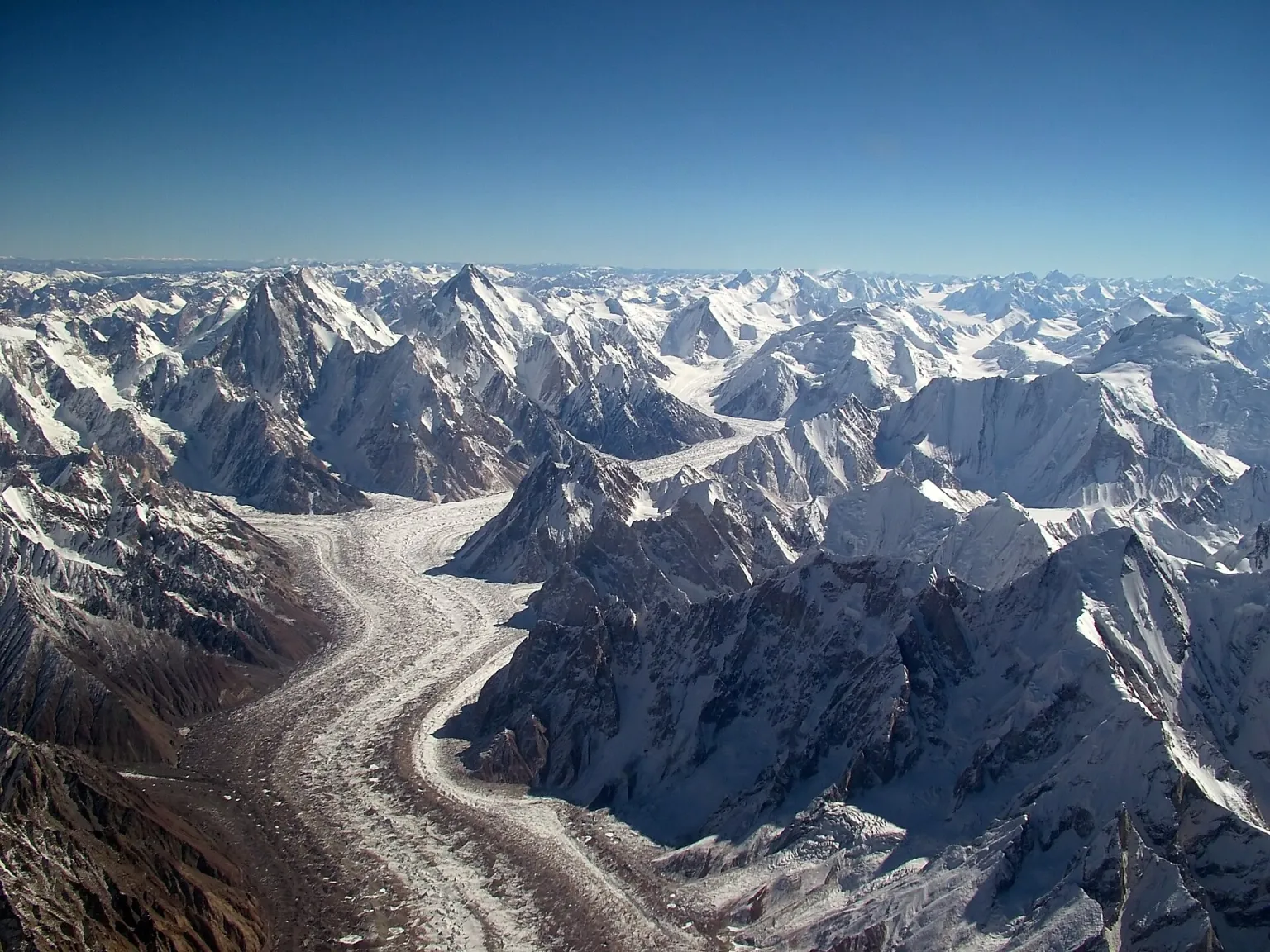
Baltoro Glacier, Karakoram
Pakistan's Ice
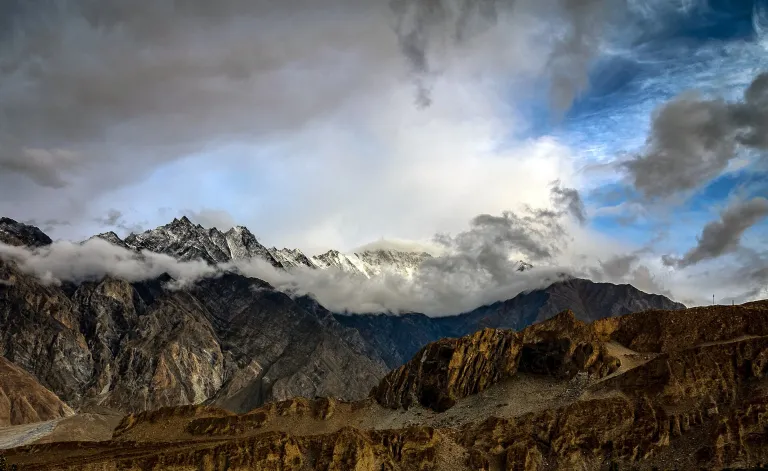
Pakistan's northern ranges hold some of the longest glaciers outside the polar regions. The ice lies in three great ranges that meet in the north: the Karakoram, the Hindu Kush and the western Himalaya. Its meltwater feeds the Indus, on which the irrigated plains of Punjab and Sindh depend. Gilgit-Baltistan, home to most of the large glaciers, is administered by Pakistan and is part of the wider Kashmir region, which is disputed; the glaciers themselves follow the mountains, not the borders.
For visitors, glaciers are both the most spectacular scenery in the country and a reminder of risk. The same ice that creates the Baltoro trek and the Passu Cones can also produce sudden floods, rockfall and unstable ground. This page covers the main glaciers, how scientists understand their recent behaviour, and what glacial lake outburst floods (GLOFs) mean for mountain communities.
Pakistan's northern glaciers are both scenery and water supply.

The Main Glaciers
| Glacier | Length | Where | Notes |
|---|---|---|---|
| Baltoro | About 63 km (Britannica) | Karakoram, route to K2 base camp | Debris-covered; trekkers walk on it to reach Concordia |
| Biafo | 63 km (GB Forest, Wildlife & Environment Department) | Central Karakoram, from Snow Lake towards Askole | Third-longest glacier outside the polar regions, per the department |
| Hispar | About 49 km (CKNP information site) | Nagar, Gilgit-Baltistan | Meets the Biafo at Snow Lake; Hispar La links the two |
| Batura | About 57 km (Wikipedia, citing mapping sources) | Upper Hunza (Gojal) | Flows beside the Karakoram Highway; heavily debris-covered |
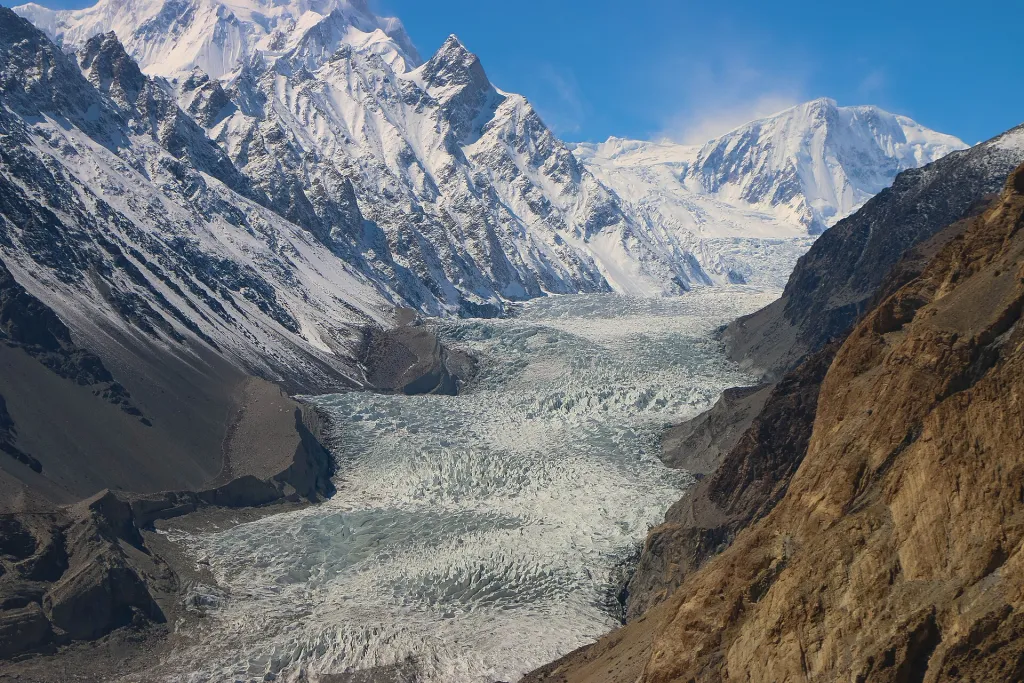
| Passu | Not stated | Upper Hunza (Gojal) | Descends towards the valley beside the Karakoram Highway; visible from the road |
Glacier lengths vary between sources because of measurement method, date and where the terminus is drawn. They have changed over time and should be read as approximate. Source pages are listed below. Accessed 24 October 2026.
A Note on Siachen
Siachen Glacier in the Karakoram is described by Encyclopaedia Britannica as about 70 km long and located near the India-Pakistan border in the Kashmir region. Control of the area is part of the wider Kashmir dispute, and it is a high-altitude military zone, not a visitor destination. This guide mentions it only for completeness; see our explainer on the Kashmir dispute for background.
The Karakoram Anomaly
Across most of High Mountain Asia glaciers are shrinking. The Karakoram has been an exception. A 2020 review in Nature Geoscience by Farinotti and colleagues describes Karakoram glaciers as having roughly balanced or slightly positive mass budgets over recent decades, with faster ice flow, stable or partly advancing glacier tongues and widespread surging, while the rest of High Mountain Asia shows retreat and slowing. The researchers say that several explanations have been proposed but that understanding is far from complete, and that the anomaly seems unlikely to persist in coming decades under projected warming.
The practical meaning is that glacier change in Pakistan is not simple. Some Karakoram glaciers advance and surge, while glaciers elsewhere in the Hindu Kush and Himalaya have lost mass. A relatively stable Karakoram does not remove flood hazards, and regional projections for the wider mountains remain serious. ICIMOD's 2023 assessment of the Hindu Kush Himalaya, which includes northern Pakistan, said glaciers there could lose up to 80 per cent of their current volume by 2100 on current emissions trajectories, and that glaciers had lost ice 65 per cent faster in 2011 to 2020 than in the previous decade. Those are regional figures, not a prediction for any single Pakistani glacier.
Case Study: The Shisper Surge and the 2022 Flood
In Hunza, the Shispare (also written Shisper) Glacier gave scientists and residents a close look at what a surge can do. A 2020 study in Scientific Reports by Bhambri and colleagues describes how a surge that began in April 2018 blocked the river draining the Muchuhar Glacier and formed an ice-dammed lake, ending with a small outburst flood in June 2019. The surge reached speeds of about 18 metres a day, which the researchers say is the highest rate recorded for a Karakoram glacier using feature tracking, and the glacier front advanced about 1,495 metres.
On 7 May 2022, during a heatwave, the lake burst again. Dialogue Earth reported that a historic bridge on the Karakoram Highway was swept away, six houses in Hassanabad village were destroyed along with farmland, orchards and two hydropower projects, and no lives were lost. The Pakistan Meteorological Department had been monitoring the glacier from February and issued warnings on 27 April and 7 May; authorities and communities were informed at least 24 hours before the outburst. Residents evacuated dangerous areas after training and drills run by the Gilgit-Baltistan Disaster Management Authority. The same report notes that floodwater reaches Hassanabad in about 15 minutes.
Glacial Lake Outburst Flood Risk
The UNDP's GLOF-II project brief (November 2022) states that over 3,000 glacial lakes have developed in Gilgit-Baltistan and Khyber Pakhtunkhwa, that 33 have been assessed as prone to glacial lake outburst flooding, and that an estimated 7.1 million people in the two regions are vulnerable. Dialogue Earth cites the UNDP count as 3,044 lakes. The project, supported by the Green Climate Fund, UNDP and the Government of Gilgit-Baltistan, works with communities on early warning, preparedness and livelihoods. It ran from 2017 to January 2024.
For travellers, GLOF risk is mainly a reason to heed local warnings in valleys below active glaciers and glacial lakes, not to avoid the north altogether. See also our guide to floods and monsoon safety.
Seeing and Walking on Glaciers
 Baltoro and K2Multi-day trek on the Baltoro Glacier to Concordia, inside Central Karakoram National Park.
 Biafo and HisparA long glacier traverse across Snow Lake between Askole and Hispar village.
 Passu and GojalThe most accessible glacier views in Pakistan, beside the Karakoram Highway.
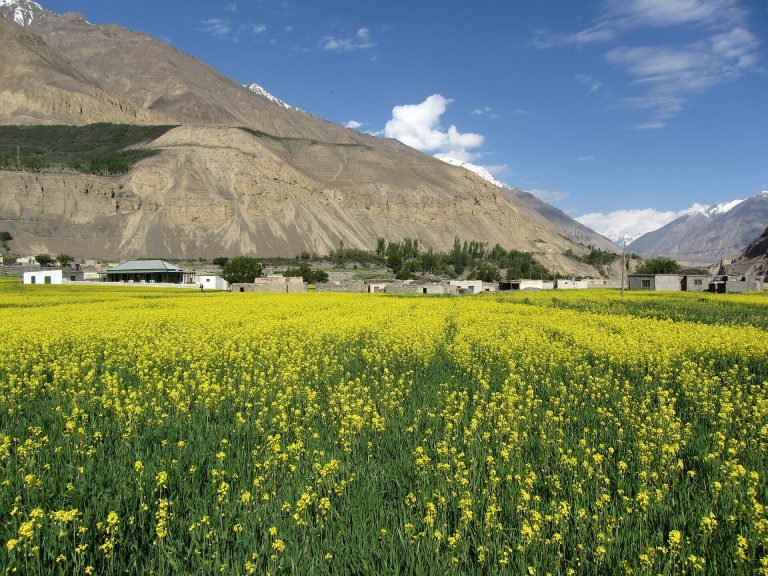 Shimshal ValleyAn isolated Upper Hunza community in glaciated country.
 Rakaposhi Base CampGlacier-hung slopes above Nagar and Minapin.
 Central Karakoram National ParkThe protected area that contains Baltoro, Biafo and Hispar.
Staying Safe and Respectful Around Glaciers
- Treat glacier ice as hazardous: crevasses, hidden streams and falling rock are common, and routes change from season to season.
- Walk with an experienced local guide and a registered operator on glacier routes.
- Do not camp or rest in the path of possible floods, below glacial lakes or beneath unstable slopes.
- Heed warnings from local authorities, community leaders and meteorological services, especially in hot spells.
- Carry out all waste; high camps cannot absorb it and meltwater feeds villages downstream.
- Check current advisories and local authority guidance, and confirm permits for protected areas and restricted zones.

Frequently Asked Questions
What is the longest glacier in Pakistan?
It depends on the source and measurement. Siachen is described by Britannica as about 70 km long, but it lies in the disputed Kashmir region and is not a visitor destination. Biafo is given as 63 km by the Gilgit-Baltistan forest department and Baltoro as about 63 km by Britannica.
Are Pakistan's glaciers melting?
It varies. The Karakoram has been an exception to global glacier loss, with balanced or slightly positive mass budgets in recent decades according to a 2020 review, but regional projections for the Hindu Kush Himalaya show large losses by 2100 on current emissions trajectories (ICIMOD, 2023).
What is a GLOF?
A glacial lake outburst flood: a sudden release of water from a lake held by ice or moraine. Over 3,000 glacial lakes have formed in Gilgit-Baltistan and Khyber Pakhtunkhwa, and 33 have been assessed as prone to outburst floods.
Can I walk on a glacier?
Yes, on established routes such as Baltoro with registered guides, but glaciers are hazardous. Confirm permits and conditions for your route.
Where can I see a glacier without trekking?
The Passu Glacier and Batura Glacier are visible from the Karakoram Highway in Upper Hunza.
Keep Exploring
Related places and stories on DailyLife.pk
 Baltoro Glacier, Gasherbrum and Broad PeakBaltoro Glacier guide: stages from Askole to Concordia, Gasherbrum I and Broad Peak, season, permitsBiafo-Hispar TrekBiafo-Hispar trek guide: the route from Askole to Hispar village via Snow Lake and Hispar LaK2 Base Camp and ConcordiaK2 Base Camp and Concordia trek guide: the Baltoro route from Askole, permits and licensed operators
 Passu and GojalPassu and Gojal guide: Passu Cones, Batura and Passu glaciers, Hussaini bridge, Gulmit, Borith LakeShimshal ValleyShimshal Valley guide: the gorge road from Passu, Wakhi culture, mountaineers, Shimshal Pass and Pamir pasturesCentral Karakoram National ParkGuide to Central Karakoram National Park, Pakistan's largest protected area: K2, Baltoro, Biafo and Hispar glaciers
How we know this
- Type Explainer
- Sources 10 (5 official/academic)
- Reviewed October 2026
- Disputed points None
10 sources
- Central Karakoram National Park, Forest, Wildlife & Environment Department, Gilgit-Baltistan
- Baltoro Glacier, Encyclopaedia Britannica
- Siachen Glacier, Encyclopaedia Britannica
- Karakoram glaciers: Baltoro, Biafo, Hispar, CKNP information site
- Batura Glacier (length and mapping sources), Wikipedia
- Manifestations and mechanisms of the Karakoram glacier Anomaly (Farinotti et al., Nature Geoscience, 2020), University of Leeds White Rose repository
- The hazardous 2017-2019 surge and river damming by Shispare Glacier, Karakoram (Bhambri et al., Scientific Reports, 2020), University of Arizona repository
- Timely warnings avert loss of life as Shishper glacier lake bursts in Pakistan, Dialogue Earth
- Scaling-up GLOF risk reduction in Northern Pakistan (GLOF-II) project brief, December 2022, UNDP Climate Change Adaptation
- Landmark report on impacts of disappearing snow and ice (20 June 2023), ICIMOD
Photo credits (9)
- Baltoro glacier from air.jpg, Guilhem Vellut from Paris, CC BY-SA 2.0, via Wikimedia Commons
- Passu Glacier.jpg, Akbar Khan Niazi, CC BY-SA 3.0, via Wikimedia Commons
- K2 from Concordia.JPG, Aapkamajid, CC BY-SA 3.0, via Wikimedia Commons
- Biafo Glacier 1.jpg, BlackZero_007, CC BY 2.0, via Wikimedia Commons
- Summer in Shimshal.JPG, Shujaat Aly, CC BY-SA 3.0, via Wikimedia Commons
- Rakaposhi & Autumn.jpg, mhtoori, CC BY-SA 4.0, via Wikimedia Commons
- The Mighty K2 PAkistan.jpg, Maqsood aktar, CC BY-SA 4.0, via Wikimedia Commons
- 2022 Pakistan Floods - August 27, 2021 vs. August 27, 2022 in Sindh.jpg, NASA, Public domain, via Wikimedia Commons
- Muzaffarabad, Azad Kashmir, Pakistan.jpg, Fiaz3300, CC BY-SA 4.0, via Wikimedia Commons
