
Your CNIC
An attested copy of the applicant's CNIC is standard. Our guide to the CNIC explains how to get or renew one. Some companies also ask for the CNICs of witnesses, although an older guide said this was not required for single-phase meters.
Life in Pakistan
A practical guide to applying through your distribution company or K-Electric, paying the demand notice and getting the meter installed.
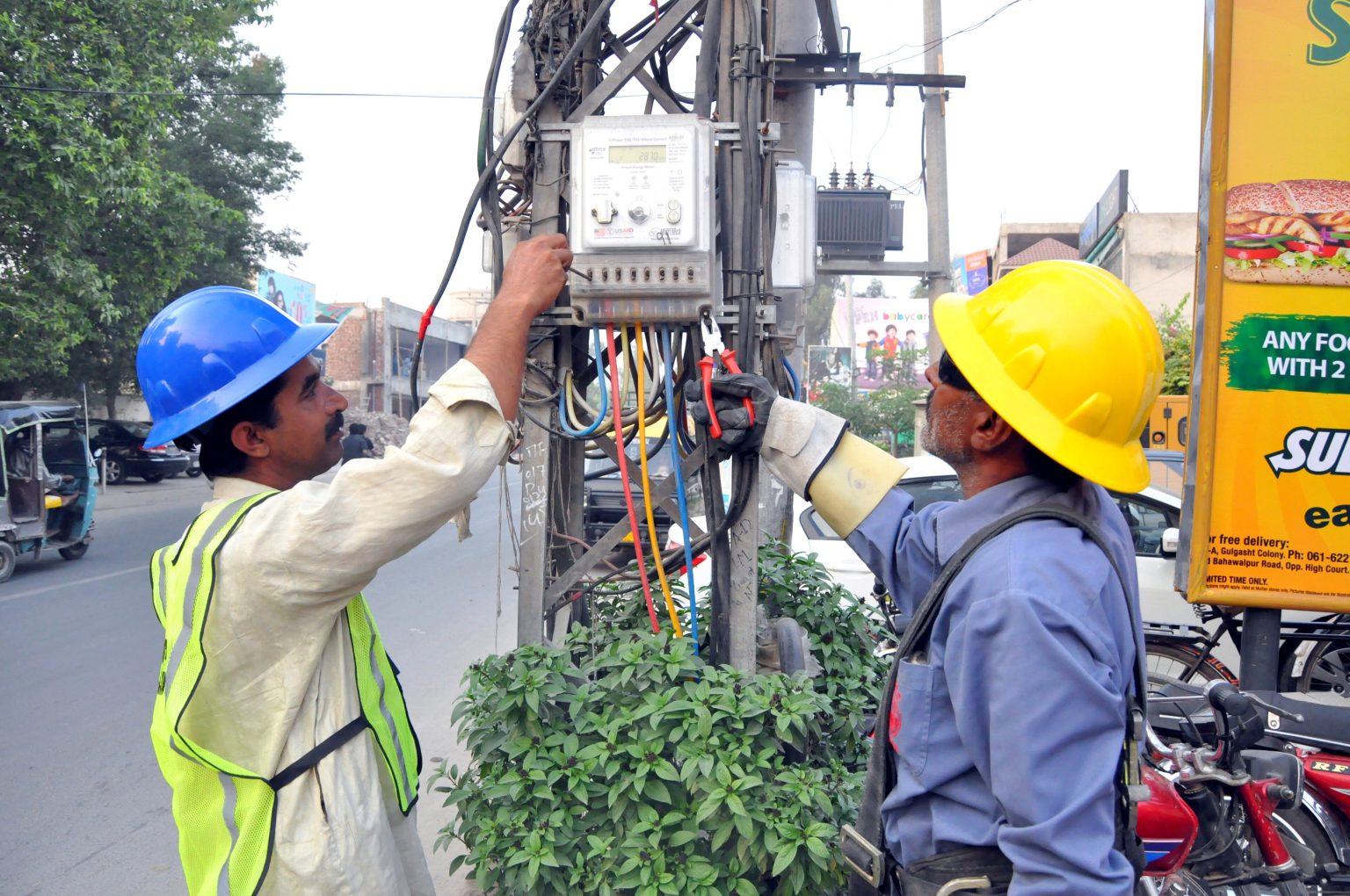
To get a new electricity connection in Pakistan you apply to the company that supplies your area. Outside Karachi that is a distribution company (DISCO) such as LESCO, IESCO, FESCO, GEPCO or MEPCO. In Karachi it is K-Electric. You submit your CNIC, proof that you own or lawfully occupy the property and the other documents the company asks for. The company checks the papers, surveys the site and issues a demand notice. You pay the demand notice at a bank, and after payment the company installs and energises the meter.
The Power Division's own guidance says you can apply online through the Electricity New Connection (ENC) portal at enc.com.pk, and K-Electric runs its own online application and Customer Care Centres. Fees, documents and waiting times are changed by the companies and the regulator from time to time. This page explains the general process and tells you where to check the current requirement.
Pakistan's electricity is distributed by several companies, each with its own territory. The distribution companies include LESCO (Lahore area), IESCO (Islamabad and Rawalpindi area), FESCO (Faisalabad area), GEPCO (Gujranwala area), MEPCO (Multan area), PESCO (Peshawar area), HESCO (Hyderabad area), SEPCO (Sukkur area) and QESCO (Quetta area), along with others. K-Electric supplies Karachi and nearby areas. Your latest electricity bill shows the company name. If you have no bill because the house is new, ask neighbours, or search for your area on the company website.
The Power Division says the ENC portal directs your application to the relevant company, so you do not have to work out the right office yourself. K-Electric applications are separate and go through the K-Electric website or app. If you are a tenant, our page on renting a home in Pakistan explains why you will usually need the owner's permission.
If you are moving into a new home, you may also need a gas supply: see how to get a new gas connection. Some owners now plan solar at the same time, and our guide to solar panel sizing for Pakistani homes helps you work out the size of a system.
The exact list depends on the company, the type of connection (domestic, commercial, industrial) and the load. These are the documents that official pages and recent reports mention most often.
An attested copy of the applicant's CNIC is standard. Our guide to the CNIC explains how to get or renew one. Some companies also ask for the CNICs of witnesses, although an older guide said this was not required for single-phase meters.
This can be a registered deed, a transfer letter, an allotment letter or another recognised document. K-Electric lists many accepted forms, including lease, mutation, allotment, conveyance or sale deed, and gift deed. See property registration and transfer for what those documents are.
If you are a tenant, expect to need a no objection certificate (NOC) from the owner on stamp paper, signed before an oath commissioner, plus the tenancy agreement.
Companies often ask for an affidavit that the property has no other connection and no outstanding dues. K-Electric asks for a standard affidavit on Rs 200 stamp paper, attested by a notary public or oath commissioner. Stamp paper is now bought online in several provinces.
Reports from October 2025 said LESCO would require a test report verified online by an Electric Inspector before issuing a demand notice. In Karachi, K-Electric asks for an electrical inspector test form. Ask your electrician to arrange this early.
K-Electric asks for an NTN certificate or Active Taxpayer List status for commercial and industrial connections.
The process below is the one described by the Power Division and recent reports. Individual companies may add steps, so follow the screens on the portal.
Never pay anyone in cash on the promise of a faster connection. Official channels give you a demand notice and a bank challan.
K-Electric accepts applications through its website, the KE Live app and its Customer Care Centres. Its published guidance describes this sequence.
K-Electric states that a new connection should be energised within 15 days, and an automatic meter reading (AMR) meter within 20 days, if all prerequisites are met. It also publishes longer expected timelines for larger loads, for example a total of 30 days for loads up to 15 kW and 44 days for 16 to 70 kW. K-Electric also says its employees are not allowed to collect cash for any service. Concerns can be reported to [email protected].
These figures come from K-Electric's own guide and are estimates in days, not guarantees.
| Load category | Survey | Estimate | Material | Installation | Total |
|---|---|---|---|---|---|
| Up to 15 kW | 4 | 6 | 11 | 9 | 30 |
| 16 to 70 kW | 4 | 6 | 25 | 9 | 44 |
| 71 to 500 kW | 5 | 7 | 36 | 10 | 58 |
| 501 to 5,000 kW | 10 | 20 | 55 | 21 | 106 |
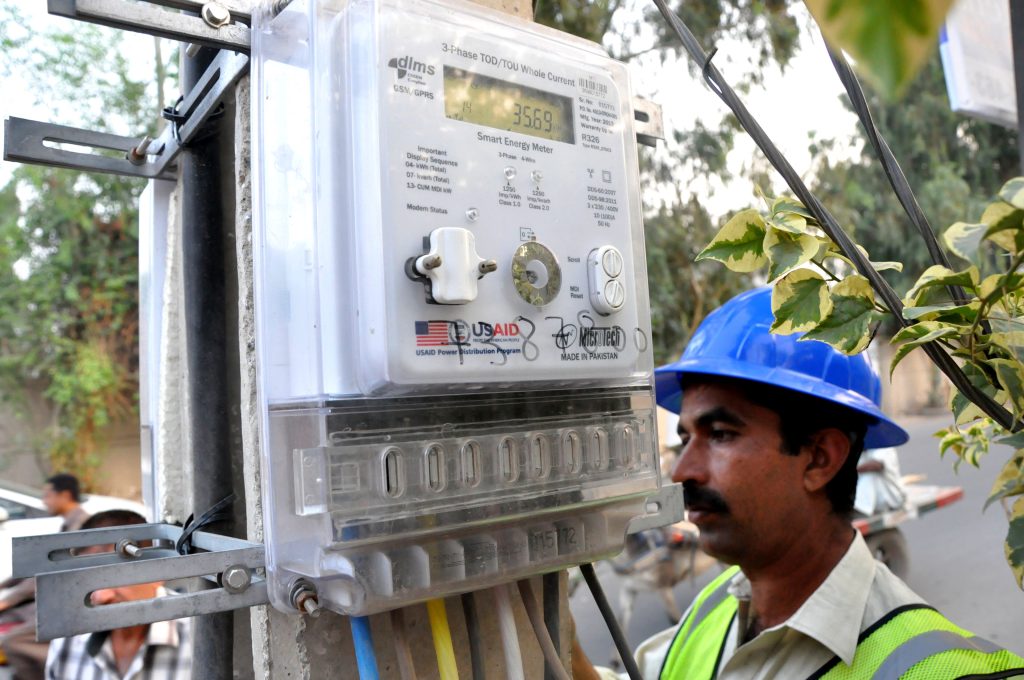
The demand notice is not your monthly bill. It is a one-time payment document that can cover a security deposit, service connection charges and the cost of the meter or line materials. The amount depends on your load, whether you need a single-phase or three-phase meter, whether the property is urban or rural and how far you are from the existing pole.
The Power Division gives a sample calculation for a house 80 metres from an existing pole. For a 3 kW single-phase connection, it shows a material cost of Rs 12,000 plus a security deposit of Rs 3,660 for an urban area. For a 5 kW three-phase connection, it shows Rs 25,400 plus Rs 6,100. These are illustrative and undated, so do not treat them as today's price. News reports in 2024 quoted an estimated Rs 7,240 for a single-phase LESCO meter, but also said some Lahore sub-divisions were charging Rs 18,000 to Rs 25,000 during a meter shortage. In October 2025, LESCO was reported to be allowing consumers to buy approved single-phase meters in the market with a LESCO NOC, after which a demand notice is issued.
The safe rule is to pay only the amount stated on an official demand notice, and only through the bank challan. If the amount looks very high, ask the sub-division in writing why, and ask for a breakdown.
NEPRA approved a revised Consumer Service Manual for all distribution companies in November 2025, according to K-Electric, and it contains an annexure on the time frame for new connections. The manual is on the NEPRA website. Charges and timelines can differ by company and by load, so rely on the demand notice you receive.
Once the bank confirms your payment, the company installs the meter and the service line. Make sure the premises are accessible and the wiring is ready, otherwise the visit is wasted. K-Electric says the first bill is issued within 45 to 60 days of connection. Our page on how to check electricity and gas bills shows how to look up and pay bills online.
If you plan to install solar panels, ask about net metering before you finalise your load. Our guide to load shedding, net metering and solar explains the basics. Rules for net metering and net billing have been changing, and K-Electric publishes its own guidelines, so check with your company before you buy equipment.
For other documents you may need, see online government services in Pakistan.
Checked October 2026. Meter prices and connection charges change, so no rupee figures are quoted as current.
Meter price and LESCO private-purchase details come from a press report, so confirm with your distribution company. Other sources: Power Division, K-Electric, MEPCO and NEPRA.
Use the Electricity New Connection portal at enc.com.pk, choose your distribution company, fill in the form and upload your documents. In Karachi, apply through the K-Electric website, the KE Live app or a Customer Care Centre.
Usually an attested CNIC copy, proof of ownership or a tenancy agreement with the owner's NOC, an affidavit on stamp paper and, in many cases, a wiring test report. The exact list depends on your company and connection type.
It is a one-time payment document issued after your application is approved. It states what you must pay for items such as the security deposit, service connection and meter or line materials, and you pay it at a bank.
K-Electric says a new connection can be energised within 15 days if all prerequisites are met, and longer for bigger loads. Distribution companies do not publish a single fixed time, and delays can occur during meter shortages.
It varies by company, location, load and distance from the pole. The only safe figure is the one on your official demand notice, because news reports have shown large differences between areas and months.
Often yes, but you will usually need the owner's NOC on stamp paper, signed before an oath commissioner, and a tenancy agreement. Check your company's requirement before applying.
In October 2025, LESCO was reported to be allowing consumers to buy single-phase meters from approved manufacturers with a LESCO NOC. Ask your own company whether it has a similar policy before buying anything.
Ask the sub-division for the exact reason in writing, fix the problem and reapply or resubmit. If the delay continues, escalate to the company's complaint channels and then to NEPRA.
They are set in the NEPRA Consumer Service Manual, which has an annexure on the time frame for new connections. NEPRA approved a revised manual in 2025, so check the latest version on nepra.org.pk.
Rules and fees change, confirm with the official links below before you act.
From majestic mountains to vibrant cities, rich cuisine to timeless traditions — discover the real Pakistan with DailyLife.pk.
