
Life in Pakistan
RegistryMutation and Transfer: How Property Changes Hands
How a sale of land or a house is recorded in Pakistan: the sale deed and registry at the sub-registrar, mutation (intiqal) in the land record, Punjab's Arazi Record Centres and e-Registration, Sindh's e-Registration, society transfers and federal taxes.
- Registry: the deed
- Mutation: the land record
- Advance taxes under FBR rules
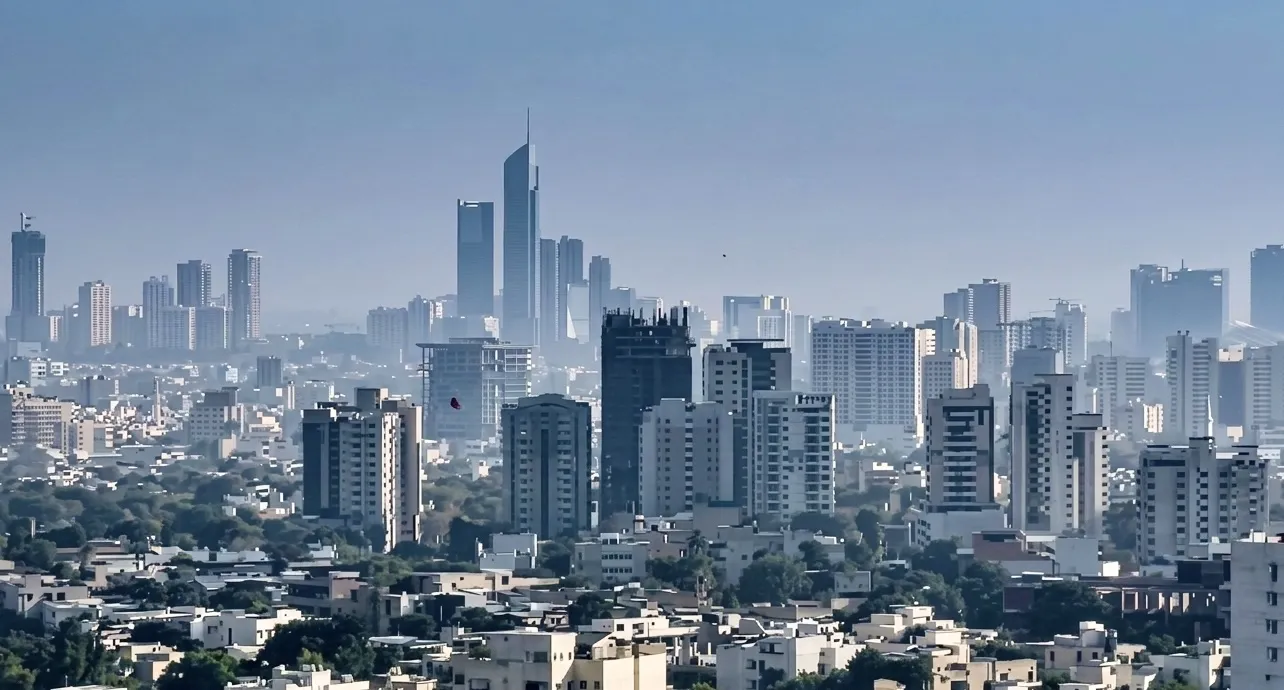
Clifton, Karachi
Registry and Mutation: Know the Difference
A property sale in Pakistan is recorded in two places, and buyers who stop after the first can find their ownership challenged years later. The registry is the registration of the sale deed (bai nama) by the sub-registrar under the Registration Act and Stamp Act, after stamp duty and fees are paid. The mutation (intiqal) is the change of owner in the revenue department's land record, which produces an updated ownership record (fard). For agricultural and most urban land outside housing societies, a transfer is complete only when both are done.
Housing societies and development authorities, DHA, cooperative societies, CDA sectors and the like, keep their own membership and transfer records. There the society's transfer, with its own fees and biometric checks, is the key step, alongside any registry the society requires.
Provinces have been computerising these records. Punjab's land record is run by the Punjab Land Records Authority (PLRA) through Arazi Record Centres and an e-Registration system; Sindh's Board of Revenue runs LARMIS and an e-Registration and e-Mutation system built with PITB; Khyber Pakhtunkhwa's Board of Revenue maintains its own land records.
Before You Pay: Due Diligence
- Get the latest fard (ownership record) and compare the owner's name, khasra/khewat numbers and share with the seller's CNIC
- Trace the chain of title through earlier registries and mutations
- Check for stay orders, mortgages or pending litigation recorded against the land
- For society property, get a non-demand certificate and verify the file with the society office directly
- Confirm the plot is in an approved scheme and not on acquired or public land
- Meet the owner in person; if someone signs under a power of attorney, verify it with the sub-registrar
Transferring Land in Punjab
- 1
Get a fard from an Arazi Record Centre
PLRA says you can book an appointment through its helpline and take the registry copy, mutation copy and CNIC to the ARC, pay the fee by bank challan and collect the fard. Always use the latest fard before a transaction.
- 2
Prepare and pay for the deed
Under PLRA's e-Registration, an e-stamp challan is generated, stamp duty, registration fee and FBR taxes are paid, and the deed is printed on security paper.
- 3
Register with the sub-registrar
Party details are entered on the e-Registration portal (yourself or through a deed writer) and forwarded to the sub-registrar, who records the statements of the parties and witnesses and issues the registered deed.
- 4
Mutation at the ARC
After registration, the mutation is entered and attested so the land record shows the buyer as owner. PLRA describes this as a registry mutation.
- 5
Collect the updated fard
Take a fresh fard in your name as proof that the land record has changed. Keep copies of the deed, mutation and all challans.
Other Routes and Provinces
Oral mutation (Punjab)
Bai zubani
PLRA describes a sale recorded directly by mutation: both parties attend the ARC with documents and two witnesses, and the revenue officer records their statements and attests the mutation.
Inheritance mutation
Wirasat
Any legal heir can apply at the ARC with the death certificate, NADRA Family Registration Certificate, heirs' CNICs and an affidavit; the family tree is verified before attestation.
Sindh
Board of Revenue, LARMIS and e-Registration
Sindh launched e-Registration in February 2024 through People's Service Centres, and the CM's office reported in July 2025 that it ran across 51 sub-registrar offices, with e-Mutation to be integrated.
Khyber Pakhtunkhwa and Balochistan
Boards of Revenue
Registration is at the sub-registrar and mutation through the revenue office (patwari/tehsildar). Check the provincial Board of Revenue for computerised services in your district.
Housing societies and Islamabad
Society or CDA transfer
Transfers in societies and CDA sectors go through the society or authority's transfer office, which also collects the FBR advance taxes before transfer.
Taxes and Fees
Several charges arise on a transfer, and their rates change with provincial and federal budgets, so this guide does not quote them. Provincial charges include stamp duty, the registration fee, mutation fees and local-council fees, calculated on the property's value as set in the district's valuation table or the declared price, whichever rules apply.
Federal advance income tax is collected at the time of transfer: under section 236C of the Income Tax Ordinance from the seller, and under section 236K from the buyer. FBR explains that rates depend on the property's value and on whether the person is on the Active Taxpayers List (filer), a late filer or a non-filer, and that the registrar or housing society collects it through an FBR payment slip (PSID). Overseas Pakistanis with a NICOP or POC have specific provisions. Check current rates on fbr.gov.pk and with your provincial revenue authority before you agree a price, and see filing income tax to understand filer status.
Common Property Frauds
Property fraud in Pakistan often involves the same land sold twice, sellers impersonating absent owners, forged powers of attorney, files in unapproved societies and "open files" sold before a plot exists. Protect yourself by verifying the fard or society record yourself, insisting on biometric verification of the seller, paying by crossed cheque or bank transfer rather than cash, and completing both registry and mutation (or the society transfer) promptly. Do not rely on photocopies supplied by a dealer.
Buying from overseas? Powers of attorney, Roshan Digital Accounts and tax rules for non-residents are covered in buying property in Pakistan from abroad.
Frequently Asked Questions
What is the difference between registry and intiqal?
The registry is the registration of the sale deed with the sub-registrar. The intiqal (mutation) updates the revenue department's land record to show the new owner. For most land outside housing societies you need both.
What is a fard?
A fard (fard malkiat) is an extract of the land record showing who owns which share of a piece of land. In Punjab it is issued by Arazi Record Centres of the Punjab Land Records Authority. Always get the latest one before a transaction.
Can property be registered online?
Partly. Punjab's PLRA e-Registration and Sindh's e-Registration let deeds be prepared and processed electronically, but parties still appear before the sub-registrar to record statements.
Which taxes apply when I buy or sell property?
Provincial stamp duty, registration and mutation fees, plus federal advance tax under section 236K (buyer) and 236C (seller). Rates depend on value and filer status and change with budgets, check fbr.gov.pk and the provincial revenue authority.
How do transfers work in housing societies?
The society or development authority records the transfer in its own office, with biometric verification and its own fees, and collects FBR advance taxes. Verify the file directly with the society before paying.
Keep Exploring
Related places and stories on DailyLife.pk
 Buying Property in Pakistan From AbroadBuying property in Pakistan from abroad: due diligence, approved schemes and NOCs, PLRA land records
 Filing Income Tax in PakistanA practical guide to filing income tax in Pakistan: IRIS registration, CNIC as NTN, deadlines
 Renting a Home in PakistanRenting a house or flat in Pakistan: tenancy agreements, advance and security
 Roshan Digital Account (RDA) ExplainedRoshan Digital Account guide: who can open one, foreign-currency and rupee accounts, Naya Pakistan Certificates
 Overseas Pakistanis: The Complete GuideHub for overseas Pakistanis: NICOP, POC, passport renewal abroad, sending money, Roshan Digital Account
How we know this
- Type Practical guide
- Sources 7 (6 official/academic)
- Reviewed October 2026
- Disputed points None
Rules and fees change, confirm with the official links below before you act.
7 sources
- Frequently asked questions (CLRMIS), Punjab Land Records Authority
- e-Registration, Punjab Land Records Authority
- Revenue Department Sialkot, District Sialkot, Government of Punjab
- Sindh Government completes first e-Registry through PITB's e-Registration & e-Mutation System (February 2024), Punjab Information Technology Board
- Sindh Chief Minister reviews progress of land record digitalisation initiatives (July 2025), Chief Minister's Office, Sindh
- Frequently asked questions for Overseas Pakistanis (sections 236C and 236K), Federal Board of Revenue
- PLRA completes e-registration training for property officers (May 2023), ProPakistani (ProProperty)
Photo credits (4)
- Clifton Karachi View.jpg, Ktownboy103, CC0, via Wikimedia Commons
- Parliament House, Islamabad by Usman Ghani.jpg, Usman.pg, CC BY-SA 3.0, via Wikimedia Commons
- Bahadurabad Area Karachi City.jpg, King Eliot, CC BY-SA 4.0, via Wikimedia Commons
- Long Exposure of Blue Area Islamabad.JPG, Obaid747, CC BY-SA 3.0, via Wikimedia Commons
