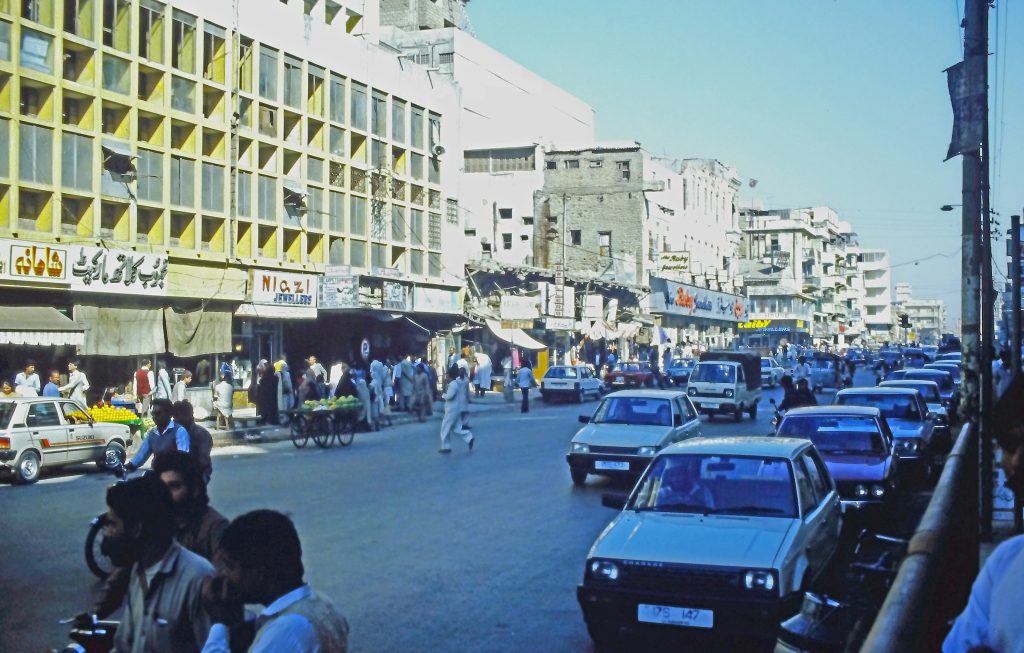
A street near the Lahore Fort, Lahore

Life in Pakistan

E-Stamp Paper in Pakistan: Where and How to Buy Itand How to Check It Is Genuine

What e-stamping replaced, how the Punjab, Sindh and Khyber Pakhtunkhwa systems work, and how to avoid fake papers.

Punjab, Sindh and Khyber PakhtunkhwaWhere it applies
Designated bank branches or countersWhere you pay
CNICs of the people named in the documentWhat you need
Not accepted from 1 September 2025Paper stamps in KP

The Quick Answer

An e-stamp paper is a stamp paper that is generated online, paid for through a bank and printed with a unique number that can be checked in a government database. It replaced the old paper stamps that vendors kept in stock, and it exists to stop forged and reused stamp papers. Punjab, Sindh and Khyber Pakhtunkhwa all use systems built by the Punjab Information Technology Board (PITB), and Khyber Pakhtunkhwa stopped accepting manual stamp papers from 1 September 2025.

In short: you enter the details of the transaction, the system works out the duty, you pay at a designated bank, and the bank prints your e-stamp paper. Then you use it for the sale deed, rent agreement, power of attorney or affidavit it was bought for. Rules, rates and bank arrangements differ by province and change from time to time, so treat this page as an overview and confirm the final step on the official provincial portal.

What an E-Stamp Paper Is and Why It Was Introduced

Stamp duty is a tax that the provincial government charges on legal documents such as sale deeds and agreements. For decades, people paid it by buying printed stamp papers from licensed vendors. That system was open to forgery, to reuse of old papers and to leakage of revenue. The Punjab Board of Revenue has said the main aim of e-stamping is to prevent paper and process related fraud.

PITB moved the issue of high-value stamp papers online. In Punjab, PITB says the old process could take two to three days, while the online system issues the paper far more quickly. A central database also lets sub-registrars, housing societies and other authorities check whether a paper is genuine, and the database marks a paper as used once it has been submitted so it cannot be used a second time.

In December 2022, PITB announced that the e-stamping system had been implemented across Punjab, Sindh and Khyber Pakhtunkhwa, working with the provincial Boards of Revenue and banks including the Bank of Punjab, the National Bank of Pakistan and Sindh Bank. The State Bank of Pakistan and the World Bank were also named as partners.

Which Documents Need Stamp Paper

The exact duty and the exact list depend on the province and the type of document, but these are the documents people most often need stamp paper for.

Property sale and transfer

Sale deeds, gift deeds and other property transfers are the main use. In Punjab the duty is worked out from the property details you enter and the District Collector (DC) valuation tables built into the system. See our guide to property registration and transfer for the wider process.

Rent agreements

Tenancy agreements are normally written on stamp paper so that the agreement can be proved later. Our page on renting a home in Pakistan explains what a landlord and tenant should agree before signing.

Power of attorney

A power of attorney lets someone act for you, for example to sell a plot while you are abroad. Overseas Pakistanis often need one, so read buying property in Pakistan from abroad before you sign anything.

Affidavits and undertakings

Many offices ask for an affidavit on stamp paper. For example, K-Electric's new connection requirements list a standard affidavit on Rs 200 stamp paper, attested by a notary public or oath commissioner. Always check which denomination the office asks for.

Court and judicial use

Judicial stamp papers are used for court fees. They are separate from non-judicial stamp papers, which cover contracts and deeds.

How to Buy an E-Stamp Paper in Punjab

The Punjab system is run through the e-Stamping portal at es.punjab.gov.pk. The steps below follow the process described by PITB and the Punjab e-stamping portal. Screens and bank arrangements can be updated, so follow the on-screen instructions if they differ.

  1. Enter the transaction details. For property, this means the area, the location, the covered area and whether it is commercial or residential. The system then calculates the duty from the DC valuation tables.
  2. Enter the names and CNIC numbers of the buyer, the seller and the person buying the stamp paper on their behalf. The CNICs are verified online against the NADRA database in real time.
  3. Generate and sign Challan Form 32-A. This is the payment slip that carries the amount of duty.
  4. Pay at a designated bank branch or at a designated counter in the sub-registrar's office. Reports on the system name the Bank of Punjab and the National Bank of Pakistan.
  5. Collect the printed e-stamp paper. The bank counter prints it on specially designed legal-sized paper.
  6. Submit it to the sub-registrar, housing society, authority or land developer that asked for it.

The person buying the paper must bring the original CNIC, because the paper is issued only after the CNIC is checked. Older guides say that low-value non-judicial papers below Rs 500 are still bought from stamp vendors, but this may have changed, so ask the office that needs your document which paper it will accept.

E-Stamping in Sindh and Khyber Pakhtunkhwa

Sindh

PITB reports that the first e-stamp paper in Sindh was issued in Karachi in March 2022, and that the rollout to other districts began in May 2022 with the National Bank of Pakistan issuing the first papers in districts such as Matiari, Tando Allahyar, Mirpurkhas and Nawabshah. Sindh Bank was named as a partner in the December 2022 announcement. The general idea is the same as in Punjab: details are entered into the system, duty is paid at the bank, and a verifiable paper is printed.

Khyber Pakhtunkhwa

PITB said in October 2022 that the e-stamping rollout in Khyber Pakhtunkhwa was well underway. In August 2025 the provincial government announced that physical stamp papers were abolished and that only e-stamped documents would be accepted from 1 September 2025. Reports say revenue is collected through the Bank of Khyber and paid directly into the provincial treasury.

Balochistan and Islamabad

Islamabad: the Associated Press of Pakistan reported on 1 February 2026 that the federal capital had started e-stamping across Islamabad on a digital portal, run under the Islamabad Capital Territory administration, with the aim of stopping fake papers. Balochistan: we could not confirm the current position from an official source. If you are working in either place, ask the registrar or sub-registrar's office, or the Board of Revenue, which kind of stamp paper it will accept.

A street in Karachi, Sindh
A street in Karachi, Sindh.

E-Stamping at a Glance by Province

A summary of what could be confirmed from PITB and news reports. Check the provincial portal or your registrar before relying on it.

ProvinceWhat we could confirmBank named in reports
PunjabOnline system run with the Board of Revenue and PITB. Portal at es.punjab.gov.pk. Challan Form 32-A paid at the bank.Bank of Punjab, National Bank of Pakistan
SindhFirst paper issued in Karachi in March 2022. Rollout to other districts began in May 2022.National Bank of Pakistan, Sindh Bank
Khyber PakhtunkhwaRollout under way by October 2022. Manual stamp papers reported as not accepted from 1 September 2025.Bank of Khyber
IslamabadAPP reported on 1 February 2026 that e-stamping had started across the capital. Check the ICT portal or the registrar for the current procedure.Not confirmed
BalochistanNot confirmed from an official source. Ask the sub-registrar or Board of Revenue which paper is accepted.Not confirmed

How to Check That an E-Stamp Paper Is Genuine

Every e-stamp paper carries a unique number, and the idea of the system is that the number can be checked against the central database. In Punjab, officials such as special treasury officers use a dedicated verification portal, and sub-registrars, housing societies, authorities and land developers get limited database access to confirm a paper is genuine. An older Zameen guide from 2020 also described a public online check using the 16 digit number printed on the paper. If your province offers a public check, use it before you pay for a deal that depends on the paper.

Look at the paper as well as the number. It should be printed at the bank counter on legal-sized security paper, carry the names and CNICs of the people in the transaction, and match the details of your deed. If any detail is wrong, do not use it. Ask the bank or the provincial e-stamping office how to correct or replace it before you go to the sub-registrar.

Fake Papers, Agents and Other Risks

The reason e-stamping exists is that fake and reused stamp papers cost the provincial treasury millions of rupees and cheated ordinary buyers. Keep these points in mind.

  • Buy through the official channel. If someone offers you a ready printed stamp paper outside a bank or sub-registrar counter, treat it with suspicion.
  • Never hand over your original CNIC to a stranger. The system issues the paper only after the CNIC is verified, so a genuine agent will not need to keep it.
  • Read every detail before paying. A wrong name, CNIC number or property description can mean a useless paper. Check these before you sign the challan.
  • Do not trust a verbal promise. Always keep the challan receipt and the printed paper with the deed.
  • Be careful with agents. The system records the person through whom the paper is bought, so a deed writer or agent should be willing to show their name on the record.

If you lose an identity document while handling paperwork, see lost or damaged CNIC replacement, because the CNIC is verified online when e-stamp papers are issued.

Costs and How Long It Takes

The amount of stamp duty depends on the province, the type of document and, for property, on the value used in the District Collector valuation tables. Rates are set by provincial law and the Board of Revenue and are changed in the budget and by notifications, so we do not quote a figure here. Use the e-stamping portal's calculator or ask your registrar for the amount before you plan your budget.

Time is a lot shorter than the old system. PITB says issue of stamps in Punjab once took two to three days. With the online system, the paper is printed at the bank counter after payment. Allow extra time for the registration step itself, which depends on the sub-registrar's office, and keep in mind that bank branches near registrar offices can be busy.

Payment through a bank may include bank or service charges that the portal will show. Keep every receipt, because you may need proof of payment if the paper is questioned later.

Tips for Overseas Pakistanis and Out-of-Town Buyers

If you live abroad, you usually cannot collect an e-stamp paper yourself because the process depends on a CNIC and a bank counter in Pakistan. The common solution is a power of attorney in favour of a trusted relative. Because a power of attorney gives someone wide authority, take advice from a lawyer, limit the powers to what you really need and keep copies. Our guides on NICOP and CNIC and on buying property from abroad cover the identity documents and common traps.

For other transactions, check whether your province lets someone else buy the stamp paper for you. In Punjab, the system records the person purchasing on behalf of the parties, which suggests this is allowed, but the person still needs to show an original CNIC and the details must match the deed.

Official Sources and Where to Get Help

For anything that affects money or property, rely on the government source rather than a social media post or an agent.

  • Punjab: the e-Stamping portal (es.punjab.gov.pk) and its contact email, [email protected], as listed on the PITB e-stamping page.
  • Project information: the Punjab Information Technology Board (pitb.gov.pk), which designed the system for all three provinces.
  • Local help: the sub-registrar's office or the Board of Revenue office in your district, and the bank branch that prints the papers.
  • Legal questions: a lawyer, especially for property transfers and powers of attorney.

See also our overview of online government services in Pakistan and the government websites directory for other official portals.

Checked October 2026. Stamp duty rates are set by each province and change with budgets, so no rate is quoted here.

Reports on the Khyber Pakhtunkhwa abolition date of physical papers and on Islamabad come from press coverage, so confirm with the registrar.

Frequently Asked Questions

What is an e-stamp paper in Pakistan?

It is a stamp paper generated through an online provincial system, paid for at a bank and printed with a unique number that can be checked in a central database. It replaces pre-printed paper stamps that could be forged or reused.

Where can I buy e-stamp paper in Punjab?

You generate a challan on the Punjab e-Stamping portal, pay it at a designated bank such as the Bank of Punjab or the National Bank of Pakistan, and the bank prints the paper. You need the CNICs of the people named in the transaction.

Are old paper stamp papers still valid in Khyber Pakhtunkhwa?

News reports from August 2025 said that manual stamp papers stopped being accepted in Khyber Pakhtunkhwa from 1 September 2025 and that only e-stamped documents would be accepted. Confirm with your registrar if you hold an old paper.

Can I buy e-stamp paper without a CNIC?

The system verifies CNICs against the NADRA database, and the paper is issued after the original CNIC is checked. Foreign nationals and others without a CNIC should ask the provincial e-stamping office or the registrar how they can complete the process.

How do I know if my e-stamp paper is fake?

Check the unique number through the official verification channel your province offers, make sure it was printed at a bank or sub-registrar counter, and match the names and CNICs to your deed. If anything is wrong, contact the e-stamping office before using it.

How much does e-stamp paper cost?

The amount is the stamp duty for your document and it depends on the province, the document type and, for property, the District Collector value. The e-stamping portal calculates it, and rates change, so check the portal instead of relying on a fixed figure.

Do I need e-stamp paper for a rent agreement?

Rent agreements are normally written on stamp paper in Pakistan. Ask the office or authority that will use the agreement which paper and denomination it accepts.

Can someone else buy e-stamp paper on my behalf?

In Punjab the system records the person who purchases the paper for the buyer and seller, so an agent or relative can do it. That person must show an original CNIC and the details must match the deed.

Has Islamabad moved to e-stamping?

The Associated Press of Pakistan reported on 1 February 2026 that e-stamping had started across Islamabad. Confirm the portal and rules with the ICT administration before you buy.

How we know this

  • Type Practical guide
  • Sources 7 (5 official/academic)
  • Reviewed October 2026
  • Disputed points None

Rules and fees change, confirm with the official links below before you act.

7 sources
  1. e Stamping, Punjab Information Technology Board
  2. e-Stamping, Government of the Punjab
  3. PITB's e-Stamping Initiative Implemented across Punjab, Sindh and KP, Punjab Information Technology Board
  4. e-Stamping System Rolled Out Across Sindh, Punjab Information Technology Board
  5. E-Stamp Project, Revenue and Estate Department, Government of Khyber Pakhtunkhwa
  6. KP abolishes physical stamp papers, implements e-stamping system, ARY News
  7. Islamabad moves all stamp papers online, ending fraud, Associated Press of Pakistan
Suggest a correction

Stay updated

Stay Connected with DailyLife.pk

Get new travel guides, recipes and stories from across Pakistan, no spam, unsubscribe any time.

Your Pakistan journey starts here

From majestic mountains to vibrant cities, rich cuisine to timeless traditions — discover the real Pakistan with DailyLife.pk.