
History · Event
The 2010 Floods: When the Indus Overflowed
Record monsoon rains sent a flood wave the length of the Indus, affecting some 20 million people, then the largest disaster in Pakistan's recorded history by number affected.
- From late July 2010
- About one-fifth of Pakistan affected
- About 20 million affected
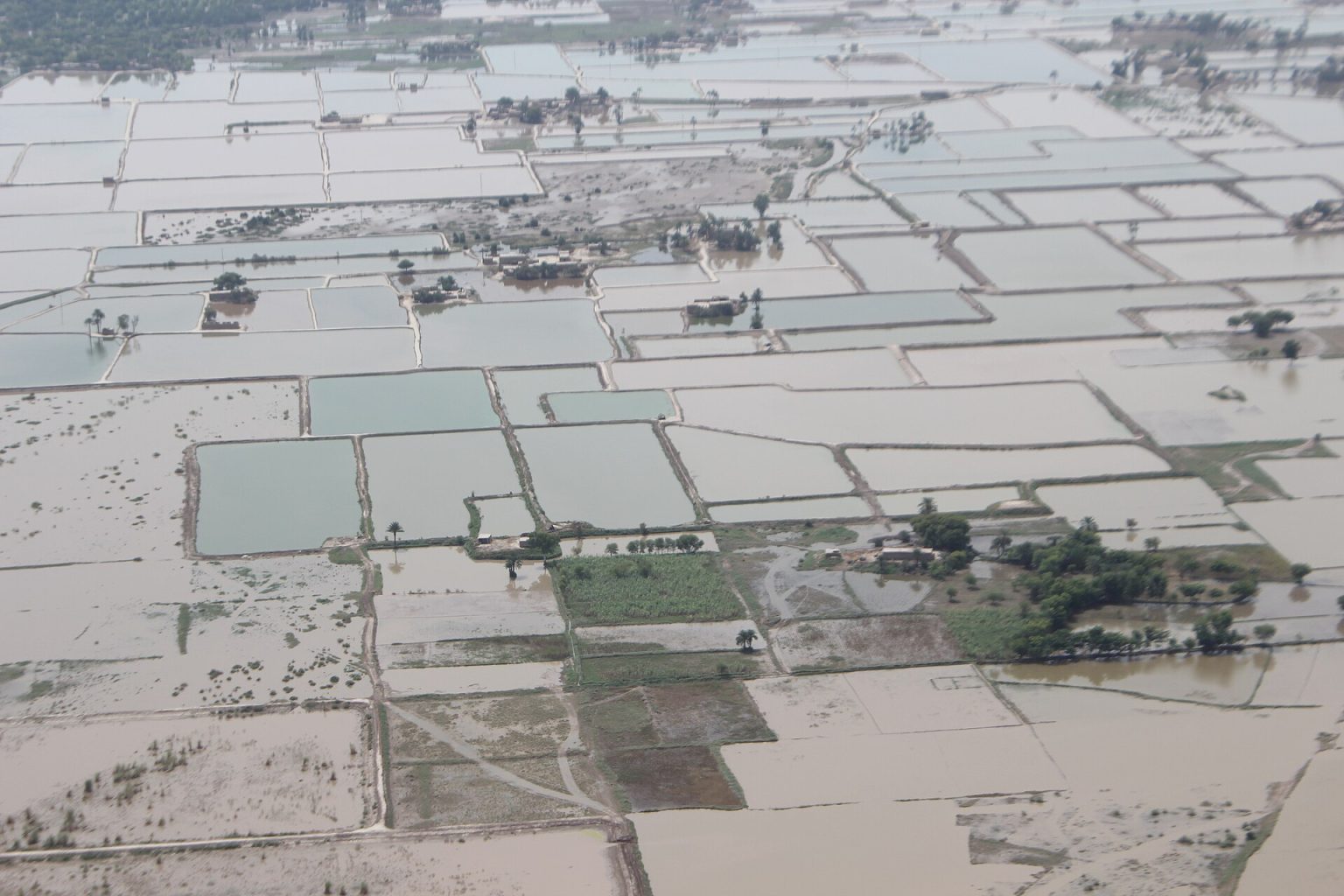
Indus floodplain, Sindh
- When
- Late July – autumn 2010
- Where
- Khyber Pakhtunkhwa, Punjab, Sindh, Balochistan
- Certainty
- Well established
What Happened
Around 22 July 2010 unusually heavy monsoon rains began over north-west Pakistan. Within days, flash floods swept through Khyber Pakhtunkhwa and parts of Punjab and Balochistan, destroying bridges, roads and homes. By 1 August at least 1,000 people had died.
The water then gathered into a vast flood wave that moved slowly down the Indus through southern Punjab and into Sindh during August and September. Embankments breached and huge areas of farmland were submerged; in Sindh alone breaches flooded about 1.5 million hectares. By mid-August about one-fifth of the country was affected. River levels largely returned to normal by October, but some floodwater lakes in low-lying areas remained into early 2011.
According to the National Disaster Management Authority (NDMA), more than 1,980 people died and nearly 3,000 were injured, while over 20 million, more than a tenth of the population, were affected. About 1.6 million homes were damaged or destroyed, with heavy losses of crops, livestock, schools, clinics, roads and irrigation works.
Background
Most of Pakistan's people and farmland depend on the Indus and its tributaries, and large populations live on or near the floodplain. The river system is controlled by barrages, embankments and canals. Monsoon floods are a recurring hazard, but the rains of July 2010 were exceptional in intensity and in falling over the upper catchments, where steep valleys funnelled water rapidly downstream. Read more on Pakistan's rivers and climate.
Timeline
22 July 2010
Rains begin
Record monsoon rains start in the north-west.
Late July 2010
Flash floods
Flash floods hit Khyber Pakhtunkhwa, parts of Punjab and Balochistan; bridges and roads are swept away.
1 August 2010
Toll mounts
At least 1,000 people are dead and more than a million displaced.
August 2010
Flood wave moves south
The Indus flood wave reaches southern Punjab and Sindh; embankment breaches flood vast areas.
Mid-August 2010
One-fifth of the country
About a fifth of Pakistan's land area is affected.
October 2010
Waters recede
Indus levels largely return to normal, though some areas stay flooded into early 2011.
31 January 2011
Relief phase ends
The UN-coordinated relief and early recovery plan reaches its scheduled end; reconstruction continues.
March 2011
Reconstruction finance
The Asian Development Bank approves a US$650 million flood emergency reconstruction project.
Consequences and Lessons
- About 2.2 million hectares (5.4 million acres) of crops were destroyed and about 1.2 million livestock lost, according to Britannica.
- More than 10,000 schools and 500 clinics and hospitals were damaged or destroyed.
- The government faced criticism at home for a slow response; President Zardari was criticised for continuing a trip to Europe in early August.
- Similar vulnerabilities, settlement on flood plains, inadequate infrastructure and outdated river management, were highlighted again after the 2022 floods.
How We Know
Official figures come from the National Disaster Management Authority, and the World Bank and Asian Development Bank carried out a joint Damage and Needs Assessment. UN humanitarian reviews documented the relief operation. Figures differ by source: NDMA counted more than 1,980 deaths; other summaries give 'more than 1,800' (ADB, 2018) or a range of 1,200–2,200 (Britannica). Economic loss estimates also vary widely, Britannica reports a government estimate of US$43 billion in economic losses, far above the damage assessment's sector repair costs.
Before and After
Where this moment sits in Pakistan’s story.
Before
- Passed 8 and 15 April; signed 19 April 2010
Eighteenth Amendment
Passed by the National Assembly on 8 April and the Senate on 15 April 2010, and signed into law on 19 April, the Eighteenth Amendment rewrote about a third of the Constitution. It restored a parliamentary system, removed the President's power to dissolve the National…
- 19 April 2010
Signed into law
President Asif Ali Zardari signs the amendment.
Frequently Asked Questions
When did the 2010 floods happen?
Heavy monsoon rains began around 22 July 2010; flash floods hit the north-west in late July and the Indus flood wave moved through Punjab and Sindh in August and September.
How many people were affected by the 2010 floods?
About 20 million people, more than a tenth of Pakistan's population, according to the NDMA.
How many people died in the 2010 floods?
The NDMA counted more than 1,980 deaths; other sources give estimates between about 1,200 and 2,200.
Which provinces were affected?
All four provinces, along with FATA, Gilgit-Baltistan and Azad Jammu and Kashmir; Khyber Pakhtunkhwa, Punjab and Sindh were among the worst hit.
How do the 2010 and 2022 floods compare?
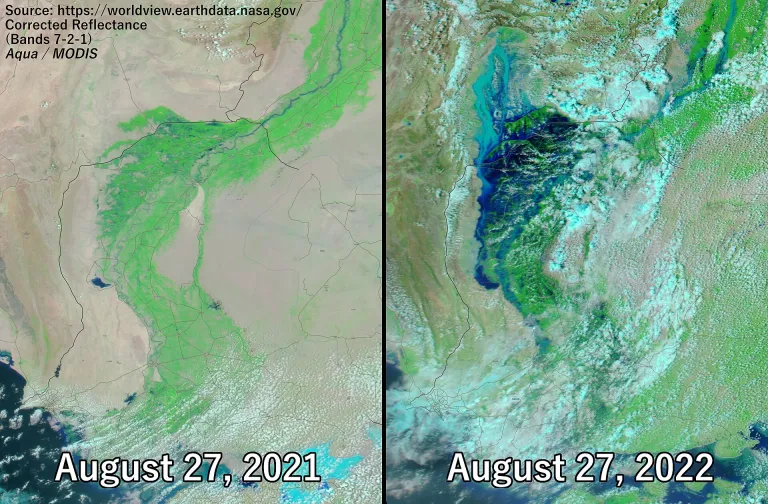
Both were caused by extreme monsoon rains. The 2022 floods affected more people (about 33 million) and caused greater economic damage.
Keep Exploring
Related places and stories on DailyLife.pk
 Climate of PakistanPakistan's climate explained: seasons, monsoon, regional weather, record heat at Turbat
 Rivers and Lakes of PakistanPakistan's rivers and lakes: the Indus and its tributaries, the Indus Waters Treaty, Attabad, Saiful Muluk
 Agriculture in PakistanAgriculture in Pakistan: major crops, Indus canal irrigation, livestock and challenges
How we know this
- Type Historical record
- Sources 5 (2 official/academic)
- Reviewed October 2026
- Disputed points None
5 sources
- Pakistan floods of 2010, Encyclopaedia Britannica
- Technical assistance completion report: flood emergency reconstruction (44356-012), Asian Development Bank
- A review of the Pakistan Flood Relief and Early Recovery Response Plan (January 2011), ALNAP
- Pakistan: responding to disaster with partnership (ADB, 2018), PreventionWeb (UNDRR)
- 2010 Pakistan floods (overview, used to locate sources), Wikipedia
Photo credits (1)
- Aerial view of floods, Pakistan 2010. Photo- Australian Government (10664863836).jpg, Department of Foreign Affairs and Trade, CC BY 2.0, via Wikimedia Commons
