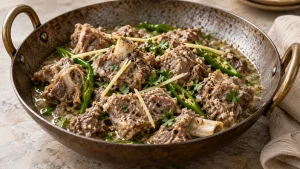
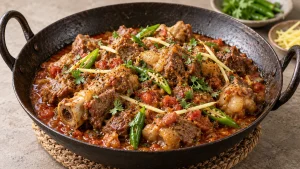
White Mutton Karahi
وائٹ مٹن کڑاہی
Tenderize bone-in meat, then finish gently with yogurt and cream
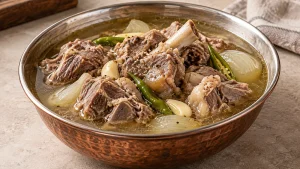
A pale, creamy mutton karahi made with tender goat pieces, yogurt, mild pepper and cream, without a tomato-based red masala. Restaurant and home versions vary.

Total includes 5 min of passive time described in the preparation and method. One tablespoon = 15 ml; one teaspoon = 5 ml.
About White Mutton Karahi
A pale, creamy mutton karahi made with tender goat pieces, yogurt, mild pepper and cream, without a tomato-based red masala. Restaurant and home versions vary.
Personally cooked and tested by Zohair Fakhar for DailyLife.pk. Cooking times can vary with your stove, cookware and batch size; follow the texture and doneness cues in the method.
Make it work for your kitchen
Also known as Safed Mutton Karahi, Mutton White Karahi.
Original quantities serve 6. Cooking times, pan size and frying-oil depth do not scale, cook in extra batches instead.
Before you start
Before you start
Use only inspected, food-grade, butcher-prepared meat; never rinse raw meat. Measure all ingredients by weight; 1 tablespoon = 15 ml and 1 teaspoon = 5 ml. Plan a gentle covered simmer, a food thermometer and a separate stage for finish ingredients.
Set up the equipment
Have the following tools ready before starting: Deep heavy karahi or wide heavy pot with fitted lid; Kitchen scale, measuring jug and spoons; Food thermometer; Tongs, long spatula and covered cooling containers.
Clean workspaceMeasure the ingredients
Measure the ingredient quantities for your selected servings before applying heat. Keep separately listed groups, such as dough, filling, sauce or garnish, in separate containers; keep any optional additions separate.
Use the ingredient list aboveCheck allergens and substitutions
Check ingredient labels and any substitutions against these notes: Milk (yogurt and cream)
Before cooking
Step-by-step cooking method
1 Prepare and portion
Inspect bone-in goat shoulder or leg, raw for loose bones; whisk plain full-fat yogurt, whisked smooth and measure unsweetened dairy cream and all spices. Keep dairy cool until needed.
2 Start the goat
Warm neutral oil in a heavy pot. Add bone-in goat shoulder or leg, raw in batches, turn until its surfaces change colour; stir in ginger-garlic paste and half salt without browning the paste.
3 Tenderize with a covered simmer
Add hot water, initial measured amount, bring to a boil and cover at a gentle simmer, checking regularly and adding small hot-water top-ups if needed. Continue until meat is cooked through and fork-tender.
4 Add the yogurt gently
Reduce heat to low.
5 Add the yogurt gently (continued)
Temper plain full-fat yogurt, whisked with some warm cooking liquid, then stir it in gradually.
6 Add the yogurt gently (continued)
Add ground roasted cumin, ground black pepper, ground white pepper and green chillies, slit; maintain a gentle simmer, not a rolling boil.
7 Reduce and enrich
Cook uncovered until sauce lightly coats meat; stir in unsweetened dairy cream toward the end, heating through gently without boiling hard. Check texture and seasoning.
8 Finish and rest
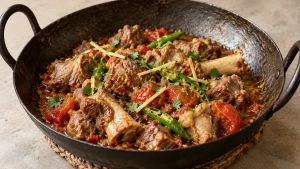
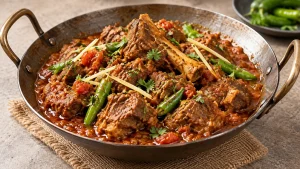
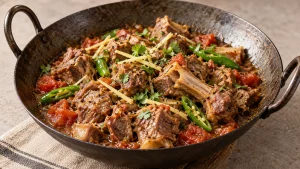
Taste and add remaining salt as appropriate. Scatter ginger julienne over the karahi. Rest briefly before serving with naan or roti (sides excluded).
Chef’s tips
- Use gentle heat to tenderize meat before reducing sauce.
- For larger quantities cook in batches; pot capacity and evaporation do not scale linearly.
- Serve freshly cooked with naan or roti, excluded from nutrition.
Common mistakes & quick fixes
- Meat is chewy
- Add a small amount of hot water and return to a covered gentle simmer.
- Sauce or broth scorches
- Lower heat; move unburnt food to clean pot if needed, leaving any burnt layer behind.
- Salt becomes excessive
- Season cautiously before reduction, then taste at the finish.
Variations & serving ideas
Variation: Adjust green chilli for mild or hot preference without changing the core cooking approach.
Variation: Serve with naan, roti or rice; accompaniments are not included in batch nutrition.
Variation: Do not change animal, meat cut or dairy content without rechecking timing, allergens and nutrition.
Perfect result check
| Check | Meat is tender and appropriately cooked, with no loose bone fragments. |
|---|---|
| Check | The pale yogurt-and-cream sauce lightly coats the meat without a watery pool. |
| Check | Pepper and cumin season the sauce; fresh ginger finishes it, with salt adjusted after reduction. |
Storage & reheating
| Fridge | Refrigerate in shallow covered containers within 2 hours (within 1 hour in temperatures above 32°C); 4°C or below. | |
|---|---|---|
| Fridge | 3–4 days | Eat refrigerated leftovers within 3–4 days or freeze promptly; reheat leftovers to 74°C (165°F). |
| Storage | Discard food left at room temperature beyond food-safety limits. |
Know when to change the heat
| Stage | Heat | What to look for |
|---|---|---|
| Prepare and portion | No heat | Whisk the yogurt smooth, measure the cream and spices, and reserve the ginger garnish and part of the salt. |
| Start the goat | Medium heat | Meat surfaces turn opaque; ginger-garlic paste becomes fragrant without browning. |
| Tenderize with a covered simmer | High then low heat | Maintain a gentle covered simmer and enough liquid to prevent scorching; meat must be fork-tender before adding dairy. |
| Add the yogurt gently | Low heat | Temper and gradually stir in smooth yogurt at low heat; keep small bubbles rather than a rolling boil. |
| Reduce and enrich | Low to medium-low heat | Sauce lightly coats the meat; cream heats through gently without a hard boil. |
| Finish and rest | No heat | Taste before adding reserved salt, then add fresh ginger and rest briefly. |
Helpful answers before you cook
How can I stop the yogurt sauce from splitting?
Whisk the yogurt smooth, lower the heat and mix some warm cooking liquid into it before adding it gradually to the pan. Keep the sauce at a gentle simmer and stir regularly; a rolling boil can separate the dairy. Add the cream near the end.
Why is my goat still tough before the yogurt stage?
Bone-in shoulder and leg pieces can take different amounts of time. Continue the covered gentle simmer with small hot-water top-ups as needed until the meat is fork-tender. Add the yogurt after tenderising rather than trying to soften tough meat in the finished dairy sauce.
Should the finished sauce be thin or thick?
Reduce uncovered until the pale sauce lightly coats the meat. Keep the heat low to medium-low and stir often; stop before the pan dries out. The ginger garnish goes on at the end, and any remaining salt is added only after tasting.