
White Biryani
وائٹ بریانی
Stovetop parboiled-rice layering and gentle dum
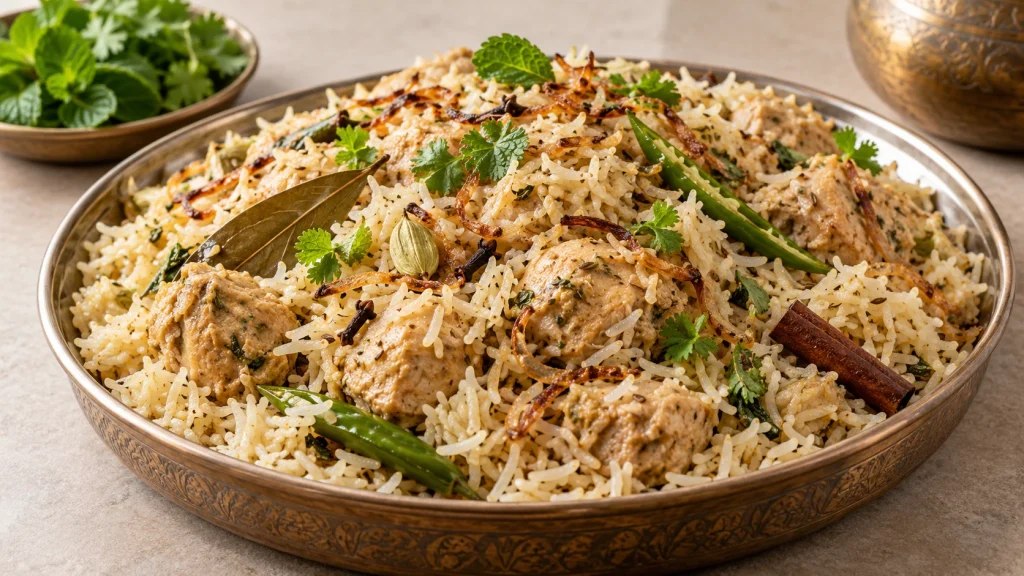
Pakistani white chicken biryani with yogurt, ginger, green chilli, aromatic whole spices and a pale, gently spiced masala without tomatoes.
Excludes 25 min soaking, 25 min marinating, 10 min resting. One tablespoon = 15 ml; one teaspoon = 5 ml.
About White Biryani
Pakistani white chicken biryani with yogurt, ginger, green chilli, aromatic whole spices and a pale, gently spiced masala without tomatoes.
Personally cooked and tested by Zohair Fakhar for DailyLife.pk. Cooking times can vary with your stove, cookware and batch size; follow the texture and doneness cues in the method.
Make it work for your kitchen
Also known as chicken white biryani, safed biryani.
Original quantities serve 4. Cooking times, pan size and frying-oil depth do not scale, cook in extra batches instead.
Before you start
Before you start
Prepare rice and protein Rinse and soak rice, prepare the listed primary ingredient and keep seafood or chicken refrigerated until needed. Weigh and divide required yogurt where specified. No heat 25–35 minutes, overlapping Set up two cooking pots Set out a colander for firm-centred parboiled rice and a heavy lidded pot for final dum. Do not rely on dum alone to cook raw seafood or chicken. No heat 5 minutes
Set up the equipment
Have the following tools ready before starting: Heavy 5–6 litre lidded pot; separate large rice saucepan; Colander; food thermometer; food scale and measuring jug; Heat diffuser, broad spatula, clean tray for cooked protein.
Clean workspaceMeasure the ingredients
Measure the ingredient quantities for your selected servings before applying heat. Keep separately listed groups, such as dough, filling, sauce or garnish, in separate containers; keep any optional additions separate.
Use the ingredient list aboveCheck allergens and substitutions
Check ingredient labels and any substitutions against these notes: Milk (yogurt)
Before cooking
Step-by-step cooking method
1 Set up rice and aromatics
Soak measured dry rice for 25–30 minutes, drain. Bring a large separate pot containing the listed rice-boiling water, rice salt, cardamom, cloves, cinnamon and bay leaves to a vigorous boil. Keep rice aside until the sauce is underway.
2 Marinate chicken
Mix chicken with 150 g yogurt, ginger, garlic, white pepper, 4 g salt, lemon and half the green chilli. Refrigerate for at least 25 minutes while rice soaks.
3 Build the masala
Soften sliced onion in measured oil 8–10 minutes over medium-low, without browning deeply. Add cumin, ginger, garlic and ground coriander; stir 1 minute. The white-style chicken and yogurt cooking follows in the next step; do not add tomato or red chilli.
4 Parboil rice
Add soaked, drained rice to freely boiling spiced water. Boil uncovered approximately 5–8 minutes; bite a grain, it should bend with a firm centre, not be fully soft. Drain immediately and let steam escape; exact time depends on rice age and pot.
5 Finish the primary ingredient
Soften onion in oil over medium-low heat without deep browning. Add chicken and marinade and cook covered on medium-low for about 12–18 minutes, stirring occasionally; add remaining 70 g yogurt and simmer uncovered until lightly thick. Use a thermometer to confirm chicken reaches 74°C (165°F) before layering.
6 Layer the biryani
Use a heavy lidded vessel: layer the thick cooked masala and rice, adding mint, coriander, reserved onions and garam masala. Keep the protein pieces largely intact, distribute rather than stir. Ensure no thin pool of sauce remains on the bottom.
7 Steam and rest
Alternate thick chicken masala and mostly cooked rice, with mint, coriander and remaining green chilli. Seal the pot; steam over very low heat with diffuser for 10–12 minutes then rest off heat for 10 minutes.
8 Serve and check
Open lid away from face. Fluff only the upper rice with a wide spoon, lift from the side so protein stays intact, discard whole spice stems and visually inspect for fish bones or prawn shell pieces. Serve promptly.
Chef’s tips
- Drain rice while centres are still firm; watery rice cannot be rescued by longer dum.
- The masala must be thick enough to cling to a spoon, with no free liquid.
- Cook extra portions in extra pans or batches; do not scale rice-pot water volume or cooking duration automatically.
Common mistakes & quick fixes
- Wet, clumped rice
- Drain earlier, spread briefly to release steam and reduce the masala further before layering.
- Dry bottom or scorching
- Use a heavy pan, diffuser and minimum heat; do not extend dum blindly.
- Overcooked chicken
- Check protein temperature before layering and shorten final dum as necessary; reduce stir-frying and repeated lid opening.
Variations & serving ideas
Variation: Adjust chilli without altering food-safety cooking targets.
Variation: Serve with raita, salad or lemon wedges separately; accompaniments excluded from nutrition.
Perfect result check
| Check | Rice remains in distinct aromatic grains, without a wet base. |
|---|---|
| Check | Primary ingredient is fully cooked, intact and tender, not rubbery or raw. |
Storage & reheating
| Cooling and refrigerator | Within 24 hours | Cool cooked rice quickly in small shallow portions, ideally within 1 hour, then refrigerate at 4°C or colder. Use within 24 hours; do not leave it in the warm cooking pot. |
|---|---|---|
| Reheating and freezing | Reheat only once until steaming hot throughout, reaching 74°C/165°F, and serve immediately. Freeze portions promptly for longer keeping; defrost in the refrigerator before reheating. |
Know when to change the heat
| Stage | Heat | What to look for |
|---|---|---|
| Cook the chicken-yogurt masala | Medium-low heat | Keep onion pale and reduce the yogurt sauce gently until thick. Check chicken reaches 74°C/165°F before layering. |
| Final dum and rest | Very low, covered; then off heat | Steam gently without scorching the base, then rest covered before lifting the rice carefully. |
Helpful answers before you cook
How do I know the chicken is cooked safely?
Use a food thermometer in the thickest chicken piece and confirm 74°C/165°F before final layering. Surface colour alone does not confirm doneness, and the final dum is not a substitute for cooking the chicken first.
Can I use fully cooked rice?
Not advised in this layered method: fully cooked rice can become mushy during dum. Start with rice that retains a firm centre.
How do I keep white biryani pale rather than brown?
Soften the onion without deep browning and keep the aromatics from scorching. This version uses yogurt, green chilli and white pepper, with no tomato or red chilli powder in the ingredient list. Keep the final sauce thick enough for layering rather than adding extra dairy to change its colour.


