
Mutton Mandi
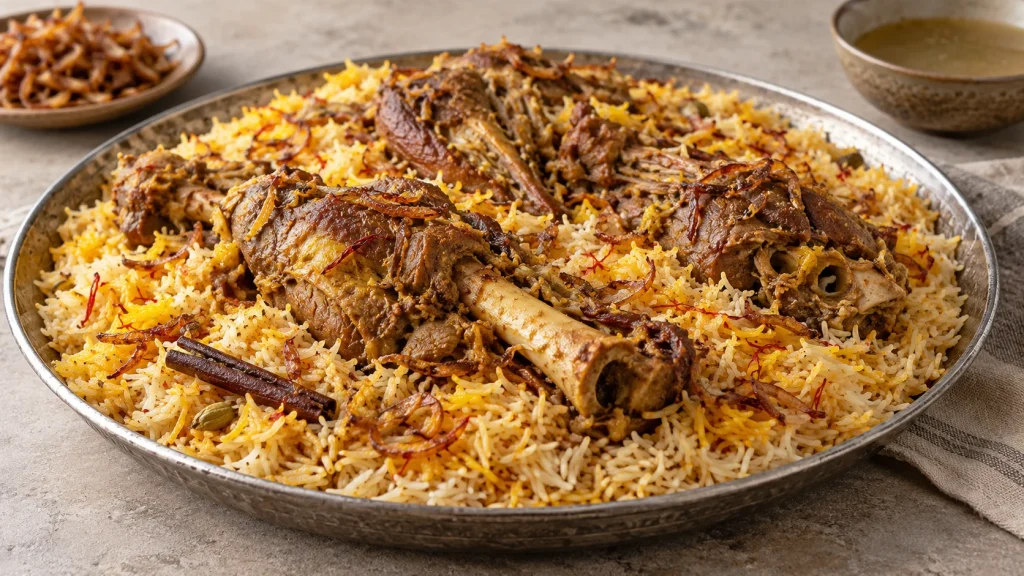
Braise goat shoulder to tenderness, then serve over broth rice
Home-style mutton mandi using bone-in goat
Includes 30 minutes refrigerated seasoning, 2–3 hours braising, 10–15 minutes browning and 25 minutes rice cooking/resting. Rice soaking and final rice cooking overlap the later meat work; older goat may need another hour. One tablespoon = 15 ml; one teaspoon = 5 ml.
About Mutton Mandi
On this Pakistani site, mutton is defined here as goat shoulder rather than left ambiguous between goat and mature sheep. The meat is gently braised until tender, browned briefly, and served over rice cooked with its strained broth. This is a domestic adaptation of mandi, not a pit-roasted preparation. Goat age and cut strongly affect braising time, so the schedule includes a range and a skewer-tenderness check instead of a universal pressure-cooker timing.
Personally cooked and tested by Zohair Fakhar for DailyLife.pk. Cooking times can vary with your stove, cookware and batch size; follow the texture and doneness cues in the method.
Make it work for your kitchen
Original quantities serve 6. Cooking times, pan size and frying-oil depth do not scale, cook in extra batches instead.
Before you start
Confirm the meat
Ask for bone-in goat shoulder cut into 5–6 cm pieces, avoiding shattered small bone fragments. Mature sheep requires its own tenderness range.
ButcherySoak rice later
Rinse and soak rice 20 minutes only near the end of the braise, then drain. Do not leave it soaking on the counter throughout a long meat cook.
PlanningSet up the equipment
Have the following tools ready before starting: 5 litre heavy lidded pot; 24 cm rice saucepan with tight lid; Roasting tray; Measuring jug; Fine sieve; Food thermometer.
Clean workspaceMeasure the ingredients
Measure the ingredient quantities for your selected servings before applying heat. Keep separately listed groups, such as dough, filling, sauce or garnish, in separate containers; keep any optional additions separate.
Use the ingredient list above
Step-by-step cooking method
1 Season and begin braise
Coat goat with oil, ground spices and 12 g salt. Refrigerate 30 minutes. Put in the heavy pot with onion, garlic, cinnamon and 1200 ml water. Bring to a simmer, skim obvious foam, then cover and reduce to a gentle simmer.
2 Cook until genuinely tender
Braise 2–3 hours, turning pieces every 40 minutes. Add reserved braising water in 100 ml additions only if liquid falls below about one third of the meat depth; keep a record of what is used.
3 Cook until genuinely tender (continued)
A skewer should enter a thick piece with little resistance and meat should yield near the bone. If still firm, continue in 20 minute intervals.
4 Strain and measure
Lift tender meat carefully onto a roasting tray. Strain broth, discard spent onion and whole cinnamon, and skim excess floating fat. Measure exactly 800 ml for rice; if short, add water to make that amount. Reserve excess broth for another use rather than adding it all to the rice.
5 Brown the goat
Heat oven to 230°C conventional. Roast the tender drained pieces 10–15 minutes until browned at the edges. They are already cooked; stop before the outer fibres turn dry and hard. Keep warm briefly while rice rests.
6 Cook rice
Bloom saffron in 20 ml hot water. In the rice pan melt ghee and cook sliced onion over medium heat 8 minutes until golden.
7 Cook rice (continued)
Stir in drained rice, add the 800 ml broth and rice salt only if needed. Bring to a simmer, cover and cook on very low heat 13–16 minutes. If dry but chalky inside, add reserved 50 ml rice water and steam 5 minutes more.
8 Rest and serve
Drizzle saffron water over one part of the rice. Rest covered off heat 10 minutes, then fluff gently for mixed white and gold grains. Arrange meat on top and serve promptly. Confirm goat was fully cooked; tender braised meat will have exceeded the whole-cut minimum of 63°C and 3 minutes resting.
Chef’s tips
- Use the pan size stated: a broad shallow rice pan loses more liquid.
- A lean tender goat leg piece can dry before shoulder collagen softens; keep the cut consistent within a batch.
Common mistakes & quick fixes
- Rice is too salty
- The broth was reduced and seasoned twice. Taste cooked broth before adding the optional rice salt; do not use a strongly reduced stock undiluted.
- Goat is brown but chewy
- Browning is not tenderizing. Return it to a gentle covered braise with measured liquid until a skewer enters easily.
Variations & serving ideas
Lamb shoulder: Use the same weight of bone-in lamb shoulder but start tenderness checks earlier, around 90 minutes; total time changes.
No saffron: Omit saffron and its 20 ml blooming water; keep rice broth measurement unchanged.
Perfect result check
| Goat | Fork-tender near the bone, no resistant connective tissue. |
|---|---|
| Rice | Tender distinct grains and no pooled broth. |
Storage & reheating
| Rice | Refrigerate up to 24 hours | Cool in shallow portions ideally within 1 hour and reheat once until steaming throughout. |
|---|---|---|
| Goat | Refrigerate up to 48 hours | Cool in shallow portions within 1–2 hours; reheat once with a little reserved broth until steaming. |
Know when to change the heat
| Stage | Heat | What to look for |
|---|---|---|
| Braise | Low covered simmer | Occasional gentle bubbles rather than a rolling boil. |
| Brown | 230°C | Edges color quickly without drying the meat. |
Helpful answers before you cook
Why define mutton as goat?
The word varies by location. This entry specifies goat to make the cut and timing understandable; mature sheep is not silently treated as identical.
Can I use a pressure cooker?
Not with the timings here. Safe pressure cooking depends on the appliance, piece size and release method; this is a stovetop braise.
Can the rice cook directly under the raw meat?
That would be a different pit or oven setup. This version measures fully cooked broth after braising so rice hydration and meat tenderness can be controlled separately.


