Khatti Daal
کھٹی دال
Stovetop recommended; pressure-cooker method not verified
A tangy, spoonable toor-dal preparation with tomato and tamarind, informed by Sindhi and Hyderabadi approaches.
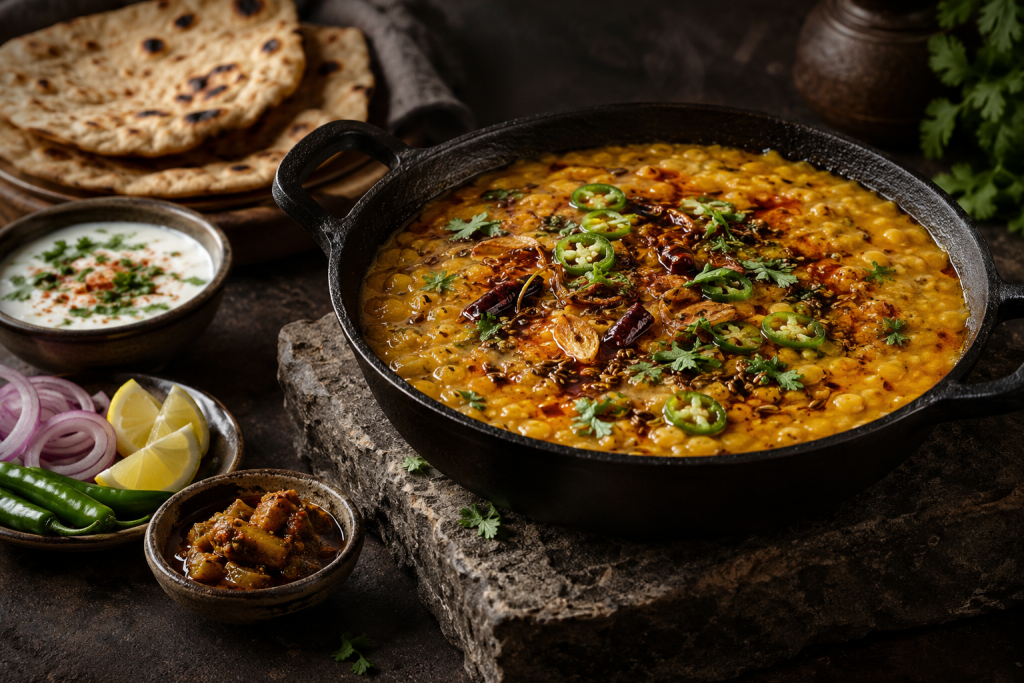
Excludes 60 min soaking, 5 min resting. One tablespoon = 15 ml; one teaspoon = 5 ml.
About Khatti Daal
A tangy, spoonable toor-dal preparation with tomato and tamarind, informed by Sindhi and Hyderabadi approaches.
Personally cooked and tested by Zohair Fakhar for DailyLife.pk. Cooking times can vary with your stove, cookware and batch size; follow the texture and doneness cues in the method.
Make it work for your kitchen
Also known as Khatti Dal, Sour Dal, Imli Daal.
Original quantities serve 4. Cooking times, pan size and frying-oil depth do not scale, cook in extra batches instead.
Before you start
Before you start
Read the recipe and measure ingredients Sort and rinse dried pulses; prepare aromatics and measure spices before heating the pan. Coordinate simmering and masala preparation in parallel. None Included in preparation time
Set up the equipment
Have the following tools ready before starting: Heavy-bottomed lidded saucepan; Wide sauté pan, wooden spoon and ladle; Colander, measuring jug and kitchen scale.
Clean workspaceMeasure the ingredients
Measure the ingredient quantities for your selected servings before applying heat. Keep separately listed groups, such as dough, filling, sauce or garnish, in separate containers; keep any optional additions separate.
Use the ingredient list aboveCheck allergens and substitutions
This recipe contains mustard seeds. Using ghee also introduces milk; choose the listed neutral-oil option if avoiding milk. Check all packaged ingredients, including any spice blends or substitutions, for other allergens and cross-contact.
Before cooking
Step-by-step cooking method
1 Rinse and soak toor dal
Sort and rinse 300 g toor dal, cover generously with clean water and soak 1 hour; drain. This is passive preparation.
2 Start the lentils
Combine drained toor with 950 ml of the listed 1150 ml water and 2 g turmeric. Bring to a boil, skim any foam, then simmer partly covered at low heat about 30–45 minutes, stirring occasionally until grains crush easily. Add reserved water as needed.
3 Soften tomato
Add 200 g chopped tomato and simmer uncovered 8–10 minutes until softened; whisk or mash the dal lightly to a pourable but substantial consistency.
4 Extract and balance tamarind
Cover 22 g tamarind pulp with 100 ml hot water for 8 minutes, massage and strain away fibres and seeds. Add the liquid gradually to dal; add 7 g salt and simmer 3–5 minutes. Taste before adding all the liquid.
5 Prepare the tempering
Heat 35 g oil in a small skillet on medium.
6 Prepare the tempering (continued)
Add 5 g cumin, 3 g mustard and 1 g fenugreek briefly; add 20 g sliced garlic and fry 30–60 seconds until lightly golden, then optional 12 g chilli and 8 g curry leaves briefly (beware sputtering).
7 Prepare the tempering (continued)
Do not burn fenugreek.
8 Finish and rest
Pour hot tempering over gently bubbling dal, stir, and turn off heat. Rest 5 minutes. Serve with rice, which is not included in this recipe or nutrition.
Chef’s tips
- Tamarind brands vary enormously: strain it and add in stages only after lentils are tender, so the dal is bright rather than aggressively sour.
- Adjust free liquid based on actual absorption and pan evaporation; do not scale cooking time automatically.
- Taste salt and chilli at the end; adjust gradually.
Common mistakes & quick fixes
- Dal remains gritty
- Keep simmering before adding tamarind; add hot water as required.
- Dal too sour
- Dilute with more cooked plain dal or water, bring briefly to a simmer and reseason.
- Bitter tarka
- Discard burned fenugreek/garlic and make a small fresh tempering.
Variations & serving ideas
Variation: For a no-mustard household version, omit mustard and curry leaves and use cumin-garlic tempering.
Variation: Use less tamarind for a milder family meal.
Variation: Serve with plain rice or roti, listed separately.
Perfect result check
| Check | Toor dal crushes easily between fingers or against a spoon |
|---|---|
| Check | Sourness is balanced, not sharply puckering |
| Check | Garlic is golden and fenugreek not bitter |
Storage & reheating
| Fridge | 3–4 days | Cooling and refrigeration Refrigerate promptly in shallow containers at or below 4°C within 2 hours (1 hour above 32°C). Use within 3–4 days. |
|---|---|---|
| Freezer | Freezing Freeze promptly in meal portions; best texture varies and texture may soften after freezing. | |
| Reheating | Reheating Reheat until 74°C/165°F throughout, stirring thoroughly; add a little water if dal thickens. |
Know when to change the heat
| Stage | Heat | What to look for |
|---|---|---|
| Simmer toor dal | Bring to a boil, then low | Grains become soft enough to crush easily against a spoon. Stir occasionally and add reserved cooking water if needed. |
| Temper seeds and garlic | Medium, adjusting as needed | Seeds become fragrant and garlic turns lightly golden. Stop before the fenugreek or garlic darkens and tastes bitter. |
Helpful answers before you cook
Can I make this ahead?
Yes. Cool promptly in shallow containers and refrigerate according to the storage section. Dal thickens as it stands; loosen the portion being reheated with a little water and stir so it heats evenly throughout.
When should I add the tamarind?
Cook the toor dal until the grains crush easily, then add the softened tomato and strained tamarind as directed. Add the tamarind liquid gradually and taste before using it all because its sourness varies. Keep the tamarind-extraction water separate from the dal cooking-water allowance.
How do I stop the tarka becoming bitter?
Keep the tempering heat controlled and watch the small fenugreek seeds and sliced garlic closely. The garlic should turn lightly golden rather than dark brown. Have the cooked dal ready so the tempering can be added promptly, and take care with sputtering when adding chillies or curry leaves.