
Kalonji Naan
Press aromatic nigella into a lightly damp surface
Kalonji naan made from a yeast-raised yogurt dough, lightly dampened and topped with nigella seeds before cooking. Cook the unseeded face first on a covered flat griddle, then turn and watch the seeded face to avoid scorching. The original four-serving batch makes six naan.
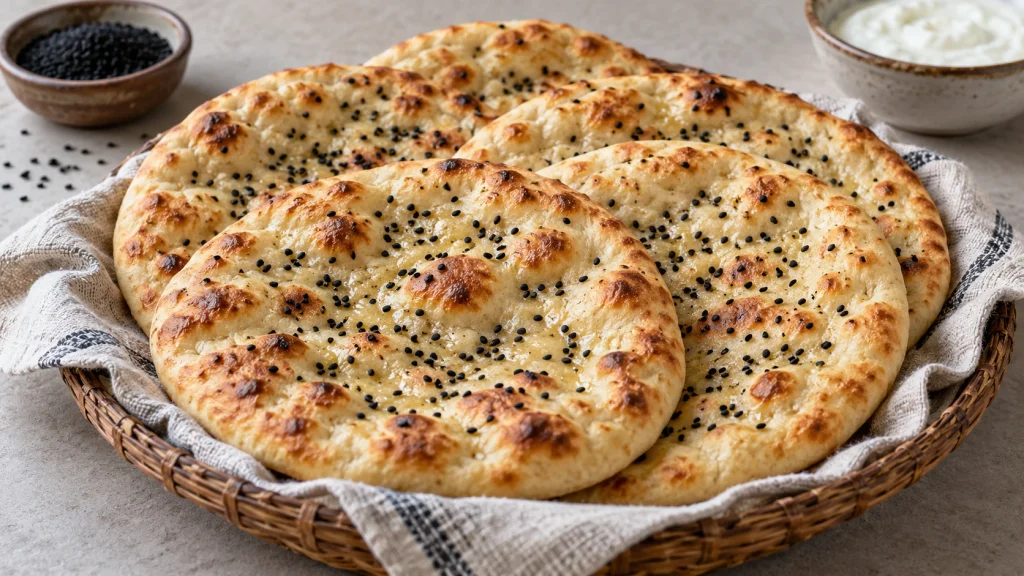
Allow about 60–90 minutes for the first rise and 15 minutes for portioned dough to relax, then shape and apply the seeds before cooking. The original four-serving batch makes six naan and allows about 25 minutes for griddle cooking including handling and heat recovery. Two servings make three naan; eight make twelve and need extra cooking time. A cool room can extend the rise and total elapsed time beyond three hours; avoid direct heat to speed it up. This is a planning estimate. One tablespoon = 15 ml; one teaspoon = 5 ml.
About Kalonji Naan
Kalonji naan finishes a simple soft naan dough with nigella seeds. A small measured amount gives a distinct savoury aroma; heavy handfuls can overwhelm the bread and become bitter when scorched.
The dough is deliberately soft, but it should hold a rounded shape after kneading. Instant yeast supplies the lift; the yogurt contributes tenderness and acidity rather than acting as a fermentation starter. Temperature changes rising time, so use expansion and a puffy feel as the main cues. Shape one bread at a time while the remaining portions stay covered. The finishing step is part of this formulation, so measure it separately from the dough ingredients.
Personally cooked and tested by Zohair Fakhar for DailyLife.pk. Cooking times can vary with your stove, cookware and batch size; follow the texture and doneness cues in the method.
Make it work for your kitchen
Original quantities serve 4. Cooking times, pan size and frying-oil depth do not scale, cook in extra batches instead.
Before you start
Measure before mixing
Set out the flour, initial liquid and top-up separately. Flour brands absorb differently, so the allowance is a correction rather than an instruction to use every drop. Keep the finishing flour separate from the dough flour.
HydrationPrepare a cooking station
Keep the rolling surface dry, the uncooked portions covered and a cloth-lined plate close to the stove. Cook one bread first and inspect its middle before shaping the whole batch; this catches a cold griddle or overly thick rolling early.
WorkflowSet up the equipment
Have the following tools ready before starting: Digital kitchen scales; Mixing bowl and close-fitting cover; Rolling pin; Heavy flat griddle with heat-safe lid; Small bowl and brush for surface water; Spatula; Clean cloth.
Clean workspaceMeasure the ingredients
Measure the ingredient quantities for your selected servings before applying heat. Keep separately listed groups, such as dough, filling, sauce or garnish, in separate containers; keep any optional additions separate.
Use the ingredient list above
Step-by-step cooking method
1 Mix the dough
Mix the dough portion of flour with instant yeast, sugar and salt. Stir yogurt, oil and the listed initial lukewarm water together and add to the flour. Keep the separate top-up water, dusting flour and surface water aside.
2 Mix the dough (continued)
Knead 8–10 minutes until soft and smooth, adding reserve water only if needed. Do not use hot water: it can damage the yeast. Cover and leave in a comfortably warm place until roughly doubled, usually 60–90 minutes; a cool room can require longer.
3 Portion and relax
Press out large gas pockets gently and divide into equal balls for your selected servings: six for the original four-serving batch, three for two servings or twelve for eight. Tuck the edges underneath and rest covered for 15 minutes. They should feel airy again and flatten without strong spring-back.
4 Shape
Roll or stretch one ball to an oval approximately 18 by 12 cm and about 5 mm thick. Keep the centre even and use only a light dusting of flour. Brush loose flour from both faces before moving it to the pan.
5 Apply the seeds before cooking
After shaping, lightly dampen the upper face of each naan using the separately listed surface water. Divide the listed nigella seeds evenly across all naan for your selected servings and press gently so they adhere. Keep the other face unseeded.
6 Cook the unseeded side covered
Preheat a heavy griddle over medium-high heat. Add one naan with its unseeded side against the griddle and cover with a heat-safe lid for 60–90 seconds. Lift the lid away from your face; the top should be puffy and mostly opaque. Reduce heat if the base blackens before bubbles appear.
7 Turn and watch the seeded face
Turn and cook uncovered for 60–90 seconds until browned patches form. Watch the seeded face closely: lightly toasted seeds are enough, and blackened flour around them signals excessive heat. Lower the heat if necessary.
8 Finish and inspect
Turn briefly again if a side remains damp. Check a thick edge of the first naan for a cooked crumb, then hold briefly under a clean cloth. Serve warm and avoid compressing the stack while it is steaming.
Chef’s tips
- Keep portions covered while working; a dry skin makes seams and edges split.
- Brush away surplus dusting flour before cooking so it does not burn and taste bitter.
- Scale ingredient weights for a different yield, but keep individual bread size, pan capacity and cooking cues the same.
Common mistakes & quick fixes
- The bread tears or cracks while shaping.
- Cover and rest the dough for another 10 minutes. If it still fractures, knead in a little of the measured top-up; do not bury sticky dough under repeated handfuls of flour.
- Outside browns before the middle cooks.
- Reduce the heat slightly and check the specified thickness. Cook a little longer, turning as needed; do not increase the heat to compensate for thick rolling.
- Bread becomes tough before serving.
- Avoid prolonged cooking after the raw patches disappear. Hold only briefly in the suggested covering and serve the first batch promptly.
Variations & serving ideas
Serving adjustment: Make smaller breads by dividing the same dough into more portions. Keep the stated thickness and reduce cooking only when the centre is cooked; portion count is not a reliable timing formula.
Perfect result check
| Shape | The bread has an even centre and edges, without torn seams or a heavy ridge. |
|---|---|
| Interior | A cooled test piece tears cleanly, with no sticky raw flour line in the middle. |
| Eating texture | Serve warm, when the bread bends without feeling gummy or leathery. |
Storage & reheating
| Refrigerate | Up to 48 hours | Cool promptly, then wrap so the bread does not dry out. Refrigerate filled or dairy-rich bread within two hours; reheat thoroughly once. |
|---|---|---|
| Freeze | Up to 1 month for best texture | Separate cooled breads with baking paper and seal. Defrost in the refrigerator if filled; reheat covered briefly, then uncover to restore the surface. |
Know when to change the heat
| Stage | Heat | What to look for |
|---|---|---|
| Preheat | Medium-high; preheat the heavy flat griddle | Apply the surface water and nigella before cooking. Put the unseeded side against the griddle first and cover for 60–90 seconds until the top is puffy and mostly opaque. |
| Cook | Adjust after the first naan; lower if the seeds or flour darken too fast | After turning, cook uncovered for 60–90 seconds and watch the seeded face closely. Check a thick edge of the first naan for cooked crumb; blackening before the centre cooks means the surface is too hot. |
Helpful answers before you cook
Is kalonji black sesame?
No. Kalonji means nigella in this recipe. The flavour and seed type differ, so identify the ingredient rather than buying by colour alone.
Why do the seeds fall off?
Press them gently into the slightly damp shaped dough before cooking. A dry flour-covered surface does not hold seeds well.
Why do the seeds taste bitter?
Too many seeds or scorching can overwhelm the mild bread. Use the measured amount and watch the seeded face after turning.


