Grilled Fish
Support delicate fish and control surface heat
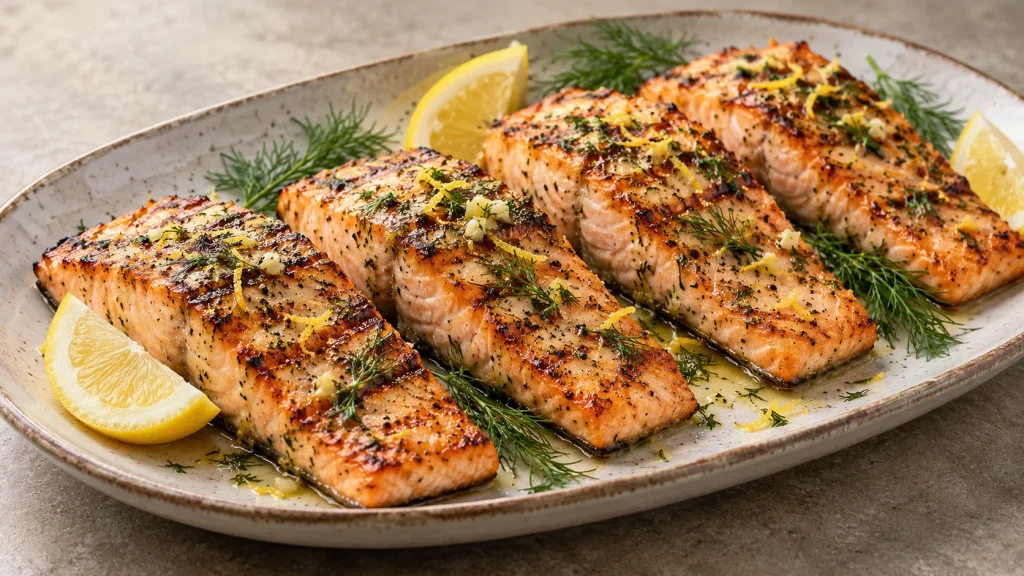
Skin-on salmon portions are seasoned with lemon zest, dill and garlic, then cooked over direct and indirect grill zones. A wide fish spatula supports the fillets when turning, with lemon juice reserved for the finished fish.
Allow 25 minutes preparation, approximately 15 minutes cooking and 12 minutes nonoverlapping waiting. Check for pin bones and pat skin thoroughly dry. Keep four portions at a similar 2.5 cm thickness; separate thin belly flaps if they would otherwise overcook. Cooking ranges are guides: retain the stated doneness checks when your pan, meat age or portion thickness changes. One tablespoon = 15 ml; one teaspoon = 5 ml.
About Grilled Fish
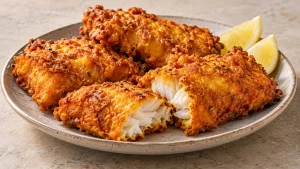
Grilled fish is a skin-on salmon fillet preparation with lemon zest, black pepper and dill. This broad catalogue title is given an explicit species and format rather than implying one method fits every fish. Salmon's firm oily flesh tolerates a clean grill well, but the skin needs time to release naturally before the portion is moved.
Personally cooked and tested by Zohair Fakhar for DailyLife.pk. Cooking times can vary with your stove, cookware and batch size; follow the texture and doneness cues in the method.
Make it work for your kitchen
Original quantities serve 4. Cooking times, pan size and frying-oil depth do not scale, cook in extra batches instead.
Before you start
Prepare the batch
Check for pin bones and pat skin thoroughly dry. Keep four portions at a similar 2.5 cm thickness; separate thin belly flaps if they would otherwise overcook.
Cut and portion before heatingKeep the work area ready
Keep raw seafood chilled until its cooking step; thaw frozen seafood in the refrigerator and pat it dry. Set aside a clean serving dish and clean utensils before handling raw protein. Do not return cooked food to the unwashed raw-food plate. Measure spices separately so they can enter the pan at the intended stage rather than burning while you find the next jar.
Food handlingSet up the equipment
Have the following tools ready before starting: Digital kitchen scale; Measuring jug and 5 ml / 15 ml spoons; Sharp knife and separate raw-protein board; Heavy pan sized for the stated batch; Instant-read food thermometer; Covered outdoor grill with direct and indirect heat zones.
Clean workspaceMeasure the ingredients
Measure the ingredient quantities for your selected servings before applying heat. Keep separately listed groups, such as dough, filling, sauce or garnish, in separate containers; keep any optional additions separate.
Use the ingredient list above
Step-by-step cooking method
1 Inspect and dry
Check for pin bones and pat skin thoroughly dry. Keep four portions at a similar 2.5 cm thickness; separate thin belly flaps if they would otherwise overcook.
2 Inspect and dry (continued)
Pat dry with disposable towel. Keep raw fish cold while making the seasoning, and prepare a clean serving platter before touching raw pieces. Uniform thickness gives more reliable cooking than dividing solely by weight.
3 Apply the measured seasoning
Mix all seasoning ingredients with 15 ml of the oil and coat the fish evenly, including any shallow slashes. Cover and refrigerate for 10 minutes. This brief acid contact is for flavour, not a substitute for cooking; do not leave fish in an acidic marinade overnight, which can make its surface chalky.
4 Prepare heat and support
Preheat a clean outdoor grill to medium-high with an indirect cooler side. Start the salmon skin-side down on the greased grate; keep a wide fish spatula ready.
5 Prepare heat and support (continued)
Use the remaining 10 ml oil to grease the cooking surface. Keep a wide fish spatula or two turners ready so the fish is lifted rather than squeezed. Do not scrape marinade from raw fish onto a cooked portion at the end.
6 Cook to the centre
Cook skin-side down 6–8 minutes with lid closed, then turn gently and cook the flesh face for 1–3 minutes. Finish on the indirect side if needed without blackening the skin. Check the thickest fish reaches 63°C and flakes with no translucent centre.
7 Cook to the centre (continued)
Insert the probe sideways where possible, avoiding metal skewers or backbone. Surface charring is optional; complete centre cooking is not. Move to gentler heat if the coating darkens too soon.
8 Lift and finish
Rest for 2 minutes, then lift to the clean serving dish without dragging the skin off. Spoon over the measured lemon juice. Serve promptly, warning about remaining bones for whole or steak cuts. Discard leftover raw marinade and use clean utensils for portioning the cooked fish.
Chef’s tips
- Check for pin bones and pat skin thoroughly dry. Keep four portions at a similar 2.5 cm thickness; separate thin belly flaps if they would otherwise overcook.
- Use the same thickness of another firm fish if the named species is unavailable, and label the substitution clearly; bones and skin alter handling even when the weights match.
- A 5 ml teaspoon and 15 ml tablespoon are used throughout. Weigh salt where possible because crystal sizes vary. Add any top-up water in the listed small increments and stop once the required texture is reached.
Common mistakes & quick fixes
- Fish breaks when turned
- Leave the first surface until it sets, use a wide oiled spatula and turn only as often as the method requires. A whole-fish basket can support fragile skin.
- Uneven finish between pieces
- Sort by thickness before cooking and check the largest piece separately. Move smaller finished pieces to a clean warm dish while thicker ones finish; do not assume colour alone proves that the centre is cooked.
Variations & serving ideas
A practical adjustment: Use the same thickness of another firm fish if the named species is unavailable, and label the substitution clearly; bones and skin alter handling even when the weights match.
Perfect result check
| Texture and structure | Leave the first surface until it sets, use a wide oiled spatula and turn only as often as the method requires. A whole-fish basket can support fragile skin. |
|---|---|
| Final seasoning | Taste only after the protein is fully cooked. The named principal ingredient should remain distinct, with no scorched spice bitterness or raw garlic edge. |
Storage & reheating
| Refrigerate | Within 2 hours; use within 48 hours | Divide into shallow portions promptly; refrigerate at 5°C or colder. Do not leave a deep cooking pot on the counter to cool. |
|---|---|---|
| Freeze | Up to 2 months for quality | Pack cooled portions airtight, label and freeze. Thaw in the refrigerator. Reheat one portion once to 74°C throughout; add a small measured splash of water only where a sauce needs loosening. |
Know when to change the heat
| Stage | Heat | What to look for |
|---|---|---|
| Set direct and indirect zones | Medium-high direct heat with a cooler side | Start the salmon skin-side down on a clean greased grate, with a wide fish spatula ready. Keep thin pieces separate so they can be removed earlier. |
| Turn and finish the centre | Direct heat, then indirect if needed | Lift gently once the first face releases. Move the fish to the cooler side if the surface darkens before the stated centre check is met; avoid blackening the skin to chase extra colour. |
Helpful answers before you cook
Must salmon stay rare to remain moist?
No. This formulation uses the official 63°C endpoint. Even thickness and prompt removal at that point help preserve moisture.
Can frozen fish be used?
Yes. Thaw fully in the refrigerator and dry carefully before seasoning; partially frozen centres cannot follow the stated timing reliably.
How can I avoid dry fish?
Keep portions even, check the thickest centre early and remove at 63°C rather than extending the cook to force darker colour. Thin tail pieces may need removing first.