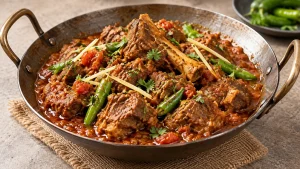
Dum Pukht
دم پخت
Very low, closely monitored covered cooking in heavy pot; not pressure cooking
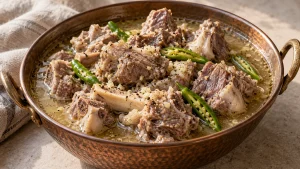
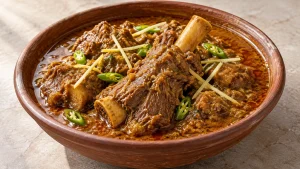
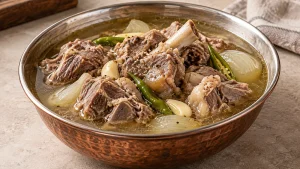
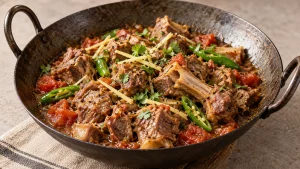
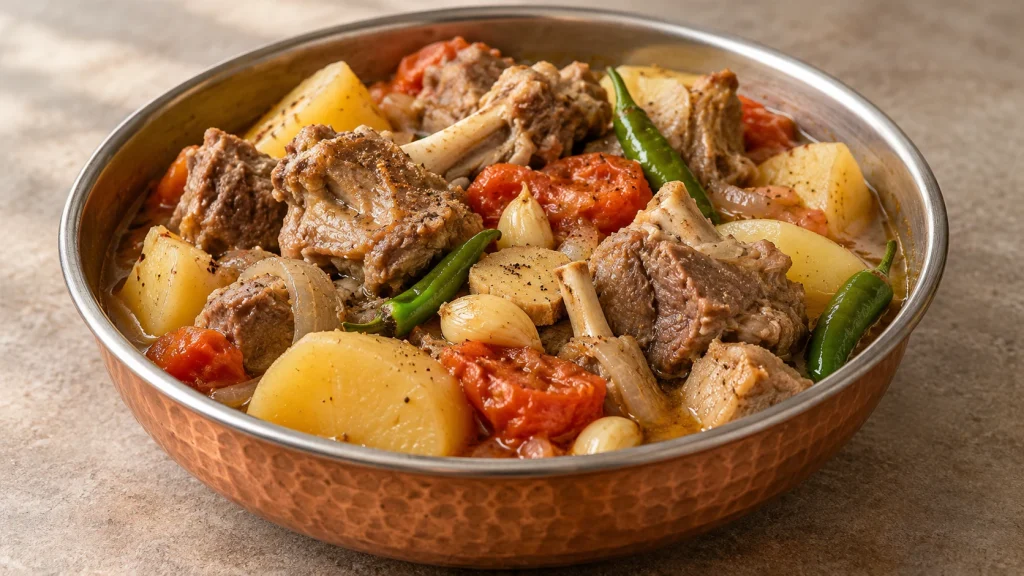
Slow-cooked mutton and vegetables in a tightly covered heavy pot with very restrained seasonings, based on the Pashtun/Khyber Pakhtunkhwa sealed-pot tradition.
Total includes 10 min of passive time described in the preparation and method. One tablespoon = 15 ml; one teaspoon = 5 ml.
About Dum Pukht
Slow-cooked mutton and vegetables in a tightly covered heavy pot with very restrained seasonings, based on the Pashtun/Khyber Pakhtunkhwa sealed-pot tradition.
Personally cooked and tested by Zohair Fakhar for DailyLife.pk. Cooking times can vary with your stove, cookware and batch size; follow the texture and doneness cues in the method.
Make it work for your kitchen
Also known as Dampukht, Dum Pokht, Dum Pukht Gosht.
Original quantities serve 6. Cooking times, pan size and frying-oil depth do not scale, cook in extra batches instead.
Before you start
Before you start
Inspect butcher-prepared meat for bone fragments; do not wash raw meat. Measure all ingredients separately; 1 tablespoon = 15 ml and 1 teaspoon = 5 ml. Plan vessel capacity, mild simmer and storage containers before beginning.
Set up the equipment
Have the following tools ready before starting: Large heavy-bottomed lidded cooking pot rated for intended heat source; Kitchen scale and measuring jug; Food thermometer; Long stirring spoon, tongs and shallow cooling containers.
Clean workspaceMeasure the ingredients
Measure the ingredient quantities for your selected servings before applying heat. Keep separately listed groups, such as dough, filling, sauce or garnish, in separate containers; keep any optional additions separate.
Use the ingredient list aboveCheck allergens and substitutions
Check ingredient labels and any substitutions against these notes: Dairy (ghee), if included; check ingredient substitutions
Before cooking
Step-by-step cooking method
1 Prepare the heavy pot
Inspect bone-in mutton or goat chunks, raw for bone fragments. Cut potatoes in large chunks into large pieces; slice sliced onion, quarter ripe tomatoes, quartered, cut ginger, thick slices and peel garlic cloves, peeled.
2 Layer vegetables and meat
Spread sliced onion and ripe tomatoes, quartered over the base of a heavy lidded pot. Place bone-in mutton or goat chunks, raw above them; tuck in ginger, thick slices, garlic cloves, peeled and potatoes in large chunks.
3 Season and add limited moisture
Distribute fine salt, cracked black pepper, ghee and optional whole green chillies. Pour in initial hot water, keeping initial liquid shallow rather than submerging everything.
4 Bring to a gentle simmer
Heat over medium-low just until light steam forms. Reduce promptly to low and cover. Do not leave a dry, sealed vessel unattended.
5 Slow-cook, checking safely
Cook covered at the lowest heat that maintains a gentle simmer, checking moisture and turning the meat periodically using steam-safe technique.
6 Slow-cook, checking safely (continued)
Add measured hot water only if necessary. Meat should become fork-tender and reach the applicable safety target.
7 Check vegetables and liquid
Test potatoes in large chunks for tenderness; if tender early, carefully remove and return for the finish. Simmer briefly uncovered only if the juices need slight reduction.
8 Rest and present
Switch off heat, allow steam to subside before opening away from the face, rest covered, remove bone fragments and serve meat and vegetables with their juices.
Chef’s tips
- Use controlled gentle heat after initial browning; tough meat requires more time, not higher heat.
- Measure any extra water added and document finished yield before nutrition calculation.
- Scale ingredients by weight; pot size, evaporation and cooking duration require human judgment.
Common mistakes & quick fixes
- Meat remains tough
- Add measured hot water if needed and continue a gentle covered simmer until tender.
- Pan begins catching
- Immediately lower heat; transfer unburnt food to a clean pot rather than scraping a scorched base.
- Gravy too thin or too thick
- Reduce gradually or add measured hot liquid; do not change thickener blindly.
Variations & serving ideas
Variation: Adjust chillies to taste without assuming other ingredient or cooking times stay identical.
Variation: Serve with naan, roti or rice; accompaniments are excluded from nutrition.
Variation: Alternative animal cuts require separate tenderness, yield and nutrition verification.
Perfect result check
| Check | Meat is fully cooked, sufficiently tender and checked with a thermometer. |
|---|---|
| Check | No loose bone fragments remain in portions. |
| Check | Potatoes hold their shape and the meat and vegetables are served with moist cooking juices. |
Storage & reheating
| Fridge | Cool promptly in shallow covered containers; refrigerate within 2 hours, or within 1 hour if ambient temperature exceeds 32°C. | |
|---|---|---|
| Fridge | 3–4 days | Refrigerate at 4°C or colder, use within 3–4 days or freeze promptly. |
| Reheating | Reheat leftovers thoroughly to 74°C (165°F); discard improperly stored food. |
Know when to change the heat
| Stage | Heat | What to look for |
|---|---|---|
| Prepare the heavy pot | No heat | Meat is checked for fragments and vegetables are prepared before layering. |
| Layer vegetables and meat | No heat | Onions and tomatoes line the base; meat and remaining vegetables are arranged above. |
| Season and add limited moisture | No heat | Seasoning and fat are distributed; initial water stays shallow rather than covering all the ingredients. |
| Bring to a gentle simmer | Medium-low heat | Gentle bubbling begins before the heat is lowered and the pot covered. |
| Slow-cook, checking safely | Low heat | Maintain a gentle simmer and check moisture; continue until the meat is fork-tender. |
| Check vegetables and liquid | Low heat | Potatoes are tender without collapsing; reduce excess juices briefly only if needed. |
| Rest and present | No heat | Open the lid away from your face once steam subsides; serve the tender meat and vegetables with their juices. |
Helpful answers before you cook
What if the pot starts to dry before the meat is tender?
Check the moisture during the covered cooking stage. Lower the heat if the contents catch and add a small measured amount of hot water only as needed. Continue at a gentle simmer; do not leave a drying pot unattended.
What if the potatoes cook before the meat?
Carefully lift out potatoes once tender and keep them covered while the meat continues cooking. Return them near the finish to heat through without prolonged stirring that breaks them apart.
Should Dum Pukht have a thick gravy?
This version serves meat and vegetables with their own cooking juices. Reduce briefly uncovered only if those juices are too watery. Avoid cooking the pot dry or reducing it into a heavily fried masala.