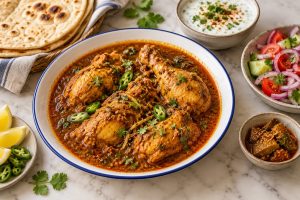
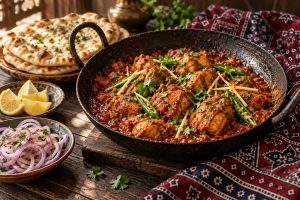
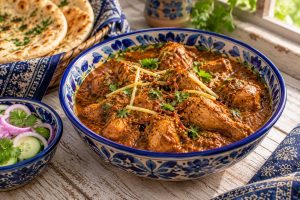
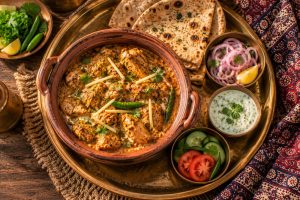
Chicken Do Pyaza
چکن دو پیازہ
Stovetop heavy pan or karahi
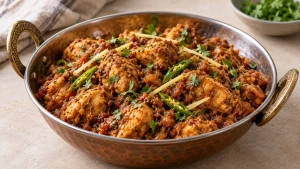
Pakistani chicken curry with onions used in two distinct stages: softened in the gravy and quickly sautéed for a firmer finishing bite.

Total includes 5 min of passive time described in the preparation and method. One tablespoon = 15 ml; one teaspoon = 5 ml.
About Chicken Do Pyaza
Pakistani chicken curry with onions used in two distinct stages: softened in the gravy and quickly sautéed for a firmer finishing bite.
Personally cooked and tested by Zohair Fakhar for DailyLife.pk. Cooking times can vary with your stove, cookware and batch size; follow the texture and doneness cues in the method.
Make it work for your kitchen
Also known as Chicken Dopiaza, Murgh Do Pyaza.
Original quantities serve 4. Cooking times, pan size and frying-oil depth do not scale, cook in extra batches instead.
Before you start
Before you start
Weigh ingredients; chop vegetables before handling raw chicken. Keep raw chicken refrigerated and separate from ready-to-eat ingredients. Do not wash raw chicken. Prepare finishing ingredients in separate bowls.
Set up the equipment
Have the following tools ready before starting: Heavy-based karahi or wide deep pan with lid; Kitchen scale and measuring spoons; Digital probe thermometer; Clean chopping board and spatula.
Clean workspaceMeasure the ingredients
Measure the ingredient quantities for your selected servings before applying heat. Keep separately listed groups, such as dough, filling, sauce or garnish, in separate containers; keep any optional additions separate.
Use the ingredient list aboveCheck allergens and substitutions
Check ingredient labels and any substitutions against these notes: Milk (yogurt)
Before cooking
Step-by-step cooking method
1 Prepare two onion textures
Finely chop onion and cut extra onions for finish into broad petals; keep separate. Whisk plain unsweetened yogurt.
2 Brown the first onions
Heat about 30 ml from neutral cooking oil over medium heat; cook onion 8–10 minutes until light gold. Stir in ginger-garlic paste for 1 minute.
3 Cook chicken and spices
Add raw boneless chicken thigh and turn 5–6 minutes; stir in ground turmeric, ground red chilli, ground coriander, cumin seeds and fine salt.
4 Make the yogurt-tomato gravy
Stir in tomatoes; cook uncovered 7–9 minutes until thick.
5 Make the yogurt-tomato gravy (continued)
Lower heat, add plain unsweetened yogurt in small additions, then add some of water if required to prevent sticking.
6 Simmer to a safe centre
Cover and simmer gently about 14–20 minutes until the chicken registers 74°C/165°F in the thickest piece.
7 Simmer to a safe centre (continued)
Uncover for the last few minutes if the sauce is too loose.
8 Add the second onions
In a separate pan warm the remaining 15 ml from neutral cooking oil and quickly sauté extra onions for finish 2–4 minutes to soften the surface without turning mushy; fold into chicken with garam masala, optional lemon juice and fresh coriander leaves.
Chef’s tips
- Cut chicken pieces to similar size for even cooking.
- Taste salt and acidity only after the chicken is fully cooked.
- Keep the sauce gently simmering; boiling hard after yogurt can cause splitting.
Common mistakes & quick fixes
- Chicken cooked but sauce watery
- Remove lid and reduce over medium heat while stirring; do not overcook chicken.
- Masala catches at the bottom
- Reduce flame and add 1–2 tbsp from the measured water, scraping gently.
- Chicken seems cooked by colour only
- Verify 74°C/165°F using a probe thermometer.
Variations & serving ideas
Variation: Reduce chilli for a mild family version; do not replace the signature distinguishing aromatics.
Variation: Use boneless breast if preferred but monitor doneness closely to avoid dryness.
Variation: Serve with fresh chapati or plain basmati rice (accompaniments excluded from nutrition).
Perfect result check
| Check | Chicken reaches 74°C internally |
|---|---|
| Check | Tomato-yogurt masala coats the chicken, with the final onion petals still distinct. |
| Check | No excessive surface oil pooling; seasoning balanced after tasting |
Storage & reheating
| Cooling | Refrigerate in shallow covered containers within 2 hours (1 hour above 32°C/90°F). | |
|---|---|---|
| Fridge | 3–4 days | Use refrigerated cooked leftovers within 3–4 days, or freeze promptly; thaw in refrigerator. |
| Reheating | Reheat leftovers to 74°C/165°F throughout. Do not repeatedly warm the entire batch. |
Know when to change the heat
| Stage | Heat | What to look for |
|---|---|---|
| Prepare two onion textures | No heat | Have finely chopped onion and broad petals in separate bowls, with smooth whisked yogurt ready. |
| Brown the first onions | Medium heat | The base onion should become light golden without black edges; ginger-garlic should smell fragrant. |
| Cook chicken and spices | Medium heat | Turn chicken through the spices for even coating; surface colour is only an intermediate cue. |
| Make the yogurt-tomato gravy | Low to medium heat | Reduce tomato before adding yogurt gradually over gentle heat. Use water only if the base needs moisture. |
| Simmer to a safe centre | Low heat | Keep a gentle simmer and confirm 74°C/165°F in the thickest chicken centre. Reduce excess sauce uncovered if needed. |
| Add the second onions | Medium-high then off | Finishing petals should be just softened and remain distinct when folded into the chicken. |
Helpful answers before you cook
Why are there two separate onion additions?
The finely chopped onion cooks into the masala, while the broad petals are sautéed separately and folded in at the end for a distinct texture. Keep them separate during preparation rather than adding all the onion at the start.
Can I prepare the masala ahead?
Yes. Prepare and promptly chill the cooked base separately, then reheat thoroughly before cooking fresh chicken. For better texture, sauté and add the finishing onion petals near serving. Keep the original storage clock for the base and follow the poultry temperature check.
How do I stop the finishing onion petals going mushy?
Cut broad even petals and sauté them briefly in a separate pan until their surfaces soften but they still hold their shape. Fold them into the cooked chicken gently near the end, rather than simmering them through the full gravy stage.