Beef Lasagna
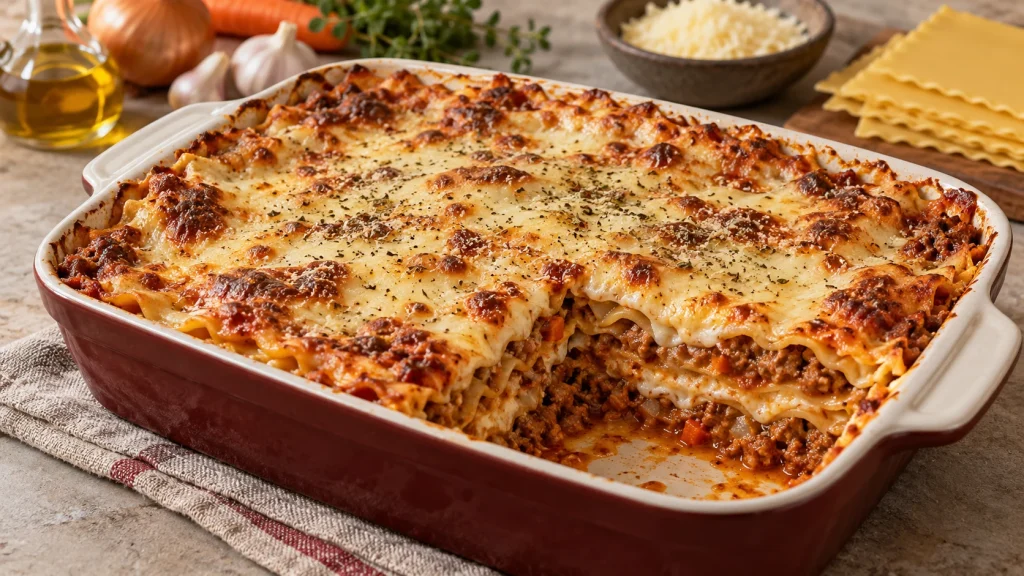
Beef tomato ragù lasagna with béchamel
One 30 × 20 × 6 cm dish; six portions
Allow about 135 minutes for this base batch. Ingredient thickness, burner strength and oven recovery affect the range. The method identifies work that may overlap; use safe doneness and texture cues rather than extending or shortening cooking solely to match the clock. One tablespoon = 15 ml; one teaspoon = 5 ml.
About Beef Lasagna
A six-portion layered bake with pre-boiled sheets, measured tomato ragù and milk béchamel. Beef ragù is reduced enough to support layers without making the sheets dry.
This original formulation defines the style and portion size rather than assuming the catalogue title has only one interpretation. Follow the order of work so components are ready together. The stated times are estimates for a domestic kitchen, not evidence of a kitchen test.
Personally cooked and tested by Zohair Fakhar for DailyLife.pk. Cooking times can vary with your stove, cookware and batch size; follow the texture and doneness cues in the method.
Make it work for your kitchen
Original quantities serve 6. Cooking times, pan size and frying-oil depth do not scale, cook in extra batches instead.
Before you start
Identify the chosen style
A six-portion layered bake with pre-boiled sheets, measured tomato ragù and milk béchamel. Beef ragù is reduced enough to support layers without making the sheets dry.
Recipe scopeMeasure and separate
Cut ingredients to the sizes listed and measure liquids before heating. Keep ready-to-eat garnishes on a clean board separate from raw meat. Make any cold dressing in a clean bowl and refrigerate it until assembly.
PreparationSet up the equipment
Have the following tools ready before starting: 30 × 20 × 6 cm baking dish; Rimmed baking tray; 4 litre pasta pot; 28 cm sauté pan; 3 litre saucepan; Whisk; Food thermometer.
Clean workspaceMeasure the ingredients
Measure the ingredient quantities for your selected servings before applying heat. Keep separately listed groups, such as dough, filling, sauce or garnish, in separate containers; keep any optional additions separate.
Use the ingredient list above
Step-by-step cooking method
1 Cook a concentrated ragù
Soften onion and carrot in oil in a 28 cm pan 8–10 minutes. Add garlic 30 seconds, then mince. Break into small crumbs and cook 8–10 minutes to 71°C.
2 Cook a concentrated ragù (continued)
Stir in tomato paste 1 minute, then tomatoes, stock, ragù salt and oregano. Simmer partly covered 25–35 minutes until thick but spoonable. Use top-up water 20 ml at a time only if needed.
3 Make béchamel
Melt butter in a 3 litre pan, add flour and stir gently 2 minutes. Gradually whisk in milk, smoothing each addition. Simmer 5 minutes, scraping the base, then add white-sauce salt and nutmeg. It must pour in a thick ribbon; hold covered on lowest heat, stirring occasionally.
4 Prepare sheets and dish
Heat oven to 190°C conventional. Use a 30 × 20 × 6 cm deep baking dish.
5 Prepare sheets and dish (continued)
Boil sheets in measured salted water in small batches to 2 minutes short of package time; lift onto a clean damp towel without stacking. This liquid ratio is not for dry no-boil sheets, which need manufacturer-specific hydration.
6 Layer without thick overlaps
Spread a thin layer of ragù in the dish. Build three layers of pasta, ragù and white sauce, dividing the components evenly.
7 Layer without thick overlaps (continued)
Reserve enough white sauce to cover the top completely. Scatter mozzarella and hard cheese over the last white-sauce layer. Leave at least 1 cm headroom and put the dish on a rimmed tray.
8 Bake and settle
Cover loosely with foil, keeping it off the cheese. Bake 25 minutes, uncover and bake another 15–20 minutes until the centre reaches 74°C and edges bubble. Rest 15 minutes before cutting into six portions. Cutting immediately produces a loose stack even when fully cooked.
Chef’s tips
- Prepare serving plates before the finishing stage so the intended texture is not lost while waiting.
- Do not crowd the stated pan: larger batches need separate cooking rounds and time for heat to recover.
- Taste the fully cooked component before assembly. Commercial cheeses, bread and sauces vary in salt; never taste raw meat mixture or raw marinade.
Common mistakes & quick fixes
- The outside colours before the centre is ready
- Lower heat and finish gently, checking the centre with a thermometer where relevant. Make the next batch uniform in thickness.
- The finished texture becomes damp
- Drain wet ingredients thoroughly and serve promptly. Trapped steam and heavy sauce soften a crisp surface.
Variations & serving ideas
Portion planning: Divide the complete batch into the stated portions first. For a larger group, multiply measured ingredients but cook in separate batches; heat, oil depth and cooking time do not scale directly.
Perfect result check
| Defining texture | Beef tomato ragù lasagna with béchamel. Follow the size and consistency cues in the steps. |
|---|---|
| Relevant doneness | Minced beef reaches 71°C before assembly. A browned exterior alone is insufficient. |
Storage & reheating
| Refrigerator | Use within 48 hours | Divide pasta or a layered bake into shallow portions and refrigerate at 4°C or colder within 2 hours, or 1 hour above 32°C. Fresh pesto is refrigerated food, never a shelf-stable garlic-oil preserve. This is a conservative editorial limit. |
|---|---|---|
| Reheating | Reheat once | Reheat a portion gently, stirring or turning to avoid cold centres, until 74°C throughout. Dairy emulsions and fresh pesto lose texture; freshly tossed pasta is preferable. |
Know when to change the heat
| Stage | Heat | What to look for |
|---|---|---|
| Cook a concentrated ragù | Medium then low simmer | 45–55 minutes; use the detailed doneness cues in this step. |
| Make béchamel | Medium-low heat | 10 minutes, overlaps ragù; use the detailed doneness cues in this step. |
| Prepare sheets and dish | Boiling water; 190°C oven preheating | 10–15 minutes; use the detailed doneness cues in this step. |
| Layer without thick overlaps | No heat | 10 minutes; use the detailed doneness cues in this step. |
| Bake and settle | 190°C conventional | 55–60 minutes including rest; use the detailed doneness cues in this step. |
Helpful answers before you cook
Should beef ragù be dry before layering?
It should be thick and spoonable, not crumbly or watery. Pre-boiled sheets need enough sauce to remain moist, but a thin stew will not support clean layers.
How do I fix a sauce that tightens while tossing?
Keep the sauce at the stated flowing or spoonable consistency before combining. A layered bake cannot be loosened effectively after its top has set; use its measured liquid from the start.
How do I know the pasta stage is complete?
For lasagna, bake to 74°C centrally and rest 15 minutes before cutting; the sheets must be tender without raw stiff edges.