
Ingredients & Spices · The complete guide
Dried red chillies
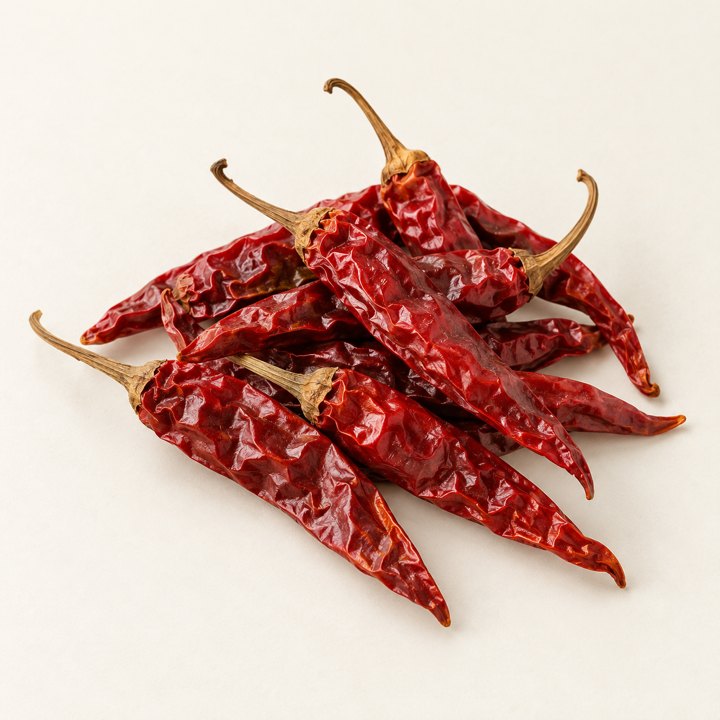
Dried red chillies are whole ripe Capsicum fruits preserved by drying. Sabut lal mirch can mean slim long chillies or round button chillies, among other cultivars.
What it is and names to know
Dried red chillies are whole ripe Capsicum fruits preserved by drying. Sabut lal mirch can mean slim long chillies or round button chillies, among other cultivars. Shape and redness do not guarantee a particular heat level.
Origins, producing regions and Pakistan context
Capsicum was domesticated in the Americas and reached South Asia through post-Columbian exchange. Its powerful role in modern regional tadkas is a subsequent culinary tradition rather than evidence of ancient South Asian origin.
Pakistan and India grow dried chillies; other producing countries include China and Mexico. In Pakistan cultivar, drying and storage affect quality as much as a sellers geographic description. Whole and processed forms can cross borders separately: a spice may be imported, milled and repacked before sale in Pakistan. The growing countries listed here are not a claim about the direct supplier of a particular Pakistani packet.
Background: Royal Botanic Gardens, Kew: plant identity and range.

Types and buying advice
Choose a known cultivar or heat description where possible. Inspect the pods for dampness, insects and mould before grinding.
How to cook with it
Fry whole chillies briefly with a dal tadka, or toast and grind them for a fresh blend. Slit a chilli to release flavour faster, and remove it when a mild infusion is sufficient.
Keep the extractor running and avoid letting chillies turn black. Add the hot tadka to a moist dish carefully, since contact with liquid can spit.
A whole unbroken chilli releases heat more slowly than a torn pod, so the preparation method matters as much as the number used. Remove stalks before grinding and inspect the cavity for mould or insects. Toasting cannot make spoiled chillies acceptable. For a tadka, keep the dal or vegetables ready before heating the oil; a short delay after the pods become fragrant is enough to turn a clean chilli aroma into irritating smoke.
Try the ingredient in Daal Fry, Sarson Ka Saag Makki Ki Roti, Daal Moong. Follow each recipes specified form and quantity, since whole pieces and fine powder season food differently.
For related pantry ingredients, see the Pakistani ingredients and spices guide.
For a mild chilli-infused tadka, keep the pods intact and remove them before serving if desired. For a stronger result, tear them first. A dry pan-roasted chilli intended for grinding should cool before milling; steam trapped in a closed grinder or jar can dampen the powder.
Nutrition and realistic benefits
At the quantities usually used in a household dish, the main benefit is flavour rather than a large contribution of protein, vitamins or minerals. Composition tables often describe 100 grams, far more than an ordinary serving. A small seasoning quantity should not be advertised as a practical way to meet a daily mineral requirement. Aromatic food can help make simple lentils, vegetables and rice appealing, but the whole meals balance of ingredients, salt and fat still matters.
Disadvantages and precautions
Dried chillies can develop mould if damp. Do not grind spoiled pods. Avoid touching your face after handling them, and keep the irritating cooking fumes away from children.
Dry spices are not sterile foods. FDA food-safety guidance explains practical handling. Buying from a traceable food supplier is more dependable than trying to judge safety from appearance alone.
Substitutions and storage
Flakes or powder can replace their heat, but behave differently in oil. Use less at first, especially if the original whole chillies were meant to remain intact.
Keep in a clean, tightly closed food container in a cool dry cupboard, away from the cooker and direct sun. Whole pieces generally retain aroma better than the same spice left ground. Date the jar when opened and buy an amount you can use while fragrant. Crush a small sample periodically: fading aroma means weaker flavour, while dampness, insects or a musty smell are reasons to discard it. Never tip a wet spoon into a dry-spice jar.
Names and forms used in our recipes
View the recipe names covered by this guide
- dried red chillies
- dried whole red chillies
- whole dried red chilli
- whole dried red chillies
Frequently Asked Questions
Does tearing a dried chilli change its effect?
A whole unbroken chilli releases heat more slowly than a torn pod, so the preparation method matters as much as the number used. Remove stalks before grinding and inspect the cavity for mould or insects.
What can I use instead of dried red chillies?
Flakes or powder can replace their heat, but behave differently in oil. Use less at first, especially if the original whole chillies were meant to remain intact.
What is the main caution with dried red chillies?
Dried chillies can develop mould if damp. Do not grind spoiled pods. Avoid touching your face after handling them, and keep the irritating cooking fumes away from children.
Keep Exploring
Related places and stories on DailyLife.pk

How we know this
- Type Explainer
- Sources 4 (2 official/academic)
- Reviewed November 2026
- Disputed points None
4 sources
Photo credits (1)
- Spice market @ Walled City @ Lahore (15449651456).jpg, Guilhem Vellut from Annecy, France, CC BY 2.0, via Wikimedia Commons
