
Ingredients & Spices · The complete guide
Chocolate wafers
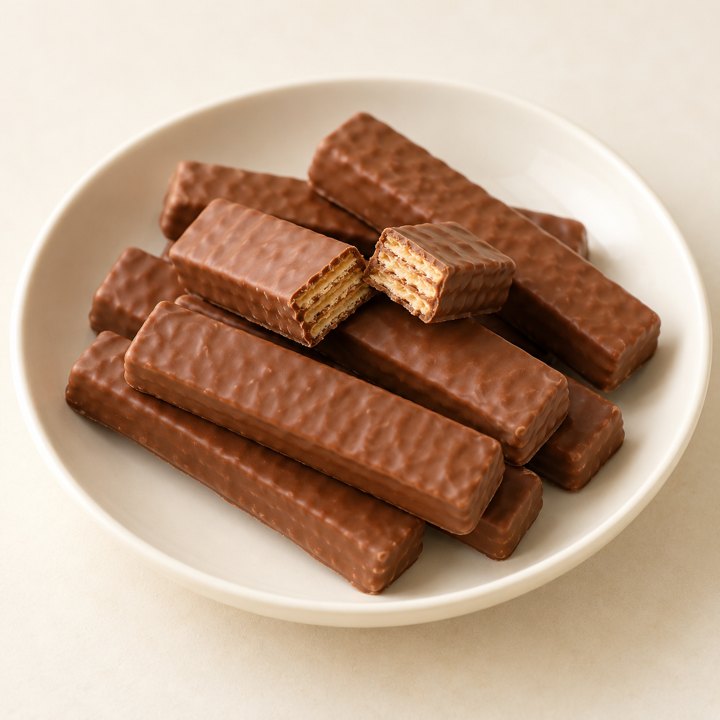
Chocolate wafers are thin baked wafer sheets layered with filling and usually coated in chocolate or compound coating. The linked recipe uses KitKat-style fingers.
What it is and local names
Chocolate wafers are thin baked wafer sheets layered with filling and usually coated in chocolate or compound coating. The linked recipe uses KitKat-style fingers. They differ from a solid chocolate bar and from thin cocoa biscuits sometimes also called chocolate wafers.
Origins and documented history
Nestle documents the 1935 British launch of Rowntree’s Chocolate Crisp, later named KitKat. That is a reliable brand milestone, while wafer baking itself is older. It should not be described as the discovery of chocolate-coated foods in general.
Reference: Nestle: KitKat history.
Types and manufacture
A thin batter is baked between patterned hot plates. Sheets are filled, stacked, cut and coated. Milk, dark and white coatings and flavoured fillings alter sweetness and allergens. The air spaces make the bars light by volume but fragile when handled.
Production, trade and Pakistan
Wafer confectionery is manufactured in many countries using traded cocoa, flour, sugar and fats. Pakistan has imported and locally available branded confectionery. Check the production country on the wrapper rather than treating all products under one brand as identical.
How to use it
Use a short blend in a cold milkshake to retain some wafer character. For a garnish, keep fingers whole and dry until serving; they soften quickly against milk foam or ice cream. Count by weight if replacing one bar size with another.
Nutrition, benefits and limits
They supply sugar, refined flour and fat rather than a substantial portion of whole grain or protein. Their airy texture can make a large-looking garnish seem lighter nutritionally than it is.
Drawbacks, allergens and precautions
Wheat, milk and soy are common possibilities, and fillings may introduce nuts. Read each wrapper. Warm storage can damage the coating and leave a greasy or bloomed surface.
Substitutions and storage
Another chocolate-coated wafer can substitute by weight. A plain chocolate bar gives stronger chocolate and loses the brittle wafer texture. A dry wafer biscuit plus a small amount of chocolate is closer in structure.
Store cool, dry and sealed. Do not keep unwrapped fingers in a refrigerator where condensation and odours can soften them. Assemble garnishes at the last practical moment.
Selecting biscuits for a dessert
Texture matters as much as flavour when a biscuit becomes a dessert ingredient. A dry, crisp biscuit gives a more predictable crumb base than one softened by humidity. Weigh crumbs after crushing, because different shapes pack differently into a measuring cup. For a pressed base, add melted fat gradually and squeeze a small handful: it should hold together without leaving an oily puddle. Chill the base before filling it, and allow for the sweetness already present before adding sugar to the cream or cheesecake mixture.
Preserving contrast and controlling moisture
Crushed biscuits can supply crunch, while whole biscuits can provide structure or absorb a flavoured liquid. These jobs require different timing. Add a crisp garnish close to serving, especially beside ice cream or a cold drink where condensation softens it quickly. For a layered dessert, use a brief dip or a measured drizzle rather than a long soak unless the recipe specifically calls for one. Freeze a test portion if planning ahead: some fillings release water after thawing, turning an initially firm biscuit layer into a wet paste.
Reading the label and the portion
Biscuits are composite foods, so their nutrition and allergens depend on the complete formula rather than the name of the biscuit alone. Wheat, milk, eggs, soy and nuts can occur as ingredients or through shared production lines. A biscuit promoted for a flavour or tradition is still usually a source of refined flour, sugar and fat. It can play a useful culinary role without being a fibre supplement or a meal replacement. Check the actual pack sold in Pakistan, since an imported version may differ from a locally manufactured version.
Making a substitution work
For a crumb base, replace by weight and adjust the binding fat gradually rather than using the full quantity at once. A very sweet or filled biscuit may need less added sugar; a dry, low-fat biscuit may need more binding fat. For a soaked dessert, the replacement must survive a brief dip yet soften pleasantly after chilling. For a garnish, flavour and crispness may matter more than absorption. Keep a spoonful of spare crumbs aside before assembling the whole dish so that you can correct a base or add a fresh contrast at serving.
Recipes and the Pakistani pantry
Use this ingredient in Kitkat Milkshake. Explore related ingredients in the Pakistani ingredients and spices pantry.
Names and forms used in our recipes
View the recipe names covered by this guide
- kitkat wafers
Frequently Asked Questions
What should I check when buying chocolate wafers?
Choose fresh crisp coated wafers with intact wrappers. Check bar weight and allergens rather than relying on the number of fingers.
What can replace chocolate wafers in a recipe?
Another chocolate-coated wafer can substitute by weight. A plain chocolate bar gives stronger chocolate and loses the brittle wafer texture.
How should chocolate wafers be stored?
Store cool, dry and sealed. Do not keep unwrapped fingers in a refrigerator where condensation and odours can soften them.
Keep Exploring
Related places and stories on DailyLife.pk

How we know this
- Type Explainer
- Sources 5 (1 official/academic)
- Reviewed November 2026
- Disputed points None
