
Heritage trail
A Sufi Shrine Trail: Lahore, Multan, Uch and Sindh
Four routes linking the great Sufi shrines of Pakistan, from Data Darbar and Baba Farid to the tiled tombs of Multan and Uch and the shrines of Sehwan and Bhit Shah, with notes on etiquette and security.
- Punjab and Sindh
- Qawwali and devotional poetry
- Best October to March
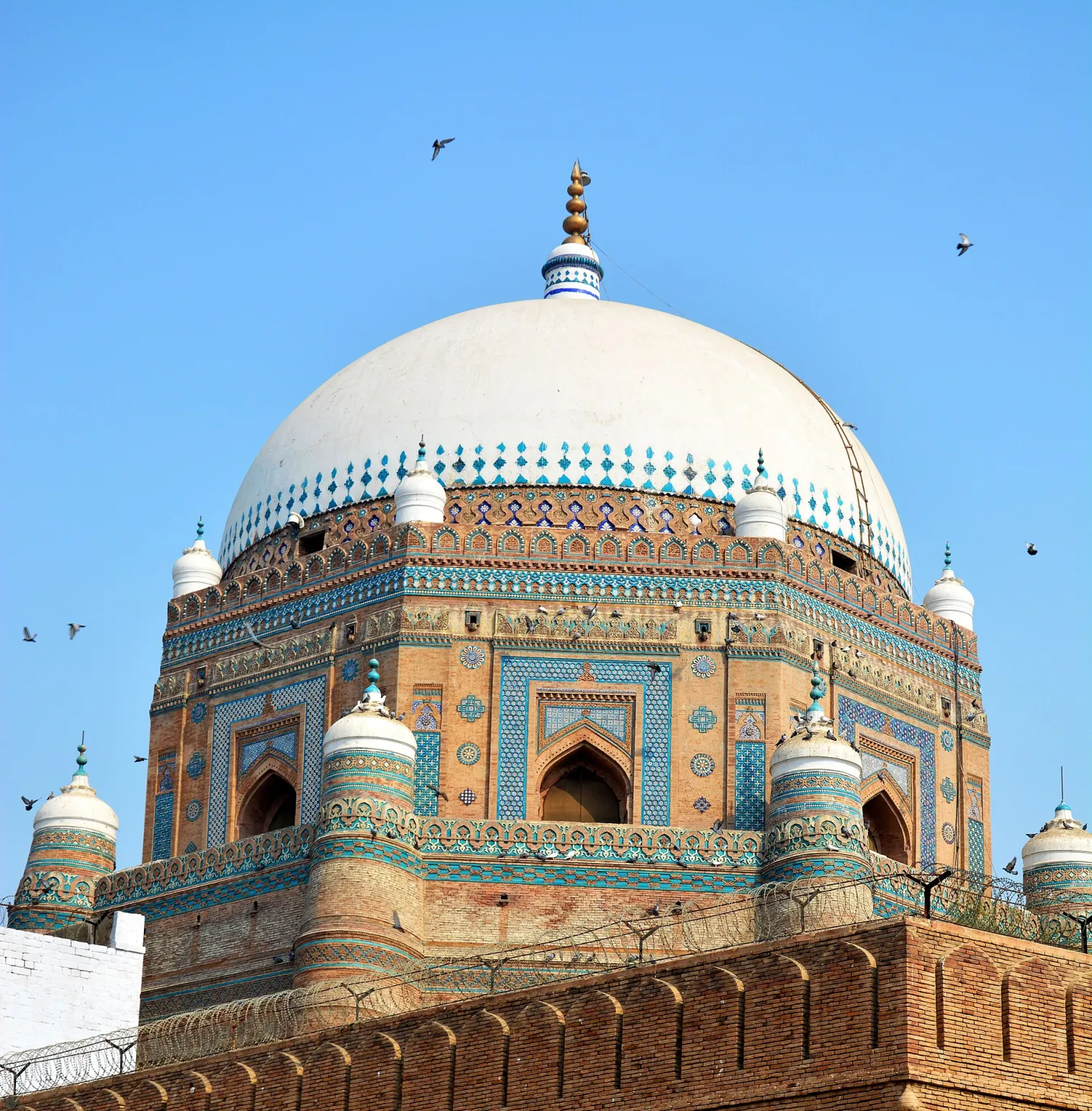
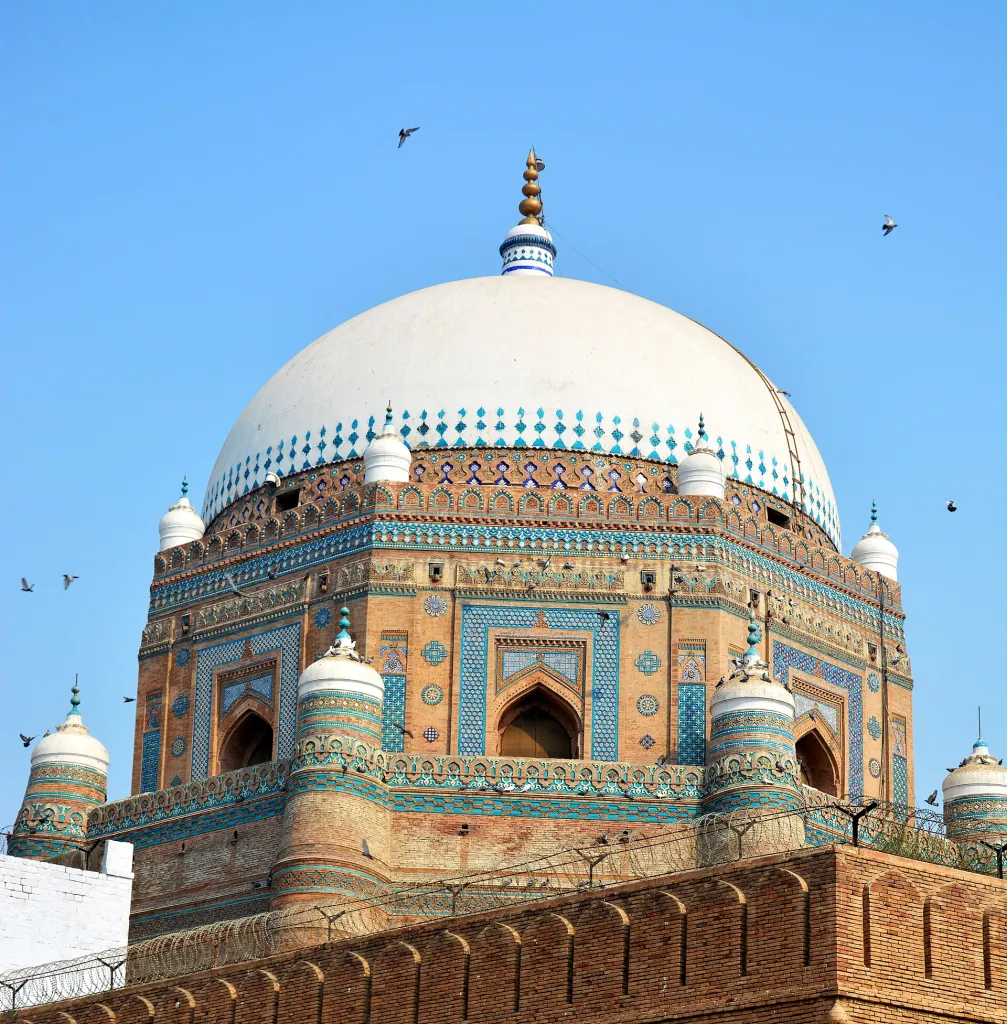
Tomb of Shah Rukn-e-Alam, Multan
About the trail
Sufi shrines are among the most visited places in Pakistan. They are tombs of teachers and poets who shaped the faith and culture of the Indus lands, and they are also kitchens, concert halls and meeting places where people from all backgrounds come to pray, eat and listen. This page strings the best known together into routes. For the history, practices and poets, start with the Sufi shrines topic page.
The Punjab Auqaf and Religious Affairs Department says it has administrative control of 548 shrines and 437 mosques. Its page on Data Darbar records that the shrine was nationalised in 1960 and is managed by the department today. Management varies from one shrine to another, and some are run by hereditary custodians.
These are working places of worship, not museums. Confirm opening and access locally, expect security checks at the large shrines, and read the section on respectful visiting before you go.
Shrines on the trail
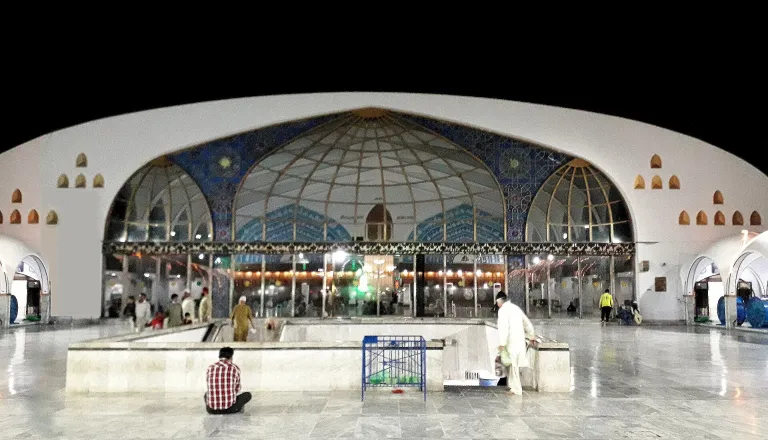 Data Darbar, LahoreThe shrine of Abu'l Hasan Ali bin Uthman, known as Data Ganj Bakhsh or Ali Hujwiri, who was born in Ghazni around 1009 and wrote the Persian Sufi text Kashf al-Mahjub. The Auqaf Department calls it Pakistan's largest shrine by visitors and complex size. His three-day urs is marked by a public holiday on 21 November, declared in 2016.
 Bulleh Shah, KasurThe shrine of the 18th-century Punjabi poet, whose kafis are sung by qawwals and musicians around the world.
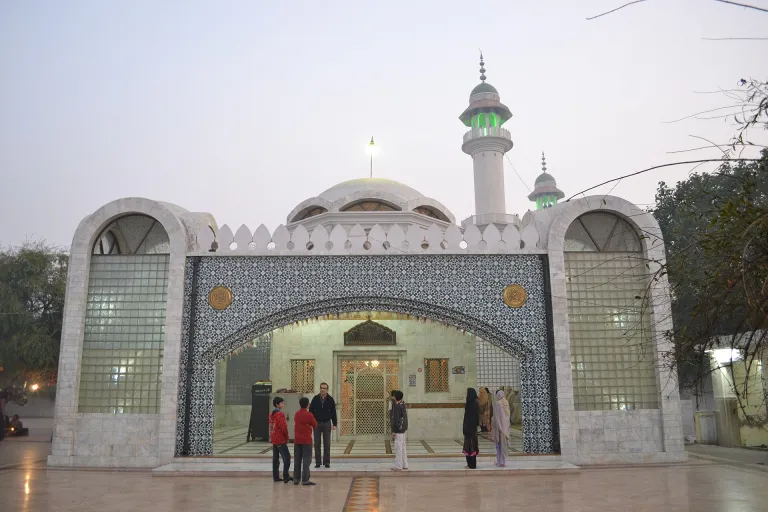
 Baba Farid, PakpattanThe district government calls Pakpattan the seat of the Chishti order in Pakistan. Baba Farid died on 5 Muharram 664 AH, or 17 October 1265. The shrine has two doors: the Nuri Darwaza facing east and the Bahishti Darwaza, the Gate of Paradise, facing north, which pilgrims pass through in the first five days of Muharram.
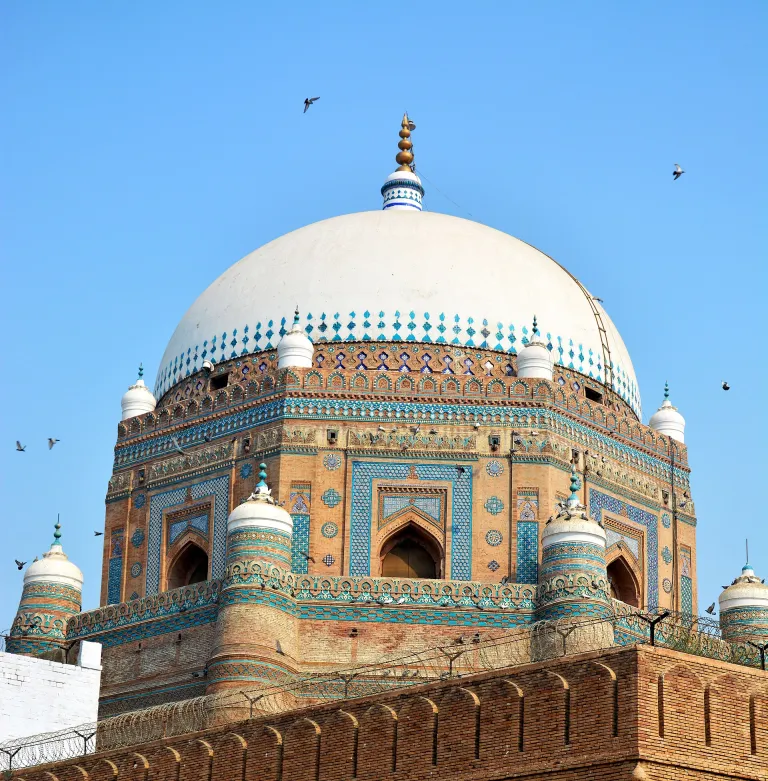 Shah Rukn-e-Alam, MultanBuilt between 1320 and 1324 by Ghiyas-ud-din Tughluq according to UNESCO's Tentative List entry, then given to the family of the saint. An octagonal three-tier tomb about 35 m high with walls about 4 m thick, faced in blue and white faience tiles. The Auqaf Department repaired it thoroughly in the 1970s.
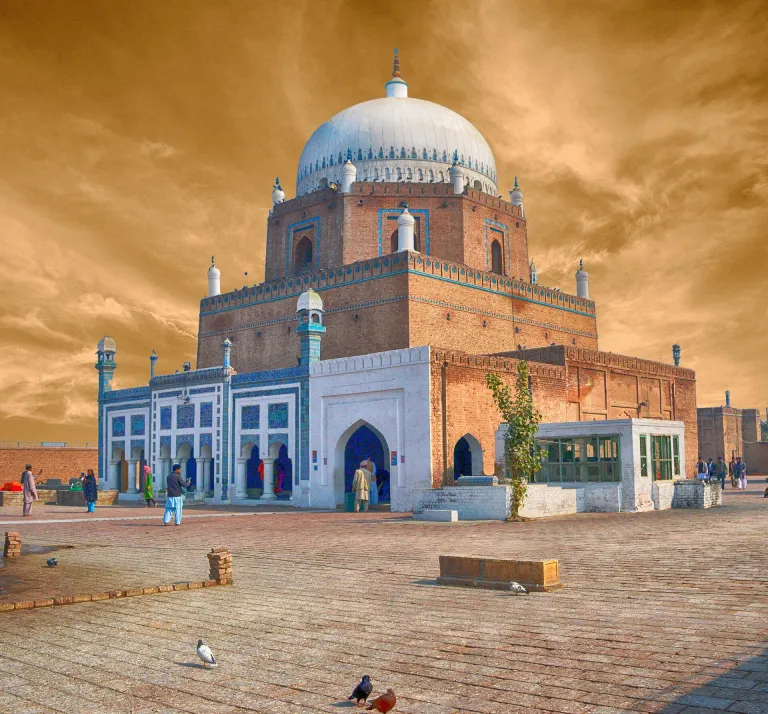 Bahauddin Zakariya, MultanThe saint died in 1268 AD, according to Auqaf. The mausoleum has a square base, an octagon above it and a hemispherical dome.
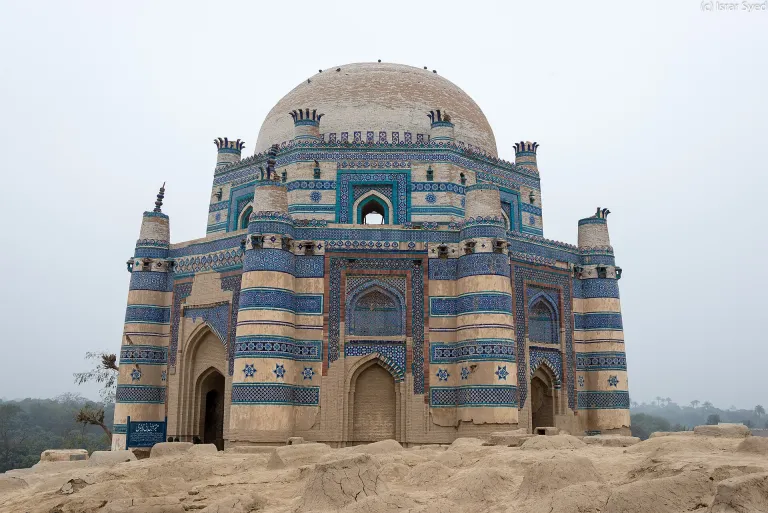 Uch Sharif, Bahawalpur DistrictUNESCO's Tentative List entry covers five monuments, the oldest being the 14th-century tomb and mosque of Jalaluddin Bukhari, plus three domed tombs for Baha'al-Halim, Bibi Jawindi and their architect, decorated with carved timber and blue and white tile mosaic.
 Lal Shahbaz Qalandar, SehwanOne of the great shrines of Sindh, famed for its gilded dome and nightly dhamaal drumming.
 Shah Abdul Latif Bhittai, Bhit ShahThe shrine of Sindh's great poet, with nightly recitation of his verse on a sandy mound in Matiari District.
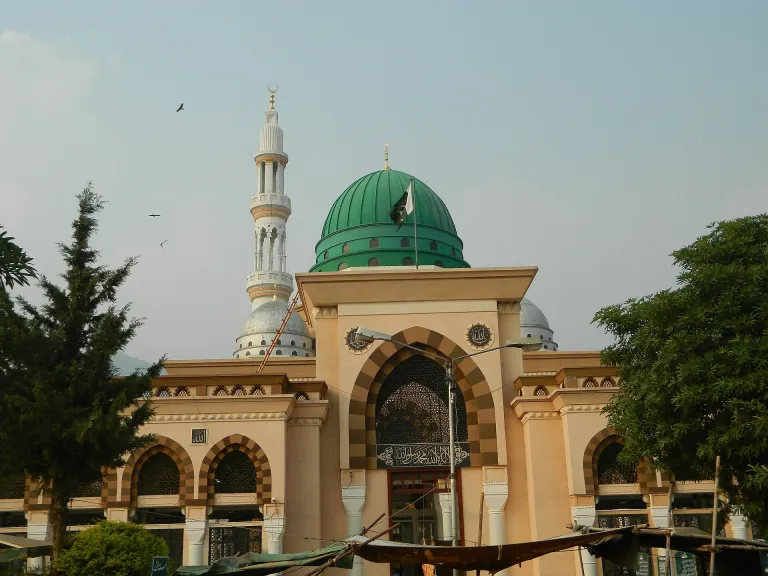 Bari Imam, IslamabadThe shrine of the 17th-century saint Shah Abdul Latif Kazmi at Nurpur Shahan, at the foot of the Margalla Hills.
Four routes
- 1
Lahore, Kasur and Pakpattan
Begin at Data Darbar, then travel south for Bulleh Shah in Kasur and Baba Farid in Pakpattan. Plan around the first days of Muharram if you want to see the Bahishti Darwaza opened, but expect very large crowds.
- 2
Multan and Uch Sharif
Multan holds the tombs of Shah Rukn-e-Alam and Bahauddin Zakariya within a short distance of each other. Uch Sharif lies further south in Bahawalpur District, with tile-faced tombs on a mound; Bahawalpur is the practical base.
- 3
Sindh: Sehwan and Bhit Shah
Sehwan Sharif and the shrine of Lal Shahbaz Qalandar can be linked with Bhit Shah and the Indus delta by road from Hyderabad. Check the local situation and any advisories first.
- 4
Islamabad: Bari Imam
A short visit from Islamabad, usually combined with a walk in the Margalla Hills.
Architecture to look for
The Multan tombs are the masterpieces of the style: octagonal plans, tapering brick walls bonded with timber and bands of cobalt-blue and white tile. UNESCO's Tentative List entry for Shah Rukn-e-Alam notes about 4 m of wall thickness in the first tier, eight corner buttresses and a carved wooden mehrab that may be the earliest of its kind. Uch Sharif shows how the Multan style travelled south. In Sindh, Sehwan and Bhit Shah add mirror-work and glazed tile; Data Darbar's 20th-century expansion uses marble and vast courtyards designed for large crowds.
Visiting respectfully
- Dress modestly: cover arms and legs, and women should carry a scarf for the head. Remove your shoes at the shoe stall before the inner precinct.
- Some shrines have separate areas for women; follow signs and staff guidance.
- Photography is often allowed in courtyards but not at the tomb. Never photograph worshippers without asking.
- Accept langar if offered, and donate if you can. Shrine kitchens feed large numbers of people.
- Do not walk in front of people praying, and do not touch the grave covering unless others do so.
- Expect bag searches and metal detectors at large shrines. Follow police and staff instructions, especially around urs gatherings.
- Check current advisories and local authority guidance before travelling, and avoid the heaviest crowd days unless you are used to them.
Planning
Best season
October to March
Cooler weather suits Punjab and Sindh. Multan and interior Sindh are very hot in summer.
Thursday evenings
For music
Many shrines hold qawwali or devotional singing on Thursday evenings. Go early in the morning for quiet.
Urs dates
Lunar calendar
Each saint's urs follows the Islamic calendar and moves about eleven days earlier each year in the Gregorian calendar. Confirm dates locally.
Auqaf contact
Lahore
The Punjab Auqaf and Religious Affairs Department lists its office at Aiwan-e-Auqaf, Shah Chiragh Building, The Mall, Lahore, phone 042-99210872-3 (as of October 2026). Confirm before calling.


Frequently Asked Questions
Can non-Muslims and foreigners visit Sufi shrines?
In general, respectful visitors are welcome at the large public shrines and langar is open to everyone. Follow dress rules and local guidance, and check access with the Auqaf office or the shrine management.
What is an urs?
The annual death anniversary of a saint, marked with prayer, music and fairs. Dates follow the lunar calendar.
Is the Bahishti Darwaza at Pakpattan always open?
The Pakpattan district site says pilgrims pass through it during the first five days of Muharram. Confirm arrangements locally.
Are Sufi shrines safe?
Security is tight at large shrines, with searches and heavy police presence during urs gatherings. Check current advisories and local authority guidance.
Keep Exploring
Related places and stories on DailyLife.pk
Uch SharifVisit Uch Sharif in Bahawalpur District: Bibi Jawindi's tomb, the Bukhari shrines, Sufi historyShrine of Lal Shahbaz QalandarVisit the shrine of Lal Shahbaz Qalandar in Sehwan Sharif: history, dhamaal, the urs, etiquette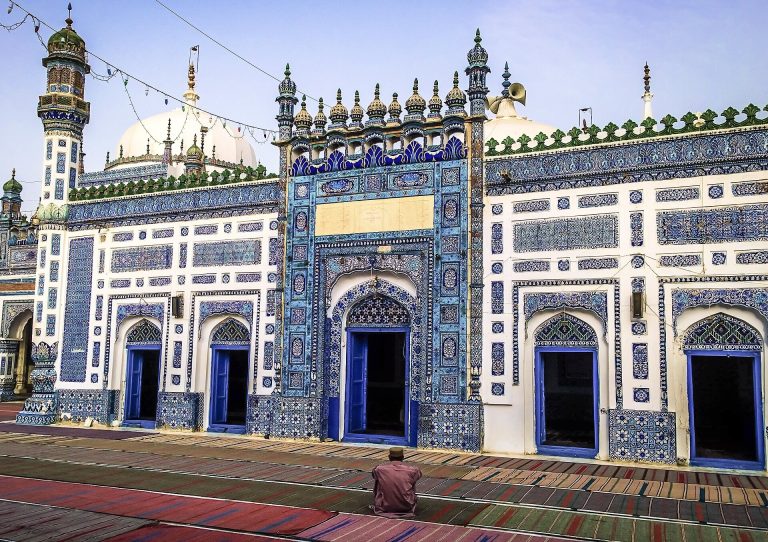 Bhit ShahVisit Bhit Shah, Matiari: the shrine of Shah Abdul Latif Bhittai, poet of Shah Jo RisaloShrine of Bulleh Shah, KasurVisit the Shrine of Bulleh Shah in Kasur: the life of the Punjabi Sufi poet, Urs
 LahoreLahore travel guide: Badshahi Mosque, Lahore Fort, Shalimar Gardens, the Walled City, food streets, neighbourhoods, metroKasurKasur city guide: Bulleh Shah's shrine, Ganda Singh Wala border ceremony, Changa Manga forest, Kasuri falooda
How we know this
- Type Practical guide
- Sources 6 (6 official/academic)
- Reviewed October 2026
- Disputed points None
Rules and fees change, confirm with the official links below before you act.
6 sources
- Data Darbar, Auqaf and Religious Affairs Department, Government of Punjab
- Auqaf and Religious Affairs Department, Government of Punjab
- Hazrat Baba Fariduddin Masud Gunj Shakar (RA), Pakpattan, Auqaf and Religious Affairs Department, Government of Punjab
- Important Places, Pakpattan District Government
- Tomb of Shah Rukn-e-Alam (Tentative List), UNESCO World Heritage Centre
- Tomb of Bibi Jawindi and related monuments, Uch Sharif (Tentative List), UNESCO World Heritage Centre
Photo credits (12)
- Tomb of Shah Rukn-e-Alam Multan.jpg, Junaidahmadj, CC BY-SA 3.0, via Wikimedia Commons
- Data Darbar 2.jpg, King Eliot, CC BY-SA 4.0, via Wikimedia Commons
- Darbar Hazrat Baba Farid ud Deen Ganj Shakar Rahmatullah Alaih - panoramio.jpg, Sunni Person, CC BY-SA 3.0, via Wikimedia Commons
- Front view of Bahauddin Zakariya Tomb by Balochlens.jpg, Balochlens, CC BY-SA 4.0, via Wikimedia Commons
- Tomb of Bibi Jawindi Uch Sharif.jpg, Israr Syed, CC BY-SA 4.0, via Wikimedia Commons
- Shrine Lal Shahbaz Qalandar, Sehwan Shareef, Sindh, Pakistan.jpg, Fassifarooq, CC BY-SA 4.0, via Wikimedia Commons
- Mausoleum of Shah Abdul Latif Bhittai 05.jpg, Umasha79, CC BY-SA 3.0, via Wikimedia Commons
- Bulleh Shah's Shrine.JPG, Khalid Mahmood, CC BY-SA 3.0, via Wikimedia Commons
- 'Pakistan'-Bari Imam Tomb-Islamabad-@ibnezhar Sep 2016 (2).jpg, Ibnazhar, CC BY-SA 4.0, via Wikimedia Commons
- Shah Rukn-e-Alam Tomb.jpg, Junaidali88z, CC BY-SA 3.0, via Wikimedia Commons
- AsadQizilbash.jpg, Clement Rossignol, CC BY-SA 4.0, via Wikimedia Commons
- The Badshahi in all its glory during the Eid Prayers.JPG, Bilalhassan88, CC BY-SA 3.0, via Wikimedia Commons
