
Things to do
Learn to Ask Better Questions while Buying Ajrak in Bhit Shah
An ajrak-focused visit to Bhit Shah can be a practical lesson in looking and buying. Sindh Small Industries Corporation lists an Artisans Colony.
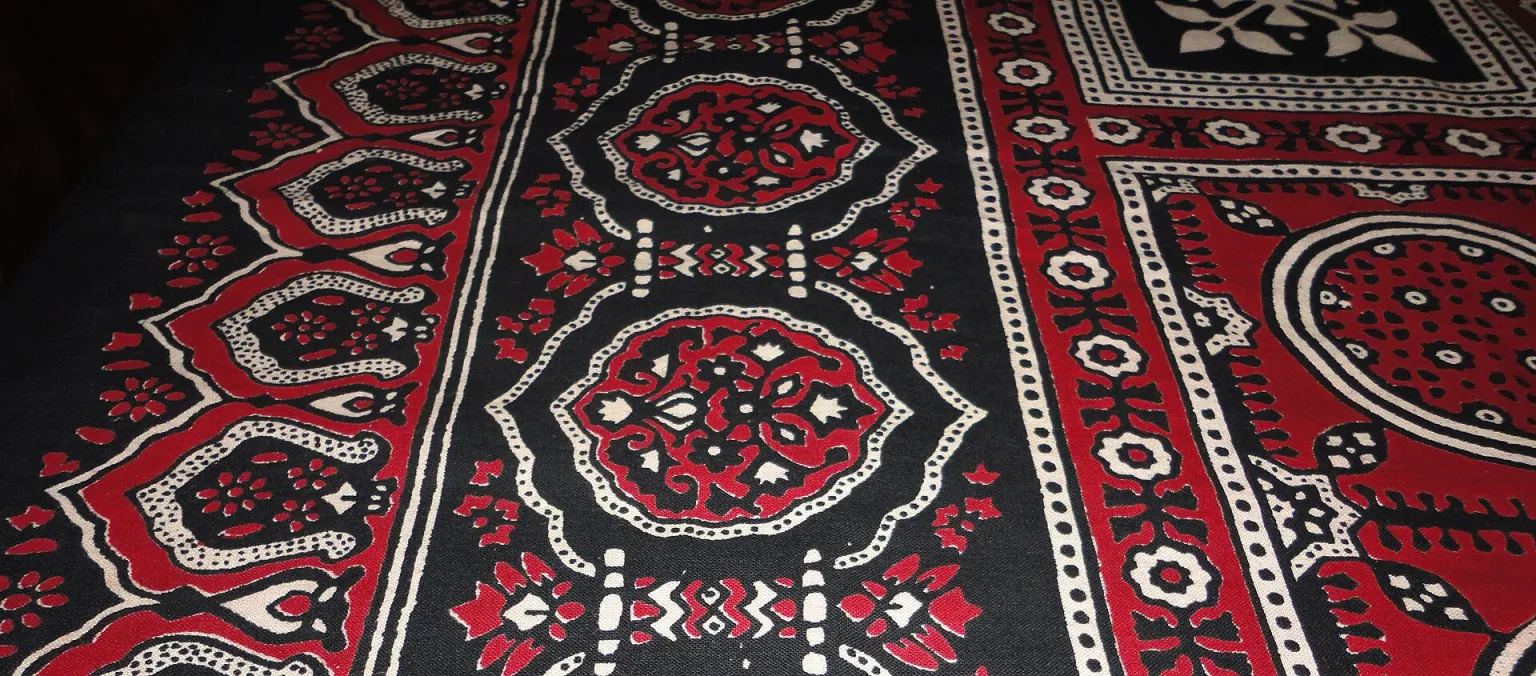
Ajrak textile from Sindh’s craft tradition; production methods and provenance should be checked with the seller.
Who this experience suits
An ajrak-focused visit to Bhit Shah can be a practical lesson in looking and buying. Sindh Small Industries Corporation lists an Artisans Colony handicraft display centre in Bhitshah and an ajrak product associated with the town. These are useful institutional leads, but they do not guarantee that a particular printer will be available for a spontaneous factory visit.
Choose the actual stops
Handicrafts Display Centre at Artisans Colony, Bhitshah, if confirmed open; ajrak sellers recommended by the centre; an arranged return to Hyderabad.
The main activity
Ask whether a cloth is block printed, machine printed or made by another process, and what is known about its fibre and dyes. Examine both sides, the edge finish and any visible pattern alignment. Minor variation can be informative but is not, by itself, a reliable authenticity certificate.
Ajrak shopping benefits from slowing the conversation down. Begin with the seller’s description and ask what can be documented about production. A cloth may be locally sold but produced elsewhere; it may combine hand and machine processes. Those distinctions are more useful than a simple authentic-or-fake argument. If dye origin matters to you, ask for a substantiated explanation rather than relying on colour alone.
Explore the places and guides mentioned
Photographs show the linked places or guide subjects. Open each page for its own visiting and planning information.

A realistic suggested sequence
Arrange the display-centre contact first, then spend time understanding one cloth before comparing alternatives. If a maker explicitly offers a production visit, agree its purpose, duration and fee before going. Keep shrine visitation separate from the shopping plan so worship is not reduced to a backdrop.
Make the experience more rewarding
Think about how the cloth will be used after the trip. Dimensions, edge finishing, colour transfer and washing advice can matter more than the most striking display. For a gift, include the maker or seller information and care instructions so the recipient receives some context. A person who chooses not to buy can still thank the seller for their time without demanding an extended demonstration. If a production visit is agreed, let the maker set safe boundaries around wet work, drying cloth and tools, and do not rearrange work for a better picture.
A useful learning sequence moves from the whole cloth to a detail and then to the making process. First see the dimensions and overall arrangement. Next examine an edge or repeated element with the seller’s permission. Finally ask which stages create those effects. Keep questions specific enough that a maker or knowledgeable seller can answer from their own experience.
If printing is demonstrated, ask which stage you are seeing and what happened before it. A single colourful moment is not the whole production process. Do not rearrange wet cloth, touch a prepared block or step across a work area for a better camera angle. Any hands-on attempt needs the host’s explicit agreement, suitable materials and an explanation of how mistakes affect working stock.
At the end, write down the seller’s account of origin and process separately from your own observations. This prevents a later caption from claiming more than the visit established. For a gift, pass on that modest context and the care advice. The outing can remain valuable even if the best choice is to buy later after comparing dimensions, budget and the recipient’s likely use.
Getting there and returning
Arrange the Bhitshah display-centre contact and a road transfer before setting out from Hyderabad. Ask whether event traffic affects the approach on your date. If adding another craft town, make it optional and allow time to compare cloth carefully; a longer distance does not automatically make a better craft day.
Season and weather decisions
Choose cooler weather for easier transfers and browsing. Religious gatherings can change traffic and crowding; verify the calendar and local advice rather than assuming an ordinary day around a major event.
Families, comfort and preparation
Ask whether cloth can be brought to a seated viewing position and whether the entrance has steps. Narrow shopfronts, roadside traffic and heat can make a short visit tiring for older relatives.
Carry a bag that keeps purchases dry, a note of desired dimensions and enough payment flexibility for small retailers. Ask for wash-care advice and a receipt identifying the seller.
Costs to check before committing
Allow separately for the road transfer, any agreed demonstration fee and the cloth itself. Compare dimensions, fibre, stated printing process and finishing before comparing price. Ask about care instructions, colour transfer and return terms. A very low price should prompt questions rather than a confident authenticity claim. Keep a receipt with the seller’s details and do not make an artisan provide a lengthy free lesson as a bargaining tactic.
Leave the place and people respected
Do not interrupt a printer’s work or stage photographs without permission. Respect worshippers’ privacy if passing religious spaces and avoid representing one pattern as belonging to every Sindhi community.
Continue planning your trip
Frequently Asked Questions
Does a small print variation prove hand production?
No. Ask about the process and provenance rather than relying on one visual sign.
Can I watch printing without an appointment?
Only if a maker welcomes the visit. A display-centre listing does not establish open access to production.
What should accompany an ajrak gift?
Include the maker or seller details, dimensions and care advice where known, without inventing a community attribution.
How we know this
- Type Practical guide
- Sources 3
- Reviewed October 2026
- Disputed points None
Rules and fees change, confirm with the official links below before you act.
3 sources
- Handicraft Shops — Sindh Small Industries Corporation, Sindh Small Industries Corporation
- Bhitshah Origional Sindhi Ajrak, Sindh Small Industries Corporation
- Sindh Indigenous & Traditional Crafts Company — SITCO, SITCO
Photo credits (3)
- Ajrak.jpg, Ahub1988, CC BY-SA 3.0, via Wikimedia Commons
- PK Hyderabad asv2020-02 img08 Talpur Tombs.jpg, A.Savin, FAL, via Wikimedia Commons
- Alamgiri Gate - Main entrance to Lahore Fort.jpg, S.hassanjawad, CC BY-SA 3.0, via Wikimedia Commons
