
Places to visit
Chauburji: a practical visitor guide
Visit Chauburji: what to see, historical context, getting there, a realistic plan, families and official access checks.
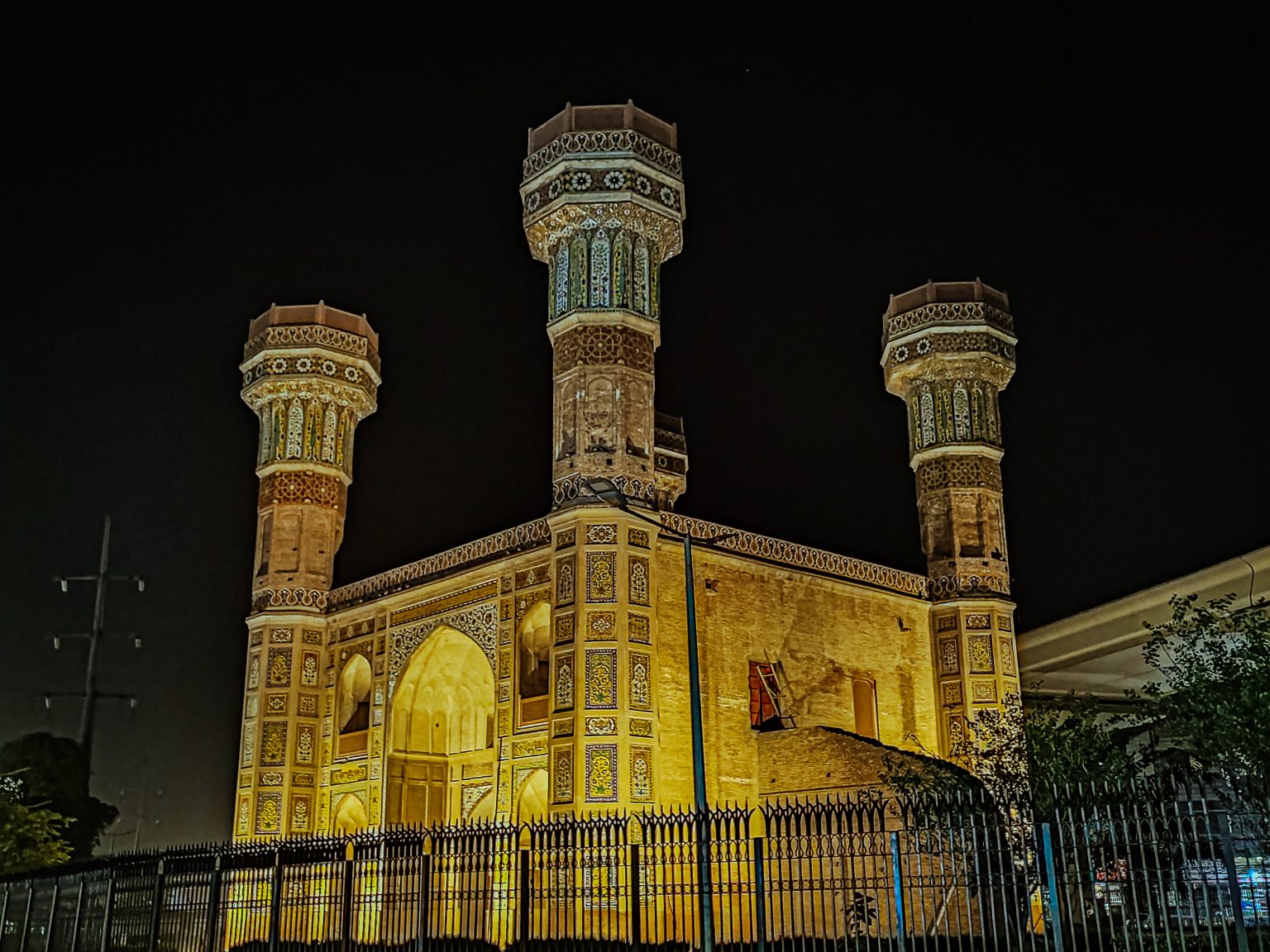
Chauburji gateway in Lahore
A surviving gateway rather than a complete garden
Chauburji is a Lahore landmark best understood as the surviving entrance to a much larger Mughal garden setting. Its four-cornered tower form and colourful surface decoration give it a strong visual identity, but the vanished wider landscape is part of the story. Allow roughly thirty to forty-five minutes for a focused exterior visit as an editorial estimate. This guide does not promise access to the towers or an interior tour. It is a compact architectural attraction in a busy urban setting, so a workable approach and a clear purpose matter more than assigning it an artificially long itinerary.
The date is visible in the historical record
The federal heritage inventory explains the name through the four corner minarets and records an inscription dated AH 1056, corresponding to 1646 CE. It identifies mosaic decoration and blue-enamelled lettering among the building's important features. The Walled City authority also describes it as a seventeenth-century garden gateway. These sources support a clear date and function without requiring an unsupported patronage story. Do not confidently attribute the garden to a particular princess merely because an online account repeats the association. An inscription and a later historical interpretation should be distinguished when the identity of a patron is debated.
How to read the surface from a permitted viewpoint
Begin with the full outline: the central opening, the corner forms and how decoration follows the architecture. Then look for differences between calligraphic panels, geometric divisions and floral patterns where visible. A photograph may flatten those details into one colourful surface, so give the eye time before reaching for a phone. Compare areas of surviving decoration with repaired sections without assuming every difference can be dated by appearance. Restoration and weathering require specialist interpretation. Do not touch tilework or climb the base to improve a view; surface fragility is a reason to keep a respectful distance.
Explore the places and guides mentioned
Photographs show the linked places or guide subjects. Open each page for its own visiting and planning information.


Four towers and the memory of an entrance
The official inventory records the loss of a north-west corner minaret in the structure's earlier history. That is a useful reminder that a monument's familiar outline may include restoration as well as surviving original material. Do not label every visible part as untouched seventeenth-century work or attempt to date a reconstructed section by colour alone. Look for an authoritative conservation explanation where one is available.
The entrance function is equally important. An opening intended to frame movement into a garden now stands within a very different urban setting. Try viewing the central passage as a spatial device rather than only a decorative surface. What does it frame today, and what would a garden threshold have implied? The answer need not recreate a lost plan. It simply connects the documented function with an observable feature and gives the compact visit a clearer focus than a general claim that the building is beautiful.
The modern setting changes the experience
Chauburji now belongs to a dense modern road and transport landscape, which is very different from an isolated pleasure-garden entrance. That contrast is worth observing, but it creates practical limits. Assess the actual pedestrian crossing and public approach rather than walking towards the monument by the shortest line. No photograph is worth standing in a carriageway or crossing a barrier. If taking children, identify a gathering point before approaching and keep them together. For someone using a wheelchair or walking aid, a short architectural stop may still depend on kerbs, surfaces and the location of a suitable crossing.
Getting there and choosing a view
Use the specific Chauburji destination and ask your driver for a lawful drop-off that supports the pedestrian route. Do not expect a vehicle to wait beside the structure while the group takes pictures. Arrange a return pickup point and allow for any road circuit needed to reach it. If using public transport, verify the current station or stop exit and the final walk separately. The nearby road or station name can provide orientation, but it does not establish that every side of the monument is readily accessible or that a particular entrance is currently in use.
A short visit plan that makes the history clear
Start by explaining that the structure was a gateway, then invite companions to imagine a garden beyond without claiming an exact vanished layout. Spend the next part on the visible tile and inscription work from authorised areas. Move to a second viewpoint only if the public route makes that easy and lawful. End by comparing the original garden function with the modern urban setting. This makes a half-hour stop coherent and avoids simply circling until somebody becomes tired. A longer visit is useful only when it supports real observation, drawing or informed architectural interest.
Access and fees should not be invented
No current admission price, daily opening timetable or tower access is verified in this guide. Check the responsible heritage authority if your visit depends on close access rather than a public exterior view. Temporary conservation, events or changes in the surrounding road arrangement may affect the approach. An old travel photograph does not establish present permission to stand on a platform or enter a protected space. If barriers prevent the view you hoped for, accept a more distant perspective. The building remains interesting as an urban landmark even when a conservation boundary limits detailed inspection.
Use the official attraction information as your starting point for the enquiries above.
How to connect it with Lahore without overloading the day
Read the Lahore city guide and DailyLife's Mughal trail or Walled City guide before making a larger historical circuit. Chauburji is outside the old city's central pedestrian monument cluster, so give the transfer its own allowance. A compact gateway visit can be paired with a meal or a different indoor attraction rather than another long series of exterior stops. With children, ask which clues show that the structure was intended to be passed through. That simple spatial question explains more than a list of rulers and dates, while keeping the visit tied to what is actually visible.
For related planning, read Mughal trail.
Continue planning your trip
Frequently Asked Questions
Was Chauburji a palace?
The official sources describe a gateway to a Mughal garden. Treat it as a surviving entrance structure rather than a complete palace or intact garden.
What date is verified?
The federal inventory records an inscription dated AH 1056, corresponding to 1646 CE.
Can I enter the corner towers?
No current public tower access is verified. Follow barriers and plan around authorised exterior views.
How long should I spend?
Thirty to forty-five minutes is an editorial allowance for a focused visit, plus the time needed for the actual urban approach and pickup.
How we know this
- Type Travel guide
- Sources 2 (1 official/academic)
- Reviewed October 2026
- Disputed points None
Rules and fees change, confirm with the official links below before you act.
2 sources
- Chauburji — official information, Government of Pakistan
- Historic monuments: Chauburji, Walled City of Lahore Authority, Government of Punjab
Photo credits (3)
- Chauburji a historical landmark in Lahore, Pakistan.jpg, Saddique Khalid, CC BY-SA 4.0, via Wikimedia Commons
- Night View of Badshahi Mosque (King’s Mosque).jpg, Muhammad Ashar, CC BY-SA 3.0, via Wikimedia Commons
- Wide angle view of Badshahi Mosque.jpg, Mishel Ijaz, CC BY-SA 4.0, via Wikimedia Commons
