
Lotus Biscoff Cheesecake
No-bake Biscoff cream-cheese cheesecake
One 20 cm cheesecake; ten slices
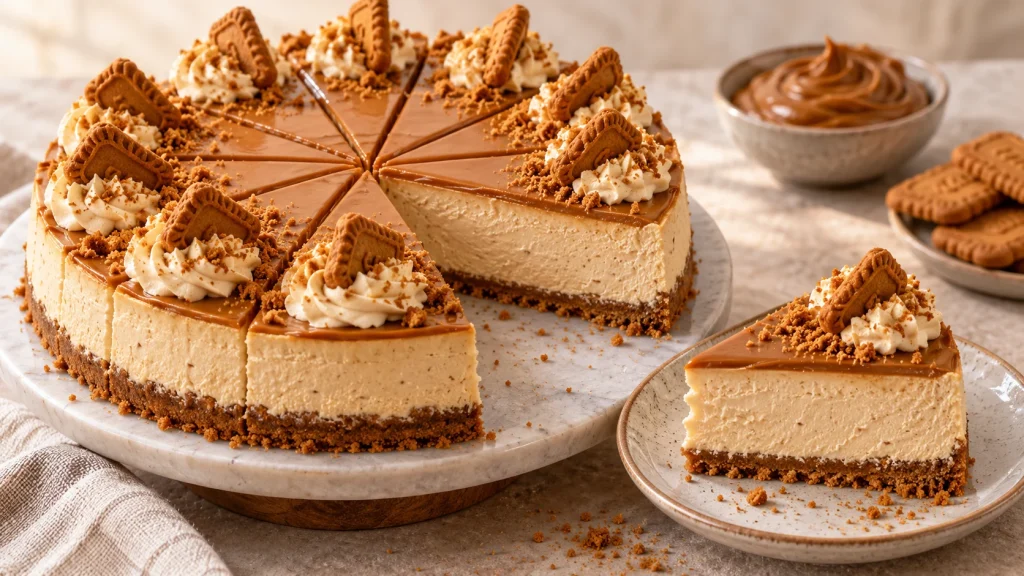
Base elapsed estimate: 570 minutes, including the proofing, cooling or chilling explicitly stated in the method. Preparation and baking may overlap only where directed. A cold refrigerator is 4°C or below; a warm kitchen can require earlier refrigeration and longer chilling. One tablespoon = 15 ml; one teaspoon = 5 ml.
About Lotus Biscoff Cheesecake
A Lotus Biscoff no-bake cheesecake with a full-fat whipped filling and no gelatin or raw eggs. Product labels determine any dietary certification.
Use full-fat block-style cream cheese and cold high-fat whipping cream; a low-fat pourable substitute will not give the same set. This is an original editorial formulation. Pan dimensions, measured egg weight and the cooling or chilling stage are part of the recipe, not optional details. It has not been kitchen tested; oven performance and ingredient brands can change the final timing.
Personally cooked and tested by Zohair Fakhar for DailyLife.pk. Cooking times can vary with your stove, cookware and batch size; follow the texture and doneness cues in the method.
Make it work for your kitchen
Original quantities serve 10. Cooking times, pan size and frying-oil depth do not scale, cook in extra batches instead.
Before you start
Prepare the actual equipment
Line a 20 cm springform tin base and sides with baking paper or acetate. Weigh all ingredients before starting; keep dairy components chilled until the method calls for them.
Mise en placeClean handling
Do not taste raw flour, dough or egg batter. Use pasteurized dairy and clean utensils for uncooked cream fillings. Keep eggs and dairy refrigerated until needed.
Food safetySet up the equipment
Have the following tools ready before starting: Digital scales; 20 cm springform tin; Baking paper or acetate; Food processor or rolling pin for crumbs; Electric mixer; Cold whipping bowl; Microwave-safe topping bowl.
Clean workspaceMeasure the ingredients
Measure the ingredient quantities for your selected servings before applying heat. Keep separately listed groups, such as dough, filling, sauce or garnish, in separate containers; keep any optional additions separate.
Use the ingredient list above
Step-by-step cooking method
1 Compact and chill the base
Line a 20 cm springform tin base and sides with baking paper or acetate. Mix 200 g biscuit crumbs with melted butter.
2 Compact and chill the base (continued)
Press firmly and evenly into the base using the flat bottom of a glass. Refrigerate 30 minutes, rather than pouring filling onto warm butter.
3 Make an aerated filling
Beat cold cream cheese, filling spread and icing sugar briefly until smooth. In a separate cold bowl whip cream to firm peaks without graininess.
4 Make an aerated filling (continued)
Fold one third into the cheese to lighten, then fold in the rest gently. A thin pourable mixture will not set like this full-fat formulation.
5 Chill until structurally firm
Spoon over chilled base, level and cover without touching the surface.
6 Chill until structurally firm (continued)
Refrigerate at least 8 hours or overnight. This recipe contains no gelatin and depends on full-fat cheese, sufficient whipped cream and long chilling; do not shorten it to one hour.
7 Decorate cold
Warm the topping spread in 10-second microwave bursts only until fluid, then let it cool until barely warm.
8 Decorate cold (continued)
Spread over the cold cheesecake and add topping crumbs. Chill another 15 minutes, release the ring carefully and cut ten slices.
Chef’s tips
- Use full-fat block-style cream cheese and cold high-fat whipping cream; a low-fat pourable substitute will not give the same set.
- Keep the measured liquid quantities and ingredient temperatures as stated; added liquid changes setting, frying or batter behaviour.
- Prepare serving dishes before the final stage and use the actual texture cues in the method, rather than waiting for an oven colour change.
Common mistakes & quick fixes
- Filling stays runny
- Use full-fat block-style cheese and cream of at least 35% fat whipped to firm peaks. Fold gently and chill at least eight hours; low-fat substitutes need reformulation.
- Warm topping sinks into filling
- Cool the melted spread to barely warm before spreading on the fully chilled surface.
- Base crumbles on cutting
- Compact biscuit-butter crumbs evenly and chill the base before filling; release only once the complete cheesecake is firm.
Variations & serving ideas
Serving size: Divide the same completed batch into smaller portions if desired. Do not increase batter depth or shorten a chilling stage merely because the portions are smaller.
Perfect result check
| Texture | Use full-fat block-style cream cheese and cold high-fat whipping cream; a low-fat pourable substitute will not give the same set. |
|---|---|
| Handling | Use pasteurized dairy and ready-to-eat components. Keep the finished dessert cold and follow the specific assembly and chilling steps; no raw egg or flour mixture is served. |
Storage & reheating
| Refrigerator | Use within 48 hours | For cream, custard, cheesecake or fruit-filled desserts, cover and refrigerate at 4°C or colder promptly, within 2 hours or 1 hour above 32°C. Use shallow portions for cooling. This is a conservative editorial limit. |
|---|---|---|
| Serving | Keep chilled desserts cold until serving | Return unused portions promptly to the refrigerator. Plain baked goods without perishable toppings may be covered at cool room temperature for 24 hours; refrigerate in a hot kitchen. Texture is best on the day specified by the method. |
Know when to change the heat
| Stage | Heat | What to look for |
|---|---|---|
| Compact and chill the base | No heat; refrigerator | Pressed biscuit base is cold and firm. |
| Make an aerated filling | No heat | Cream holds firm peaks; folded filling is thick, not pourable. |
| Chill until structurally firm | Refrigerator | Eight-hour chill gives a sliceable soft set. |
| Decorate cold | Very brief microwave; refrigerator | Barely warm spread sits on the cold filling without sinking. |
Helpful answers before you cook
Why is there no gelatin?
The set comes from full-fat cream cheese, Biscoff spread and firm whipped cream followed by at least eight hours chilling. It is a soft no-bake cheesecake, not an egg custard.
Can low-fat cream cheese replace block-style?
Not at equal weight with the same expected result. Extra water and a softer cheese structure can prevent this gelatin-free filling holding slices.
Why cool the topping spread?
Hot fluid spread melts the chilled whipped filling. Warm only enough to pour, then let it become barely warm before coating.


