
Cheesecake
Gently baked vanilla cheesecake
One 20 cm cheesecake; ten slices
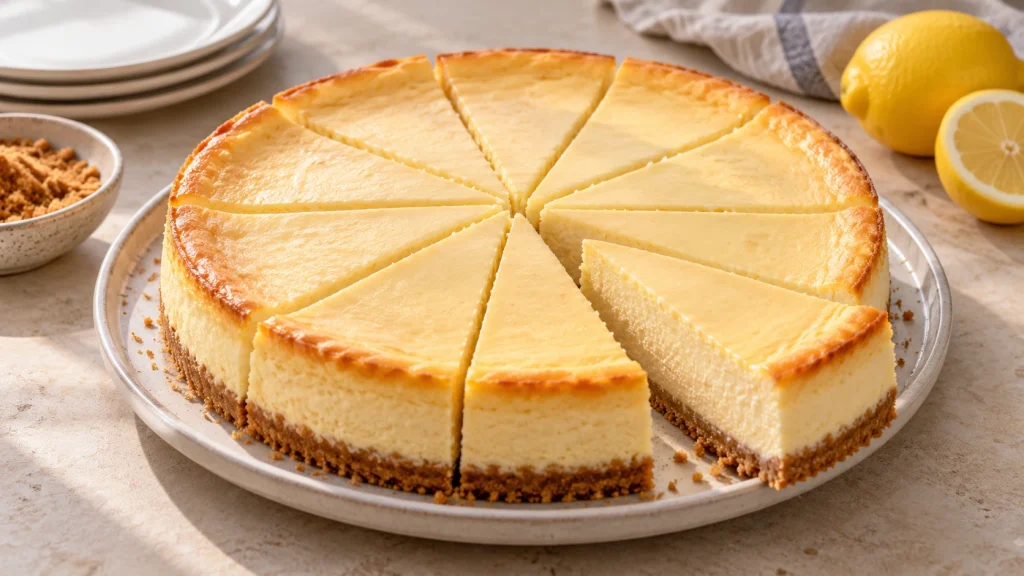
Allow about 8 hours 50 minutes, potentially 9 hours 15 minutes at the long bake range. This includes the biscuit-base bake, gentle cheesecake bake, 20-minute oven rest, 30-minute rack cooling and at least six hours refrigerated. One tablespoon = 15 ml; one teaspoon = 5 ml.
About Cheesecake
A baked full-fat cream-cheese cheesecake with a biscuit base, no gelatin and no water bath. Gentle mixing and long chilling are distinct structural stages.
Avoid whipping air into the filling; bake gently to a set outer ring and a centre of at least 71°C, then chill thoroughly. This is an original editorial formulation. Pan dimensions, measured egg weight and the cooling or chilling stage are part of the recipe, not optional details. It has not been kitchen tested; oven performance and ingredient brands can change the final timing.
Personally cooked and tested by Zohair Fakhar for DailyLife.pk. Cooking times can vary with your stove, cookware and batch size; follow the texture and doneness cues in the method.
Make it work for your kitchen
Original quantities serve 10. Cooking times, pan size and frying-oil depth do not scale, cook in extra batches instead.
Before you start
Measure accurately
Weigh ingredients, including egg without shells where listed. Use the exact tin or dish dimensions specified. Prepare the vessel before mixing leavened batter so it can cook without delay.
PreparationClean handling
Do not taste raw flour, dough or egg batter. Use pasteurized dairy and clean utensils for uncooked cream fillings. Keep eggs and dairy refrigerated until needed.
Food safetySet up the equipment
Have the following tools ready before starting: Digital scales; 20 cm springform tin at least 7 cm deep; Rimmed baking tray; Electric mixer on low speed; Spatula; Food thermometer; Wire rack.
Clean workspaceMeasure the ingredients
Measure the ingredient quantities for your selected servings before applying heat. Keep separately listed groups, such as dough, filling, sauce or garnish, in separate containers; keep any optional additions separate.
Use the ingredient list above
Step-by-step cooking method
1 Set the biscuit base
Heat oven to 170°C. Line the base of a 20 cm springform tin at least 7 cm deep.
2 Set the biscuit base (continued)
Mix crumbs with melted butter and press evenly over the base, not up the sides. Bake 10 minutes, then cool while filling is mixed. Reduce oven to 150°C.
3 Mix without whipping
Beat cream cheese with sugar on low speed until smooth, scraping the bowl. Mix cornflour with sour cream and add with vanilla and lemon.
4 Mix without whipping (continued)
Add egg in three additions, mixing only until incorporated. Excess air causes puffing and collapse, so avoid high-speed whipping.
5 Bake slowly
Pour filling over base and set tin on a rimmed tray. Bake at 150°C for 55–70 minutes until the outer ring is set and the central 5 cm wobbles as one piece, not like a liquid wave.
6 Bake slowly (continued)
Check centre reaches at least 71°C. Switch oven off, crack door and rest inside 20 minutes; then move to a rack 30 minutes.
7 Chill before releasing
Refrigerate promptly after brief rack cooling and chill at least 6 hours. Do not leave it on the counter to cool completely.
8 Chill before releasing (continued)
Loosen the edge and release the ring only when fully chilled. Cut ten slices with a clean warm knife, wiping between cuts.
Chef’s tips
- Avoid whipping air into the filling; bake gently to a set outer ring and a centre of at least 71°C, then chill thoroughly.
- Begin checking at the early end of the stated range. Oven temperature, tin material and the depth of the mixture affect cooking more than the number of portions.
- Cool or chill for the specified period before cutting or decorating. A warm base melts dairy toppings, and a chilled dessert often needs time to finish setting.
Common mistakes & quick fixes
- The texture is heavy or uneven
- Measure by weight, use the stated mixing method and avoid changing vessel depth. Avoid whipping air into the filling; bake gently to a set outer ring and a centre of at least 71°C, then chill thoroughly.
- Outside is ready before the middle
- Check oven calibration and the stated tin size. Protect an already browned surface loosely with foil and continue gently until the actual doneness cue is met.
- Cream or filling softens during assembly
- Chill the base and dairy components first. Work in short stages and return perishable components to the refrigerator rather than leaving them beside a warm oven.
Variations & serving ideas
Serving size: Divide the same completed batch into smaller portions if desired. Do not increase batter depth or shorten a chilling stage merely because the portions are smaller.
Perfect result check
| Defining texture | Gently baked vanilla cheesecake. Avoid whipping air into the filling; bake gently to a set outer ring and a centre of at least 71°C, then chill thoroughly. |
|---|---|
| Safety and finish | No raw flour or egg batter is served. Egg custards and cheesecake reach at least 71°C centrally; cake and bread batters must be fully baked as specified, not intentionally left raw. |
Storage & reheating
| Refrigerator | Use within 48 hours | For cream, custard, cheesecake or fruit-filled desserts, cover and refrigerate at 4°C or colder promptly, within 2 hours or 1 hour above 32°C. Use shallow portions for cooling. This is a conservative editorial limit. |
|---|---|---|
| Serving | Keep chilled desserts cold until serving | Return unused portions promptly to the refrigerator. Plain baked goods without perishable toppings may be covered at cool room temperature for 24 hours; refrigerate in a hot kitchen. Texture is best on the day specified by the method. |
Know when to change the heat
| Stage | Heat | What to look for |
|---|---|---|
| Set the biscuit base | 170°C then 150°C oven | Biscuit crumbs form an even compact baked base. |
| Mix without whipping | No heat | Filling is smooth with minimal incorporated air. |
| Bake slowly | 150°C oven then residual heat | Outer ring is set; central wobble is coherent and centre reaches 71°C. |
| Chill before releasing | Refrigerator | Six-hour chilled cake releases and slices without slumping. |
Helpful answers before you cook
Why avoid high-speed whipping?
Air bubbles expand during baking and then collapse, encouraging cracks. Smooth the full-fat cream cheese on low speed and add eggs only until incorporated.
How much wobble is acceptable?
The central 5 cm should move as one coherent piece, not ripple like liquid. Check at least 71°C centrally and allow the full chilled set before cutting.
Do I need a water bath?
This particular formulation uses a low 150°C oven and no bath. Use the stated 20 cm tin and gentle cooling rather than adding an unplanned bath or higher temperature.


