Apricot Bread
Apricot yeast loaf with wholewheat and plain flour
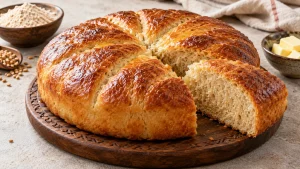
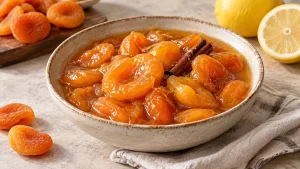
Chopped dried apricots are folded into a yeast dough made with wholewheat and plain flour, then baked in a loaf tin. The method includes an optional fruit soak, two dough rises and at least one hour cooling before slicing.

Plan roughly 300 minutes for the original ten-person batch: about 35 minutes active preparation, a separate ten-minute hydration rest, up to 90 minutes for the first rise, up to 60 minutes for the shaped-loaf proof, 45 minutes baking and at least 60 minutes cooling before slicing. The optional 15-minute fruit soak can overlap measuring the other ingredients; allow extra time if you do it separately. Stage totals describe parts of this plan, so do not add them all again. These are planning allowances, not measured guarantees; dough expansion, batch size, tin shape and oven performance can change the schedule. One tablespoon = 15 ml; one teaspoon = 5 ml.
About Apricot Bread
A small wholewheat apricot loaf made with chopped dried apricot flesh and commercial yeast. This is a modern fruit bread, not a claim that the broad catalogue title names one historical Hunza formula.
Small fruit pieces distribute better and are less likely to tear the dough. Keep exposed apricot pieces tucked under the surface where possible to avoid scorching.
Personally cooked and tested by Zohair Fakhar for DailyLife.pk. Cooking times can vary with your stove, cookware and batch size; follow the texture and doneness cues in the method.
Make it work for your kitchen
Original quantities serve 10. Cooking times, pan size and frying-oil depth do not scale, cook in extra batches instead.
Before you start
Prepare the batch
Measure the selected dried apricots, inspect them for pit fragments and cut into roughly 5 mm pieces. Keep them separate from the main dough ingredients. If they need soaking, follow the method using water taken from the selected initial dough quantity.
Mise en placeControl liquid and salt
Keep the initial dough water and the extra-water allowance separately measured. Any water used for the optional fruit soak comes from the initial dough water; retain it for mixing and count it within that same quantity. The extra-water allowance is a single limit for the whole batch and is added only if needed after the hydration rest.
Batch controlSet up the equipment
Have these tools ready: Kitchen scale and measuring jug; Knife and board for inspecting and dicing dried apricots; Small bowl and sieve for an optional soak, with a container to retain the soaking water; Mixing bowl, clean cover and dough scraper; Lined loaf tin sold as a 900 g tin for the original ten-person batch, or an appropriately smaller tin for reduced dough; Domestic oven, oven gloves and cooling rack; Instant-read thermometer and foil for shielding a darkening crust. Line the tin before shaping. Keep dough covered during the rises, proof the shaped loaf outside the oven while the oven preheats separately, and remove any cloth or other non-ovenproof cover before baking.
Clean workspaceMeasure the ingredients
Measure all ingredients for your selected servings, keeping the two main dough flours separate from the rolling-and-fruit-dusting flour allowance. Divide that allowance into two equal portions: one for the fruit and one reserved for shaping. Both portions come from the single selected allowance; neither is extra.
Use the ingredient list above
Step-by-step cooking method
1 Prepare fruit
Check apricots for pit fragments and cut into small even pieces.
2 Prepare fruit (continued)
If the apricots are leathery, soak them for 15 minutes in a portion taken from the selected initial dough water. Drain and keep that soaking water for mixing the dough; do not count it as extra water. Dust the fruit with half of the selected rolling-and-fruit-dusting flour allowance and reserve the other half for shaping.
3 Knead dough
Mix the main wholewheat and plain flours, instant yeast, salt and sugar measured for your selected servings. Add the selected initial dough water, including any reserved soaking water, and oil measured for your selected servings. The soaking water and any unused initial water together must stay within that one initial-water quantity. Knead for 8–10 minutes to a supple dough.
4 Knead dough (continued)
Rest the dough for ten minutes, then knead the prepared fruit through gently. If the dough is still stiff, add small amounts from the selected extra-water allowance. Keep the whole batch within that single allowance; do not add it automatically or start a fresh allowance for each addition.
5 Rise and shape
Cover and rise 60–90 minutes until expanded.
6 Rise and shape (continued)
Shape into a log using the reserved half of the selected rolling-and-fruit-dusting flour allowance. For the original ten-person batch, place in a lined tin sold as a 900 g loaf tin; use a suitably smaller tin for a reduced dough quantity. Cover and proof for 40–60 minutes until puffy and slowly springing back when pressed. Tin size and bake time need checking when changing the batch size.
7 Bake
Bake at 190°C conventional or 170°C fan for 35–45 minutes. Tent with foil if fruit darkens.
8 Bake (continued)
Centre should reach about 95°C and feel set. Cool out of the tin on a rack for at least one hour before slicing.
Chef’s tips
- Small fruit pieces distribute better and are less likely to tear the dough. Keep exposed apricot pieces tucked under the surface where possible to avoid scorching.
Common mistakes & quick fixes
- Dough is stiff and tears.
- Give it the stated hydration rest before adding the measured allowance a teaspoon at a time.
- Crust colours before the centre sets.
- Lower oven slightly or tent with foil, then continue until the centre is baked. Do not judge only by the top colour.
Variations & serving ideas
Chosen version: A small wholewheat apricot loaf made with chopped dried apricot flesh and commercial yeast. This is a modern fruit bread, not a claim that the broad catalogue title names one historical Hunza formula.
Seasoning adjustment: Keep the main ingredient and technique unchanged when adjusting chilli or finishing herbs. Substitute packaged sauces only after checking salt content and allergens.
Perfect result check
| Main ingredient | The first rise should leave the dough expanded; the shaped loaf should be puffy and slowly spring back when gently pressed. Use the reserved half of the selected dusting-flour allowance for shaping. The original ten-person batch uses a tin sold as a 900 g loaf tin; that label does not establish the finished loaf weight. Check tin fit when reducing the batch. |
|---|---|
| Finished batch | Bake at 190°C conventional or 170°C fan for 35–45 minutes. Tent with foil if fruit darkens. Centre should reach about 95°C and feel set. Cool out of the tin on a rack for at least one hour before slicing. |
Storage & reheating
| Cool the loaf, then refrigerate portions | Refrigerate within 2 hours; use within 48 hours | For later use, cool the loaf on a rack as directed in the method, then pack meal-sized portions in a clean covered container. Refrigerate within two hours at 0–5°C and use within 48 hours, or freeze promptly. If reheating, heat only the portion needed, once, until steaming hot throughout, including the centre. |
|---|---|---|
| Freeze cooled apricot-loaf portions | Use within 24 hours after fully defrosting | After prompt cooling, freeze in sealed, labelled meal-sized portions. Defrost fully in the fridge and use within 24 hours. If reheating, reheat only the portion needed, once, until steaming hot throughout. Freezing and reheating can change the crumb and fruit texture. |
Know when to change the heat
| Stage | Heat | What to look for |
|---|---|---|
| Prepare fruit | No heat | Check apricots for pit fragments and cut into small even pieces. |
| Knead dough | No heat | Mix the selected main flours, yeast, salt and sugar. Count reserved fruit-soaking water within the selected initial water. After kneading, give the dough its ten-minute rest before adding the fruit and assessing whether any of the separate water allowance is needed. |
| Rise and shape | No heat | Let the covered dough expand during the first rise, then shape using the reserved half of the selected dusting-flour allowance. Proof covered outside the preheating oven until puffy and slowly springing back; remove the non-ovenproof cover before baking. |
| Bake | 190°C conventional / 170°C fan | Bake at 190°C conventional or 170°C fan. Use the method’s 35–45 minutes as an approximate guide and shield darkening fruit with foil if needed. Check the centre as directed in the method; crust colour alone does not establish that the loaf is baked. Cool out of the tin on a rack for at least one hour before slicing. |
Helpful answers before you cook
Can I add whole dried apricots?
Use the roughly 5 mm pieces specified in the ingredient list so the fruit can be folded through the dough evenly. Inspect the apricots for pit fragments before cutting. If they are leathery, use the optional soak in the method and count its water within the selected initial dough water.
Why tuck exposed fruit under?
Exposed apricot pieces can darken before the loaf centre is baked. Keep surface fruit tucked into the dough where possible and use the method’s foil shield if it darkens during baking. Follow the centre check as well as the crust colour.
What kind of apricot loaf is this?
This version is a modern home-oven fruit loaf made with commercial instant yeast, a mixture of wholewheat and plain flour, and chopped dried apricots. Its measured dough, proofing schedule and oven method describe this particular version.