Beef Boti Roll
Braise tender cubes, reduce the sauce, then wrap
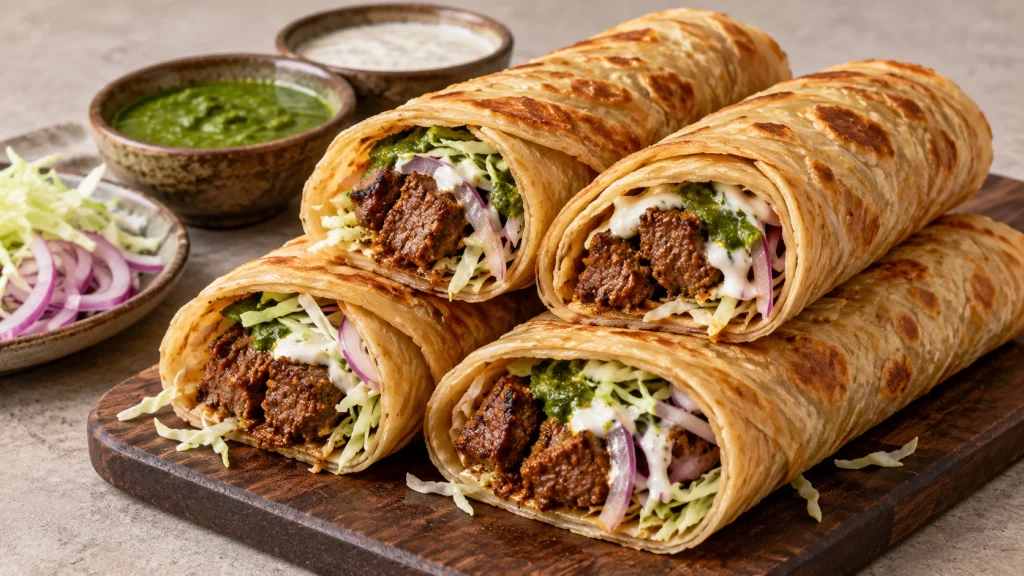
Beef chuck braised until tender, wrapped in homemade parathas with yogurt-chutney sauce and salad. The original quantities make four substantial wraps.
The 35 minute preparation, 135 minute cooking and 245 minute total are estimates for the original batch. Allow 1 hour refrigerated marination and a 75–120 minute gentle braise, with extra time for a tough cut or reduction. The 30 minute dough rest overlaps filling preparation. Bread cooking takes about 3–4 minutes per paratha; larger selected servings need extra batches. Assemble near serving rather than holding finished rolls. One tablespoon = 15 ml; one teaspoon = 5 ml.
About Beef Boti Roll
Beef boti roll uses small chuck cubes braised until tender and then reduced to a clingy spiced coating. This stovetop method trades a quick grill for a realistic home approach to a cut that otherwise stays chewy.
The bread is made from a separate measured dough rather than assuming an unspecified ready-made paratha. Fill the wraps along one narrow line and leave space at the edges. Too much sauce makes the bread slip, while a dry reheated filling can feel heavy; aim for a moist coating without a puddle. Assemble only the amount being eaten promptly.
Personally cooked and tested by Zohair Fakhar for DailyLife.pk. Cooking times can vary with your stove, cookware and batch size; follow the texture and doneness cues in the method.
Make it work for your kitchen
Original quantities serve 4. Cooking times, pan size and frying-oil depth do not scale, cook in extra batches instead.
Before you start
Set up the ingredients
Measure the selected-serving quantities. Keep raw beef and its marinade away from dough, cooked bread, washed salad and serving sauce. Do not wash raw beef. Wash hands and clean utensils and surfaces after handling it; wash produce under running water before cutting.
PreparationPlan the finishing stage
Allow 1 hour for covered refrigerated beef marination before the gentle braise, which can take 75–120 minutes or longer for a tough batch. The 30 minute covered dough rest can overlap filling preparation; keep the dough covered while the beef finishes and cook the breads near serving. Keep washed salad and clean yogurt-chutney sauce refrigerated at 0–5°C until assembly.
WorkflowSet up the equipment
Have scales, separate covered bowls for dough and raw beef, a rolling pin, griddle, broad frying pan, lidded saucepan, clean serving board and clean food thermometer ready. Choose enough pan space for the selected amount or cook in batches. Keep raw-meat utensils separate from cooked filling and salad utensils.
Clean workspaceMeasure the ingredients
Keep the initial dough liquid and dough reserve separate from the initial braising liquid and braising reserve. The dough, griddle and filling each have their own oil allowance. Separate the beef-marination yogurt from the clean serving-sauce yogurt; all marinade that touches raw beef must cook with the beef and must not be used as uncooked serving sauce.
Use the ingredient list above
Step-by-step cooking method
1 Mix the paratha dough
Mix atta, flour and dough salt. Add the dough oil and separately measured initial dough liquid. Knead 6–8 minutes to a soft smooth dough, adding the dough reserve only if needed in 5 ml increments. Cover and rest 30 minutes. Divide into one ball per selected serving and keep covered while working.
2 Marinate the beef, then start the braise
Mix the 2 cm beef chuck cubes with the marinade yogurt, ginger, garlic, cumin, coriander, chilli and filling salt. Cover and refrigerate at 0–5°C for 1 hour, within the beef and yogurt use-by dates, keeping the raw beef on the bottom shelf. Then heat the filling oil in the cooking pan, add the beef and all its marinade, and stir for about 5 minutes. Add the separately measured initial braising liquid. Keep the clean serving-sauce yogurt separate.
3 Braise until tender and reduce the coating
Cover and simmer very gently for 75–120 minutes, or longer if needed, until a cube yields readily to a fork. If the pan dries before the beef is tender, add the braising reserve in 30 ml increments, using only what is needed. Uncover and reduce until the fully cooked beef has a moist, clinging coating without a puddle. Do not stop at the timer if a cube is still tough, and do not serve uncooked marinade.
4 Roll and griddle
Roll each ball to a 20 cm round about 3 mm thick. Cook on a medium griddle for 45–60 seconds per side, then share the measured paratha-cooking oil across both faces of all the selected breads. This oil is separate from the dough oil and beef-cooking oil.
5 Roll and griddle (continued)
Turn and cook another 1–2 minutes until golden patches form and no raw dough remains. Hold loosely under a cloth so the bread stays flexible.
6 Keep the tender filling ready for assembly
Keep the freshly cooked filling covered and hot briefly while finishing the breads, then assemble promptly. For advance preparation, follow the cooked-component cooling and storage limits below; reheat chilled filling only once until steaming hot throughout before assembly. Let excess steam escape for about a minute before rolling, without leaving the filling standing at room temperature. Keep the coating moist but not watery.
7 Build and roll
Using clean utensils, stir the serving-sauce yogurt and ready-to-eat green chutney together. Divide the sauce evenly among the selected parathas, leaving a 3 cm border. Keep any sauce not yet needed refrigerated; do not use the raw-beef marinade as serving sauce.
8 Build and roll (continued)
Divide the cooked beef, onion and cabbage evenly among the selected parathas, arranging each portion in a narrow band. Fold the lower edge inward, roll firmly without crushing and wrap the lower half in food-safe paper for handling. Serve immediately, with one wrap per selected serving.
Chef’s tips
- Measure the salt separately from any packaged seasoning; branded spice blends can already be salty.
- Keep cut sizes consistent so the components cook or soften at the same rate.
- Use a clean serving spoon rather than returning a tasting spoon to a component that will be stored.
Common mistakes & quick fixes
- The final mixture tastes flat.
- Taste a small complete serving, including every sauce or garnish. Adjust the measured salt or acid in a small portion first, then apply that correction to the remaining batch.
- The texture deteriorates before serving.
- Keep crisp and moist components separate until the final step, and prepare smaller serving batches. A long assembled hold cannot be corrected by adding more spice.
Variations & serving ideas
Milder serving: Use half the stated chilli in the base batch, keeping the other ingredient weights unchanged. Offer additional chilli separately at the table; heat-sensitive diners can then take an unmodified portion of the fully cooked dish.
Perfect result check
| Braised beef and paratha | A beef cube yields readily to a fork and its fully cooked coating clings without pooling. The paratha has golden patches with no raw dough inside and stays flexible enough to roll. |
|---|---|
| Assembled roll | Each wrap has an even share of tender beef, cool clean sauce and washed salad. The border closes without tearing or a puddle leaking from the filling; serve promptly. |
Storage & reheating
| Store cooked components separately | Cooked leftovers: up to 48 hours at 0–5°C | Cool cooked beef in shallow portions and refrigerate within 1–2 hours. Keep the fridge at 0–5°C and eat cooked leftovers within 48 hours or freeze them. Keep cooked breads wrapped and the washed salad and clean sauce covered separately; follow any shorter yogurt or chutney package limit. Reheat cooked filling only once until steaming hot throughout, then assemble and eat promptly. Assembled rolls do not keep their texture well. These cooked-leftover limits do not extend raw-beef or dairy use-by dates. |
|---|
Know when to change the heat
| Stage | Heat | What to look for |
|---|---|---|
| Beef braise | Very gentle covered simmer, then uncovered reduction | Keep enough braising liquid to prevent catching until the cubes yield to a fork; use the separate braising reserve only as needed. Reduce the coating after tenderness is reached. |
| Paratha and assembly | Medium griddle; no heat during assembly | Cook bread through without drying it hard. Hold it loosely under a clean cloth, then add hot cooked beef and cold clean sauce and salad immediately before eating. |
Helpful answers before you cook
Can I use shop-bought parathas?
Yes. Use one shop-bought paratha per selected serving, cook according to its packet and divide the selected filling and sauce evenly among the breads. Total time and allergens also depend on that product.
Why does the wrap split?
Overcooked dry bread or too much filling can cause tears. Keep freshly cooked parathas loosely under a clean cloth, divide the filling and sauce evenly among the selected breads and leave the stated border rather than overfilling one roll.
Why is the beef still chewy?
Chuck tenderness depends on the individual cut. Continue a gentle covered simmer and add the separate braising reserve in 30 ml increments only if the pan is drying before a cube yields to a fork. The 75–120 minute range is a guide; reduce the coating after the beef is tender.