

History
The Pakistan Movement: From Aligarh to Independence
How a campaign for Muslim education and representation in British India became, within a lifetime, the demand for a separate homeland that led to Pakistan in 1947.
- c. 1875–1947
- All-India Muslim League, founded 1906
- Lahore Resolution, 23 March 1940
- Led by Muhammad Ali Jinnah
Minar-e-Pakistan, Lahore
The Pakistan Movement is the name given to the political campaign, led by the All-India Muslim League, that culminated in the creation of Pakistan on 14 August 1947. Its roots lie in the late 19th century, when Muslims in British India, a large minority, roughly a quarter of the population, but a majority in the north-west and east, debated how to secure their place in a colonial system that was slowly introducing elections and representative government.
The movement was not a single straight line. It began with educational reform, moved through demands for separate representation and constitutional safeguards, and only from 1940 did the League formally demand independent Muslim-majority states. Its leading figures, Sir Syed Ahmad Khan, Allama Muhammad Iqbal, Muhammad Ali Jinnah and many others, differed in their ideas, and many Muslims opposed the demand for Pakistan altogether.
Understanding the movement means holding both stories together: the hopes it carried for millions who saw Pakistan as a homeland where they could shape their own future, and the bitter consequences of the Partition that accompanied independence.
Key Figures
A few of the many people who shaped the movement.
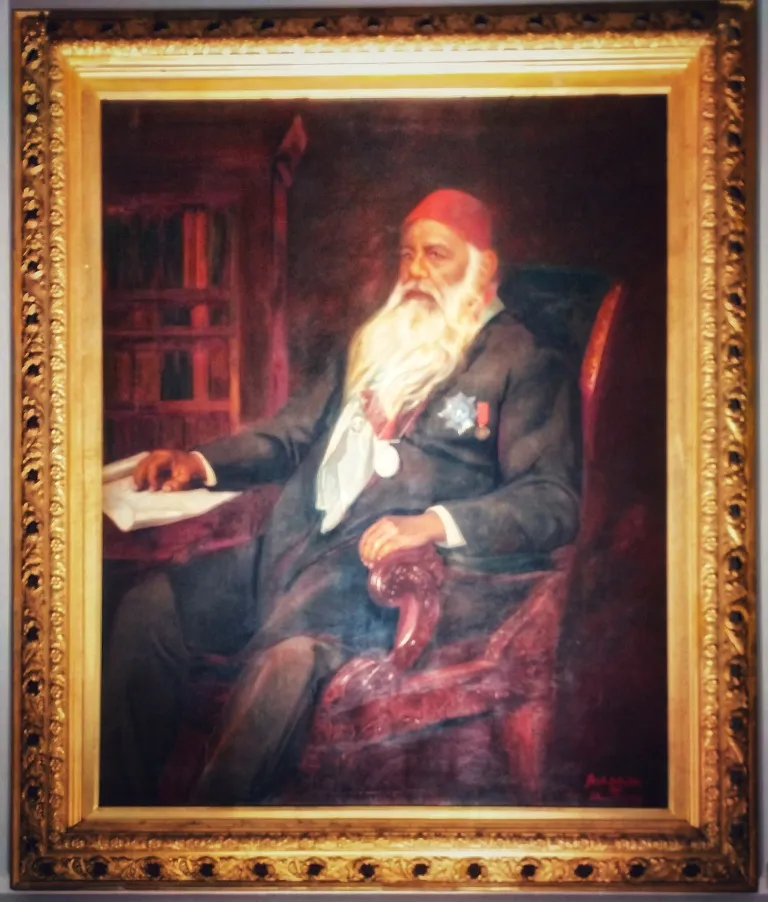 Sir Syed Ahmad Khan (1817–1898)Educator and reformer who urged Muslims to embrace modern, English-language education after 1857, and founded the Muhammadan Anglo-Oriental College at Aligarh, the seed of the ‘Aligarh Movement’.
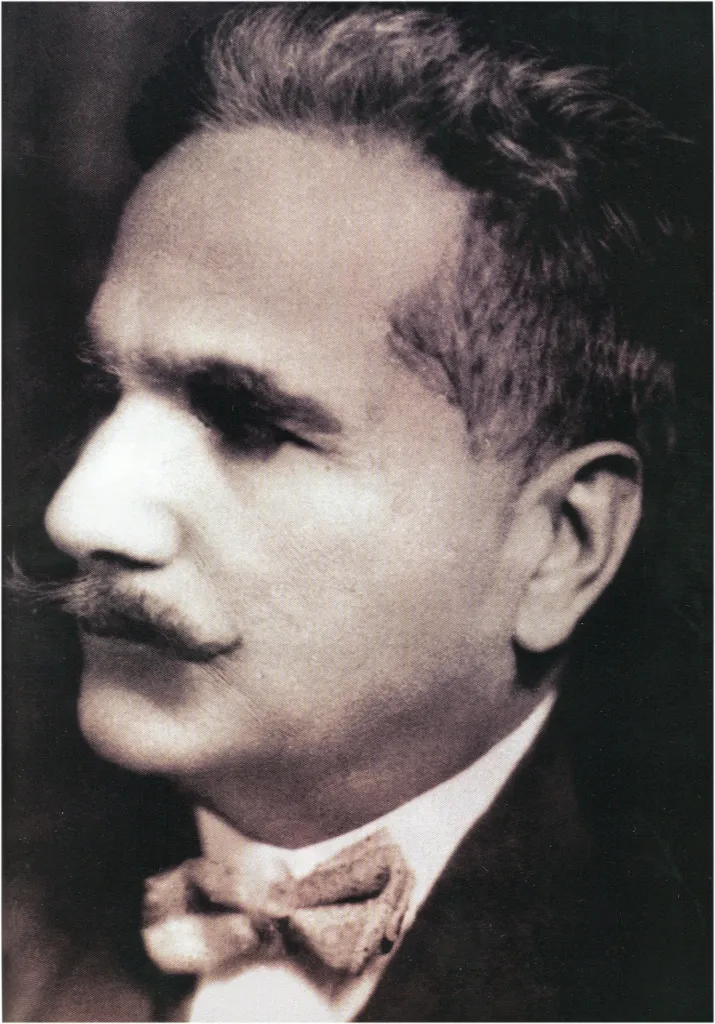
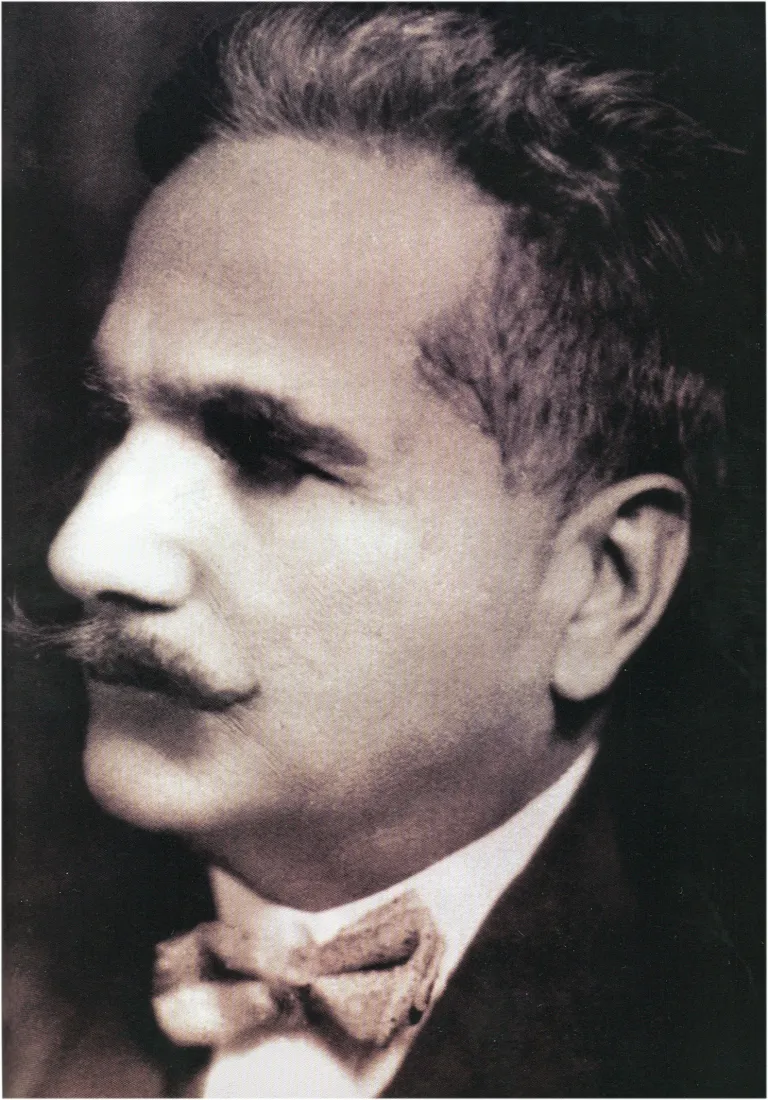 Allama Muhammad Iqbal (1877–1938)Poet-philosopher born in Sialkot, widely regarded as the greatest Urdu poet of the 20th century. In 1930 he argued that the north-western Muslim-majority provinces should one day form a separate state.
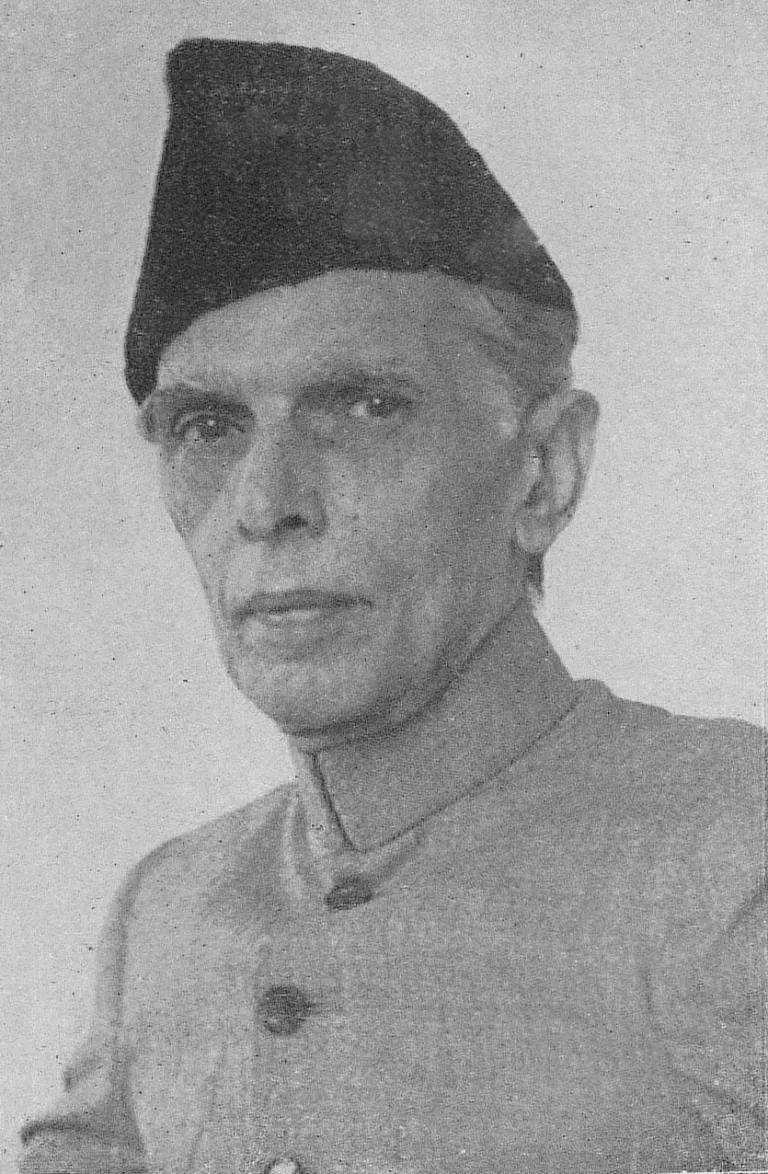 Muhammad Ali Jinnah (1876–1948)Barrister born in Karachi who began as an advocate of Hindu–Muslim unity, became the Muslim League's leader and Pakistan's founder and first Governor-General. Known as Quaid-e-Azam, ‘Great Leader’.
Timeline of the Pakistan Movement
1857–1875
After the uprising
Following the failed uprising of 1857, Sir Syed Ahmad Khan campaigns for modern education for Muslims and founds the college at Aligarh in 1875.
1906
Muslim League founded
After the Simla Deputation to the Viceroy in October, the All-India Muslim League is founded in Dhaka in December to represent Muslim political interests.
1916
Lucknow Pact
Jinnah helps broker an agreement between the League and the Indian National Congress on constitutional reforms and Muslim representation.
1930
Iqbal's Allahabad address
As League president, Iqbal argues that the north-western provinces should one day be joined into a self-governing Muslim state.
1933
The name ‘Pakistan’
Choudhary Rahmat Ali and three Cambridge colleagues coin the name in the pamphlet <em>Now or Never</em>.
1937
The League goes to the masses
After disappointing provincial elections, Jinnah reorganises the League as a mass movement.
23 March 1940
Lahore Resolution
Meeting in Lahore on 22–24 March, the League demands that Muslim-majority areas in the north-west and east be grouped into ‘independent states’.
1942–1946
Failed compromises
The Cripps Mission (1942) and the Cabinet Mission (1946) fail to produce a constitutional settlement acceptable to both Congress and the League.
3 June 1947
The Partition Plan
Viceroy Lord Mountbatten announces, with Nehru and Jinnah, that power will be transferred to two dominions, India and Pakistan.
14 August 1947
Independence
Pakistan becomes an independent dominion within the Commonwealth, with Jinnah as Governor-General.
Ideas Behind the Movement
Three strands of thought came together in the movement. The first was educational and social reform. Sir Syed Ahmad Khan believed that Muslims had fallen behind after 1857 and needed European learning and access to government service; the Aligarh college trained a generation of Muslim professionals and politicians.
The second was political safeguards. As Britain introduced elected councils, Muslim leaders feared permanent minority status in a single Indian democracy. The League pressed for separate electorates and guaranteed representation, and for much of his career Jinnah sought these protections within a united India.
The third was the idea of Muslims as a nation with their own culture, history and future, often called the ‘two-nation theory’. Iqbal's poetry and his 1930 address gave this idea moral and philosophical force; the Lahore Resolution of 1940 turned it into a political demand. Supporters saw it as the only way to secure Muslims' rights and identity; opponents, including many Muslims, argued that faith did not make a separate nation and that partition would harm the very communities it aimed to protect.
The Lahore Resolution, 1940
The resolution called for geographically contiguous areas where Muslims were in a majority, in the north-western and eastern zones of British India, to be grouped into ‘independent states’ with autonomous, sovereign constituent units. It was moved by A. K. Fazlul Huq and quickly became known as the Pakistan Resolution. The wording ‘states’ (plural) would later fuel debate about what kind of Pakistan its framers intended. The site of the session in Lahore is marked today by the Minar-e-Pakistan, and 23 March is celebrated as Pakistan Day.
Places and Records of the Movement
Photographs and landmarks that tell the story.
 Minar-e-PakistanThe tower in Lahore's Greater Iqbal Park commemorates the Lahore Resolution on the ground where it was adopted.
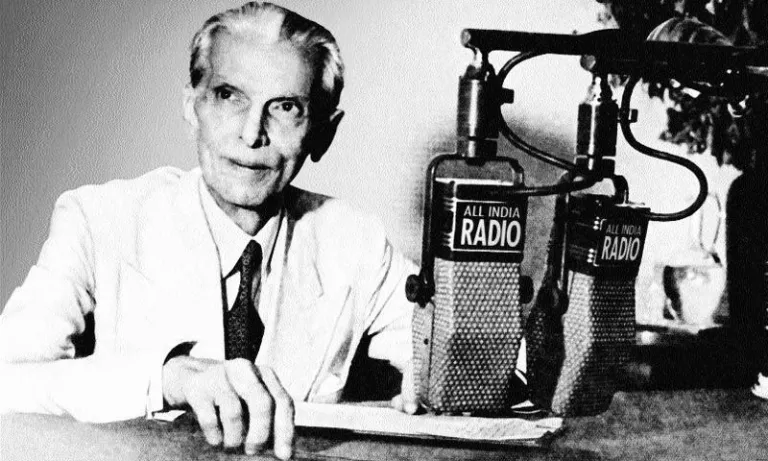 The 3 June 1947 announcementJinnah broadcasting on All India Radio after the plan to divide British India into two dominions was announced.
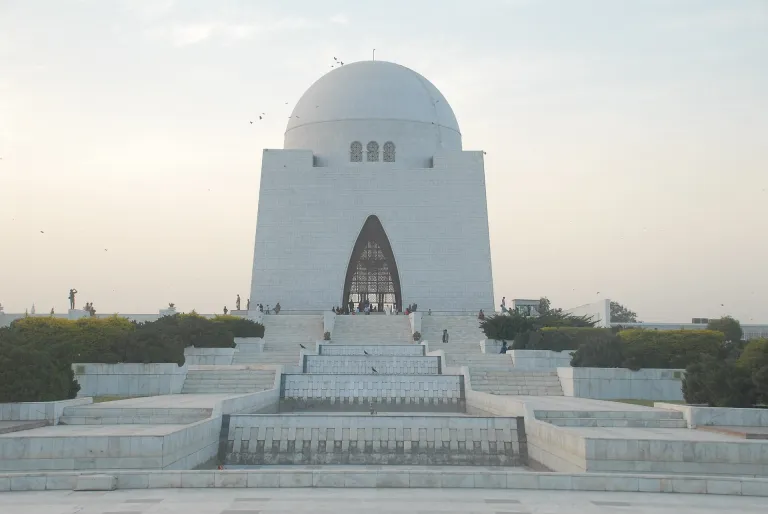 Mazar-e-QuaidJinnah's mausoleum in Karachi, the city of his birth and death, is one of Pakistan's most visited national monuments.
 Allama Iqbal's tombIqbal is buried beside the steps of the Badshahi Mosque in Lahore, a short walk from the Minar-e-Pakistan.
Evidence and Interpretation
The broad sequence of events, the League's founding, the Lahore Resolution, the failed negotiations and the 1947 transfer of power, is well documented in official records, newspapers and the papers of the leaders themselves. How to interpret them remains a lively field of scholarship.
- Inevitability: Some historians see Pakistan as the natural outcome of a distinct Muslim political identity; others stress how contingent the outcome was, shaped by wartime politics, British decisions and the breakdown of negotiations in 1946–47.
- Jinnah's aims: Historian Ayesha Jalal's influential study The Sole Spokesman argued that Jinnah used the Pakistan demand partly as a bargaining position to secure parity for Muslims within a looser Indian union; other scholars read his commitment to a sovereign state as firm from 1940.
- Muslim opposition: Not all Muslims supported the League. Parties such as Punjab's Unionists, the Khudai Khidmatgar movement in the North-West Frontier Province and some religious scholars opposed partition for very different reasons.
Reading the movement through all these lenses gives a fuller picture than any single national narrative, Pakistani, Indian or British.
Legacy
The movement achieved its central goal: an independent state for the Muslim-majority regions of the north-west and east. Yet independence came with Partition, mass displacement and violence, and with unresolved questions, about Kashmir, about the relationship between religion and the state, and about how to hold together a country of many languages and two wings a thousand miles apart.
In Pakistan, the movement is remembered on 23 March (Pakistan Day) and 14 August (Independence Day), and its leaders appear on banknotes, in school curricula and in the names of streets, universities and airports. Iqbal's poetry is still recited, and Jinnah's speeches, including his address to the Constituent Assembly on 11 August 1947 on equal citizenship regardless of faith, continue to be cited in debates about what kind of country Pakistan should be.
Frequently Asked Questions
What was the Pakistan Movement?
The political campaign, led by the All-India Muslim League and Muhammad Ali Jinnah, for a separate state for the Muslim-majority regions of British India. It began in earnest with the Lahore Resolution of 1940 and achieved its aim on 14 August 1947.
Who first proposed the idea of Pakistan?
In 1930 Allama Muhammad Iqbal proposed a Muslim state in the north-west of India. The name ‘Pakistan’ was coined in 1933 by Choudhary Rahmat Ali and his Cambridge colleagues. The Muslim League adopted the demand formally in the Lahore Resolution of 1940.
Why is 23 March celebrated in Pakistan?
It marks the adoption of the Lahore (Pakistan) Resolution on 23 March 1940. Pakistan's first constitution was also promulgated on 23 March 1956, so the date is celebrated as Pakistan Day.
Did all Muslims support the creation of Pakistan?
No. The League won wide Muslim support by 1946, but some Muslim parties and leaders, including Punjab's Unionists, the Khudai Khidmatgars in the North-West Frontier Province and some religious scholars, opposed partition.
Why is Jinnah called Quaid-e-Azam?
The title means ‘Great Leader’. It was given to him by supporters during the movement and is used officially in Pakistan.
Keep Exploring
Related places and stories on DailyLife.pk
 LahoreLahore travel guide: Badshahi Mosque, Lahore Fort, Shalimar Gardens, the Walled City, food streets, neighbourhoods, metro
 KarachiKarachi travel guide: Mazar-e-Quaid, Mohatta Palace, Clifton, Burns Road, bazaars, neighbourhoods, Green Line BRT
 SialkotSialkot city guide: Iqbal Manzil, Holy Trinity Cathedral, Sialkot Fort, sports goods and football industry, history
 The Partition of 1947The 1947 Partition of British India: the 3 June Plan, the Radcliffe Line
 The British Colonial EraBritish rule in Pakistan 1843–1947: conquest of Sindh and Punjab, the North-West Frontier, railways, canal colonies
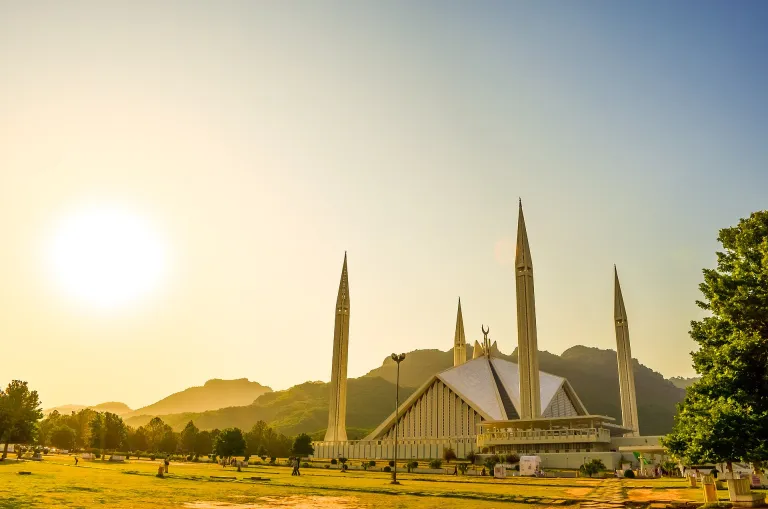 History of Pakistan since 1947Pakistan's history since 1947: Jinnah and Liaquat, constitutions of 1956, 1962 and 1973, the wars
How we know this
- Type Historical & cultural research
- Sources 8 (5 official/academic)
- Reviewed October 2026
- Disputed points Yes, see the debates
8 sources
- Pakistan: History, Encyclopaedia Britannica
- Mohammed Ali Jinnah, Encyclopaedia Britannica
- Muhammad Iqbal, Encyclopaedia Britannica
- Sayyid Ahmad Khan, Encyclopaedia Britannica
- Liaquat Ali Khan, Encyclopaedia Britannica
- Partition of British India (education resource), The National Archives (UK)
- Lahore Resolution: cross-reference, Wikipedia
- All-India Muslim League: cross-reference, Wikipedia
Photo credits (9)
- The Minar-e-Pakistan.jpg, Ammar Ejaz, CC BY-SA 3.0, via Wikimedia Commons
- Minar-e-Pakistan with waving national flags.JPG, Susmanhamza, CC BY-SA 3.0, via Wikimedia Commons
- Sir Syed Ahmad Khan.jpg, Sufe, CC BY-SA 4.0, via Wikimedia Commons
- Allama Iqbal.jpg, Iqbal Academy Pakistan, Public domain, via Wikimedia Commons
- Jinnah1945a.jpg, Photographer not known, Public domain, via Wikimedia Commons
- Jinnah announces the creation of Pakistan over All India Radio.jpg, Unknown authorUnknown author, Public domain, via Wikimedia Commons
- Mausoleum of the Quaid-e-Azam Muhammad Ali Jinnah medium View.JPG, MunawarAhmed7, CC BY-SA 4.0, via Wikimedia Commons
- Allama Iqbal Tomb side view, adjacent to the Badshahi Mosque's gateway.jpg, Rohaan Bhatti, CC BY-SA 3.0, via Wikimedia Commons
- Mazar-e-Quaid Karachi.jpg, Furqanlw, CC BY-SA 4.0, via Wikimedia Commons
