
Mutton Do Pyaza
Use onions at two stages
Mutton do pyaza combines slow-braised goat shoulder with onions at two stages: thin slices soften into the gravy, while larger petals keep their shape in the finish.
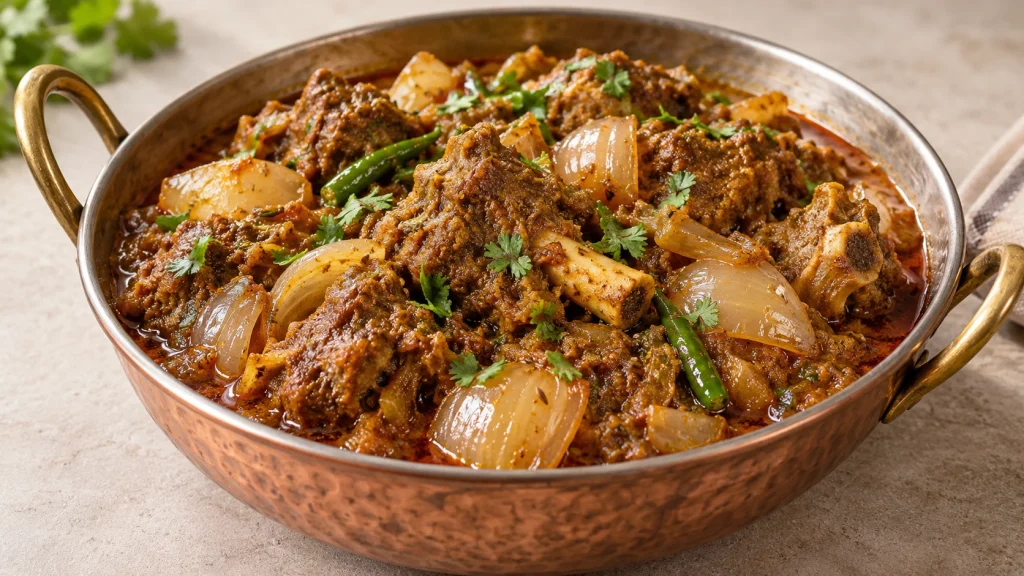
Allow 25 minutes preparation, approximately 165 minutes cooking and 5 minutes nonoverlapping waiting. Trim hard external fat but retain the shoulder's connective tissue. Slice the first onions thinly; cut the finishing onions into 2 cm petals so they survive the final simmer. Cooking ranges are guides: retain the stated doneness checks when your pan, meat age or portion thickness changes. One tablespoon = 15 ml; one teaspoon = 5 ml.
About Mutton Do Pyaza
Mutton do pyaza uses two onion treatments: thin slices melt into the gravy and larger petals finish with visible structure. Bone-in goat shoulder is chosen for a slow, gelatinous braise. This formulation has a yogurt base without tomatoes, allowing the sweetness of onion to remain the leading flavour.
Personally cooked and tested by Zohair Fakhar for DailyLife.pk. Cooking times can vary with your stove, cookware and batch size; follow the texture and doneness cues in the method.
Make it work for your kitchen
Original quantities serve 4. Cooking times, pan size and frying-oil depth do not scale, cook in extra batches instead.
Before you start
Prepare the batch
Trim hard external fat but retain the shoulder's connective tissue. Slice the first onions thinly; cut the finishing onions into 2 cm petals so they survive the final simmer.
Cut and portion before heatingKeep the work area ready
Measure the centre of the thickest piece, avoiding bone. Set aside a clean serving dish and clean utensils before handling raw protein. Do not return cooked food to the unwashed raw-food plate. Measure spices separately so they can enter the pan at the intended stage rather than burning while you find the next jar.
Food handlingSet up the equipment
Have the following tools ready before starting: Digital kitchen scale; Measuring jug and 5 ml / 15 ml spoons; Sharp knife and separate raw-protein board; Heavy pan sized for the stated batch; Instant-read food thermometer.
Clean workspaceMeasure the ingredients
Measure the ingredient quantities for your selected servings before applying heat. Keep separately listed groups, such as dough, filling, sauce or garnish, in separate containers; keep any optional additions separate.
Use the ingredient list above
Step-by-step cooking method
1 Golden onion foundation
Heat 45 ml oil in a heavy 24 cm casserole. Cook the 300 g sliced onions over medium heat for 12–16 minutes until evenly golden. Stir frequently as their moisture evaporates; browned edges are useful, black edges are bitter. Keep the petals and remaining oil separate.
2 Coat the shoulder
Add cumin, ginger and garlic and stir 1 minute. Add goat and turn for 6–8 minutes, then mix in coriander, chilli, turmeric and salt. Lower the heat and add yogurt in three additions, stirring each into the onions before adding the next. Cook gently for 3 minutes.
3 Covered braise
Add 450 ml water and cover. Maintain a quiet simmer for 90–150 minutes, turning pieces every 20 minutes.
4 Covered braise (continued)
Add 50 ml top-ups when needed to stop the base catching. Mature goat may require another 30 minutes. The meat should yield easily to a fork beside the bone before proceeding.
5 Second onion addition
Heat the reserved 15 ml oil in a skillet and fry petals for 4–6 minutes until lightly coloured but still firm inside.
6 Second onion addition (continued)
Meanwhile uncover the meat and reduce excess broth to a spoon-coating sauce. Fold petals, chillies and garam masala into the tender goat and cover for 5–7 minutes.
7 Finish and settle
Scatter coriander and rest off heat for 5 minutes.
8 Finish and settle (continued)
Lift the meat and curved onion petals into a warm bowl, then spoon over the thick gravy. Do not continue reducing until the second onions dissolve: two different onion textures are the defining feature of this formulation.
Chef’s tips
- Trim hard external fat but retain the shoulder's connective tissue. Slice the first onions thinly; cut the finishing onions into 2 cm petals so they survive the final simmer.
- For lower chilli heat deseed the measured green chillies and use 1 g red chilli; retain the onion proportions.
- A 5 ml teaspoon and 15 ml tablespoon are used throughout. Weigh salt where possible because crystal sizes vary. Add any top-up water in the listed small increments and stop once the required texture is reached.
Common mistakes & quick fixes
- Finishing onions dissolve
- Add petals only after the shoulder is tender and the broth has reduced; stop cooking while curved onion pieces remain visible.
- Uneven finish between pieces
- Sort by thickness before cooking and check the largest piece separately. Move smaller finished pieces to a clean warm dish while thicker ones finish; do not assume colour alone proves that the centre is cooked.
Variations & serving ideas
A practical adjustment: For lower chilli heat deseed the measured green chillies and use 1 g red chilli; retain the onion proportions.
Perfect result check
| Texture and structure | Add petals only after the shoulder is tender and the broth has reduced; stop cooking while curved onion pieces remain visible. |
|---|---|
| Final seasoning | Taste only after the protein is fully cooked. The named principal ingredient should remain distinct, with no scorched spice bitterness or raw garlic edge. |
Storage & reheating
| Refrigerate | Within 2 hours; use within 48 hours | Divide into shallow portions promptly; refrigerate at 5°C or colder. Do not leave a deep cooking pot on the counter to cool. |
|---|---|---|
| Freeze | Up to 2 months for quality | Pack cooled portions airtight, label and freeze. Thaw in the refrigerator. Reheat one portion once to 74°C throughout; add a small measured splash of water only where a sauce needs loosening. |
Know when to change the heat
| Stage | Heat | What to look for |
|---|---|---|
| Onion and yogurt base | Medium, then low | Onion slices are evenly golden without black edges; add yogurt in portions at lower heat. |
| Tenderise and finish with petals | Low simmer; medium for separate petals | Goat yields easily beside the bone before reduction. Separately fried petals retain curved pieces after the final brief covered simmer. |
Helpful answers before you cook
Does do pyaza mean twice the meat weight in onions?
This recipe uses two onion treatments: thin slices soften into the gravy, while larger petals go in near the end. The ingredient list gives the total onion allowance for your selected servings; keep three-fifths for slices and two-fifths for petals.
Can lamb shoulder be used?
Lamb shoulder can soften sooner than mature goat. Start checking tenderness earlier and continue the gentle braise only as needed. The meat should yield readily beside the bone before the final onion addition.
Why does yogurt look grainy?
High heat can split it. Whisk well, add over low heat and simmer gently; small grains generally become less noticeable within the onion gravy.


