
Life in Pakistan
Lahore Smog and Air Quality Guide: CausesSeason, AQI and How to Stay Safe
Why Lahore's air turns hazardous each winter, how to read the AQI and what residents and visitors can do.
The Quick Answer
Lahore's smog is a seasonal mix of fine particles, smoke and fog that builds up in late autumn and winter, when cool, still air traps pollution close to the ground. It is often so common that Pakistanis call it the "fifth season". The main sources include vehicle exhaust, industry, burning of crop residue and waste, brick kilns, dust and weather that prevents the pollution from dispersing. The worst days usually come between about November and January, and rain or strong wind can clear the air for a few days.
To protect yourself, check the live air quality index (AQI) each morning, reduce outdoor exercise when it is poor, wear a well-fitting mask designed to filter fine particles, keep windows closed on bad days and see a doctor if you develop breathing problems. Visitors can avoid the worst period or plan indoor activities. The rest of this guide explains each step.
November planning update · checked 7 November 2026
PMD’s weekly outlook issued today expects isolated smog or fog in northeast and south Punjab during 7–10 November. This is a regional forecast, not a station measurement or a school-closure order. Check the latest PMD outlook (https://weather.gov.pk/nwfc/weekly-outlook), Punjab AQI dashboard (https://aqi.punjab.gov.pk/) and the current instructions from your school, workplace or transport provider separately.
When checking air quality, note the station and observation time, not merely the time you opened the app. Identify whether the value is an index or a PM2.5 concentration and which scale is being used. An old screenshot should not be described as today’s citywide condition. A clear view of a landmark is not a substitute for a measurement.
A practical household plan
Decide which outdoor activities can move to a less polluted time or place, and which essential journeys cannot. For an unavoidable trip, reduce unnecessary time beside idling traffic and check transport disruption before leaving. Avoid a rule that says every morning or every evening is always better: use current local information.
WHO identifies children, pregnant women, older people, people with cardiorespiratory conditions and outdoor workers among groups at increased risk. Its guidance favours reducing emissions and recognises that personal measures have limits. People with existing conditions should follow their clinician’s individual advice rather than changing medication because of an app reading.
Being indoors helps only when the indoor environment is also suitable. Avoid smoking and unnecessary smoke-producing activities indoors. Use cooking ventilation appropriately; do not seal a room containing an unsafe combustion source. If using an air cleaner, match it to the room and follow its operating and filter-maintenance instructions. EPA advises keeping airflow unobstructed and placing a portable unit where you spend time. Neither an air cleaner nor a particle monitor establishes that all indoor pollutants are absent.
School, work and travel notices
Use an actual dated notification to establish a closure or change of hours. A forecast, a high reading and an official closure notice are different records. Check the issuing authority, covered institutions, effective date and any later amendment. Ask your own institution if the wording does not settle your case.
For a resident’s experience, separate what they report—such as an interrupted commute or difficulty exercising—from a measured exposure or a clinical diagnosis. This update uses published guidance and does not invent household interviews. If you contribute an account, include the date and broad area, describe what changed and avoid publishing private health details without consent.
Useful background: WHO personal interventions and air-pollution communication (https://www.who.int/news-room/questions-and-answers/item/air-pollution-personal-interventions-and-risk-communication); EPA guide to air cleaners (https://www.epa.gov/indoor-air-quality-iaq/guide-air-cleaners-home). These explain the evidence and limits of individual precautions; they do not replace current local instructions.
What Causes Smog in Lahore?
Smog has no single cause. Punjab's Environmental Protection Agency and press reports point to a combination of local sources and weather.
- Vehicles. Punjab's EPA has described vehicular pollution as a major reason for the decline in air quality, including smoke from poorly maintained vehicles and substandard fuel.
- Industry and brick kilns. Factories without emission controls and older design kilns release large amounts of smoke and fine particles. Punjab's 2020 smog measures required kilns to convert to the zigzag design and restricted stone crushers that lacked dust controls.
- Burning of crop residue, solid waste, tyres and plastics. These were banned in Punjab's measures because they release toxic smoke.
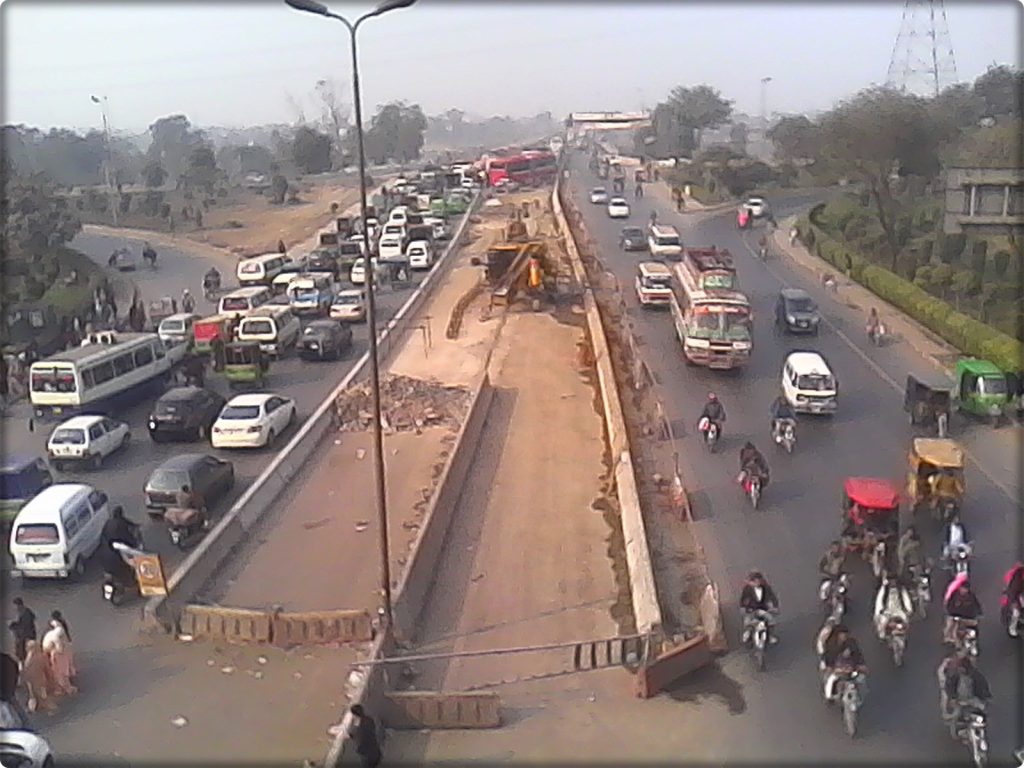
- Dust. Construction, open dumping and uncovered sand and mud trolleys add particles to the air.
- Weather. From October to late November, windless conditions and cooler temperatures trap pollutants near the ground. Wind direction also determines how much smoke from regional crop burning reaches the city, according to Punjab's EPA as quoted by Al Jazeera.
The most harmful part of smog is PM2.5, particles small enough to travel deep into the lungs. In November 2023, Al Jazeera reported readings that were around 30 times the WHO's recommended daily maximum on the worst days.
When Is Smog Season in Lahore?
Dates vary from year to year with rainfall, wind and temperature. Treat this as a guide, not a forecast.
| Period | Typical air quality | What to expect |
|---|---|---|
| Early to mid October | Rising pollution after summer and monsoon | First hazy mornings; crop burning season begins in the region |
| Late October to November | Often poor, with serious spikes | Still air and cooler nights trap smoke; Al Jazeera described November as the peak in 2023 |
| December to January | Poor to hazardous, mixed with fog | Dense fog and smog combine; flights and roads can be affected by low visibility |
| February | Gradual improvement | Winds and rain help, though pollution episodes still occur |
| March to September | Usually better | Heat, wind and monsoon rain disperse pollution, though dust can still rise |
Smog, Fog and Haze: What Is the Difference?
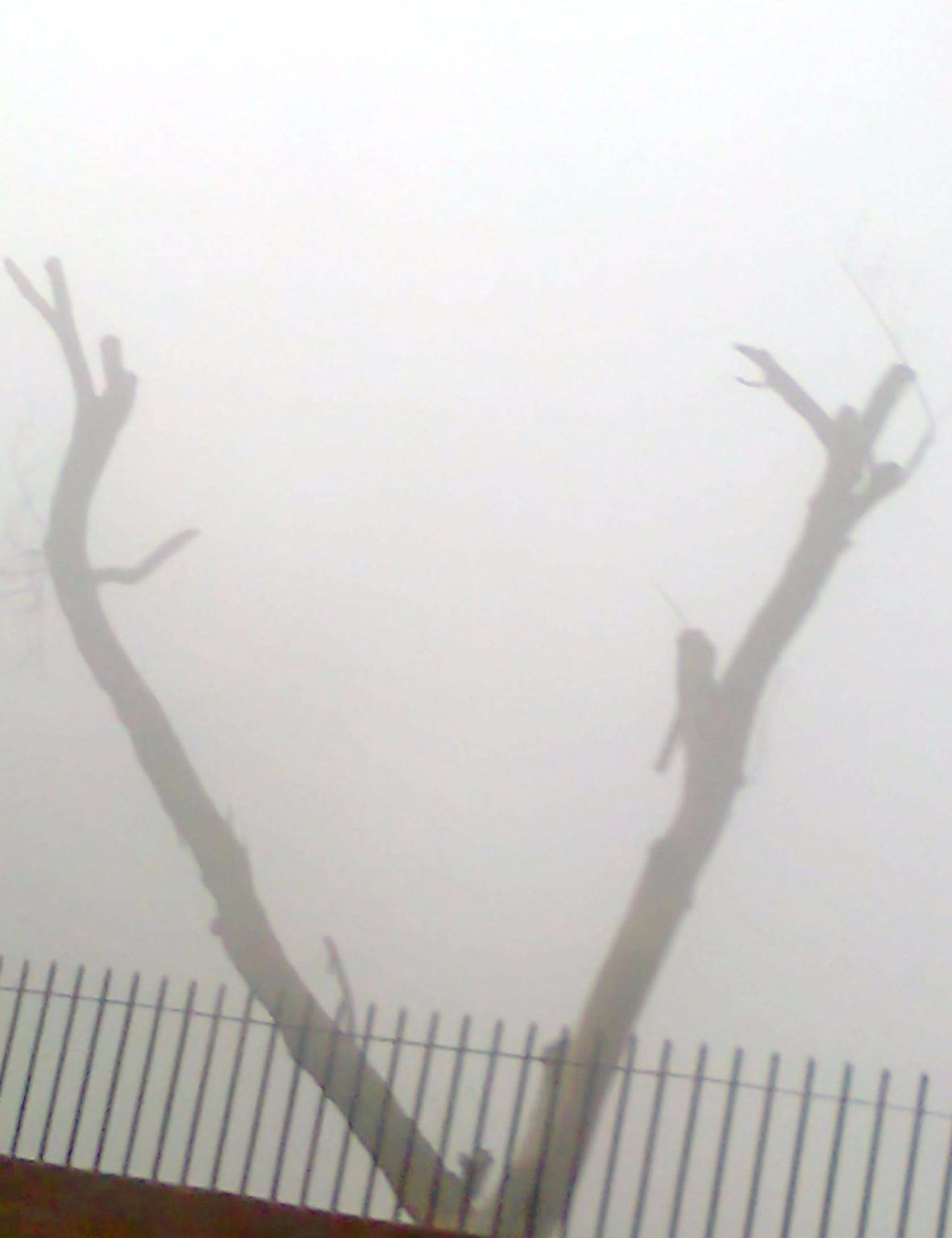
Fog is tiny water droplets and clears as the day warms. Smog is polluted air full of smoke and fine particles, and it does not clear when the sun comes out. In Lahore the two often appear together on winter mornings, which makes it hard to tell by eye whether the air is safe. A thick grey sky, a sharp smell of smoke, stinging eyes or a scratchy throat are signs that pollution, rather than harmless mist, is involved. The only reliable check is the AQI reading, so look at the number before you decide whether to go out.
How to Read the AQI
The Air Quality Index turns pollutant readings into one number. Punjab's own dashboard uses the scale below. Many apps and websites use the US scale, so the same number can carry a different label depending on the source.
| Punjab AQI range | Category | What it means in plain terms |
|---|---|---|
| 0 to 50 | Good | Little or no risk |
| 51 to 100 | Satisfactory | Fine for most people |
| 101 to 150 | Moderate | Unusually sensitive people may notice effects |
| 151 to 200 | Unhealthy for sensitive groups | Children, older adults and people with heart or lung disease should cut back outdoors |
| 201 to 300 | Unhealthy | Everyone may be affected |
| 301 to 400 | Very unhealthy | Avoid outdoor exertion |
| 401 to 500 | Hazardous | Emergency conditions; stay indoors if possible |
How to Check Lahore's Air Quality
- Use the Punjab dashboard. The Punjab government's AQI site (aqi.punjab.gov.pk) shows a live reading for Lahore, a ranking of Punjab cities, readings by monitoring station and pollutants such as PM2.5, PM10, nitrogen dioxide and ozone, along with health advice and forecasts.
- Compare more than one source. Station readings differ across the city, and international apps use different scales and sensors. If two sources disagree, treat the worse one as the safer guide.
- Check in the morning and evening. Pollution is often highest in the early morning and at night.
- Look at your neighbourhood. Lahore's town-wise table lets you see which part of the city is worst.
- Decide before you go out. Use the reading to decide whether to exercise, send children to outdoor activities or travel.
Health Effects and Who Is Most at Risk
During heavy smog, hundreds of people in Lahore have reported illness, including allergies, sore throats and breathing problems, and residents have described asthma developing among children. Eye irritation, coughing and asthma attacks are commonly associated with polluted air. Children, pregnant women, older adults, outdoor workers and people with asthma, heart disease or other lung conditions are at greatest risk. Seek medical care promptly for chest pain, severe breathlessness, wheezing that does not settle, or fainting. This guide gives general information and is not medical advice. See our guide to healthcare in Pakistan for how to find a doctor.
How to Stay Safe During Smog
- Wear the right mask. A cloth or surgical mask does little against fine particles. Look for a well-fitting respirator labelled N95, KN95 or FFP2, and replace it when it is damp, dirty or hard to breathe through. Masks that do not seal around the nose and cheeks do not work well, and they are not suitable for very small children.
- Limit outdoor exercise when the AQI is poor, and move workouts indoors.
- Keep windows and doors closed on bad days, and air your home briefly when the reading improves.
- Use an air purifier with a HEPA filter in the room where you sleep if you can afford one. Check the filter's rated room size.
- Protect children. Reduce playground and sports time on poor days and follow school announcements.
- Drink water and keep medication to hand if you have asthma or heart disease, and follow your doctor's plan.
- Drive carefully. Smog and fog cut visibility on roads and motorways, so slow down, use fog lights and keep a safe distance.
- Do not burn waste, leaves or tyres. It adds to the problem and is banned in Punjab's smog measures.
What Punjab Is Doing About Smog
Punjab's authorities have taken a mix of emergency and long-term steps over several seasons, although how effective they are is debated.
- Bans and enforcement. The 2020 measures banned burning of crop residue, solid waste, tyres, rubber and plastics, smoke-emitting vehicles and substandard fuel, and required dust control at construction and on roads.
- Brick kiln and industry rules. Old-design kilns were ordered to convert to the zigzag design, and stone crushers were required to use dust controls.
- Crackdowns. In later seasons the EPA reported demolishing many kilns and banned uncovered sand and mud trolleys across the province.
- Emergency closures. In November 2023 Punjab announced a Friday holiday that created a four-day break, closed schools, and restricted markets and public spaces. Critics told Al Jazeera that closures work only alongside long-term policies.
- Public reporting. Residents can report polluting vehicles, factories or burning to the Punjab EPA helpline 1373 or through the Green Punjab app.
Planning a Visit to Lahore in Smog Season
Lahore remains a rewarding place to visit in winter, but check conditions before you plan outdoor sightseeing. Consider these steps.
- If your dates are flexible, aim for February to April or the post-monsoon weeks of late September, or read our month-by-month travel guide and the overview of Pakistan's climate.
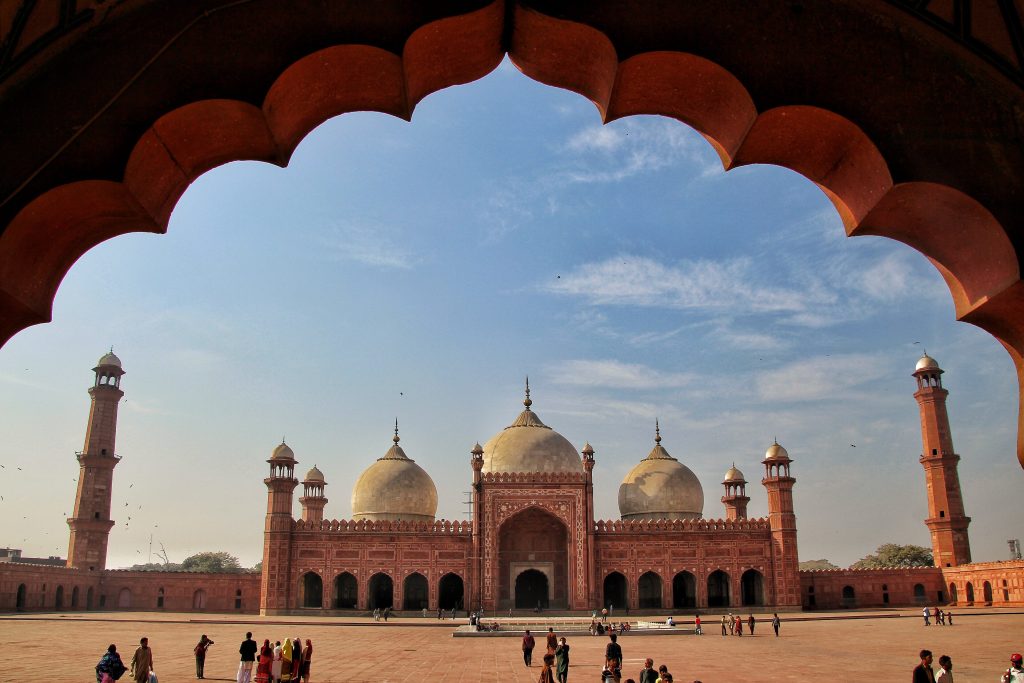
- Check the AQI each morning and keep a flexible itinerary. Visit the Walled City, Badshahi Mosque or the fort on clearer days, and keep museums, markets and food stops for hazy ones.
- Pack a proper respirator and any medication you need, particularly if you have asthma.
- Allow extra time for travel because fog can delay flights and slow traffic.
Our Lahore city break guide and Lahore city page have ideas for both indoor and outdoor days.
Official Sources and Where to Get Help
Use the Punjab Environment Protection Department and EPA Punjab website (epd.punjab.gov.pk) for reports, notices and complaints. Its pages list the EPA helpline 1373, a WhatsApp complaint number and the Green Punjab app for reporting smoke from vehicles, kilns, factories and burning waste. The Punjab AQI dashboard provides live readings. For health concerns, speak to a qualified doctor, and for emergencies go to the nearest hospital. For school closures and holidays, rely on announcements from the Punjab government rather than social media rumours.
Related guides: the same cold months bring other health risks, see dengue prevention and symptoms, the Sehat Card Plus guide and the guide to major hospitals. Rooftop solar can reduce generator use, see solar panel sizing for Pakistani homes. Getting around the city is covered in the Orange Line and Metro Bus guide and the M-2 motorway guide. Checked October 2026: the AQI categories in the table (Good 0 to 50 up to Hazardous 401 to 500) match the Punjab AQI dashboard and its health advisory page.
Frequently Asked Questions
Why is Lahore so polluted in winter?
A mix of vehicle and industrial emissions, kilns, burning of waste and crop residue, and dust is trapped by cool, still winter air. Weather, wind direction and rainfall decide how bad each season gets.
When is the smog season in Lahore?
It typically starts in October and is often worst between about November and January. The exact timing changes every year.
What AQI is dangerous?
On Punjab's scale, 151 to 200 is unhealthy for sensitive groups, 201 to 300 is unhealthy for everyone, and above 300 is very unhealthy or hazardous. On the US scale, readings above 100 are unhealthy for sensitive groups.
Which mask is best for Lahore smog?
A well-fitting N95, KN95 or FFP2 respirator filters fine particles far better than a cloth or surgical mask. Replace it when it is damp or hard to breathe through.
Where can I check Lahore's live AQI?
The Punjab government's AQI dashboard at aqi.punjab.gov.pk shows live readings, station data and health advice. Compare with an international app if you want a second reading.
How do I report smoke or burning in Lahore?
You can call the Punjab EPA helpline 1373 or use the Green Punjab app, according to the Punjab EPA website.
Are schools closed during smog in Punjab?
The Punjab government has closed schools or changed timings during severe episodes, for example in November 2023. Follow the official notification for the current season.
Is Lahore safe to visit in winter?
Yes for most visitors, if you check the AQI, plan flexible days and take precautions. People with asthma, heart disease or young children should be extra careful and speak to a doctor first.
Which AQI scale does the Punjab dashboard use?
It uses Good (0 to 50), Satisfactory (51 to 100), Moderate (101 to 150), Unhealthy for Sensitive Groups (151 to 200), Unhealthy (201 to 300), Very Unhealthy (301 to 400) and Hazardous (401 to 500). Apps that use the US scale label the same numbers differently.
How we know this
- Type Practical guide
- Sources 6 (4 official/academic)
- Reviewed October 2026
- Disputed points None
Rules and fees change, confirm with the official links below before you act.
6 sources
- https://aqi.punjab.gov.pk, Environment Protection Department, Government of the Punjab
- https://aqi.punjab.gov.pk/health-advisory, Environment Protection Department, Government of the Punjab
- https://epd.punjab.gov.pk, Environment Protection Department, Government of the Punjab
- https://www.airnow.gov/aqi/aqi-basics/, AirNow, US Environmental Protection Agency
- https://www.aljazeera.com/amp/news/2023/11/11/in-lahore-its-that-toxic-smoggy-time-of-year-again, Al Jazeera
- https://www.newsweekpakistan.com/?p=884087, Newsweek Pakistan
