
Buying by panel count
A seller quotes panels and forgets the inverter limit, battery size and shading. Ask for a complete design.
Life in Pakistan
How to work out the right system size from your electricity bill, and what to ask before you buy.
Start with your electricity bill. Take your average monthly units (kWh), divide by 30 to get daily units, then divide that by the electricity one kilowatt of panels is likely to produce per day at your location. The result is the panel capacity you need to cover the household's use. As an illustration, a home using 600 units a month uses about 20 units a day. If a conservative planning figure is 4 units per kW per day, the household needs roughly 5 kW of panels.
Batteries, the inverter and your goals then change the picture. A grid-tied system without batteries can cut your bill but stops when the grid fails. A hybrid system with batteries keeps selected loads running during outages but costs considerably more. This guide explains the sums step by step. Prices change quickly and are not quoted here, so ask for written quotations from several AEDB-certified installers.
Most buyers over-size or under-size their system because they guess. Use data instead.
Daily energy in kWh is power in kW multiplied by hours of use. For example, a 1 kW load running for five hours uses 5 kWh.
These figures are rough, common ranges for planning only. Always use the wattage on your own appliance label, because models and ages differ greatly.
| Appliance | Typical running power | Notes |
|---|---|---|
| LED bulb | About 8 to 15 W | Small but adds up across a house |
| Ceiling fan (AC motor) | About 60 to 90 W | DC or inverter fans use less |
| Refrigerator | About 100 to 250 W when running | Runs in cycles all day and night |
| Television and set-top box | About 80 to 200 W | Check the label |
| Washing machine | About 300 to 600 W | Motor load, plan for surge |
| Water pump (1 hp) | About 750 W and above | High starting surge |
| Inverter air conditioner (1.5 ton) | Often 800 to 1,800 W | Biggest single load for most homes |
| Iron or electric heater | About 1,000 to 2,000 W | Avoid on batteries |
Solar output depends on location and season. Published solar yield data show that the daily energy from each kW of fixed panels in Pakistan typically falls in a wide range: roughly 3.4 to 5.2 units in winter and 6 to 9 units in summer, depending on where you live. Central Punjab sits at the lower end in winter, and parts of Balochistan and Sindh do better. That is why a quote that assumes bright summer output all year can mislead you.
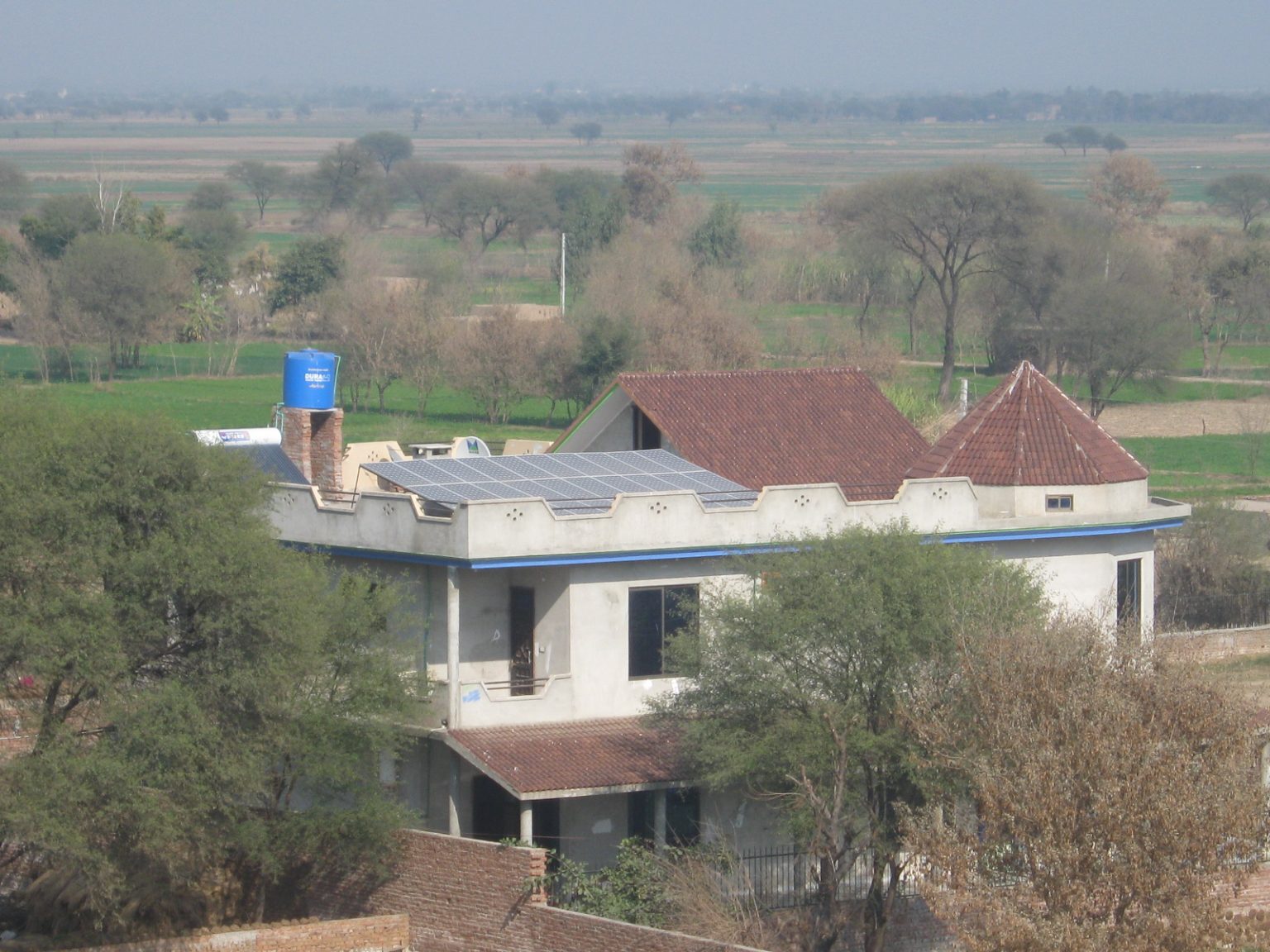
Check this against your roof. A panel is roughly two square metres, so ten panels need around 20 square metres of unshaded space, plus walkways for maintenance. Panels should face roughly south at a tilt close to your latitude, and shade from water tanks, parapets or neighbouring buildings can cut output sharply.
Panels feed a grid-tie inverter, and your home uses solar first and the grid for the rest. It is the cheapest option per unit generated, but a standard grid-tied inverter switches off during a power cut for safety. It makes sense where outages are short and rare.
A hybrid inverter works with panels, batteries and the grid together. It keeps chosen circuits running during load shedding or faults and can also export surplus power where the rules allow. Most urban homes that suffer outages choose this.
With no grid connection, everything depends on panels and batteries, with a generator as backup. This suits remote houses, farms and mountain areas where the grid is unreliable or absent. It needs the largest battery bank.
For the wider picture of outages and tariffs, read our guide to load shedding, net metering and solar.
Size the inverter to the loads that will run at the same time, with margin for motor surge. As a common guideline, the inverter rating is close to the panel capacity (a 5 kW array pairs with a 5 kW inverter, for example), though some installers size the array slightly above the inverter. Ask the installer to show how the numbers match your appliance list.
Battery size depends on how many hours of backup you want and which loads you power. To estimate it:
For instance, a 600 W load of fans, lights and a fridge for six hours needs about 3.6 kWh of usable energy. Running an air conditioner from batteries increases the size and cost a lot, so many households keep it on the grid or on daytime solar only.
The rules for exporting surplus solar power have changed recently, so older articles and sales pitches may be out of date. NEPRA notified the NEPRA (Prosumer) Regulations, 2026 on 9 February 2026, replacing the earlier net-metering framework. According to Business Recorder's report on the notification, the new framework works as net billing: the prosumer pays the applicable tariff for the electricity consumed, and the distribution company buys the surplus at the national average energy purchase price. Existing net-metering customers are reported to stay on their current arrangements until their agreements expire. The agreement is valid for five years and can be renewed, and the regulations cover clean generation of up to one megawatt.
Buyback figures that circulate online change often, so this guide does not quote one. Ask your distribution company, such as LESCO, K-Electric or the one that serves your area, and check NEPRA's website for the current regulations and amendments. NEPRA's own page lists further amendments issued during 2026. News reports in April 2026 also stated that NEPRA removed the licence requirement and fee for systems up to 25 kW, applying from 9 February 2026. Check the current position before you apply, because the rules have been amended more than once.
Panel, inverter and battery prices, and the exchange rate, move quickly, and a price printed here would be out of date within weeks. Compare at least three written quotations for the same capacity and ask each to list the brand and model of panels, inverter and batteries, warranty terms, the mounting structure, cables, protection devices and installation scope. Calculate payback yourself: divide the total installed cost by your yearly bill savings, and remember that export income is now lower and less predictable than it used to be, while battery replacement is a real future cost.
Most problems come from rushing into a sale.
A seller quotes panels and forgets the inverter limit, battery size and shading. Ask for a complete design.
Summer yield is much higher than winter yield, so size on conservative figures.
The battery is often the part that fails first. Check capacity, cycle life and warranty on paper.
Buyback terms changed in 2026. Design for self-use first.
For regulations, use NEPRA's website, which lists the Prosumer Regulations, 2026 and later amendments. For installer certification, use the AEDB list of certified installers. For a connection application and metering, contact your electricity distribution company. For solar potential at your exact location, you can use the Global Solar Atlas published by the World Bank Group. If you are also reviewing your bill after installation, our guide to checking electricity and gas bills shows how to read it.
Related guides: if you are still waiting for a supply, read how to apply for a new electricity connection and a new gas connection. For financing a system see how to open a bank account and how to apply for a credit card. Panels also help during summer smog and heat, see the Lahore smog and air quality guide. Checked October 2026: The News reported on 28 April 2026 that NEPRA dropped the licence requirement and application fee for solar systems up to 25 kW, and that larger systems pay a one time fee of Rs 1,000 per kW. Confirm the current position with NEPRA before you apply.
As an illustration, 600 units a month is about 20 units a day, and at a conservative 4 units per kW per day that means about 5 kW of panels. Your location, roof shading and goals can change this, so get a site survey.
With 550 W panels you need about 9 or 10. The number changes with panel wattage, so divide the target watts by the panel's rating.
Not if you only want to cut your bill and can live with the system switching off in an outage. If you need backup during load shedding, a hybrid system with batteries is required.
NEPRA notified the Prosumer Regulations, 2026 on 9 February 2026, which replaced net metering with net billing for new applicants. Existing customers stay on their agreements until expiry.
Under the new regulations, surplus units are bought at the national average energy purchase price. That figure changes, so check with your distribution company or NEPRA.
News reports in April 2026 said NEPRA removed the licence requirement and fee for systems up to 25 kW. Confirm the current rule with your distribution company before applying.
Lifespans depend on the brand and conditions, so use the manufacturer's written warranty as your guide. Batteries usually need replacing before panels do.
Check that the company appears on AEDB's list of certified installers, ask for references from nearby customers and compare written quotations.
The News reported in April 2026 that NEPRA scrapped the licence and application fee for systems up to 25 kW. Rules can be amended, so confirm with NEPRA or your distribution company before you install.
Rules and fees change, confirm with the official links below before you act.
From majestic mountains to vibrant cities, rich cuisine to timeless traditions — discover the real Pakistan with DailyLife.pk.
