
History
A History of Climbing in the Karakoram and Western Himalaya
From the 1856 survey that named K2 to the first Pakistani to climb all fourteen eight-thousanders: documented first ascents, the people who made them possible, and Pakistani climbers in their own right.
- Gilgit-Baltistan and Chitral
- 1856 to 2026
- Sourced dates and teams
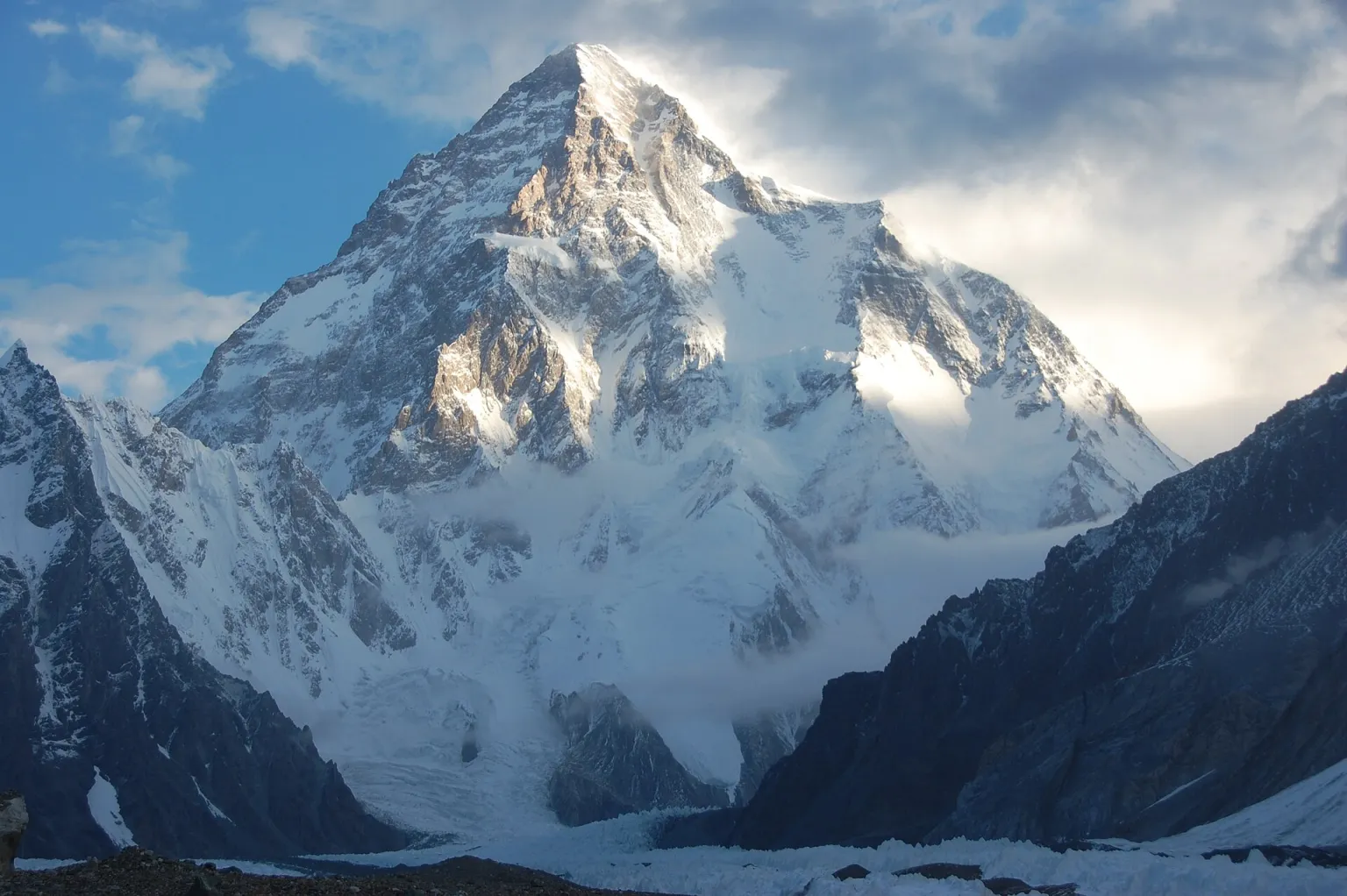
K2 from the Baltoro region, Gilgit-Baltistan
How the story runs
The mountaineering history of Pakistan begins with survey and exploration, moves through a series of national-style expeditions in the 1930s to 1950s, and ends with a Pakistani story that is increasingly told by Pakistani climbers. Foreign teams did the first ascents of the great peaks, but almost every one of them depended on porters and high-altitude porters from the valleys of Baltistan and Hunza, and on Pakistani liaison officers, army officers and guides.
This page sticks to documented events with dates. Where a source describes a controversy, we say who is reporting it. Fatalities are mentioned only where they are part of the documented record and are not dramatised. Dates and team lists come from Britannica, the Himalayan Club's journal, ExplorersWeb, Dawn, Gulf News and Wikipedia articles that cite primary accounts; where we rely only on Wikipedia we say so in the sources list.
Timeline of documented firsts
1856
Survey names K2
Colonel T. G. Montgomerie of the Survey of India sights the peak from afar and labels it K2, the second Karakoram peak measured (Britannica).
1892
Conway reaches Concordia
Martin Conway's British expedition travels up the Baltoro and reaches Concordia (Wikipedia). Conway is credited with the English names Broad Peak and Hidden Peak.
1895
Mummery on Nanga Parbat
Albert Mummery reaches almost 6,100 m on the Diamir face. He and two Gurkha companions die later while reconnoitring the Rakhiot face (Wikipedia; Britannica notes the 1895 attempt).
1902–1909
First serious K2 attempts
In 1902 Oscar Eckenstein, Aleister Crowley and others reach about 6,525 m on the north-east ridge. In 1909 the Duke of the Abruzzi's expedition reaches about 6,250 m on the south-east spur, later named the Abruzzi Spur, and judges the mountain unclimbable (Wikipedia).
1934 and 1937
German expeditions to Nanga Parbat
The 1934 expedition led by Willy Merkl ends in a storm-driven retreat in which Merkl, Willo Welzenbach, Ulrich Wieland and six Sherpas die. On or about 14 June 1937 an avalanche buries Camp IV and kills sixteen men, seven Germans and nine Sherpas (Wikipedia).
1938, 1939, 1953
American expeditions to K2
Charles Houston's 1938 reconnaissance judges the Abruzzi Spur the best route. In 1939 Fritz Wiessner's team comes within about 200 m of the top; Dudley Wolfe and three Sherpas disappear. In 1953 Houston leads a second attempt; Art Gilkey dies during the retreat and Pete Schoening's belay saves most of the party (Wikipedia).
21 July 1950
Tirich Mir
A Norwegian expedition (Arne Næss, Per Kvernberg, Henry Berg and Tony Streather per Wikipedia) makes the first ascent of the Hindu Kush's highest peak. Britannica dates it to July 1950.
3 July 1953
Nanga Parbat
Hermann Buhl reaches the summit alone on the German-Austrian expedition, without supplemental oxygen. It is the first ascent of an eight-thousander in Pakistan.
31 July 1954
K2
Achille Compagnoni and Lino Lacedelli of Ardito Desio's Italian expedition reach the summit by the Abruzzi Spur. Amir Mehdi, a Hunza porter, carried oxygen to about 8,100 m and spent a night above 8,000 m in the open, losing his toes to frostbite (Wikipedia).
7 July 1956
Gasherbrum II
Austrians Fritz Moravec, Josef Larch and Hans Willenpart reach the summit.
9 June 1957
Broad Peak
Austrians Fritz Wintersteller, Marcus Schmuck, Kurt Diemberger and Hermann Buhl, led by Schmuck, climb without high-altitude porters, supplemental oxygen or a base camp support team.
25 June 1958
Rakaposhi
Mike Banks and Tom Patey of a British expedition reach the summit by the south-west spur (Wikipedia).
5 July 1958
Gasherbrum I
Pete Schoening and Andy Kauffman of an American expedition led by Nicholas Clinch reach the summit. Pakistani army officers Captains Mohammad Akram and S. T. H. Rizvi were members of the team.
6 and 8 July 1960
Masherbrum
Willi Unsoeld and George Bell make the first ascent on 6 July. Two days later Nick Clinch and Captain Jawed Akhter Khan follow; Khan is described by ExplorersWeb as the first Pakistani to summit a major Karakoram peak.
Pakistani climbers, as documented
 Ashraf AmanSummited K2 on 9 August 1977 on the second ascent, the Japanese expedition led by Ichiro Yoshizawa, becoming the first Pakistani to reach the top (Wikipedia, K2).
Winter ascents and the modern era
1974
Alpine Club of Pakistan
The club is founded; Wikipedia notes it is the national governing body for mountaineering and trains climbers, liaison officers and women at its institute in Nilt, Gilgit-Baltistan, a programme running since 1977.
1975 and 1984
Alpine-style ascents on the Gasherbrums
Reinhold Messner and Peter Habeler climb a north-west route on Gasherbrum I in alpine style in 1975. In 1984 Messner and Hans Kammerlander traverse Gasherbrum II and I without returning to base camp.
26 July 2014
All-Pakistani K2 summit team
Wikipedia records that six Pakistani climbers summited K2 on the 'K2 60 Years Later' expedition, the first all-Pakistani team to do so.
2011 to 2016
Winter firsts
Gasherbrum II (2 February 2011), Gasherbrum I (9 March 2012), Broad Peak (5 March 2013) and Nanga Parbat (26 February 2016, with Ali Sadpara) all receive first winter ascents.
16 January 2021
K2 in winter
Ten Nepali climbers reach the summit. Sergi Mingote died on the descent the same day, and four more climbers died in the season, including the Pakistani climber Muhammad Ali Sadpara, John Snorri Sigurjónsson and Juan Pablo Mohr Prieto (Wikipedia).
February 2021
Ali Sadpara, John Snorri and Juan Pablo Mohr
The three were last seen near K2's Bottleneck and declared missing on 5 February 2021. Pakistani authorities officially presumed them dead on 18 February. Bodies believed to be theirs were found above Camp 4 on 26 July 2021, per Wikipedia.
18 May 2025
Sirbaz Khan completes all fourteen
Gulf News reports that Sirbaz Khan of Aliabad, Hunza, summited Kangchenjunga on 18 May 2025 and became the first Pakistani to climb all 14 eight-thousanders, without supplemental oxygen according to the Alpine Club of Pakistan's secretary, as quoted.
Documented controversies
The 1954 K2 ascent is controversial. Wikipedia reports that the high camp was placed higher than had been agreed, leaving Walter Bonatti and the Hunza porter Amir Mehdi to bivouac in the open above 8,000 m; Mehdi lost his toes to frostbite. In July 2023 a viral video appeared to show climbers passing a Pakistani high-altitude porter, Mohammad Hassan of Shigar, who had fallen near the Bottleneck on K2; the Gilgit-Baltistan government formed a five-member committee on 7 August 2023 to investigate and report within 15 days, as Dawn reported. We describe these cases only as far as the public record goes.


Frequently Asked Questions
Who made the first ascent of K2?
Achille Compagnoni and Lino Lacedelli of the Italian expedition led by Ardito Desio, on 31 July 1954, by the Abruzzi Spur.
Who was the first Pakistani on K2?
Wikipedia credits Ashraf Aman with being the first Pakistani to summit K2, on 9 August 1977, on the second ascent of the mountain.
Who was the first Pakistani on Everest?
According to Wikipedia, Nazir Sabir, on 17 May 2000.
Who was the first Pakistani woman to climb Everest?
Samina Baig, on 19 May 2013, per Wikipedia.
Has a Pakistani climbed all fourteen eight-thousanders?
Gulf News reported in May 2025 that Sirbaz Khan completed all fourteen with Kangchenjunga on 18 May 2025, the first Pakistani to do so.
Keep Exploring
Related places and stories on DailyLife.pk
K2K2 (Chogori): height, location, first ascent in 1954, winter ascent in 2021, history and fatalities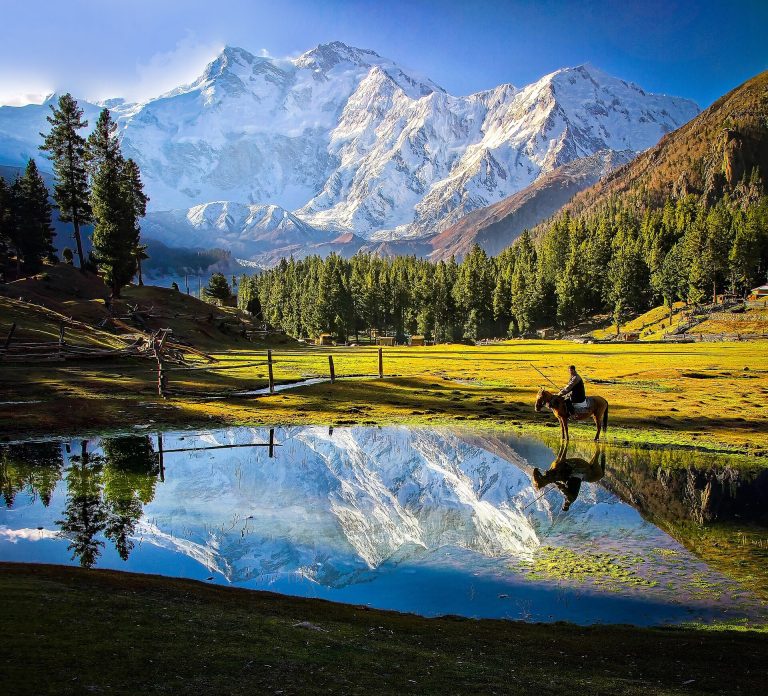 Nanga ParbatNanga Parbat (8,126 m): the Rupal Face, Diamir and Raikot sides, first ascent in 1953
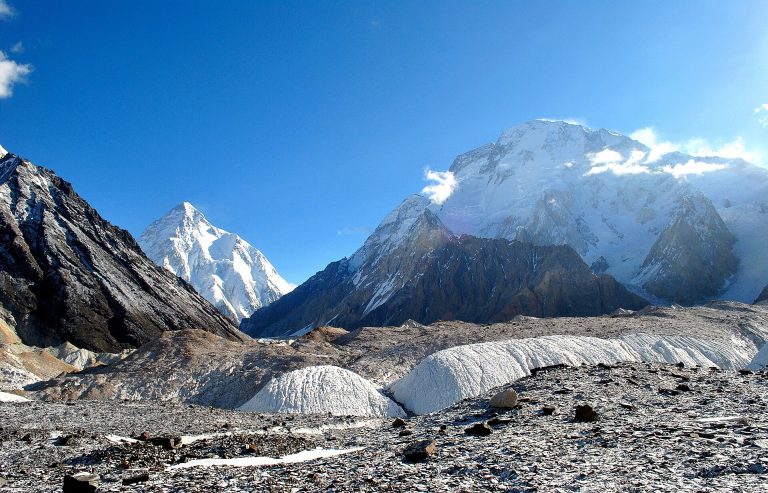 Broad PeakBroad Peak (8,051 m): where it is, first ascent in 1957 by an Austrian team
 Gasherbrum I and IIGasherbrum I (8,080 m) and II (8,035 m): names, first ascents in 1956 and 1958MasherbrumMasherbrum (7,821 m, K1): location above the Hushe Valley, the 1960 American-Pakistani first ascent
 RakaposhiRakaposhi (7,788 m) in Nagar, Gilgit-Baltistan: height, relief above the Hunza River, first ascent in 1958
How we know this
- Type Historical & cultural research
- Sources 19 (1 official/academic)
- Reviewed October 2026
- Disputed points Yes, see the debates
19 sources
- K2, Encyclopaedia Britannica
- K2, Wikipedia (used to locate primary sources)
- Nanga Parbat, Wikipedia (used to locate primary sources)
- Broad Peak, Wikipedia (used to locate primary sources)
- Gasherbrum I, Wikipedia (used to locate primary sources)
- Gasherbrum II, Wikipedia (used to locate primary sources)
- Rakaposhi, Wikipedia (used to locate primary sources)
- Masherbrum, Wikipedia (used to locate primary sources)
- Tirich Mir, Wikipedia (used to locate primary sources)
- The ascent of Masherbrum (Himalayan Journal, vol. 22), The Himalayan Club
- Why Masherbrum has had so few summits, ExplorersWeb
- Nazir Sabir, Wikipedia (used to locate primary sources)
- Hassan Sadpara, Wikipedia (used to locate primary sources)
- Muhammad Ali Sadpara, Wikipedia (used to locate primary sources)
- Samina Baig, Wikipedia (used to locate primary sources)
- Naila Kiani becomes first Pakistani woman to summit an 8,000 m peak in Pakistan (22 August 2021), Dawn
- A Pakistani first: Sirbaz Khan scales all 8,000m peaks without oxygen cylinder (May 2025), Gulf News
- GB forms committee to probe death of porter on K2 (8 August 2023), Dawn
- Alpine Club of Pakistan, Wikipedia (used to locate primary sources)
Photo credits (4)
- K2, Mount Godwin Austen, Chogori, Savage Mountain.jpg, Wikimedia Commons contributor, CC BY 2.0, via Wikimedia Commons
- Baltoro Glacier, Pakistan.jpg, Thsulemani, CC BY-SA 3.0, via Wikimedia Commons
- Minar-e-Pakistan with waving national flags.JPG, Susmanhamza, CC BY-SA 3.0, via Wikimedia Commons
- The Mighty K2 PAkistan.jpg, Maqsood aktar, CC BY-SA 4.0, via Wikimedia Commons
