
Travel destination
Rawat Fort: A Caravanserai Fort on the Grand Trunk Road
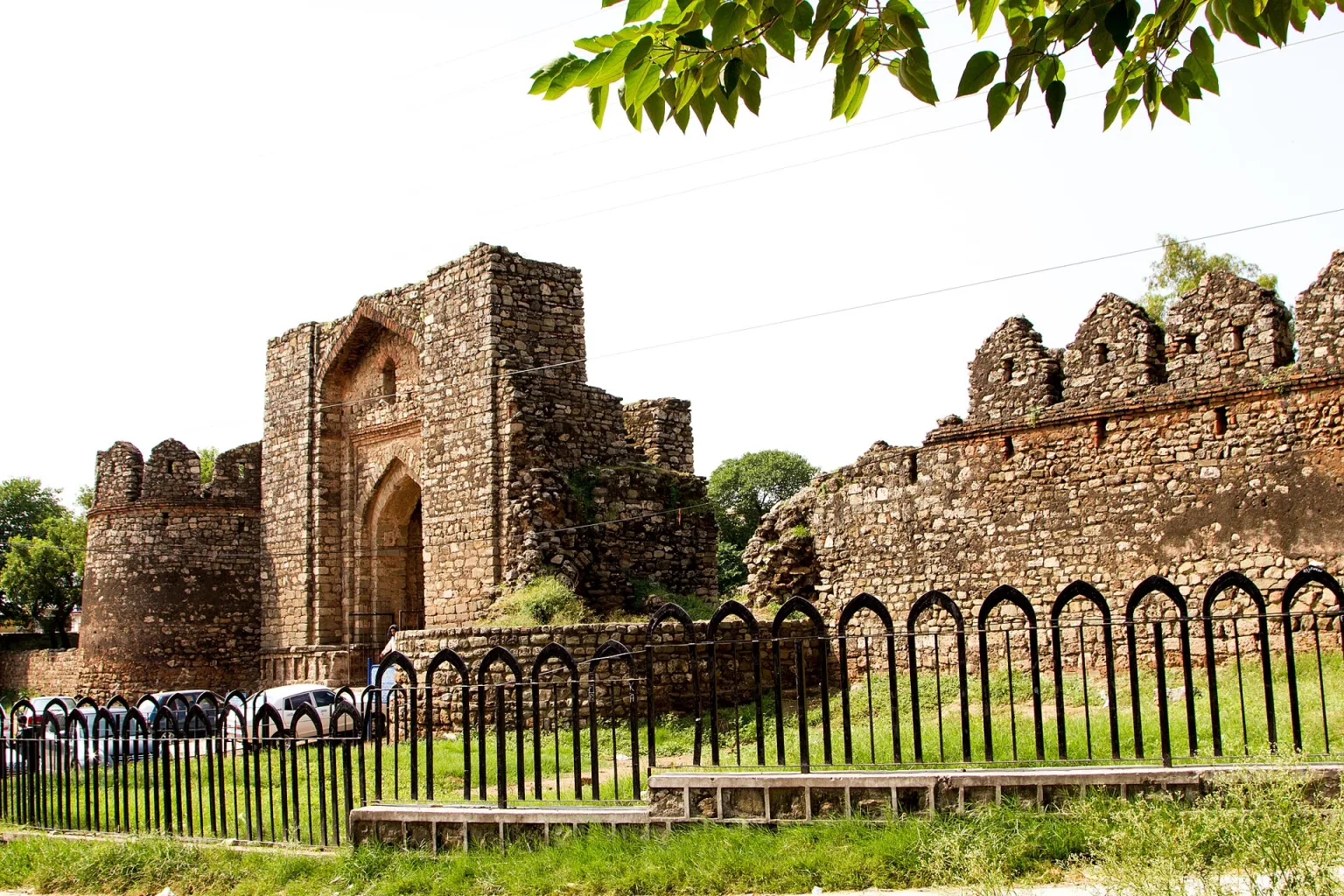
Beside the Grand Trunk Road east of Rawalpindi, a quadrangular sandstone fort holds a three-domed mosque and the graves of Gakhar chief Sultan Sarang Khan and his sons.
- Potohar Plateau, Punjab
- 15th–16th century fort
- Best season October to March
Rawat Fort, near Rawalpindi, Punjab
About Rawat Fort
Rawat Fort sits on the Grand Trunk Road about 18 km east of Rawalpindi, according to Arab News in February 2025, on the Potohar plateau of northern Punjab. Its name is usually traced to the Arabic rabat, a caravanserai or inn, and the Department of Archaeology and Museums (DOAM) describes the building as originally an inn for travellers and merchants on one of South Asia's great overland routes.
Its origins are debated. Some historians connect the site to an 11th-century foundation attributed to Sultan Masood, son of Mahmud of Ghazni; others credit the Gakhars, the Potohar chieftain family. Arab News notes that Babur made Sarang Khan Gakhar ruler of Potohar in 1520, and that Sarang Khan was killed in battle against Islam Shah, son of the Afghan ruler Sher Shah Suri; his brother Adam Khan recovered the bodies and built a tomb in the fort. Pakistan Heritage describes the fort as nearly square, measuring about 307 by 348 feet, with smaller gateways on the north and south sides, a three-bay mosque of three domes on the west wall and an octagonal tomb beside it. In the courtyard lie many smaller graves traditionally attributed to Sarang Khan's sons and companions.
The fort passed through Mughal and Sikh hands (Sikh forces under Sardar Milkha Singh captured it early in the 19th century) and decayed after the British annexed Punjab in 1849. Arab News reports significant encroachment between 2011 and 2017, return of the monument to DOAM in 2017 and a conservation project under way as of February 2025, using original materials rather than reconstruction. It is not on Pakistan's UNESCO lists, but it is one of the most atmospheric short trips from the twin cities.

What to See
 The fort and gatewaysA quadrangular enclosure with three main gates and cells once rented to merchants, now being restored.
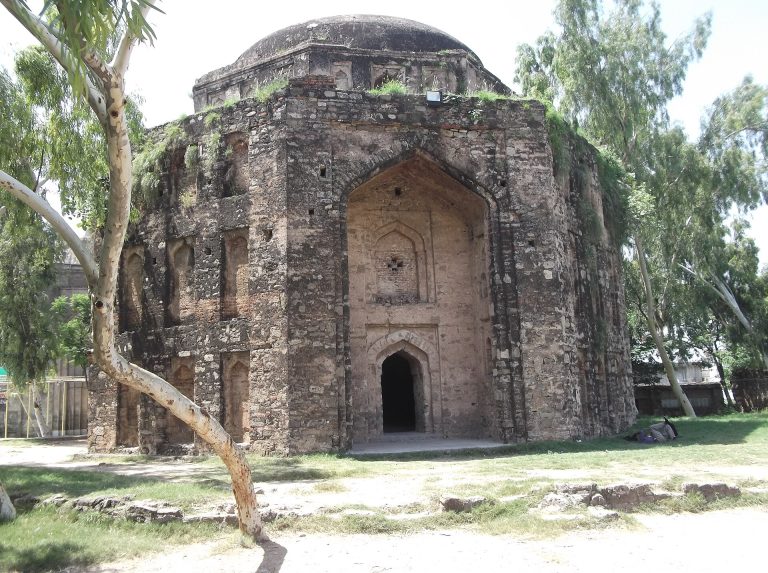 MosqueA three-bay mosque with three domes dominates the western wall.
Plan Your Visit
Best Time to Visit
October to March
Cool months suit an open site with little shade.
How to Reach
Grand Trunk Road
The fort is on the Grand Trunk Road, about 18 km east of Rawalpindi (Arab News, 2025). Take a car or taxi from Islamabad or Rawalpindi and confirm the entrance.
Tickets and Hours
Confirm locally
Reports do not state fixed opening hours or fees. Confirm with DOAM or on site.
Works
Restoration
Parts of the fort may be closed or fenced during conservation. Expect scaffolding.
Photography
Ask first
Ask staff about drones, tripods and any restricted areas.
Etiquette
Active cemetery
Graves and the mosque are sacred to visitors; dress modestly and be respectful.
Suggested Half-Day Plan
- 1
Check the situation
Ask DOAM or local officials about access.
- 2
Morning drive
Leave Rawalpindi or Islamabad early and drive along the Grand Trunk Road.
- 3
Walk the fort
Enter through the main gate; visit the mosque and tomb, then the courtyard.
- 4
Take photographs
Capture the gate and domes in the morning light.
- 5
Continue
Return to Rawalpindi for Raja Bazaar, or continue to the Pothwar's other heritage such as Rohtas Fort.
Visit Responsibly
- Do not climb on walls, domes or graves.
- Do not remove stones or bricks; the fort is under conservation.
- Do not scratch names into the walls.
- Keep the courtyard clean and use waste bins.
- Respect people who come to pray at the tomb and mosque.
Nearby Places
Frequently Asked Questions
Where is Rawat Fort?
On the Grand Trunk Road about 18 km east of Rawalpindi, on the Potohar plateau (Arab News, Feb 2025).
Who built Rawat Fort?
Its origins are debated: some sources point to an 11th-century foundation, while others link it with the Gakhars; the DOAM describes it as originally a caravanserai.
Who is buried at Rawat?
Sultan Sarang Khan, a Gakhar chieftain killed in 1546, is traditionally believed to be buried in the octagonal tomb. Many smaller graves are associated with his sons and associates.
Is the fort being restored?
As of February 2025, the Department of Archaeology and Museums was restoring it using original materials.
Is there a fee?
The reports we read do not state fees. Confirm locally.
Keep Exploring
Related places and stories on DailyLife.pk
 Rohtas FortExplore Rohtas Fort near Jhelum: Sohail Gate, ramparts, Haveli Man Singh, Shahi Masjid and stepwells
 Tilla JogianTilla Jogian near Jhelum: the ancient jogi monastery, temples, Guru Nanak and Heer Ranjha links
 TaxilaVisit Taxila: Dharmarajika stupa, Jaulian monastery, Sirkap and Taxila Museum.
 RawalpindiRawalpindi guide: Raja Bazaar, Saddar, the Army Museum, history from the Gakhars to 1959, food
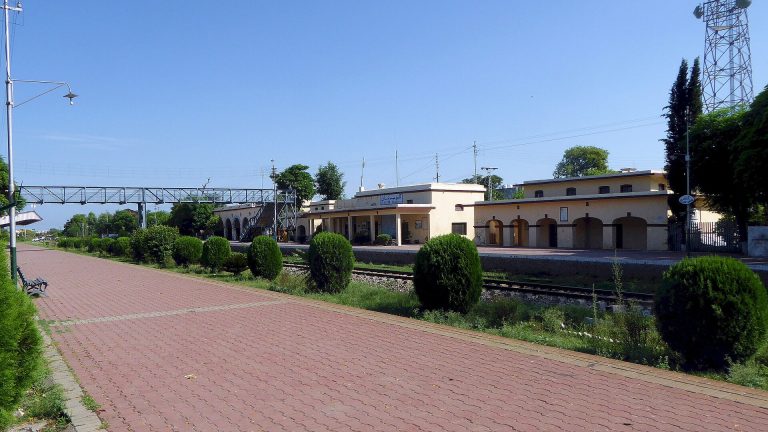 Gujar KhanGujar Khan city guide: Pothohar plateau, the Land of Martyrs, Rawat Fort, Rohtas, Mankiala nearby, history
 IslamabadIslamabad travel guide: Faisal Mosque, Pakistan Monument, Margalla Hills trails, Saidpur, markets, sectors, Metrobus
How we know this
- Type Travel guide
- Sources 2
- Reviewed October 2026
- Disputed points None
Rules and fees change, confirm with the official links below before you act.
2 sources
- Rawat Fort and Tomb of Sultan Sarang Khan, Pakistan Heritage
- Rawat Fort: a forgotten Pakistani archaeological treasure undergoes restoration, Arab News Pakistan
Photo credits (7)
- Rawat Fort - Main Gate East.jpg, Mudabbirmaajid, CC BY-SA 3.0, via Wikimedia Commons
- Rawat Fort 3.jpg, Mobeen ur Rehman, CC BY-SA 4.0, via Wikimedia Commons
- Rawalpindi railway St.jpg, Ayathere19, CC BY-SA 4.0, via Wikimedia Commons
- Gujar Khan railway station.jpg, Asad Razzaki, CC BY-SA 4.0, via Wikimedia Commons
- Sohail Gate, Rohtas Fort, Pakistan.jpg, MBNav412, CC BY-SA 4.0, via Wikimedia Commons
- Tilla Jogian hills at sunset, River Jhelum in the foreground.jpg, Xishan01, CC BY-SA 3.0, via Wikimedia Commons
- Dharmarajika stupa,Taxila.jpg, Sasha Isachenko, CC BY-SA 3.0, via Wikimedia Commons
