
Travel destination
Kot Diji Fort: A Talpur Citadel on the Rohri Hills
A brick-and-limestone fortress raised in the 1780s-90s on the edge of the desert in Khairpur District, with an older Indus-civilisation mound just below it.
- Khairpur District, Sindh
- Built 1785–1795
- Best season November to February
Kot Diji Fort, Khairpur District, Sindh
About Kot Diji Fort
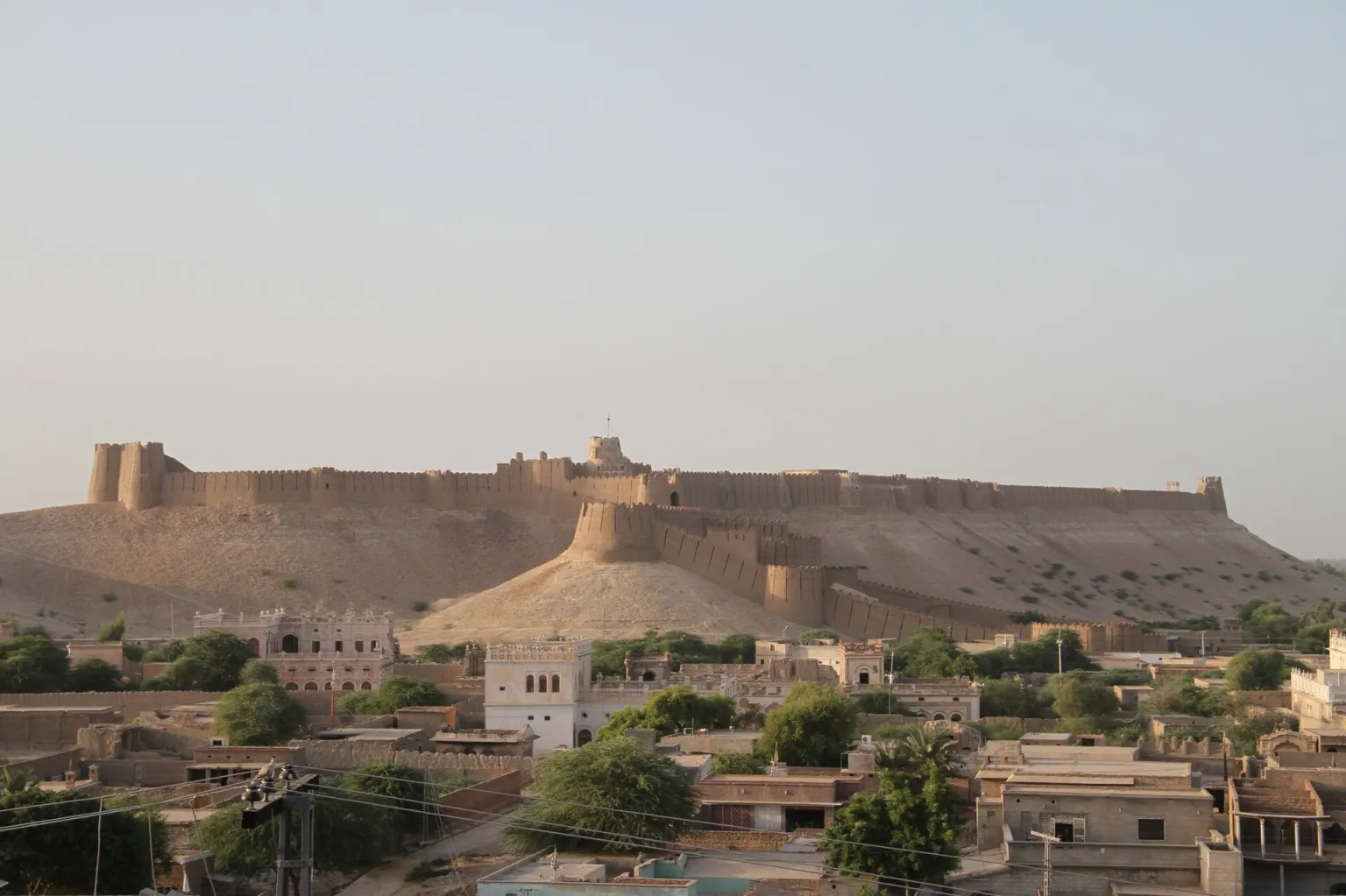
Kot Diji Fort stands on a limestone hill at the southern end of the Rohri Hills, above the small town of Kot Diji in Khairpur District, with the Thar desert beginning to the east. It was built by the Talpurs, the dynasty that took power in Sindh in the late 18th century, between 1785 and 1795, and it is sometimes called Fort Ahmadabad. Dawn's account credits Mir Sohrab Khan, the first Talpur ruler of Khairpur, with founding several forts in this period, among them the one at Diji.
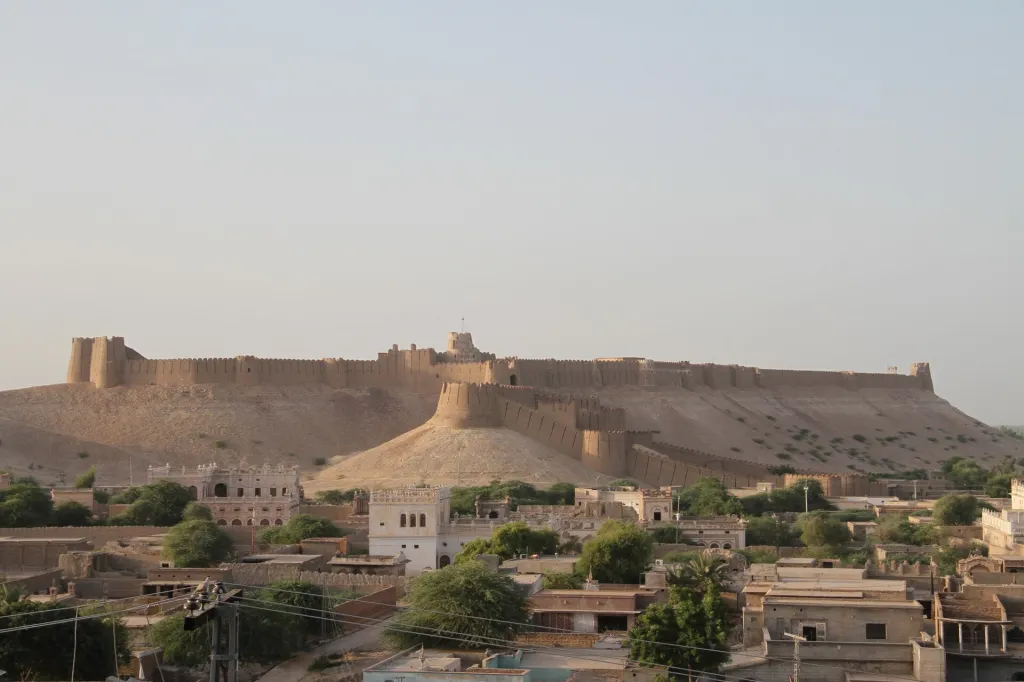
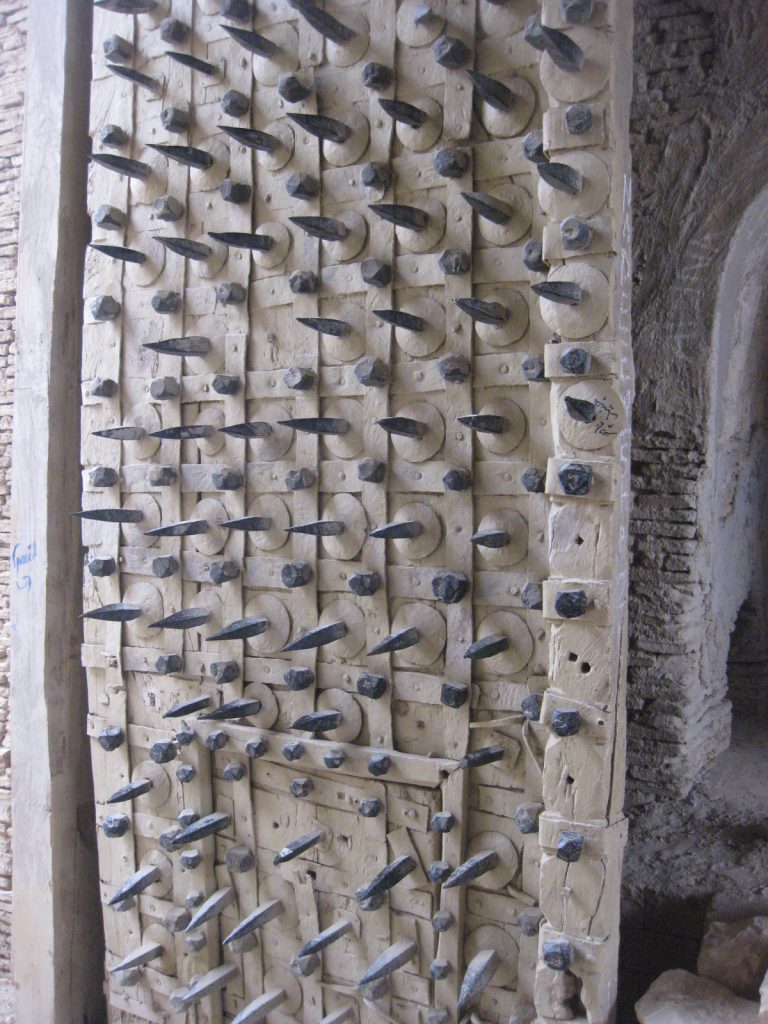
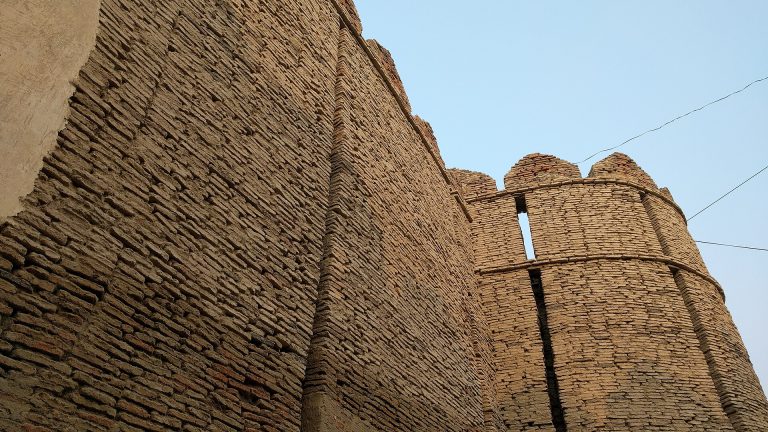
The fort was built to be seen. The kiln-baked brick walls sit on top of a hill of roughly 110 feet and rise another 30 feet or so, so that a force approaching from the east had to climb under the guns of the bastions. A winding approach, a curved royal gate and heavy wooden doors studded with iron spikes made it difficult to rush. Dawn reports that it was never attacked in its history, and it passed through the hands of the three Talpur branches (Hyderabad, Mirpur Khas and Khairpur) before the British era.
In 2026 Kot Diji, together with Naukot and Umerkot, was reported as added to Pakistan's Tentative List for UNESCO World Heritage. That is a first step only; a full nomination takes years. For visitors the fort remains an uncrowded, atmospheric climb with long views over date groves, canals and the edge of the desert, and it makes an easy stop on the way between Sukkur, Khairpur and Mohenjo-daro.
Seen from the road, the fort looks like a crown set on the hill, a signal of Talpur power in a region that had few natural defences.
Highlights
 Shahi Darwaza (Royal Gate)The main entrance faces east and is built on a curved plan, so attackers could not approach in a straight line. Two heavy bastions with musket slits and battlements guard the way up.
 The spiked wooden gateOn the northern wall a wooden gate is reinforced with iron spikes; Dawn counted 234 of them.
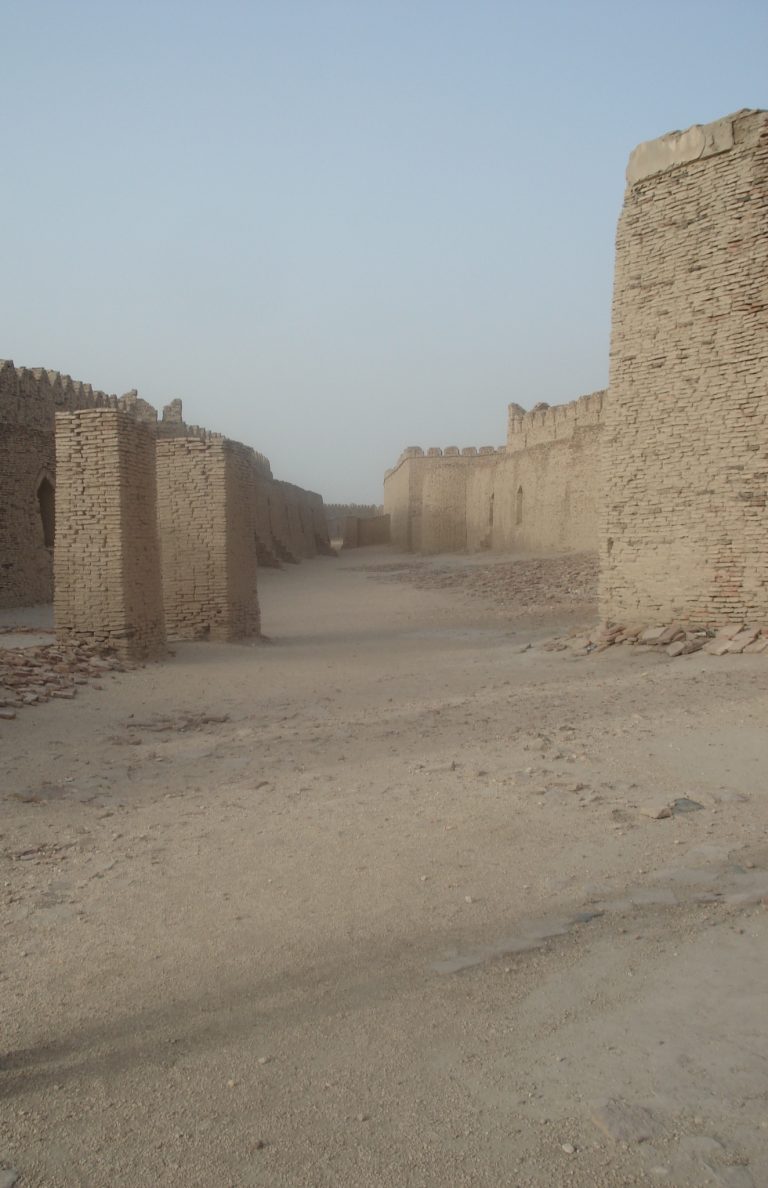 Bastions and cannon platformsNamed bastions include Fateh Thul, Saffan Safa and Malik Maidan Burj. They hold the gun platforms from which defenders covered the plain below.Inner rooms and water tankInside the walls are the remains of an ammunition store, galleries for attendants, spaces described as a court, prison and small royal quarters, and a water pond cut for the garrison.
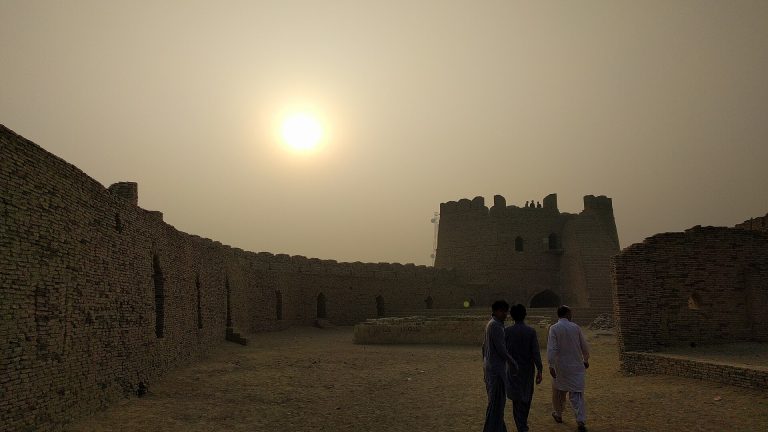 Views at sunsetThe upper ramparts give wide views over Kot Diji, the date groves and the desert edge; late afternoon light is best, and Dawn's writer advises an early start because daylight fades quickly.
 Kot Diji pre-Harappan siteJust below the fort lies the mound that gives its name to the Kot Diji culture, an Early Harappan phase dated to roughly 3300–2800 BCE. It was excavated in the 1950s and is not a monument to visit in its own right, but it explains why the hill was settled thousands of years before the Talpurs.
Two Eras on One Hill
The Talpur fort
The Talpurs overthrew the Kalhora dynasty in 1783 and ruled Sindh until the British conquest of 1843. Kot Diji was one of the strongholds that secured their northern territory. In January 1843, British troops stayed at the fort while Charles Napier campaigned against the stronghold at Imam Garh. After the end of princely rule the fort was handed to the state; the Khairpur page on this site gives 1955 for the transfer.
The Early Harappan town
Archaeologists use the name Kot Diji for a phase of the Early Harappan period, before the cities of the mature Indus civilisation. The excavated settlement, studied in the 1950s by a team led by F. A. Khan, was a small walled town of about 2.6 hectares with a citadel on higher ground and houses of mud brick on stone foundations. Excavators found distinctive red-slipped pottery, terracotta toy carts and figurines, beads and bronze arrowheads, and clear evidence of burning in a later layer. It is one of the key sites for understanding how the Indus civilisation developed from earlier village cultures.
Plan Your Visit
Best Time to Visit
November to February
Winter days are mild and clear. Upper Sindh is extremely hot from about April to September, and an exposed hilltop fort has little shade; visit early or late in the day.
How to Reach
By road from Khairpur or Sukkur
Kot Diji lies roughly 45 km south of Khairpur and is reached by road; Sukkur Airport and Rohri Junction are the nearest air and rail gateways. Use a map app for the final approach and ask at the town for the fort entrance.
Where to Stay
Sukkur or Khairpur
There is little visitor accommodation in Kot Diji itself. Most visitors stay in Sukkur or Khairpur and treat the fort as a half-day trip.
Food
Local dates and Sindhi fare
Khairpur District is famous for dates, which are a fine snack on the road; eat meals in Khairpur or Sukkur, which have a wider choice.
Etiquette and Photography
Heritage and local families
Treat the site with respect; do not climb on unstable walls or remove stones. Ask before photographing residents, especially women, who live around the foot of the hill.
Access and Advisories
Confirm locally
Opening arrangements, any ticketing and the condition of different parts of the fort can change. Check with the Sindh Antiquities Department or locally before travelling, and check current advisories and local authority guidance for upper Sindh.
Itinerary Ideas
- 1
Half-day from Khairpur
Drive south from Khairpur in the morning, climb the fort through the royal gate and spend an hour on the ramparts, then walk down to see the town and the mound below.
- 2
One day from Sukkur
Combine Kot Diji with Khairpur's Faiz Mahal and the shrine of Sachal Sarmast at Daraza, or with the Sukkur riverfront and Lansdowne Bridge on the way back.
- 3
Two days in upper Sindh
Day one: Sukkur, Rohri and Sadhu Bela. Day two: Kot Diji in the morning, then on to Mohenjo-daro or Larkana.
Visit Responsibly
- Stay on established paths and do not climb on crumbling brickwork; the fort is a protected heritage site.
- Take litter away and do not write or scratch on the walls.
- Ask permission before photographing people who live and work around the fort.
- Buy crafts and dates from local sellers rather than bargaining hard; incomes here are modest.
- Avoid the midday summer heat and carry plenty of drinking water.
Nearby Places
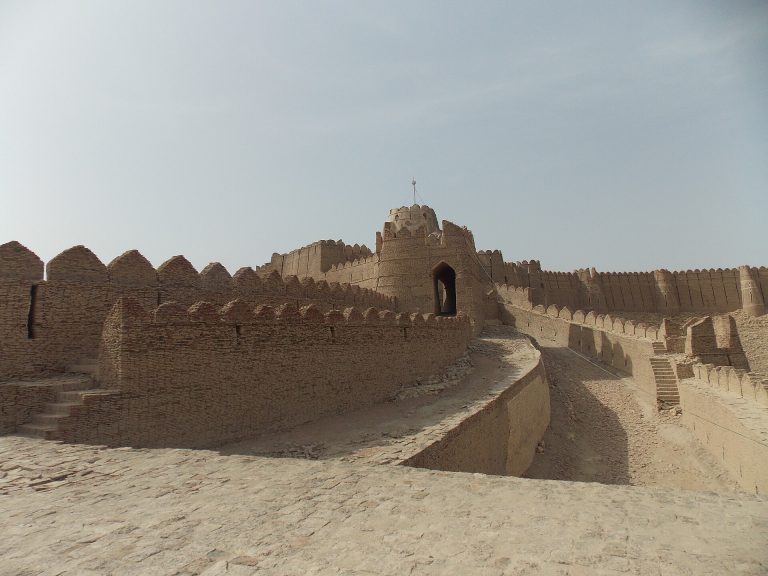 KhairpurThe former capital of Khairpur State, with Faiz Mahal and the shrine of Sachal Sarmast nearby.Mohenjo-daroThe great Indus-civilisation city, across the river in Larkana District.
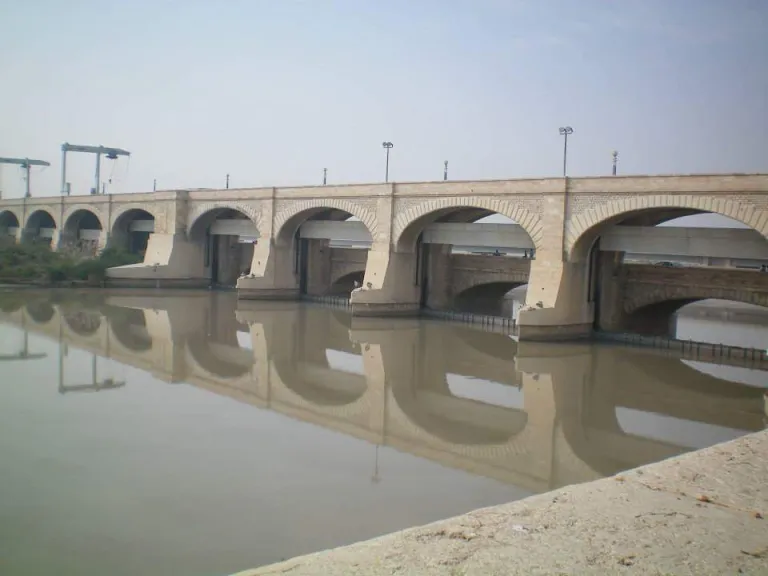 Sadhu Bela and Sukkur BarrageIsland temple complex and the barrage that irrigates much of Sindh.
 RohriThe old rail and river town across from Sukkur.
Kot Diji Fort Through Time
Every dated moment our guides record about Kot Diji Fort, from its own history and from national events that touched it. Each entry links to its source page.
- 1785–1795
Kot Diji Fort
The Talpur fort is raised on the ridge above Kot Diji.
- 2026
Twelve new entries
Added between March and May 2026, including Kalasha Valley, Kot Diji Fort, Bhamala and Bazira-Barikot.
- 2026
UNESCO Tentative List
Kot Diji Fort is reported as added to Pakistan's Tentative List.
Do you remember Kot Diji Fort as it used to be? Share a memory or an old photo, our editors review every story before it appears.
Frequently Asked Questions
Who built Kot Diji Fort and when?
The Talpur dynasty built it between 1785 and 1795; Dawn associates it with Mir Sohrab Khan, the first Talpur ruler of Khairpur.
What is the Kot Diji culture?
A phase of the Early Harappan period named after the nearby excavated mound, which was dug in the 1950s. It predates the mature cities of the Indus civilisation.
Is Kot Diji Fort a UNESCO World Heritage Site?
No. It was reported in May 2026 as added, with Naukot and Umerkot forts, to Pakistan's UNESCO Tentative List, which is only a preliminary step.
When is the best time to visit?
November to February, ideally early morning or late afternoon. Summers are very hot.
Can I visit Kot Diji from Sukkur in one day?
Yes, as a day trip by road, ideally combined with Khairpur. Confirm opening arrangements locally before you go.
Keep Exploring
Related places and stories on DailyLife.pk
Mohenjo-daroPlan a visit to Mohenjo-daro, Sindh: the Great Bath, citadel stupa, lower town and museum Sadhu Bela and Sukkur BarrageSadhu Bela and Sukkur Barrage guide: the Udasi temple island in the Indus
 Ranikot FortPlan a Ranikot Fort trip: the 'Great Wall of Sindh', Miri and Shergarh, its gatesKhairpurKhairpur city guide: Faiz Mahal, Kot Diji Fort, Sachal Sarmast's shrine, dates, Talpur history
 SukkurSukkur city guide: Sukkur Barrage, Lansdowne Bridge, Sadh Belo, Masum Shah minaret, Rohri, Indus dolphinsRohriRohri guide: Lansdowne Bridge, Aror ruins and Kalkaan Devi temple, Bukkur island, Sukkur Barrage, history
How we know this
- Type Travel guide
- Sources 4
- Reviewed October 2026
- Disputed points None
Rules and fees change, confirm with the official links below before you act.
4 sources
- Kot Diji Fort: A symbol of the Talpur dynasty, Dawn
- Kot Diji Fort, Wikipedia (used to locate primary sources)
- Kot Diji, Wikipedia (used to locate primary sources)
- Three Sindh forts listed on UNESCO tentative list, Arab News Pakistan
Photo credits (9)
- Kot Diji Fort by smn-.JPG, Smn121, CC BY-SA 3.0, via Wikimedia Commons
- Entry gate of Kot Diji Fort ready for any invader.jpg, Dr Munazza Suharwardy Obaid, CC BY-SA 3.0, via Wikimedia Commons
- Great Wall of Kot Diji.jpg, Ghulam Murtaza, CC BY-SA 4.0, via Wikimedia Commons
- Street inside Kot Diji Fort.jpg, Quratulain, CC BY-SA 3.0, via Wikimedia Commons
- Sunset in Kot Diji.jpg, Ghulam Murtaza, CC BY-SA 4.0, via Wikimedia Commons
- Sukkur Barrage in daylight.jpg, Ashahid83, CC BY-SA 4.0, via Wikimedia Commons
- Mohenjodaro - view of the stupa mound.JPG, Saqib Qayyum, CC BY-SA 3.0, via Wikimedia Commons
- Wide view of Kot Diji Fort 1.jpg, Amena14, CC BY-SA 3.0, via Wikimedia Commons
- Lansdowne Rohri, Sukkur.jpg, Dejavufotography, CC BY-SA 4.0, via Wikimedia Commons
