
Historical event
Founding of the All-India Muslim League
Founded in Dhaka in December 1906 as a forum for Muslim notables, the League grew into the party that led the Pakistan Movement.
- 30 December 1906
- Shahbagh, Dhaka
- About 3,000 delegates (Iqbal Academy)
- Led the Pakistan Movement
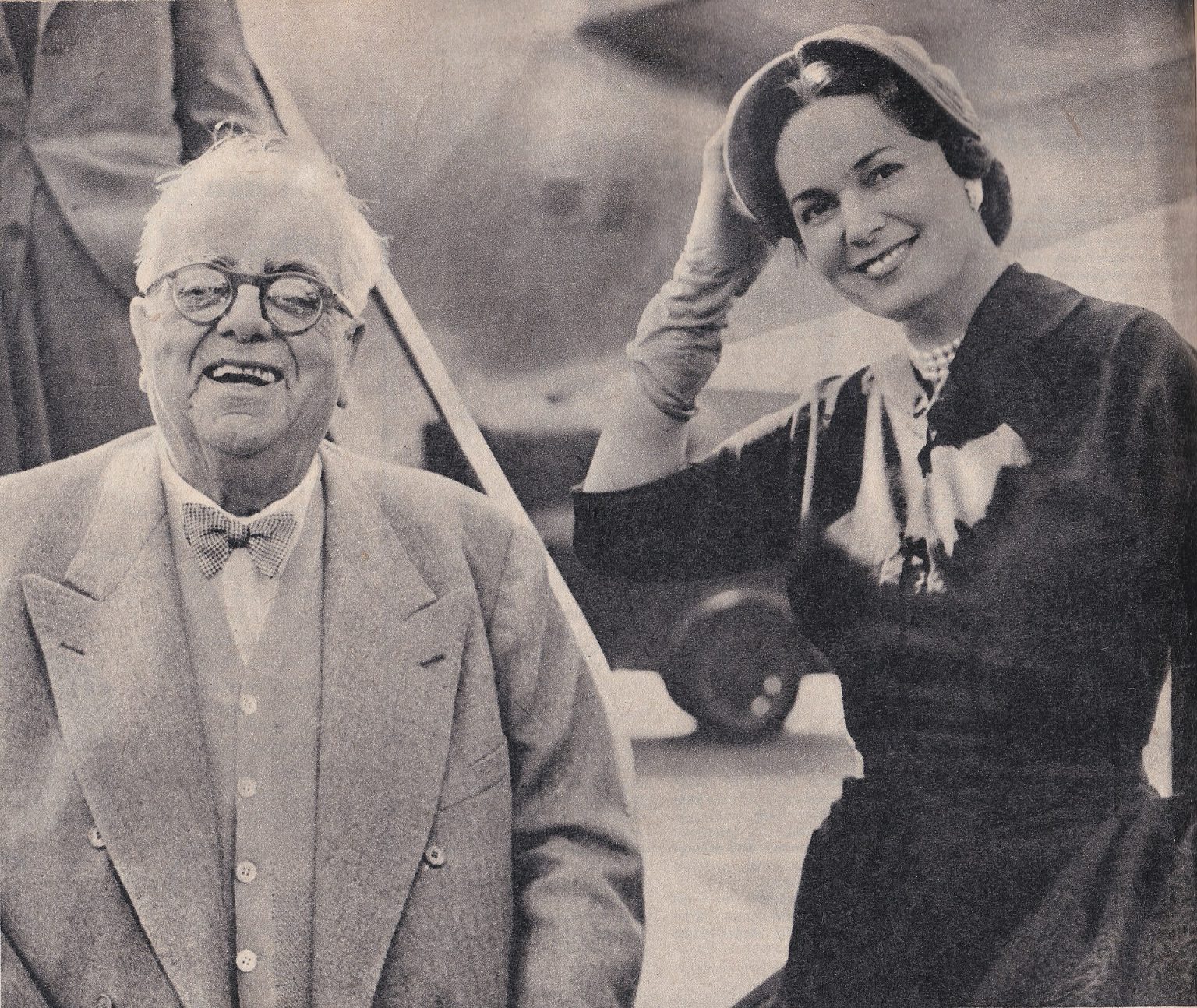
Portrait of Aga Khan III, the League's first president
- When
- 30 December 1906
- Key people
- Muhammad Ali Jinnah, Sir Syed Ahmad Khan
- Certainty
- Well established
What Happened
In late December 1906 Muslim leaders from across British India gathered in Dhaka (then Dacca) for the annual meeting of the Muhammadan Educational Conference, the body founded by the Aligarh reformers to promote modern education. The session was held at Shahbagh, the estate of Nawab Salimullah of Dhaka, and was chaired by Nawab Viqar-ul-Mulk.
On 30 December 1906, Nawab Salimullah proposed that a political party be formed. The meeting, attended, according to the Iqbal Academy Pakistan, by almost three thousand delegates, resolved to create the All-India Muslim League. Aga Khan III was elected its president, with vice-presidents and secretaries chosen for three-year terms, and the League's headquarters was placed at Lucknow.
The new party was small and led by landed and professional notables. Its founding aims were modest: to promote Muslim loyalty to the British government, to protect and advance Muslim political rights, and to prevent ill-will between Muslims and other communities. Yet it was the organisation that, under Muhammad Ali Jinnah, would demand and win Pakistan four decades later.
Background
Several developments pushed Muslim leaders towards a party of their own. The Aligarh movement of Sir Syed Ahmad Khan had produced a generation of educated Muslims, but Sir Syed had advised them to stay out of the Indian National Congress, founded in 1885. The 1905 partition of Bengal created a Muslim-majority province of Eastern Bengal and Assam with Dhaka as its capital; Muslims there largely welcomed it, while it provoked a strong Hindu-led protest movement.
Above all, Britain was preparing to enlarge the elected councils. On 1 October 1906 a deputation of Muslim notables led by Aga Khan III met the Viceroy, Lord Minto, at Simla to ask for separate representation for Muslims. The founding of the League three months later gave that demand a permanent organisation, and the Morley–Minto reforms of 1909 granted separate electorates.
Timeline
1875
Aligarh college
Sir Syed Ahmad Khan founds the Muhammadan Anglo-Oriental College, the cradle of the Aligarh movement.
16 October 1905
Partition of Bengal
A new Muslim-majority province with its capital at Dhaka is created.
1 October 1906
Simla Deputation
Muslim notables led by Aga Khan III ask Viceroy Lord Minto for separate representation.
30 December 1906
League founded in Dhaka
On Nawab Salimullah's proposal, the Educational Conference session chaired by Nawab Viqar-ul-Mulk resolves to form the All-India Muslim League.
1909
Separate electorates
The Morley–Minto reforms give Muslims separate electorates in the legislative councils.
1913
Self-government
The League adopts self-government for India as its goal; Jinnah joins it the same year while remaining in Congress.
1916
Lucknow Pact
The League and Congress agree a joint scheme of reforms.
1940
Lahore Resolution
The League demands independent Muslim-majority states in the north-west and east.
Consequences
For its first decades the League was one voice among many in Muslim politics, often weaker in the provinces than regional parties such as the Unionists in Punjab. Its turning points came later: Jinnah's reorganisation of the party after the 1937 elections, the Lahore Resolution of 1940, and the 1945–46 elections in which it won the great majority of Muslim seats.
After 1947 it was renamed the All Pakistan Muslim League and dominated the new state's politics. Britannica notes that it lost power in East Pakistan in the 1954 elections, where, according to Banglapedia, the United Front won 223 seats to the League's 8, and in West Pakistan soon after, fragmenting into factions by the late 1960s. Several parties in Pakistan still use the name Muslim League.
How We Know
The founding is documented in the proceedings of the 1906 Educational Conference, contemporary newspapers and the League's own records, later compiled by historians such as Syed Sharifuddin Pirzada. Pakistani (Iqbal Academy Pakistan) and Bangladeshi (Banglapedia) reference works agree on the date, the Dhaka venue, Viqar-ul-Mulk's chairmanship and Salimullah's proposal; figures such as the number of delegates come from Pakistani accounts.
Interpretations
Pakistani historiography generally sees 1906 as the first organised expression of a separate Muslim political identity. Many Indian nationalist historians portray the League and separate electorates as products of British 'divide and rule', pointing to the government's encouragement of the Simla Deputation; Britannica likewise notes that the League was initially encouraged by the British. Other scholars stress that Muslim leaders were acting on genuine fears of permanent minority status as elected institutions expanded.
Before and After
Where this moment sits in Pakistan’s story.
Before
- 1906
Muslim League founded
After the Simla Deputation to the Viceroy in October, the All-India Muslim League is founded in Dhaka in December to represent Muslim political interests.
- 1 October 1906
The Simla Deputation
A deputation of Muslim notables led by Aga Khan III meets Viceroy Lord Minto at Simla to ask for separate electorates and representation reflecting Muslims' political importance.
After
- 30 December 1906
All-India Muslim League founded
Meeting in Dhaka, Muslim leaders found the All-India Muslim League to represent Muslim political interests. At first it is loyal to British rule; in 1913 it adopts self-government for India as its aim.
- 1907-05-14
Birth of Ayub Khan
Ayub Khan (1907–1974): army chief, 1958 takeover, Basic Democracies, the 1962 constitution, economic growth, the 1965 war and election, and his fall in 1969.
Frequently Asked Questions
When and where was the Muslim League founded?
On 30 December 1906 in Dhaka (then Dacca), at the Shahbagh session of the Muhammadan Educational Conference.
Who founded the Muslim League?
It was founded by Muslim leaders at the Dhaka session: Nawab Salimullah proposed it, Nawab Viqar-ul-Mulk chaired the meeting, and Aga Khan III was elected its first president.
What were the League's original aims?
To promote Muslim loyalty to the British government, protect and advance Muslims' political rights and interests, and prevent ill-will between Muslims and other communities. In 1913 it adopted self-government for India as its goal.
When did Jinnah join the Muslim League?
In 1913, while still a member of the Indian National Congress.
Why was Dhaka the venue?
The 1906 Educational Conference met in Dhaka, capital of the new province created by the 1905 partition of Bengal, at the invitation of Nawab Salimullah.
Keep Exploring
Related places and stories on DailyLife.pk
 The Pakistan MovementThe Pakistan Movement explained: Sir Syed and Aligarh, the Muslim League (1906), Iqbal's 1930 address
 The Making of Pakistan: A Timeline, 1857–1947Year-by-year timeline of Pakistan's creation, 1857–1947: Aligarh, the Muslim League, Iqbal's 1930 address, the Lahore Resolution
 Muhammad Ali JinnahQuaid-e-Azam Muhammad Ali Jinnah: life, law career, Muslim League, Lahore Resolution, 1947, death in 1948
 The British Colonial EraBritish rule in Pakistan 1843–1947: conquest of Sindh and Punjab, the North-West Frontier, railways, canal colonies
How we know this
- Type Historical record
- Sources 5 (2 official/academic)
- Reviewed October 2026
- Disputed points Yes, see the debates
5 sources
- Muslim League, Encyclopaedia Britannica
- Establishment of All India Muslim League (1906), Iqbal Academy Pakistan
- Muslim League, Banglapedia (Asiatic Society of Bangladesh)
- Mohammed Ali Jinnah, Encyclopaedia Britannica
- 1946 Indian provincial elections (cross-reference; cites 'The Indian Elections – 1946', The World Today, and Stern 2001), Wikipedia
Photo credits (3)
- Aga Khan and Begum Yvette.jpg, Unknown authorUnknown author, CC BY-SA 4.0, via Wikimedia Commons
- Jinnah1945a.jpg, Photographer not known, Public domain, via Wikimedia Commons
- Mazar-e-Quaid Karachi.jpg, Furqanlw, CC BY-SA 4.0, via Wikimedia Commons
