
Life in Pakistan
Registering and Transferring a Car or Motorcycle
How new vehicles are registered and used vehicles transferred through provincial Excise and Taxation departments, with Punjab's biometric and Pak-ID transfer, Sindh's rules, number plates and token tax.
- Handled by provincial Excise departments
- Biometric checks on transfer
- Token tax due every year
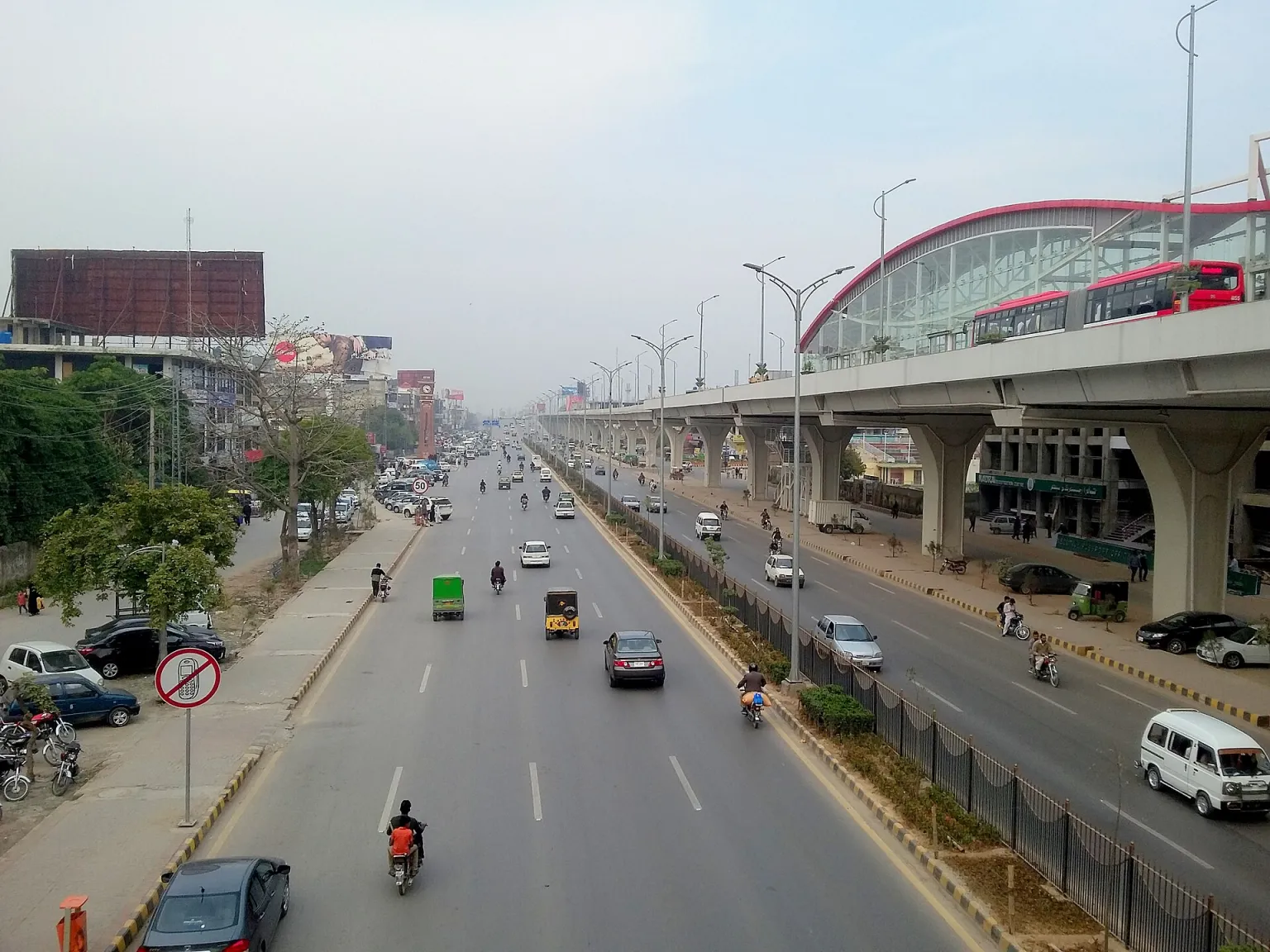
Murree Road, Rawalpindi
Who Registers Vehicles
Motor vehicles in Pakistan are registered by provincial Excise and Taxation departments, Excise, Taxation and Narcotics Control in Punjab and Sindh, and the corresponding departments in Khyber Pakhtunkhwa, Balochistan and the Islamabad Capital Territory. The department issues the registration number and either a registration book or a smart registration card, and collects the registration fee and the annual token tax.
Every change of owner must be recorded with the same department. Driving a car bought on an "open letter", a signed transfer letter never lodged with Excise, is common but risky: the previous owner stays legally responsible for challans and any misuse, and the buyer can struggle to prove ownership. Provinces have tightened the rules. Punjab now ties registration numbers to the first owner's CNIC, and both Punjab and Sindh use NADRA biometric verification to confirm that buyer and seller are who they claim to be.
Registering a New Vehicle
- 1
Get the dealer's paperwork
Your dealer or manufacturer supplies the sale invoice, sales certificate and other documents needed for first registration. Many dealers file the registration for you; ask for receipts for every payment.
- 2
Pay registration fee and taxes
Registration fee, any applicable taxes and the first token tax are paid to the provincial Excise department. Amounts depend on engine size, value and province, and are published by each department.
- 3
Biometric verification
The owner verifies identity biometrically. Punjab's Excise department says biometric verification for registration and transfer can be done through NADRA's Pak-ID app.
- 4
Receive number and card
Excise issues the registration number and the registration book or smart card. In Punjab the number stays tied to your CNIC.
- 5
Fit standard number plates
Use only plates in the department's prescribed format and size, issued or authorised by Excise. Non-standard plates can earn a challan and may be misread by cameras.
Transferring Ownership in Punjab
- 1
Check the vehicle first
Before paying, use the Excise department's official online vehicle verification, where available, to confirm that the registration, chassis and engine numbers match and that there are no unpaid token taxes. Also check e-challans (see below).
- 2
Seller starts the transfer on Pak-ID
According to the Punjab Excise department, as reported by PakWheels in February 2026, the seller signs in to the Pak-ID app with their CNIC, chooses Vehicle Transfer under Government Services and submits the details.
- 3
Biometric verification
The seller verifies identity with a fingerprint scan through the phone camera, checked against NADRA's database. Previously this was done at a NADRA e-Sahulat outlet, which remains an option where the app does not work for you.
- 4
Pay transfer fee and dues
Pay the transfer fee and any outstanding token tax through the official payment channel shown in the app or on the Excise website. Fees depend on the vehicle and are set by the department.
- 5
Transfer completes
Excise reports that online transfers are processed within 48 hours after successful verification and payment. Under Punjab's CNIC-linked numbering, the buyer of a used vehicle is issued a new registration number and plates.
Transfers in Sindh and Elsewhere
Sindh
Excise, Taxation and Narcotics Control
Pakistan Observer reported in May 2026 that both buyer and seller must complete NADRA biometric verification (at NADRA or e-Sahulat), submit a stamp-paper sale agreement and the Excise application, and pay transfer fee and token tax; a smart card in the buyer's name follows in 5 to 15 working days.
Khyber Pakhtunkhwa
KP Excise, Taxation and Narcotics Control
Apply at the department's motor registration office or its official online services. Check the department's website for documents and fees.
Balochistan
Balochistan Excise and Taxation
Registration and transfer are handled at the provincial Excise offices; confirm requirements with your local office.
Islamabad
ICT Excise and Taxation
Vehicles registered in Islamabad are handled by the ICT Excise and Taxation department; check its official website for transfer requirements.
Moving provinces
Re-registration
A vehicle moving permanently to another province may need to be re-registered there. Punjab's Excise department has announced a process for re-registering vehicles registered outside Punjab.
Transfer Documents Checklist
- Original registration book or smart registration card
- CNIC copies of seller and buyer (and originals for biometric verification)
- Sale agreement on stamp paper signed by both parties and witnesses
- The department's transfer application form, signed
- Token tax paid up to date (keep the receipt or certificate)
- Recent photographs and proof of the buyer's address, where asked (Sindh lists a utility bill or rental agreement)
- Any bank or leasing clearance letter if the vehicle was financed
Token Tax and Plates
Token tax is the annual vehicle tax collected by the provincial Excise department. Punjab offers early-payment discounts in some years, Profit reported a 10% discount for FY2025–26 token tax paid by 31 August 2025, and Excise departments run crackdowns on defaulters and unregistered vehicles. For how to pay token tax online and use M-Tag on motorways, see driving in Pakistan: licence, tokens and motorway rules.
Number plates must follow the prescribed format and size. Punjab's Excise department has published the official plate format under its "Your Car, Your Number Plate, Your Identity" campaign; fancy or tinted plates are an offence. If you sell a car and the buyer does not transfer it, Profit reported that Punjab's Excise helpline can help the original owner have the registration suspended.
Avoid Open-Letter and Fake-Document Traps
Never hand over a vehicle, or pay for one, on an open letter alone. Complete the biometric transfer together, at the same time as payment. Check registration and chassis numbers against official Excise records, be wary of "agents" who offer transfers without the seller present, and do not share fingerprint scans or OTPs outside the official Pak-ID app or NADRA counters. A tampered registration book or a stolen car on fake papers leaves the buyer with nothing.
Frequently Asked Questions
Who handles vehicle registration in Pakistan?
Provincial Excise and Taxation departments (and the ICT Excise department in Islamabad). They issue registration numbers and cards, record transfers and collect token tax.
Can I transfer a car online in Punjab?
Yes. The Punjab Excise department says the seller can start the transfer and verify biometrically in NADRA's Pak-ID app; PakWheels reported in February 2026 that transfers are processed within 48 hours after verification and payment.
Does the number plate change when I buy a used car in Punjab?
Under the system Punjab introduced from September 2025, registration numbers stay with the first owner's CNIC, and buyers of used vehicles are issued new number plates, according to Profit.
Is it legal to drive on an open letter?
An open letter does not transfer ownership in Excise records, so the seller remains the registered owner. Excise departments urge owners to complete transfers, and unpaid challans and taxes stay attached to the registered owner.
What documents does Sindh ask for?
Pakistan Observer (May 2026) listed the original registration book or smart card, ID copies, a signed application and stamp-paper sale agreement, photographs, current token tax certificate, buyer's proof of address and a vehicle inspection certificate. Confirm with Sindh Excise.
Keep Exploring
Related places and stories on DailyLife.pk
 Driving in Pakistan: Licence, Token Tax and Motorway RulesDriving in Pakistan: verify your licence, pay vehicle token tax online, get an M-Tag for motorways
 How to Check and Pay an E-ChallanCheck and pay traffic e-challans in Punjab (PSCA), Karachi and Islamabad: official portals, PSID payment, deadlines
 Driving Licence in PakistanHow to get a driving licence in Pakistan: learner permit, test, regular and international licences
 Online Government Services in PakistanOfficial links for Pakistan's main e-government services: Pak ID, passport renewal, FBR IRIS, PTA DIRBSCNIC Guide: Getting or Renewing Your National ID CardHow to get or renew a CNIC or Smart NIC from NADRA: official fees, normal/urgent/executive timelines
How we know this
- Type Practical guide
- Sources 5 (1 official/academic)
- Reviewed October 2026
- Disputed points None
Rules and fees change, confirm with the official links below before you act.
5 sources
- Announcements, Excise, Taxation and Narcotics Control Department, Punjab
- Punjab launches online biometric for vehicle transfers (February 2026), PakWheels
- Punjab to link vehicle registration numbers with CNIC from September (2025), Profit / Pakistan Today
- Excise allows transfer of vehicle ownership without seller's biometric verification (May 2026), Pakistan Observer
- Lahoris can now transfer vehicles online (January 2022), ProPakistani
Photo credits (4)
- Murree Road Rawalpindi.jpg, King Eliot, CC BY-SA 4.0, via Wikimedia Commons
- Motorway M2, Salt Range, Pakistan 04.jpg, Shahzaib Damn Cruze, CC BY-SA 4.0, via Wikimedia Commons
- Traffic towards Lahore - panoramio.jpg, Sunni Person, CC BY-SA 3.0, via Wikimedia Commons
- Constitution Avenue (cropped).jpg, Zacharie Grossen, CC BY-SA 4.0, via Wikimedia Commons
