
Food culture & heritage
Tabaheg: Preserved MeatCooking Uses and Safety
A careful guide to the regional dish, sour pomegranate and salt, buying a traceable product, and the limits of home drying and long-storage claims.
Understand the regional name carefully
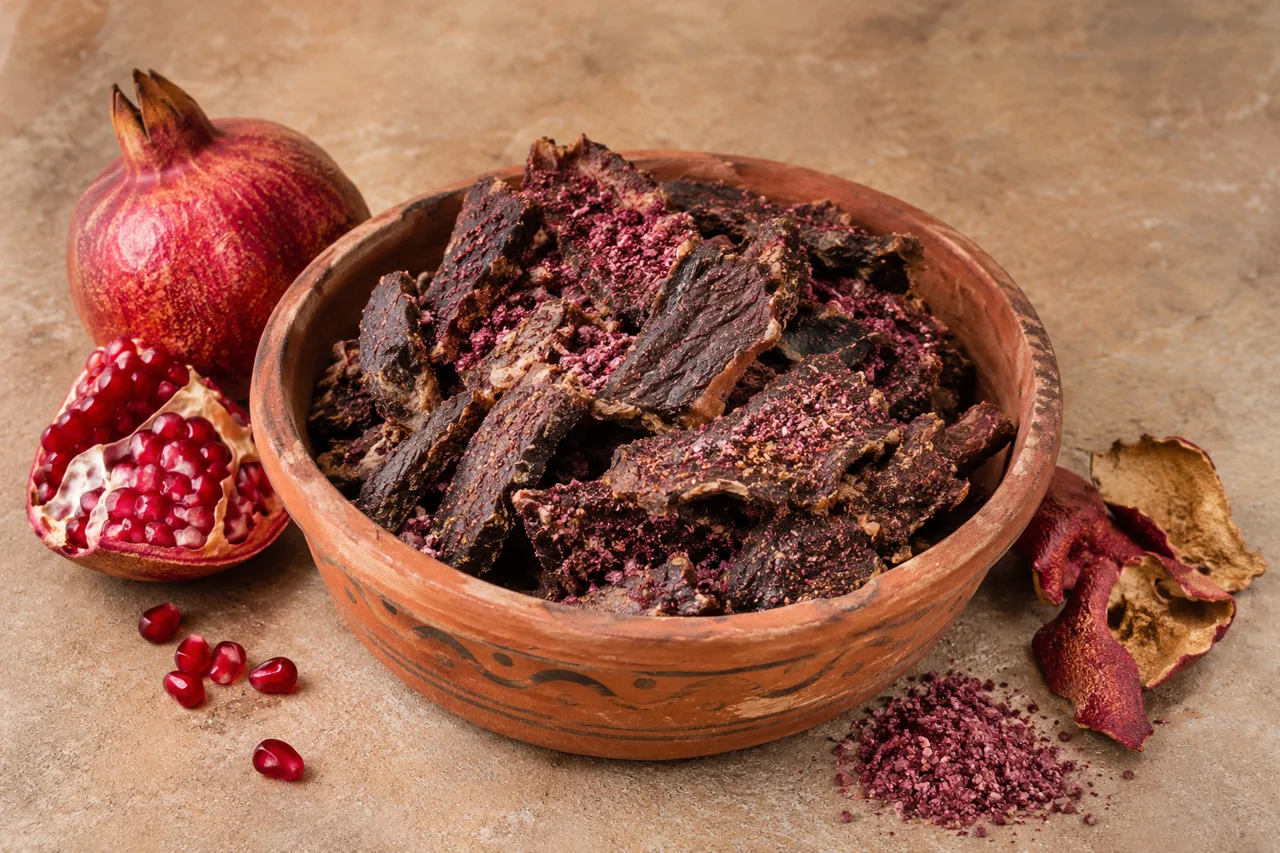
Tabaheg is associated with Baloch food traditions across a border region rather than one uniform household recipe. Iran's official tourism account describes it in Makran and Sistan and Baluchestan, including meat treated with salt and sour pomegranate and later cooked with rice. This is useful regional cultural documentation; it does not prove that every Pakistani household follows the same ingredients or process.
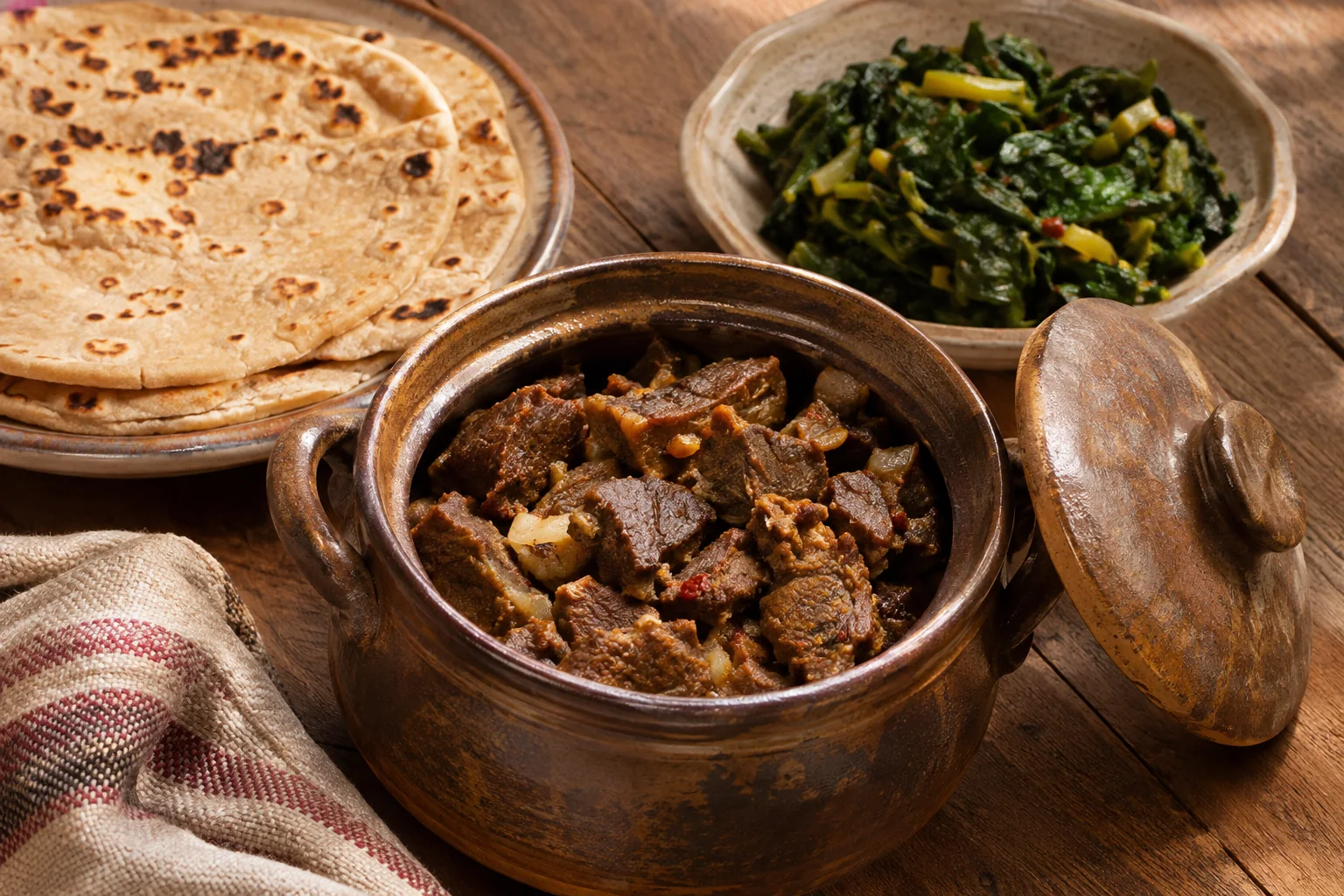
Ask the cook or seller which local preparation they mean. Spellings, seasonings, cuts and ways of serving can vary. Distinguish the preserved ingredient from the completed cooked meal. A dish may contain meat that was preserved earlier, but a photograph of rice and meat cannot establish how it was processed or whether it is ready to eat before cooking.
Reference: USDA controlled jerky safety guidance.
Regional cultural source: official tourism description of Tabaheg in Iran.
Appreciate flavour without inventing benefits
Salt and sour pomegranate help explain the concentrated savoury and tart character often associated with descriptions of Tabaheg. Cooking can mellow and distribute that flavour through a meal. The exact balance depends on the producer and recipe, so start with a modest amount instead of assuming all products have identical strength.
The dish can be valued for regional identity, family memory and hospitality without calling it a medical food. Meat contributes protein and red meat supplies iron, zinc and B vitamins, but no special healing effect follows from drying or pomegranate seasoning. An acidic taste does not prove that pathogens were destroyed. A rich traditional meal still deserves practical attention to portion size, fat, salt and the rest of the weekly diet.
Reference: NHS meat and nutrition guidance.

Buy the product with a clear identity
Choose a traceable producer or regulated supplier with specific ingredient, processing and storage information. Confirm the animal, cut, batch or preparation date and whether the item is raw, partly processed, fully cooked or ready to eat. Ask what the product requires before service and obtain a receipt where possible. Clearly labelled commercial instructions are more useful than a vague promise that it lasts a long time.
Check package integrity and avoid leaking or damaged packs, visible mould and objectionable changes. However, normal smell and appearance are not proof of safety. A strong spice coating can make the underlying meat hard to assess. If storage requirements or the producer's controls cannot be explained, do not invent them; choose a product whose handling you can establish.
Reference: FDA safe food handling.

Storage reference: official cold food storage chart.
Salt and acidity are not a validated drying method
Published cultural descriptions may mention thin meat, sunlight, salt, pomegranate and air. They are descriptions of a practice, not a safe home preservation protocol. Hazard control depends on meat thickness, temperature, humidity, salt concentration, acidity, airflow, handling and the complete process. Neither sunny weather nor a sour coating guarantees that the centre reaches a validated safe condition.
USDA jerky guidance highlights controlled heat and drying to address pathogens. It must not be presented as automatic validation for Tabaheg, outdoor hanging or a different meat formulation. Do not improvise a household drying schedule from tourism writing or copy an unverified number of days. Use a validated processor's method or a regulated supplier, and never experiment with unmeasured curing chemicals.
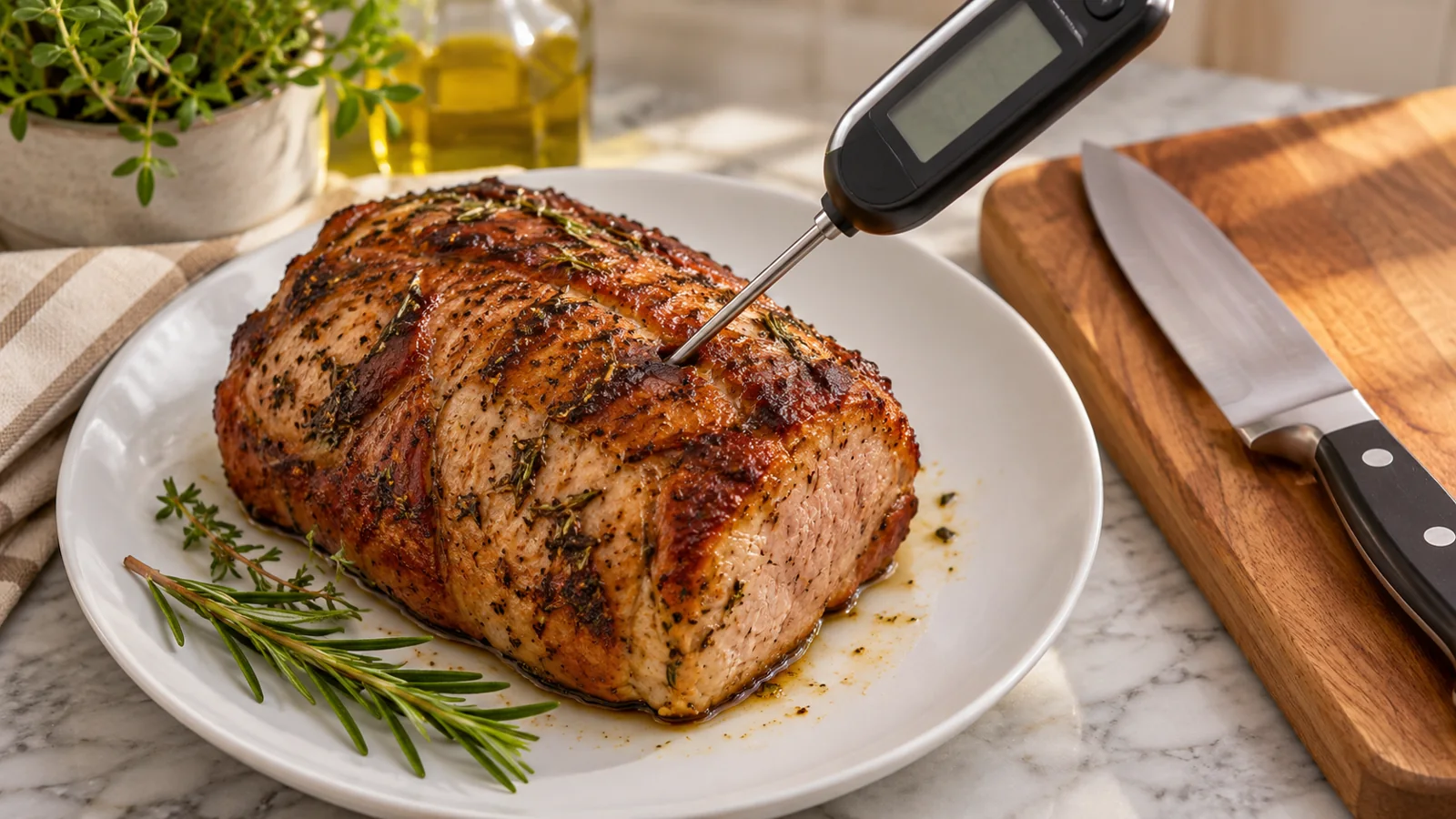
Reference: official minimum cooking temperatures.
Reject automatic long-storage claims
This guide gives no universal shelf life for homemade Tabaheg. To claim storage without refrigeration, the specific product, process and packaging need validation. A salty dry exterior cannot establish the internal condition or rule out harmful contamination. A claim about how earlier households stored food is not a guarantee for a present-day batch in a different climate.
Follow verified package instructions for unopened storage, opening and use-by dates. If chilling is required, keep it at 4°C or below, with raw products below cooked and ready-to-eat food. Transport in an insulated bag. Refrigeration and freezing do not reverse an unsafe unknown history. If the producer cannot confirm the handling pathway, obtain appropriate food-safety advice or choose another product.
Reference: FDA safe food handling.
Storage reference: official cold food storage chart.
Match the cooking method to the purchased meat
Use a tested recipe or validated producer instructions matched to the exact product. If soaking is required, do it covered under refrigeration and handle the liquid as potentially contaminated when the meat remains raw. Soaking may change saltiness and texture, but it cannot be promised to remove a particular amount of sodium and does not disinfect unsafe meat.
Do not routinely wash raw meat around the sink. Keep raw preparation separate from salad, chutney and cooked rice; wash hands and clean equipment afterward. Check whether added fat is already present before adding oil or ghee. Delay additional salt, salted stock or seasoning mixtures until the recipe's cooked sauce can be assessed safely. Never taste raw meat or uncooked soaking liquid.
Reference: USDA controlled jerky safety guidance.
Serve the cooked meal with a cold-chain plan
Where rice is part of the meal, prepare and serve it with the same care as the meat. Do not leave a deep pot cooling on the counter overnight. Divide leftovers into shallow containers and refrigerate promptly. The general limit for perishables is two hours outside refrigeration, reduced to one hour when surroundings exceed 32°C; count preparation, transport and serving together.
Reheat leftovers to 74°C throughout and heat only the portion needed. A final hard boil cannot be relied on to repair earlier unsafe handling. Product-specific cooking directions take priority; generic minimum temperatures do not validate the preceding preservation stage. Use separate clean serving utensils and small platters for a gathering instead of repeatedly adding fresh food to an old warm batch.
Reference: FDA safe food handling.
Storage reference: official cold food storage chart.
Keep preserved meat occasional
Meat salted or cured for preservation belongs within processed-meat guidance, including traditional preparations. The World Cancer Research Fund recommends very little, if any, processed meat. Red meat in general should remain moderate; guidance refers to cooked edible amounts, not the dry weight of a concentrated preserved ingredient. No universal fresh-to-dried conversion is supplied here because products vary.
Serve a modest amount with vegetables, pulses and an appropriate portion of rice or roti. Account for sodium from the preserved meat, seasoning mixes and accompaniments, and trim excessive fat where the recipe allows. People following a sodium-restricted or other medical diet should obtain individual advice. Preserve the enjoyment of the tradition without presenting it as a daily requirement, immunity treatment or shelf-stable emergency food of unknown manufacture.
Before shopping, check that the kitchen can support the plan: a working refrigerator thermometer, clean food-safe containers, a probe thermometer, enough separate utensils and room for prompt chilling. A recipe that fits a small pan may need several batches when doubled. More ingredients do not automatically need the same cooking time, and a larger pot is not proof that the centre heats or cools quickly enough.
For a family meal, decide which jobs can be completed with clean equipment before raw meat is opened. Prepare vegetables and accompaniments separately, then contain the raw work area. After handling raw food, wash hands with soap and clean the surfaces before touching ready-to-eat dishes. Keep the serving area organised so raw packaging and utensils cannot drift back into it.
At the table, offer portions people can finish and replenish from food held at a safe temperature. Keep a record of the quantity that was useful and the amount left over, particularly after a gathering. Planning improves the next meal, but it does not replace time and temperature controls. If a batch has an uncertain storage history, do not test it by tasting a spoonful. Choose an ingredient and process whose handling you can establish, and seek product-specific advice when the label or method is unclear.
Reference: NHS meat and nutrition guidance.
Related DailyLife guides: Balochi rosh · namkeen roast
Frequently Asked Questions
Does sour pomegranate make Tabaheg safe to dry at home?
No. Acidity and salt alone do not establish a validated preservation process. Use a regulated product or a properly validated processor’s method rather than an improvised outdoor schedule.
Is every Tabaheg recipe the same?
No. Regional and household preparations vary. Ask what the specific product contains and whether it is raw, cooked or ready to eat before selecting a matched recipe.
Can I assume the dried meat lasts for months?
No. There is no universal safe shelf life for homemade Tabaheg. Follow verified instructions for the actual product, including refrigeration and after-opening requirements.
Keep Exploring
Related places and stories on DailyLife.pk
How we know this
- Type Explainer
- Sources 3
- Reviewed November 2026
- Disputed points None
3 sources
Photo credits (1)
- Tabaheg | DailyLife.pk, DailyLife.pk, All rights reserved
