
Ingredients & Spices · The complete guide
Food colours
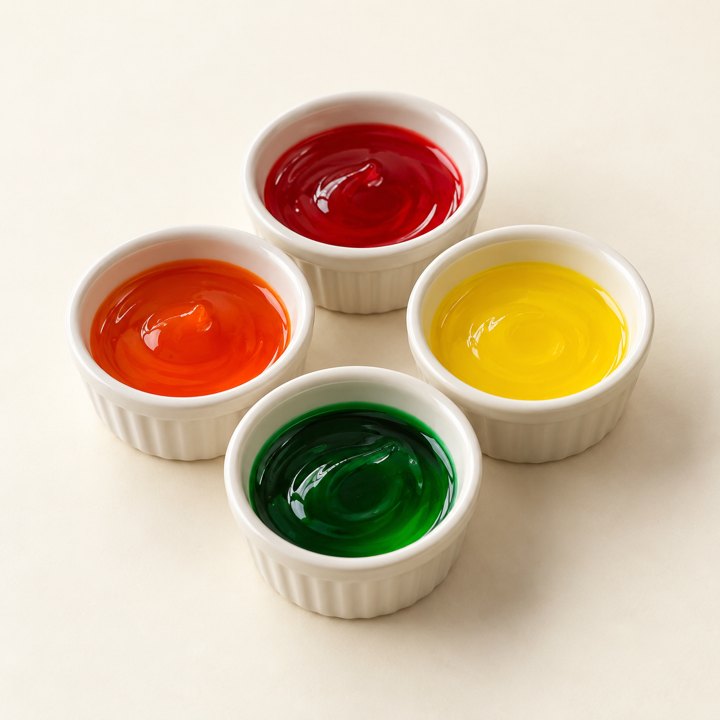
Food colours are edible additives used to tint food, sold as powders, liquids, gels or pastes. Pakistani recipes often call them rang or food colour.
What it is and local names
Food colours are edible additives used to tint food, sold as powders, liquids, gels or pastes. Pakistani recipes often call them rang or food colour. A product suitable for crafts, textiles or cosmetics is not an edible substitute even when its shade looks identical.
Origins and documented history
Plants and minerals coloured foods long before modern synthetic dyes. Industrial colours developed during the nineteenth century, followed by food-safety controls. This broad category has many separate histories, so there is no single discoverer of food colouring.
Types and manufacture
Colours can be extracted from botanical or other natural sources or synthesized. They may be water-soluble dyes, dispersions or blends carried in sugar, glycerol or starch. Oil-compatible colours are needed for some fat-based applications; ordinary liquid colour can seize plain melted chocolate.
Production, trade and Pakistan
Colours are manufactured and blended internationally and sold through Pakistani grocery and bakery suppliers. Buy traceable labelled stock intended for the particular food. Permission for a substance or use in another country should not be treated as automatic permission in Pakistan.
How to use it
Use a tiny measured amount in zarda, mutanjan, jalebi or cake batter. Dissolve or disperse a powder as its label directs before mixing evenly. Gel colours add less water than liquid colours, useful when a frosting’s consistency must stay firm.
Nutrition, benefits and limits
Colour has a visual function and no meaningful vitamin or mineral benefit at normal doses. A bright orange sweet is not evidence of saffron or fruit content. Natural origin alone does not establish superior nutritional value.
Drawbacks, allergens and precautions
Observe the approved food use and labelled dose. Some individuals react to particular colours. Carmine is animal-derived; carriers and solvents also matter for dietary requirements. Current permitted substances and conditions must be checked through the relevant authority.
Reference: FDA: Color Additives in Foods; Punjab Food Authority: Pure Food Regulations 2018.
Substitutions and storage
Saffron, turmeric, cocoa or suitable fruit powders can give colour but also add flavour and may change during heating. Leaving colour out is often better than forcing an inaccurate colour with too much spice.
Close tightly, keep dry powders away from steam and protect light-sensitive colours from sunlight. Use clean utensils. Retain the original label so the ingredient identity and directions are not lost.
Matching the form to the food
Liquid colours are easy to distribute through a watery mixture but add liquid that can loosen icing. Gels and pastes offer more concentrated colour with a smaller addition, while powders need careful dispersion to avoid specks. A colour suitable for water may be unsuitable for melted chocolate or another predominantly fat-based mixture. Choose the type recommended for that application, and check whether it is stable at the cooking temperature. A powder’s strong shade in its container does not tell you how much will be needed in a whole pan of rice.
Testing colour before a whole batch
Mix a tiny trial with the actual food rather than testing only in plain water. Milk makes colours look more opaque, cocoa darkens them, and acidity can change some botanical pigments. Heat and storage can also fade or shift the shade. For zarda or mutanjan, disperse the measured colour as the recipe directs so one spoonful does not receive an excessively concentrated dose. For frosting, allow a short rest before adding more because some colours develop after mixing. Record the product and quantity if matching the result matters.
Natural alternatives and flavour
Saffron can give golden colour and a distinctive aroma, while turmeric gives a stronger earthy note. Beet ingredients may provide red or pink tones but do not remain identical under all heating and pH conditions. Cocoa gives brown colour as well as bitterness and dry solids. These are useful ingredients when their flavour belongs in the dish, but they cannot be assumed to reproduce a commercial gel shade. A naturally derived colour can also have use limits or allergy implications. Evaluate the particular ingredient rather than treating natural as a complete safety specification.
Checking suitability and keeping records
Keep the original food label, batch information and use instructions. Buy the smallest practical quantity from a traceable supplier if the colour is only used occasionally. Use a dedicated clean utensil so colour is not contaminated with buttercream or wet batter. Close the container quickly, especially in a humid kitchen. If serving someone with a known reaction, check the named additive and the complete ingredient list rather than relying on the visual shade. Use the applicable Pakistani food requirements for local food preparation; foreign regulatory examples explain principles but do not replace local rules.
Recipes and the Pakistani pantry
Use this ingredient in Jalebi, Mutanjan, Zarda, Red Velvet Cake. Explore related ingredients in the Pakistani ingredients and spices pantry.
Names and forms used in our recipes
View the recipe names covered by this guide
- food-safe red/yellow/green colour
- food-safe yellow/orange colour
- pinch of orange food colour or a few saffron strands
- red gel food colour
Frequently Asked Questions
What should I check when buying food colours?
Buy a labelled food-grade colour approved for the intended application. Check whether it is suitable for water, fat and the cooking temperature.
What can replace food colours in a recipe?
Saffron, turmeric, cocoa or suitable fruit powders can give colour but also add flavour and may change during heating. Leaving colour out is often better than forcing an inaccurate colour with too much spice.
How should food colours be stored?
Close tightly, keep dry powders away from steam and protect light-sensitive colours from sunlight. Use clean utensils.
Keep Exploring
Related places and stories on DailyLife.pk

How we know this
- Type Explainer
- Sources 4 (3 official/academic)
- Reviewed November 2026
- Disputed points None
