
Ingredients & Spices · The complete guide
Fish Stock: Use Heads and FramesStrain Carefully and Chill Promptly
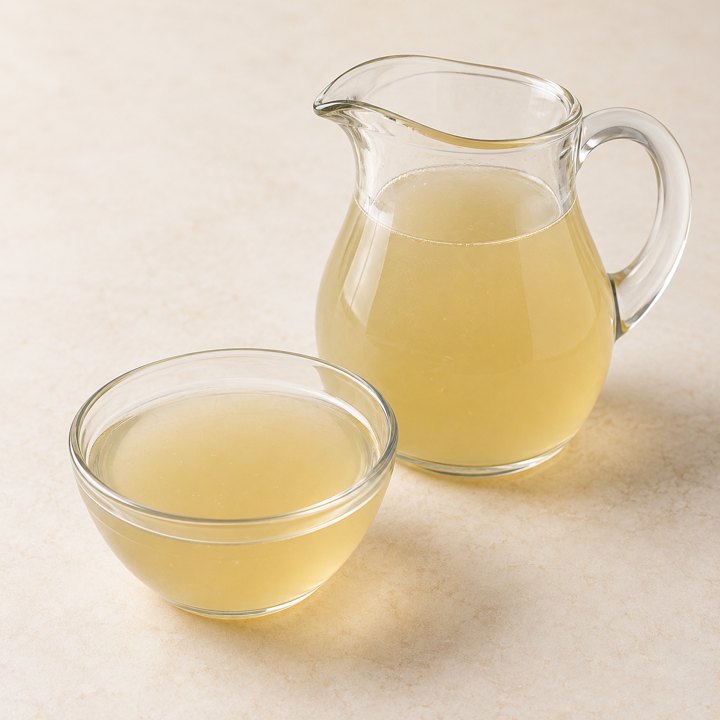
Fish stock is a cooking liquid made by gently extracting flavour from suitable fish heads, frames and trimmings with water and a restrained selection of vegetables or herbs.
Heads, frames and suitable fish trimmings
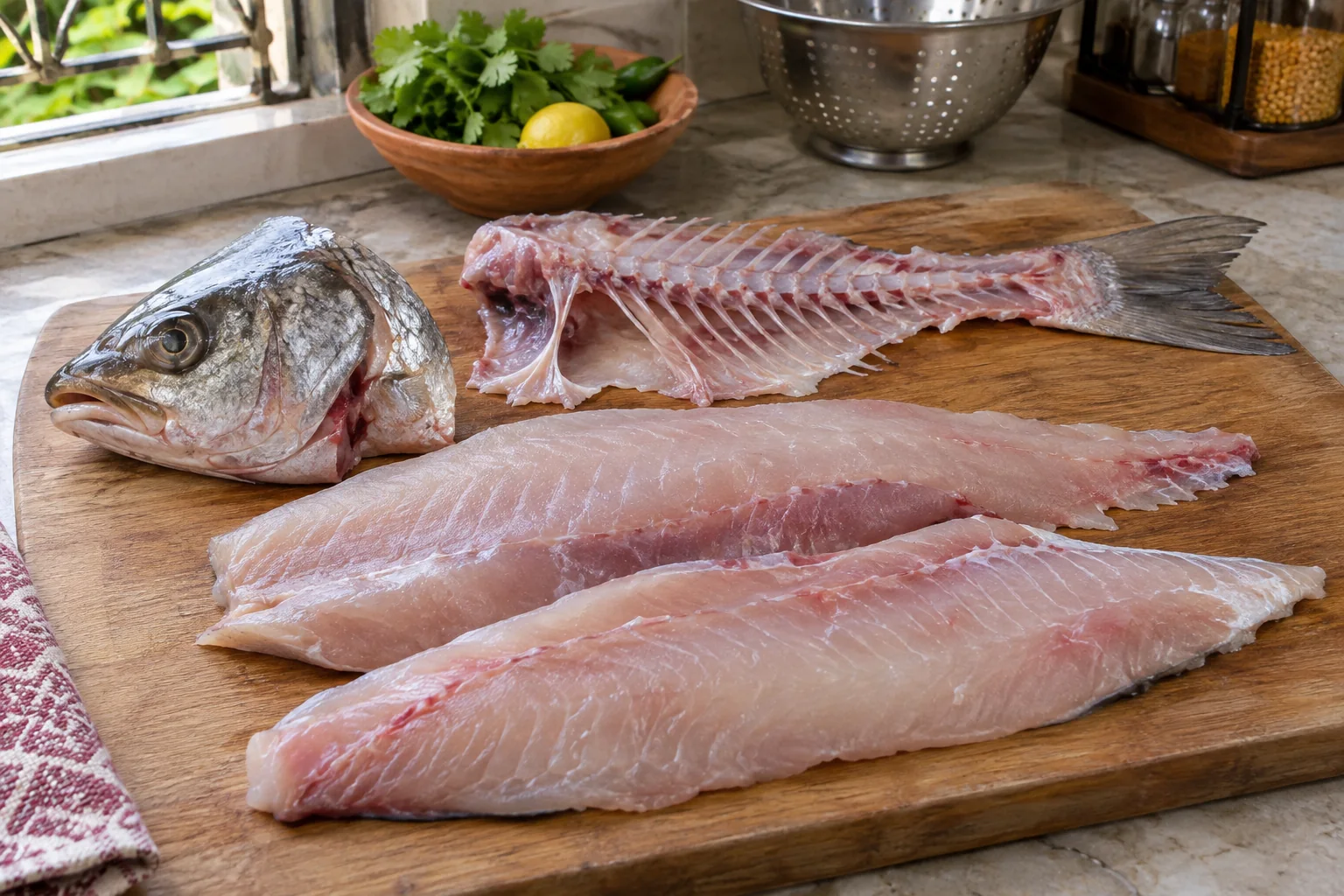
Fish stock is a cooking liquid made by gently extracting flavour from suitable fish heads, frames and trimmings with water and a restrained selection of vegetables or herbs. It is useful for soup, sauce and rice dishes where a seafood flavour belongs. It is not the same as a plate of fish, and a clear cup is not guaranteed to contain a particular amount of protein or minerals. Its composition depends on the fish, proportions, cooking and straining.
Start with ingredients that were fit to eat and kept cold. A frame is the bony structure remaining after filleting, often with a little flesh attached. A head adds flavour but requires appropriate cleaning; ask the fishmonger to remove the gills and clean the head. Suitable skin and small flesh trimmings can be included, but do not use gut contents or scraps with uncertain handling. A stock pot cannot reverse spoilage. Keep the trimmings chilled while preparing the vegetables.
Choose a flavour suited to the dish
Mild fish frames are often easier to use in a delicate dish; stronger or oilier fish can produce a more assertive flavour. Identify the species rather than assuming all white-looking frames behave alike. Prawn heads and shells belong to a shellfish stock variation and introduce a different allergen group. Label that clearly and do not slip shellfish trimmings into a fish-only stock for someone who needs to avoid crustaceans.
Buy and chill food-quality trimmings

Ask the seller when the fish was prepared, where it came from and whether it was thawed. Buy heads and frames from a properly chilled display or ask for them to be packed separately when buying whole fish. Cheap or free trimmings still need sound source and handling. An objectionable sour or ammonia-like smell, damaged packaging or a warm tray is a reason to reject the batch. Mild smell and clear eyes are quality clues, not proof that every hazard is absent.
Take trimmings home cold and refrigerate promptly in a covered leakproof container at 4°C or colder, below ready-to-eat foods. FDA seafood guidance advises using fresh seafood within two days of purchase or freezing it, with shorter label instructions taking priority. If you will not make stock soon, freeze appropriately portioned sound trimmings promptly and label them. Do not keep adding new raw scraps to an old container whose age is unclear.
Prepare clean equipment and a cooling plan
Thaw frozen trimmings in the refrigerator according to the packaging directions, containing the drips. Clean hands, knives, boards and the sink after raw preparation. Keep the strainer, receiving bowl and storage containers clean and ready before cooking starts. Planning the chilling stage matters: a large hot pot that sits unattended for hours can create a new problem after a sound start. Make a batch you can cool and store effectively.
Simmer gently with restrained aromatics
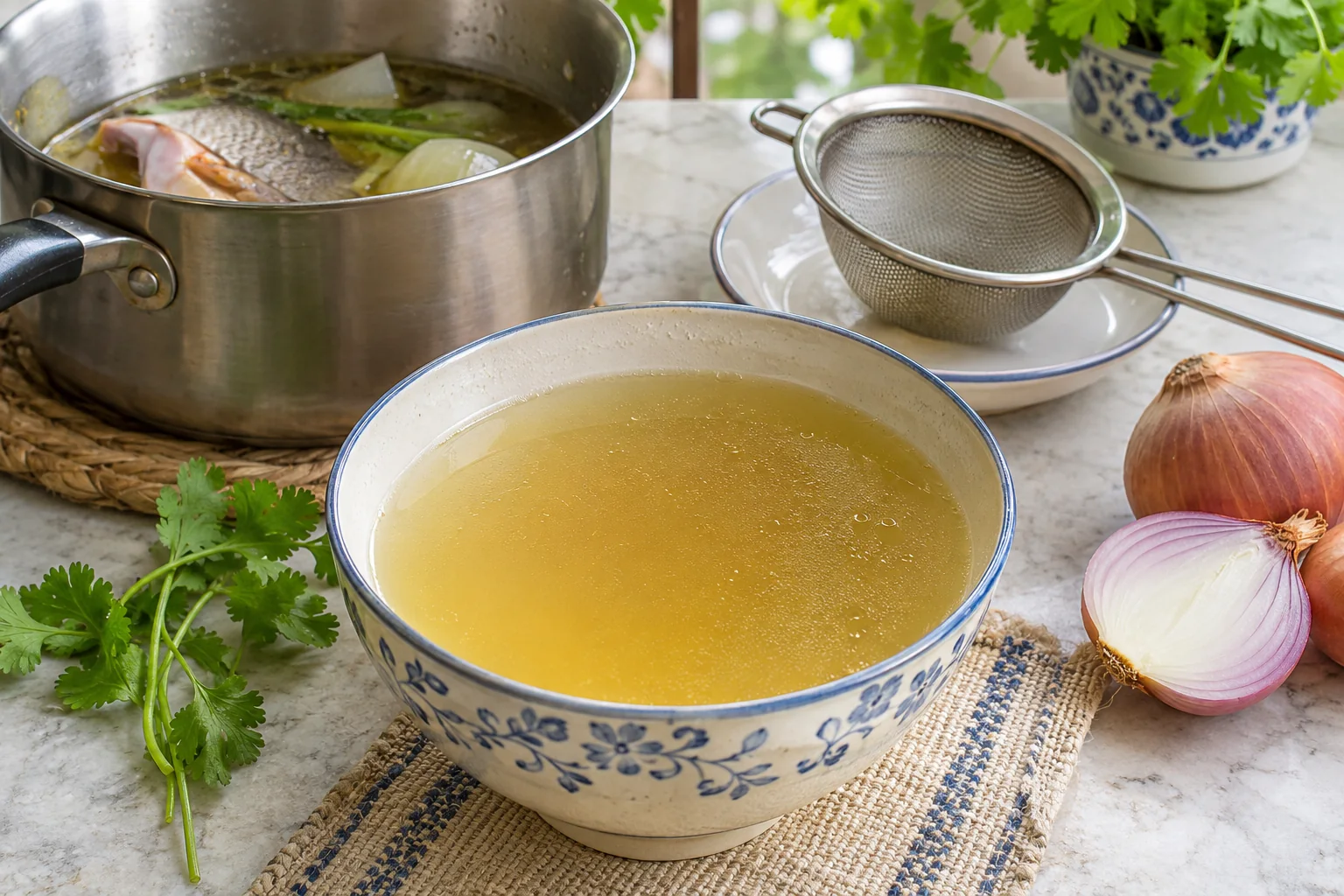
Use a pot that fits the frames with a sensible amount of water. Add restrained mild aromatics suited to the final dish. Hold back most salt until the soup, sauce or rice is nearly finished, especially if the liquid will be reduced.
Bring the liquid up steadily and then keep it at a gentle simmer rather than a violent boil. Skim surface foam when useful for the style of stock. Avoid crushing the frame or stirring repeatedly, which can break delicate bones into smaller fragments and cloud the liquid. Fish trimmings do not require the same long extraction as a tough meat joint; use a tested recipe and stop once the stock has a pleasant clean flavour rather than assuming longer always means better.
A strong or bitter result cannot always be fixed by adding more spice. Appropriate ingredients, modest aromatics and restrained heat are easier to manage than an overfilled pot simmered for hours. Use the recipe collection to choose a dish before deciding how concentrated or highly seasoned the stock should be. Keep raw trimmings separate from any vegetables or herbs reserved for serving.
Flavour, allergy and realistic benefits
Stock carries the fish allergen even when all visible fish has been removed. If shellfish was included, it also carries that ingredient's allergen risk. Tell diners what is in a soup or rice dish rather than describing it merely as a light broth. Stock is not a cure for joint problems, anaemia or illness. Its flavour and convenience are enough reason to make it. FDA histamine guidance explains that histamine formed through mishandling cannot be removed by heating or freezing; boiling questionable fish into stock is not a rescue method.
Strain carefully and inspect recovered flesh
Lift out large solids carefully, then strain the liquid through a fine sieve into a clean heat-safe vessel. A further pass through a suitable food-safe fine cloth can help catch small particles. Do not force the solids through the mesh with a spoon just to extract the last drops; this can push fragments into the liquid. Inspect the strained stock in good light. A photograph of clear stock is illustrative, not certification that a particular pot is free from bones.
If you recover cooked flesh from the head or frame, inspect it separately with particular care. Small bones can hide among flakes. Serve only what can be checked reliably, especially for children or anyone with swallowing difficulties. Straining liquid and picking meat are separate jobs. Discard solids safely and clean the work area so raw-fish residues and stray bones do not reach ready-to-eat food.
Cool promptly, portion and freeze
After straining, divide stock into shallow containers or smaller amounts that can cool efficiently. Do not leave a deep covered stock pot on the counter overnight. An ice-water bath around a suitable vessel can help remove heat before refrigeration; prevent bath water entering the food. Refrigerate promptly, within two hours or within one hour in conditions above 32°C. Keep covered in a refrigerator at 4°C or colder once cooling is managed.
USDA leftovers guidance generally allows three to four days for properly refrigerated cooked leftovers. Freeze sooner if the stock is intended for a later meal, and label the date and whether it contains fish alone or shellfish too. Leave suitable expansion space in freezer-safe containers. Smaller portions are useful for a sauce; larger ones suit soup or rice. Use within a sensible quality plan and follow any stricter ingredient or package instruction rather than treating freezing as a new starting date for mishandled food.
Reheat stock and match it to a recipe
Thaw safely in the refrigerator or heat appropriately from frozen when the recipe permits. Reheated leftover stock should reach 74°C throughout, and USDA advice calls for soups and sauces to come to a boil. Check the completed dish as well, because adding cold ingredients changes its temperature. Use stock to replace some recipe water where the seafood flavour is welcome, then adjust salt near the end. For the edible fish portion itself, use the white-fish guide.
Related recipes: Fish Soup.
Fish stock and shellfish stock are different
Label the contents clearly: fish stock, shellfish stock or a mixture. A strained broth still contains its ingredient allergens. Mild unsalted stock is versatile for soup, rice and sauce; concentrated or salted stock needs more careful adjustment. Check the recipe before replacing water so the seafood flavour belongs in the finished dish.
Frequently Asked Questions
Should fish stock boil for many hours?
No. Use sound chilled heads and frames with a tested recipe and a gentle, relatively brief extraction. Aggressive prolonged boiling can cloud the liquid and break up bones; it cannot rescue fish that was unsafe before cooking.
Does straining remove fish allergens?
No. Fine straining removes solids and helps catch bones, but the liquid still carries fish protein and the fish allergen. Stock made with prawn shells also carries crustacean shellfish ingredients. Label it clearly and tell anyone who needs to avoid those foods.
Keep Exploring
Related places and stories on DailyLife.pk

How we know this
- Type Explainer
- Sources 3 (3 official/academic)
- Reviewed November 2026
- Disputed points None
