
Ingredients & Spices · The complete guide
Zaatar
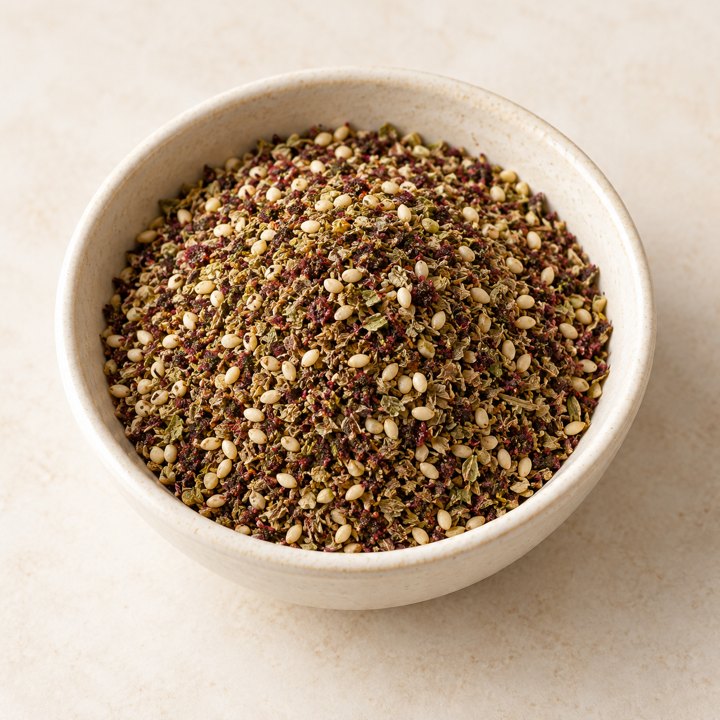
Zaatar can name a regional herb or, on pantry packets, a seasoning mixture often containing dried thyme-like herbs, sumac, sesame and salt. The blend is not a single botanical species and recipes vary by region and household.
What it is and names to know
Zaatar can name a regional herb or, on pantry packets, a seasoning mixture often containing dried thyme-like herbs, sumac, sesame and salt. The blend is not a single botanical species and recipes vary by region and household.
Origins, producing regions and Pakistan context
It belongs to longstanding Levantine herb and bread traditions. A modern packet formula should not be projected backwards as one universal ancient recipe or assigned a sole inventor.
Lebanon, Palestine, Jordan, Syria and neighbouring markets have established traditions of blending it. Pakistani buyers may find imported blends or locally packed versions using ingredients from several countries. The finished blend can be exported separately from its raw ingredients and imported for retail sale. A Pakistan-made pack and an imported finished masala can therefore have similar recipes but different supply chains.
Background: Spices Board: crop and ingredient reference.

Types and buying advice
Check whether the packet is a herb or a sesame-sumac blend. Read the salt and sesame declaration, since formulas vary.
How to cook with it
Mix with oil for manakish, sprinkle over labneh or yoghurt, or season roast vegetables and chicken. Add after cooking when a fresh sesame and sumac impression is wanted.
Check whether the blend is salty before seasoning the base dish. For bread, spread a thin layer so the herbs do not become a dry bitter crust in the oven.
For manakish, mix the dry blend with enough oil to spread thinly rather than making a loose pile of dry herbs. Avoid excessive oven exposure after the bread is cooked, which can make the herb layer bitter. In a yoghurt bowl, add close to serving for a fresh sesame texture. Homemade mixtures should list their sesame content clearly. Different regional versions may be more herbal, tangy or salty, so taste the blend before setting the rest of the seasoning.
Try the ingredient in Manakish. Follow each recipes specified form and quantity, since whole pieces and fine powder season food differently.
For related pantry ingredients, see the Pakistani ingredients and spices guide.
For a bread topping, use the blend as a complete seasoning and check it before adding extra sesame, sumac or salt. A sesame-rich blend may already provide enough texture, while a herb-heavy version may need a different oil proportion for spreading. On roasted vegetables, adding a little after cooking preserves a clearer finishing aroma than exposing all of it to the full oven time.
Nutrition and realistic benefits
A blend takes its nutritional composition from the specific ingredients and their proportions. At normal seasoning quantities it is primarily a flavouring, not a substantial source of protein or vitamins. The most useful label details are often sodium, allergens and added ingredients rather than claims about antioxidants. If a blend improves a simple vegetable or lentil dish, that benefit comes through the completed meal. It does not cancel a large amount of salt, butter or frying oil.
Disadvantages and precautions
Sesame is an important allergen, and the blend may contribute substantial salt. Zaatar oil mixtures containing fresh herbs require refrigeration and are not automatically shelf-stable.
Dry spices are not sterile foods. FDA food-safety guidance explains practical handling. Buying from a traceable food supplier is more dependable than trying to judge safety from appearance alone.
Substitutions and storage
Combine thyme or oregano, sumac and toasted sesame with salt to taste. Without sumac, add lemon separately only when its moisture suits the food.
Close the pack promptly and store it cool, dry and away from light. A mixture is only as fresh as its most vulnerable component; ground spices lose aroma, and oily seeds can develop stale flavours. Use a dry spoon, label homemade blends with the date and ingredients, and make a small batch first. Follow any packet instruction to refrigerate after opening. Do not mix a fresh batch into a damp or dirty container, and discard mouldy or musty seasoning.
Names and forms used in our recipes
View the recipe names covered by this guide
- zaatar spice blend
Frequently Asked Questions
How thickly should I spread zaatar on bread?
For manakish, mix the dry blend with enough oil to spread thinly rather than making a loose pile of dry herbs. Avoid excessive oven exposure after the bread is cooked, which can make the herb layer bitter.
What can I use instead of zaatar?
Combine thyme or oregano, sumac and toasted sesame with salt to taste. Without sumac, add lemon separately only when its moisture suits the food.
What is the main caution with zaatar?
Sesame is an important allergen, and the blend may contribute substantial salt. Zaatar oil mixtures containing fresh herbs require refrigeration and are not automatically shelf-stable.
Keep Exploring
Related places and stories on DailyLife.pk

How we know this
- Type Explainer
- Sources 3 (1 official/academic)
- Reviewed November 2026
- Disputed points None
3 sources
Photo credits (1)
- Spice market @ Walled City @ Lahore (15449651456).jpg, Guilhem Vellut from Annecy, France, CC BY 2.0, via Wikimedia Commons
