
Ingredients & Spices · The complete guide
Saffron (Zafran)
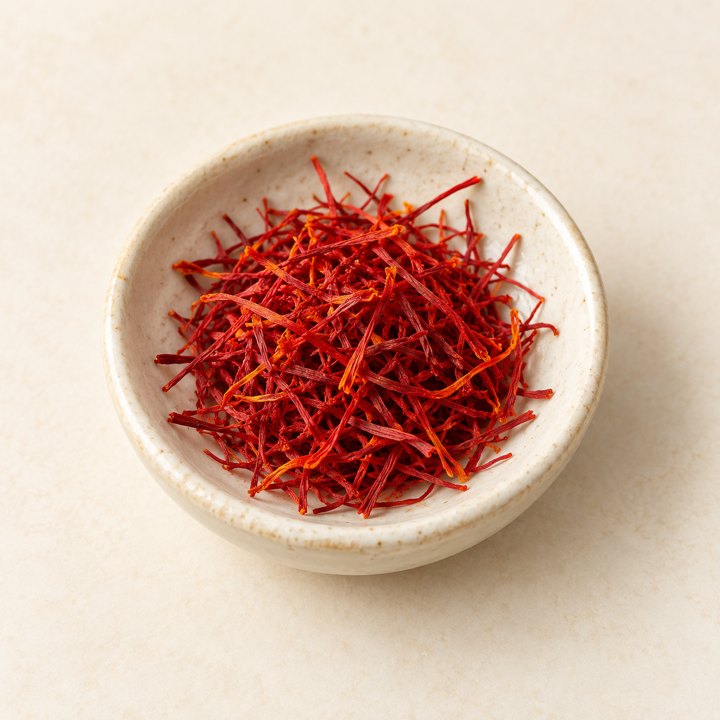
Saffron, zafran, consists of the dried stigmas of Crocus sativus flowers. It gives a distinctive floral-hay aroma and golden colour.
What it is and names to know
Saffron, zafran, consists of the dried stigmas of Crocus sativus flowers. It gives a distinctive floral-hay aroma and golden colour. Safflower, turmeric and orange food colouring are different products and cannot duplicate its flavour.
Origins, producing regions and Pakistan context
Saffron has a long cultivation and trade history across the Mediterranean and West Asia, with the precise early domestication story still debated. The botanical crop should not be assigned to a named discoverer.
Iran, India, Spain and Greece are associated with saffron cultivation. Flowers are harvested and stigmas separated by hand, contributing to its high cost. For Pakistani buyers, a traceable seller and clear origin are more useful than an unverified claim about the current leading exporter.
Background: Spices Board: crop and ingredient reference.

Types and buying advice
Buy traceable dried threads labelled saffron. Safflower and yellow food colour are different ingredients, and vivid colour alone does not prove authenticity.
How to cook with it
Crush a small pinch of threads and steep in warm water or milk, then add the infusion to pulao, biryani, kheer or halwa. Count the soaking liquid as part of the recipe.
Purchase threads from a traceable seller and use sparingly. A rich colour alone is not proof of saffron authenticity, and an extremely cheap product deserves careful label scrutiny.
Steeping helps use a small measured amount efficiently, but the infusion still needs to be distributed thoughtfully. In a layered rice dish, spoon it over selected areas for natural variation rather than stirring until every grain is uniformly coloured. Keep the steeping cup covered from kitchen splashes. A low-cost yellow powder may be a different spice or colouring; buy by a clear ingredient description, not by a photograph of bright yellow rice on the packet.
Try the ingredient in Modur Pulao, Badam Halwa, Bombay Biryani. Follow each recipes specified form and quantity, since whole pieces and fine powder season food differently.
For related pantry ingredients, see the Pakistani ingredients and spices guide.
For a milk sweet, soak a small crushed pinch in a little warm milk taken from the recipe, then stir the infusion into the main mixture. Allow the aroma to disperse before deciding whether more is needed. Adding dry threads at the last moment can leave intense local colour without distributing the fragrance evenly. Saffron and cardamom can work together, but both should remain measured accents.
Nutrition and realistic benefits
At the quantities usually used in a household dish, the main benefit is flavour rather than a large contribution of protein, vitamins or minerals. Composition tables often describe 100 grams, far more than an ordinary serving. A small seasoning quantity should not be advertised as a practical way to meet a daily mineral requirement. Aromatic food can help make simple lentils, vegetables and rice appealing, but the whole meals balance of ingredients, salt and fat still matters.
Disadvantages and precautions
Large doses and supplement products should not be treated as ordinary food. A pinch in cooking is not evidence for mood, fertility or disease-treatment claims.
Dry spices are not sterile foods. FDA food-safety guidance explains practical handling. Buying from a traceable food supplier is more dependable than trying to judge safety from appearance alone.
Substitutions and storage
Turmeric can provide yellow colour in a savoury dish, but changes flavour. A dessert can omit saffron or use cardamom for a different aromatic direction.
Keep in a clean, tightly closed food container in a cool dry cupboard, away from the cooker and direct sun. Whole pieces generally retain aroma better than the same spice left ground. Date the jar when opened and buy an amount you can use while fragrant. Crush a small sample periodically: fading aroma means weaker flavour, while dampness, insects or a musty smell are reasons to discard it. Never tip a wet spoon into a dry-spice jar.
Names and forms used in our recipes
View the recipe names covered by this guide
- pinch of saffron strands
- saffron
- saffron strands
- saffron threads
Frequently Asked Questions
Must saffron rice be uniformly yellow?
Steeping helps use a small measured amount efficiently, but the infusion still needs to be distributed thoughtfully. In a layered rice dish, spoon it over selected areas for natural variation rather than stirring until every grain is uniformly coloured.
What can I use instead of saffron?
Turmeric can provide yellow colour in a savoury dish, but changes flavour. A dessert can omit saffron or use cardamom for a different aromatic direction.
What is the main caution with saffron?
Large doses and supplement products should not be treated as ordinary food. A pinch in cooking is not evidence for mood, fertility or disease-treatment claims.
Keep Exploring
Related places and stories on DailyLife.pk

How we know this
- Type Explainer
- Sources 3 (1 official/academic)
- Reviewed November 2026
- Disputed points None
3 sources
Photo credits (1)
- Spice market @ Walled City @ Lahore (15449651456).jpg, Guilhem Vellut from Annecy, France, CC BY 2.0, via Wikimedia Commons
