
Ingredients & Spices · The complete guide
Mustard seeds (Rai)
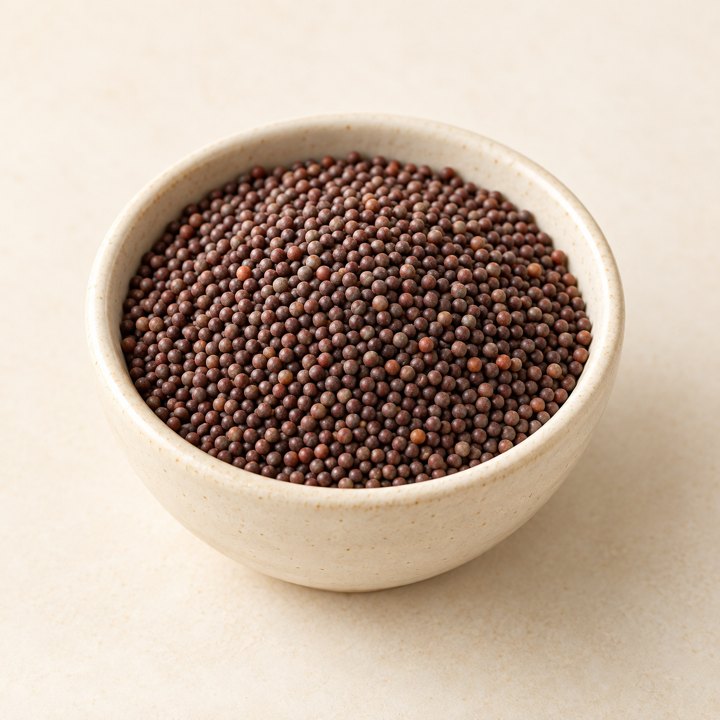
Mustard seeds include yellow or white Sinapis alba, brown Brassica juncea and black Brassica nigra. Rai and sarson are common regional names, used inconsistently.
What it is and names to know
Mustard seeds include yellow or white Sinapis alba, brown Brassica juncea and black Brassica nigra. Rai and sarson are common regional names, used inconsistently. Seed colour and species influence pungency and cooking behaviour.
Origins, producing regions and Pakistan context
Mustards have old regional histories in Europe and Asia. Leafy sarson and condiment seeds may come from related crops but should not be treated as the same kitchen ingredient or assigned one universal origin.
Canada, India, China and several European countries are associated with mustard cultivation. Pakistan also grows mustard-type oilseed and vegetable crops; condiment seed selection is a separate retail question. Whole and processed forms can cross borders separately: a spice may be imported, milled and repacked before sale in Pakistan. The growing countries listed here are not a claim about the direct supplier of a particular Pakistani packet.
Background: Spices Board: crop and ingredient reference.

Types and buying advice
Select yellow, brown or black seed deliberately. Prepared bottled mustard contains other ingredients and does not replace dry seed without adjustment.
How to cook with it
Bloom in hot oil for vegetable tadka, dal and South Indian-style preparations, or use in achar. Cover loosely if seeds pop vigorously, and add the next ingredient before they burn.
Ground mustard becomes pungent on contact with water. Follow a pickle recipe carefully: changing acid and salt in a preserving formula can affect more than flavour.
Popping is a familiar part of a mustard-seed tadka, but vigorous heat can burn the oil before every seed has popped. Aim for fragrance rather than a perfect count. A loose cover helps contain jumping seeds, and the next ingredient should be ready. In a ground mustard mixture, water and resting affect pungency. Follow the intended recipe instead of assuming bottled mustard, dry seed and dry powder can replace each other without changing liquid, salt and acidity.
Try the ingredient in Chicken Achari, Khatti Daal, Achari Chicken Karahi. Follow each recipes specified form and quantity, since whole pieces and fine powder season food differently.
For related pantry ingredients, see the Pakistani ingredients and spices guide.
For a mild mustard-seed potato dish, cook the potatoes separately, prepare a brief seed tempering and toss together. The seeds then contribute texture and aroma without requiring prolonged frying. A mustard paste is a different preparation and may be much sharper, particularly when hydrated in water before use.
Nutrition and realistic benefits
At the quantities usually used in a household dish, the main benefit is flavour rather than a large contribution of protein, vitamins or minerals. Composition tables often describe 100 grams, far more than an ordinary serving. A small seasoning quantity should not be advertised as a practical way to meet a daily mineral requirement. Aromatic food can help make simple lentils, vegetables and rice appealing, but the whole meals balance of ingredients, salt and fat still matters.
Disadvantages and precautions
Mustard is an important food allergen for some people. Do not assume a small seed quantity is irrelevant to someone with a diagnosed allergy.
Dry spices are not sterile foods. FDA food-safety guidance explains practical handling. Buying from a traceable food supplier is more dependable than trying to judge safety from appearance alone.
Substitutions and storage
Brown and black seeds can often replace each other in a tadka. Yellow seed gives a milder effect; bottled mustard brings water, salt and acidity and is not equivalent by volume.
Keep in a clean, tightly closed food container in a cool dry cupboard, away from the cooker and direct sun. Whole pieces generally retain aroma better than the same spice left ground. Date the jar when opened and buy an amount you can use while fragrant. Crush a small sample periodically: fading aroma means weaker flavour, while dampness, insects or a musty smell are reasons to discard it. Never tip a wet spoon into a dry-spice jar.
Names and forms used in our recipes
View the recipe names covered by this guide
- black mustard seeds
- brown mustard seeds
- mustard seeds
- mustard seeds, optional
Frequently Asked Questions
Must every mustard seed pop before I continue?
Popping is a familiar part of a mustard-seed tadka, but vigorous heat can burn the oil before every seed has popped. Aim for fragrance rather than a perfect count.
What can I use instead of mustard seeds?
Brown and black seeds can often replace each other in a tadka. Yellow seed gives a milder effect; bottled mustard brings water, salt and acidity and is not equivalent by volume.
What is the main caution with mustard seeds?
Mustard is an important food allergen for some people. Do not assume a small seed quantity is irrelevant to someone with a diagnosed allergy.
Keep Exploring
Related places and stories on DailyLife.pk

How we know this
- Type Explainer
- Sources 3 (1 official/academic)
- Reviewed November 2026
- Disputed points None
3 sources
Photo credits (1)
- Spice market @ Walled City @ Lahore (15449651456).jpg, Guilhem Vellut from Annecy, France, CC BY 2.0, via Wikimedia Commons
