
Ingredients & Spices · The complete guide
Butter (Makhan)
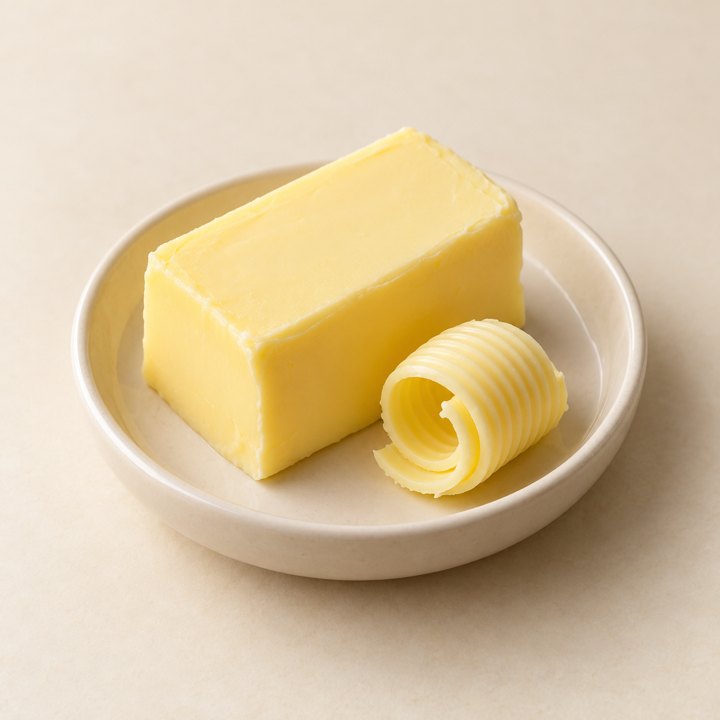
Butter, or makhan, is an emulsion made by churning cream or suitable milk until the fat gathers. White cultured makhan, sweet-cream butter and salted table butter differ in flavour and salt.
What it is and what to ask for
Butter, or makhan, is an emulsion made by churning cream or suitable milk until the fat gathers. White cultured makhan, sweet-cream butter and salted table butter differ in flavour and salt.
Read whether salt is added and check that the product is butter rather than a vegetable-fat spread. For pastry, inconsistent water content in homemade makhan can alter the dough.
History, production and the Pakistan context
Churning is an old dairy-preservation technique associated with pastoral societies. Modern commercial butter standardises moisture and fat, while household makhan may vary more.
Pakistan and India have buffalo and cow dairy traditions; New Zealand, Ireland and European countries also produce traded butter. The milk species and manufacturing style can matter more than the flag on the wrapper.
How to use it successfully
Use softened butter for creaming cakes, cold butter for flaky pastry, and melted butter where liquid fat is specified. Milk solids brown and can burn, so use moderate heat for a finishing spoon on roti or saag.
Softened does not mean melted: softened butter still holds air when beaten with sugar, whereas melted butter produces a different structure. Salted butter can work in everyday cooking if other salt is reduced, but baking formulas are easier to control with unsalted butter. Wrap well because exposed butter readily picks up strong neighbouring food odours.
Nutrition, benefits and limits
Butter is predominantly fat with substantial saturated fat and little protein per serving. It remains a milk-derived food and should not be assumed safe for a milk-allergic person.
Choosing a replacement
Ghee gives butterfat flavour with less water but cannot reproduce butter's creaming behaviour. Neutral oil makes tender cakes but produces a different crumb and cannot simply replace cold pastry butter.
When changing a cooking fat, compare flavour, water content, solidity and the method of heating. Preserve the recipe’s functional balance rather than only the apparent spoonful size. A substitute should meet the household’s actual dietary requirement, and its own food-grade and storage instructions remain relevant even when the quantity is small.
Safe handling and storage
Identify the actual fat before applying a storage rule. Butter, clarified dairy ghee, raw lamb trimmings and rendered animal fat differ in water content and processing. Follow the producer’s directions, keep utensils clean and dry, and do not store a homemade fat indefinitely at room temperature simply because a commercial sealed product permits cupboard storage.
Solid and liquid fats measure differently and may behave differently after a cooked dish cools. Butter contains water and milk solids, while clarified fat is more concentrated; rendered meat fat brings a distinct savoury aroma. Use the recipe’s specified form and amount, and avoid overheating until the fat smokes. Rendering improves usability but is not a way to rescue rancid or badly handled raw material.
Fat contributes tenderness, flavour delivery and richness, but it is not a substantial protein serving. Consider saturated fat and the overall meal when choosing portions. Dairy-derived fats remain relevant to milk allergy even when lactose is low. A fat described as natural, desi or traditional is not automatically lower in energy or suitable for every dietary requirement. Keep flavours and nutritional claims separate when comparing dairy ghee, vegetable oils and animal fats.
Planning, portions and serving
In garlic bread, combine softened butter with evenly minced or prepared garlic so the flavour spreads instead of forming a few intense lumps. In pastry, work quickly enough that cold butter remains in small distinct pieces where flakiness is intended. A recipe asking for browned butter expects deliberate milk-solid browning and a changed water content; ordinary melted butter is not quite the same. Keep those techniques separate when adapting a bake.
Recipes and pantry links
Use butter according to the form specified in the linked recipe: raw versus cooked, bone-in versus boneless, sweetened versus plain, and the stated cut or processing style all affect the result. The ingredient discussion above explains which differences matter most here. Read the complete recipe before shopping, then measure the prepared usable quantity rather than assuming every package has the same yield.
- Malai Boti Biryani
- Bun Omelette
- Garlic Bread
- Stuffed Crust Pizza
- Sarson Ka Saag Makki Ki Roti
- Butter Chicken
- Makhan Roti
- Sarson Ka Saag
- Apple Pie
For related ingredient names, local terminology and flavour pairings, browse the Pakistani ingredients and spices pantry guide.
Names and forms used in our recipes
View the recipe names covered by this guide
- butter
- cold butter
- melted butter
- softened butter
- unsalted butter
- unsalted butter, divided
- unsalted butter, total
- white butter
- white butter (makhan) or salted butter
Frequently Asked Questions
Can melted butter replace softened butter in a cake?
Not without changing the result. Softened butter can trap air during creaming; melted butter cannot perform that step in the same way. Follow the formula or choose a cake designed for liquid fat.
What should I check before buying butter for these recipes?
Read whether salt is added and check that the product is butter rather than a vegetable-fat spread. For pastry, inconsistent water content in homemade makhan can alter the dough. Match the stated plain or flavoured form and read the storage directions before opening the pack.
What is a practical substitute for butter?
Ghee gives butterfat flavour with less water but cannot reproduce butter's creaming behaviour. Neutral oil makes tender cakes but produces a different crumb and cannot simply replace cold pastry butter. Make a small test where binding, melting or a delicate final texture is central, and adjust the recipe rather than treating different ingredients as identical.
Keep Exploring
Related places and stories on DailyLife.pk

How we know this
- Type Explainer
- Sources 6 (2 official/academic)
- Reviewed November 2026
- Disputed points None
