
Ingredients & Spices · The complete guide
Fresh coriander (Hara dhania)
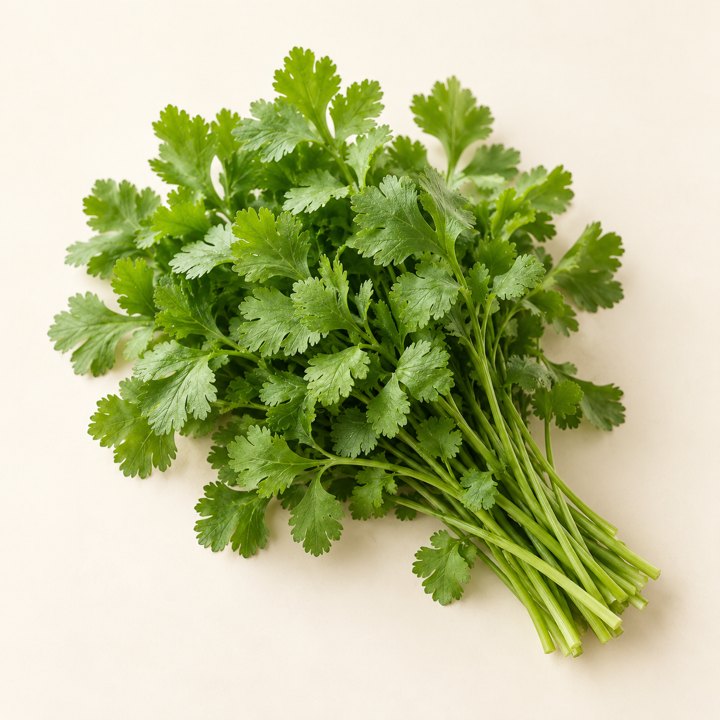
Fresh coriander, hara dhania, is the leafy part of Coriandrum sativum; cilantro is a common American name. Leaves and tender stems have a fresh green citrus-like aroma, very different from the plants dried seeds.
What it is and names to know
Fresh coriander, hara dhania, is the leafy part of Coriandrum sativum; cilantro is a common American name. Leaves and tender stems have a fresh green citrus-like aroma, very different from the plants dried seeds.
Origins, producing regions and Pakistan context
The same plant has an old Mediterranean and West Asian cultivation history. Leaf use became integral to South Asian cooking, but a first garnish or exact arrival date in present-day Pakistan cannot be established.
Fresh coriander is grown widely, including in Pakistan, and generally sold close to harvest. Its short keeping life makes local freshness more useful to a household than international production rankings.
Background: Spices Board: crop and ingredient reference.

Types and buying advice
Choose sound hara dhania with tender stems for chutney and attractive leaves for garnish. Dried seed powder cannot replace its fresh character.
How to cook with it
Chop over dal, karahi, chaat and soup, or blend with mint into chutney. Tender stems add flavour and need not be discarded; thick gritty lower stems require more trimming.
Wash under running water and dry before chopping. Add a final handful after the flame is off for fragrance, while some stems can be cooked in the masala.
Use the whole tender upper part of a bunch when blending chutney, but trim roots and wash away all soil first. For a neat garnish, chop only after drying so the leaves do not mat together. Coriander stirred into a hot gravy wilts rapidly, so keep a final portion for serving if freshness is the goal. If someone dislikes its soapy sensory character, offer it separately rather than trying to hide more in the dish.
Try the ingredient in Haleem, Chapli Kebab, Chicken Karahi. Follow each recipes specified form and quantity, since whole pieces and fine powder season food differently.
For related pantry ingredients, see the Pakistani ingredients and spices guide.
For a cooked dal, stir in some chopped tender stems after the lentils soften, then add leaves after switching off the flame. This uses two parts of the bunch purposefully. In a raw chutney, blend only enough to obtain the desired consistency; extra water can turn a thick accompaniment into a runny sauce. Keep a separate portion of washed leaves for garnish so they stay free of raw-meat handling.
Nutrition and realistic benefits
Fresh leaves add aroma, variety and some micronutrients to food. The nutritional contribution depends on whether you eat a few garnish leaves or a substantial chopped-herb portion. They cannot replace the volume and diversity of vegetables in a meal. Their most useful everyday role is making ordinary dishes enjoyable with a fresh aromatic finish. Claims based on isolated oils, extracts or laboratory tests should not be transferred to a spoonful of chopped leaves or an everyday homemade tea.
Disadvantages and precautions
Some people perceive coriander as soapy; this is a sensory preference, not evidence of spoilage. Like other raw herbs it needs clean handling and separation from raw meat.
Clean handling matters even for a small garnish. FDA food-safety guidance explains practical handling. Buying from a traceable food supplier is more dependable than trying to judge safety from appearance alone.
Substitutions and storage
Parsley supplies a mild fresh garnish but a different flavour. Mint can be useful in chutney if its stronger aroma suits the dish; coriander seed does not replace the leaves.
Choose sound leaves with a clear characteristic aroma, and discard rotten or slimy material. Rinse under fresh running water before use and dry gently; household soap and detergent are unsuitable for washing food. Keep most fresh herbs chilled with their moisture controlled so leaves do not sit wet. Tender basil is particularly sensitive to cold and bruising. Freezing can preserve a surplus for cooked dishes, though thawed leaves usually lose the texture needed for an attractive raw garnish.
Names and forms used in our recipes
View the recipe names covered by this guide
- chopped coriander
- chopped coriander leaves
- chopped coriander leaves, optional
- chopped coriander, optional
- chopped coriander, optional garnish
- chopped fresh coriander
- chopped fresh coriander leaves
- coriander leaves
- coriander leaves, optional
- finely chopped coriander leaves
- fresh chopped coriander
- fresh coriander
- fresh coriander (optional)
- fresh coriander leaves
- fresh coriander leaves, chopped
- fresh coriander leaves, optional
- fresh coriander, chopped
- fresh coriander, finely chopped
- fresh coriander, optional
Frequently Asked Questions
Can I use tender coriander stems?
Use the whole tender upper part of a bunch when blending chutney, but trim roots and wash away all soil first. For a neat garnish, chop only after drying so the leaves do not mat together.
What can I use instead of fresh coriander?
Parsley supplies a mild fresh garnish but a different flavour. Mint can be useful in chutney if its stronger aroma suits the dish; coriander seed does not replace the leaves.
What is the main caution with fresh coriander?
Some people perceive coriander as soapy; this is a sensory preference, not evidence of spoilage. Like other raw herbs it needs clean handling and separation from raw meat.
Keep Exploring
Related places and stories on DailyLife.pk

How we know this
- Type Explainer
- Sources 4 (2 official/academic)
- Reviewed November 2026
- Disputed points None
4 sources
Photo credits (1)
- I-11 Sabze Mande, Islamabad.jpg, Pakieditor, CC BY-SA 4.0, via Wikimedia Commons
