
City guide
Pakpattan: The Shrine Town of Baba Farid
An ancient ferry town near the Sutlej, once called Ajodhan, that grew around the shrine of the Sufi saint and Punjabi poet Baba Farid Ganj-i-Shakar.
- South-east Punjab, near the Sutlej
- Shrine of Baba Farid
- Waris Shah's Malka Hans nearby
- Urs in early Muharram
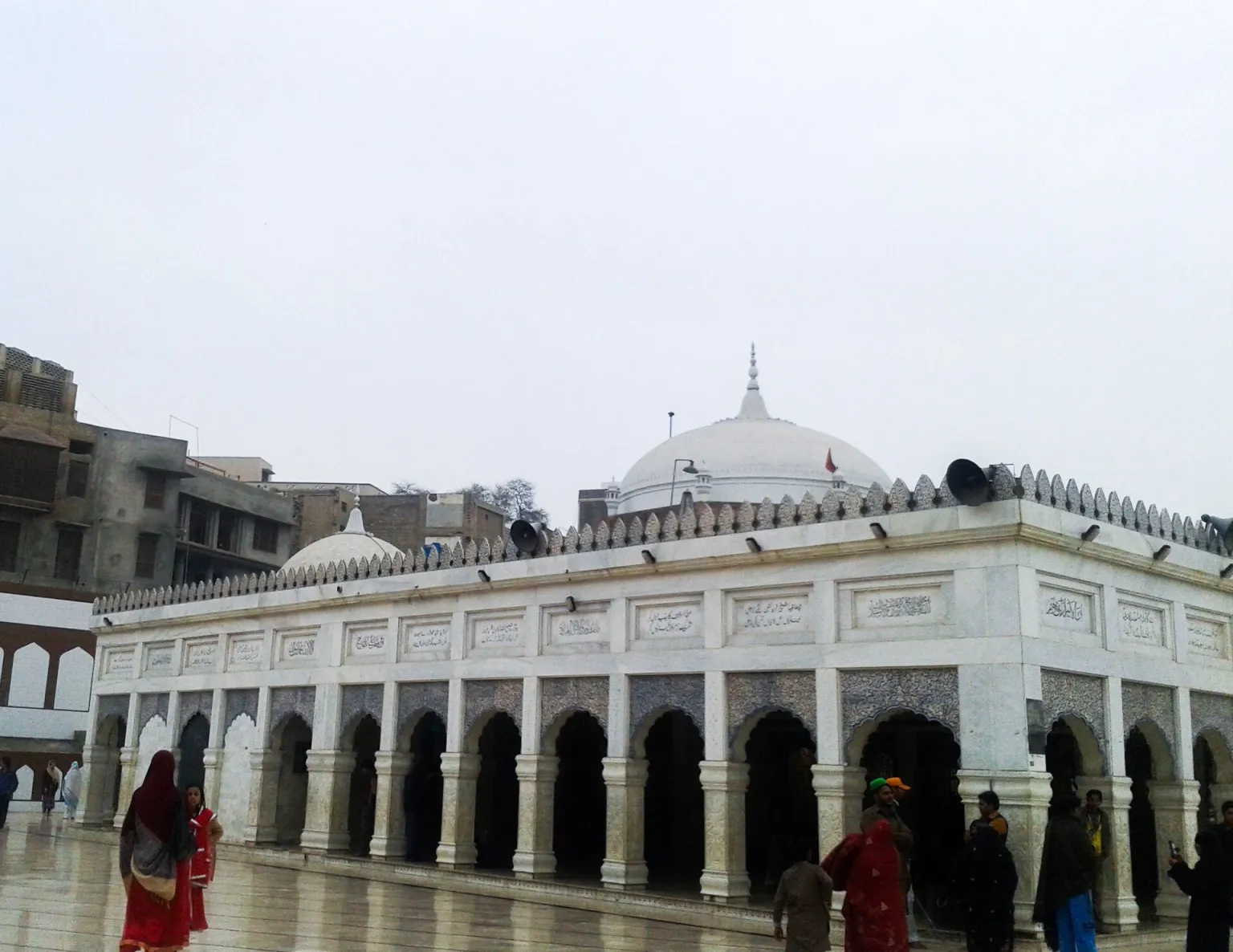
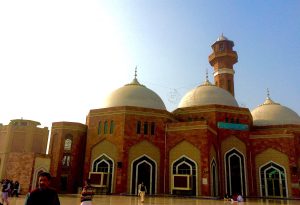
Shrine of Baba Farid Ganj-i-Shakar, Pakpattan
Pakpattan at a Glance
About Pakpattan
Pakpattan lies in south-eastern Punjab, a short distance from the Sutlej, whose crossing gave the town its old importance, pattan means a ferry or ford. Until the 16th century it was known as Ajodhan, an ancient town on the routes between Multan and Delhi. Around 1195 the Sufi master Fariduddin Masud, better known as Baba Farid or Ganj-i-Shakar ("treasury of sugar"), settled here, and the town gradually took the name Pakpattan, "the pure ferry", from his presence.
The 2023 Census counted 221,280 people in Pakpattan city and 2,136,170 in Pakpattan District, about a fifth of them urban. The district is farming country, growing wheat, cotton, potatoes and fodder on canal-irrigated land, and raising buffaloes and cattle.
Baba Farid was one of the great saints of the Chishti order and one of the first poets of the Punjabi language; his verses are included in the Sikh scripture, the Guru Granth Sahib. His shrine draws pilgrims from across Pakistan especially during the annual urs, when the shrine's Bahishti Darwaza (Gate of Paradise) is opened.
A ferry crossing became a place of pilgrimage, and took a new name to match.
Things to See
A great Sufi shrine and a poet's village.
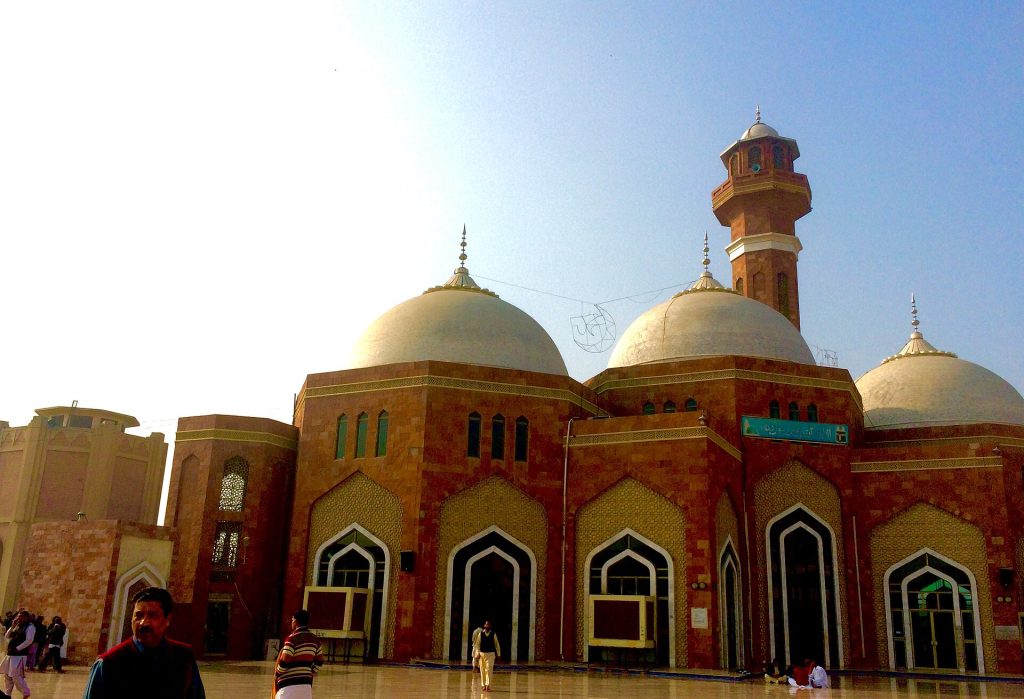
 Shrine of Baba FaridThe domed tomb, mosque and courtyards of the saint's shrine are the heart of the town. Qawwali, langar and a constant flow of pilgrims give it an atmosphere unlike anywhere else in Punjab.
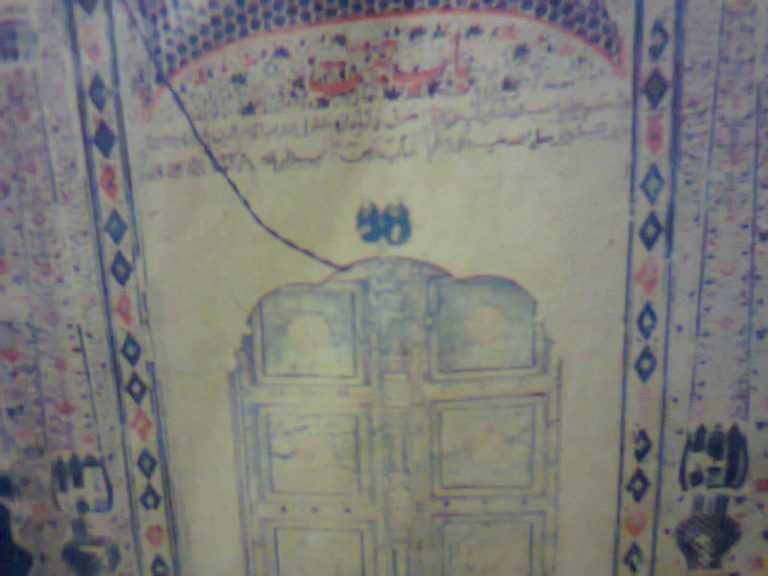 Bahishti DarwazaA small door in the southern wall of the tomb, opened only from the night of 6 Muharram until the 10th during the urs. Pilgrims pass through it and leave by the eastern Noori Darwaza.
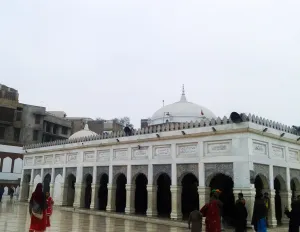
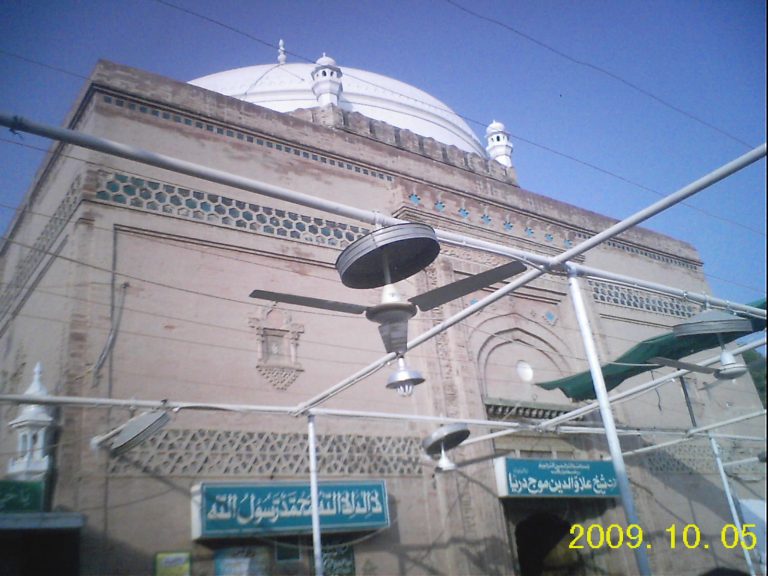 Shrine of Ala-ud-Din Mauj DaryaThe tomb of Baba Farid's grandson stands in the same compound, a fine example of the region's brick shrine architecture.
 Malka HansA village about 12 km north of Pakpattan where the poet Waris Shah lived in a small room beside a historic mosque, now called Masjid Waris Shah. He is celebrated for his version of the Heer–Ranjha romance.
 The SutlejThe river that made Ajodhan a ferry town still forms part of the district's south-eastern boundary; it flooded parts of the area in August 2023.



A Short History of Pakpattan
Ancient
Ajodhan
A town grows up at a ferry crossing on the Sutlej, on routes linking Multan with the Gangetic plain.
c. 1195
Baba Farid arrives
The Chishti saint Fariduddin settles in Ajodhan and teaches there for decades.
1265–66
Death of the saint
Baba Farid dies in Ajodhan; his shrine is built and soon becomes a major pilgrimage site.
1334
Ibn Battuta's visit
The Moroccan traveller visits the town on his journey through India.
1398
Timur
Timur visits the shrine during his invasion and spares the town's remaining inhabitants.
16th century
A new name
The name Pakpattan gradually replaces Ajodhan as the shrine's fame grows.
1910
The railway
A branch line between Lodhran and Khanewal brings trains to Pakpattan.
2023
Sutlej floods
High water on the Sutlej floods parts of the city and district in August.
Getting There and Around
By road
From Sahiwal
Pakpattan is reached by road from Sahiwal, Okara, Arifwala and Vehari; buses are crowded during the urs.
By rail
Pakpattan station
On a branch line with limited services; check current services with Pakistan Railways.
Nearest airports
Lahore, Multan, Faisalabad
Pakpattan has no airport; fly to one of these cities and continue by road.
In town
On foot
The shrine area is best explored on foot; traffic is heavily restricted during the urs.
Plan Your Visit
When to visit
Winter, or the urs for atmosphere
November to February is most comfortable. The urs falls in early Muharram and its date moves each year with the Islamic calendar.
During the urs
Expect huge crowds
Security is tight, queues for the Bahishti Darwaza are long and the town is packed; follow local authority guidance.
Shrine etiquette
Respect the space
Cover your head, remove shoes, dress modestly and keep photography discreet, especially near the tomb.
Where to stay
Sahiwal or Okara
Pakpattan has limited accommodation; many visitors stay in Sahiwal.
Pakpattan Through Time
Every dated moment our guides record about Pakpattan, from its own history and from national events that touched it. Each entry links to its source page.
- 13th century
Baba Farid
Baba Farid Ganjshakar settles at nearby Pakpattan, making the region a Sufi centre.
- 1524–1578
Mughal visits
Babur takes Lahore and Dipalpur (1524); Akbar halts here on his way to Pakpattan (1578).
- 18th century
Waris Shah
The poet Waris Shah lives at Malka Hans, north of Pakpattan.
- 1913
Canal water arrives
The Lower Bari Doab Canal is completed, followed by the Depalpur and Pakpattan canals, opening the area to settled farming.
- 1920s
Nili Bar colony
Canals from the Sutlej, including the Pakpattan Canal, open the Nili Bar uplands to settled farming.
Do you remember Pakpattan as it used to be? Share a memory or an old photo, our editors review every story before it appears.
Frequently Asked Questions
What is the population of Pakpattan?
The 2023 Census counted 221,280 people in Pakpattan city and 2,136,170 in Pakpattan District.
What was Pakpattan's old name?
Ajodhan. The name Pakpattan, 'the pure ferry', gradually replaced it as Baba Farid's shrine grew in fame.
When is the Bahishti Darwaza opened?
During Baba Farid's annual urs: from the night of 6 Muharram until the 10th. The dates move each year with the Islamic calendar.
Who was Baba Farid?
Fariduddin Masud Ganj-i-Shakar, a 12th–13th-century Sufi of the Chishti order and one of the earliest Punjabi poets, whose verses appear in the Guru Granth Sahib.
Where did Waris Shah live?
At Malka Hans, a village about 12 km north of Pakpattan, where a mosque now bears his name.
Keep Exploring
Related places and stories on DailyLife.pk
 SahiwalSahiwal city guide: Harappa's Indus Valley ruins, the Montgomery-era railway town, Sahiwal cattle, food, history
 OkaraOkara city guide: Punjab's potato and dairy country, Depalpur, the Renala Khurd canal power station
 VehariVehari city guide: south Punjab's cotton belt and its shift to maize and dairy
 MultanMultan city guide: Shah Rukn-e-Alam and other Sufi shrines, the walled city, blue pottery, sohan halwa
 Sufi Shrines of PakistanVisit Pakistan's great Sufi shrines: Data Darbar, Shah Rukn-e-Alam, Lal Shahbaz Qalandar, Bhit ShahPoetry and Literature of PakistanPakistan's poetry and literature: Bhittai, Bulleh Shah, Rahman Baba, Khushal Khan Khattak, Ghalib's legacy, Iqbal, Faiz
How we know this
- Type Place guide
- Sources 6 (2 official/academic)
- Reviewed October 2026
- Disputed points None
6 sources
- Table 1: Area, population by sex, sex ratio, density, urban proportion: Punjab districts (Census 2023), Pakistan Bureau of Statistics
- Pakistan: Cities and Municipalities: 2023 Census, City Population (Thomas Brinkhoff), from PBS data
- Bahishti Darwaza opened at Pakpattan (urs of Baba Farid), Dawn
- District Pakpattan (Waris Shah and Malka Hans), Government of the Punjab
- Pakpattan (overview used to locate primary sources), Wikipedia
- Baba Farid (overview used to locate primary sources), Wikipedia
Photo credits (12)
- Punjabi Sarsoon Ka Saag.JPG, Miansari66, Public domain, via Wikimedia Commons
- Making Lassi (White Beer) in Pakistan.jpg, Tahsin Shah, CC BY-SA 4.0, via Wikimedia Commons
- Darbar Hazrat Baba Farid ud Deen Ganj Shakar Rahmatullah Alaih - panoramio.jpg, Sunni Person, CC BY-SA 3.0, via Wikimedia Commons
- Mosque at Shrine of Fariduddin Ganjshakar 1.jpg, Malikumerajmal77, CC BY-SA 4.0, via Wikimedia Commons
- Pakpattan shrine.jpg, Rangbaz, CC BY-SA 4.0, via Wikimedia Commons
- Shrine of Shaikh Ala ud deen mauj darya at Pak Pattan - panoramio.jpg, Sunni Person, CC BY-SA 3.0, via Wikimedia Commons
- Mausoleum of Shah Abdul Latif Bhittai 05.jpg, Umasha79, CC BY-SA 3.0, via Wikimedia Commons
- Indus River Skardu Pakistan.jpg, Akhtar Bashir Nigyaal, CC BY-SA 4.0, via Wikimedia Commons
- Shah Rukn-e-Alam Tomb.jpg, Junaidali88z, CC BY-SA 3.0, via Wikimedia Commons
- View of Granary and Great Hall on Mound F - Archaeological site of Harappa.jpg, Muhammad Bin Naveed, CC BY-SA 3.0, via Wikimedia Commons
- Company Bagh Chowk, Okara - panoramio.jpg, Sunni Person, CC BY-SA 3.0, via Wikimedia Commons
- Cotton plant in Pakistan.jpg, Ihabullah khan, CC BY-SA 4.0, via Wikimedia Commons
