
City guide
Sahiwal: Gateway to Harappa
A canal-colony city between Lahore and Multan, best known for the Indus-era ruins of Harappa nearby, a famous breed of dairy cattle and the cotton and wheat fields of the Bari Doab.
- Central Punjab, between the Ravi and Sutlej
- Harappa about 27 km away
- On the Lahore–Multan main line
- Best season: November–March
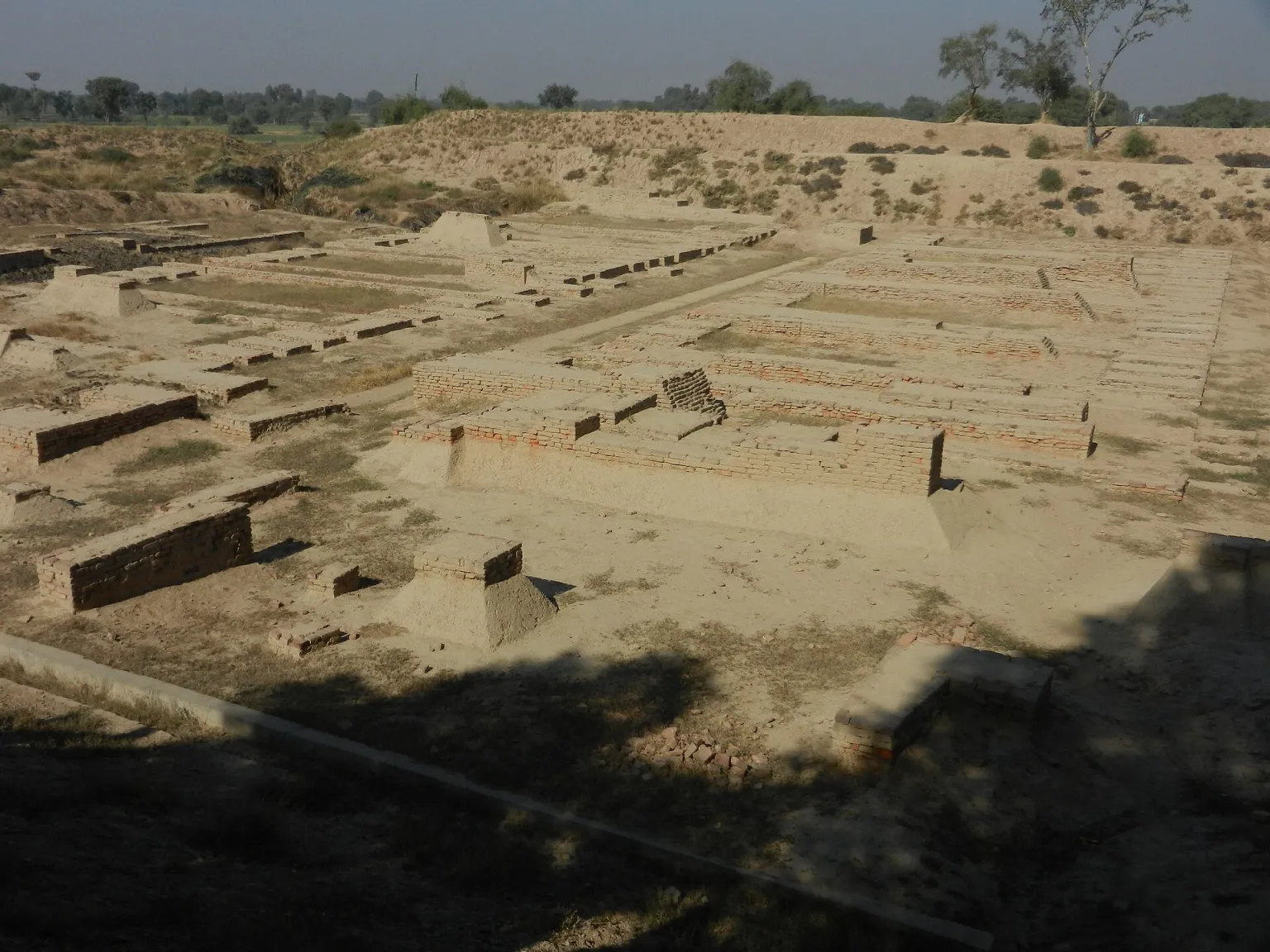
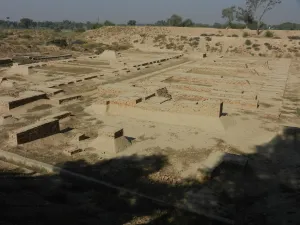
Archaeological site of Harappa, Sahiwal District
Sahiwal at a Glance
About Sahiwal
Sahiwal lies in the flat, irrigated heart of the Bari Doab, the land between the Ravi and Sutlej rivers, roughly halfway along the road and railway between Lahore and Multan. It began life in 1865 as a railway station named Montgomery, after Sir Robert Montgomery, then lieutenant-governor of Punjab; it became a municipality in 1867 and took its present name, Sahiwal, in the 1960s.
The 2023 Census counted 538,344 people in Sahiwal city and 2,881,811 in Sahiwal District, about a quarter of them in urban areas. The city is the headquarters of Sahiwal Division, a busy market for cotton, wheat and dairy produce, and a regional centre for hospitals and colleges.
For visitors its great draw is Harappa, the Bronze Age city that gave its name to the Harappan or Indus Valley Civilisation, about 27 km to the south-west. The district also lends its name to the Sahiwal breed of cattle, prized as dairy animals and exported far beyond Pakistan.
Few Pakistani towns sit so close to the beginnings of South Asian urban life.
Things to See in and around Sahiwal
Bronze Age ruins, a colonial railway town and a modern power plant on the plains.
 HarappaMounds, gateways and a granary-like building of one of the great Indus cities, occupied from about 3300 to 1300 BCE. A site museum displays seals, pottery and ornaments; the site has been on UNESCO's Tentative List since 2004.
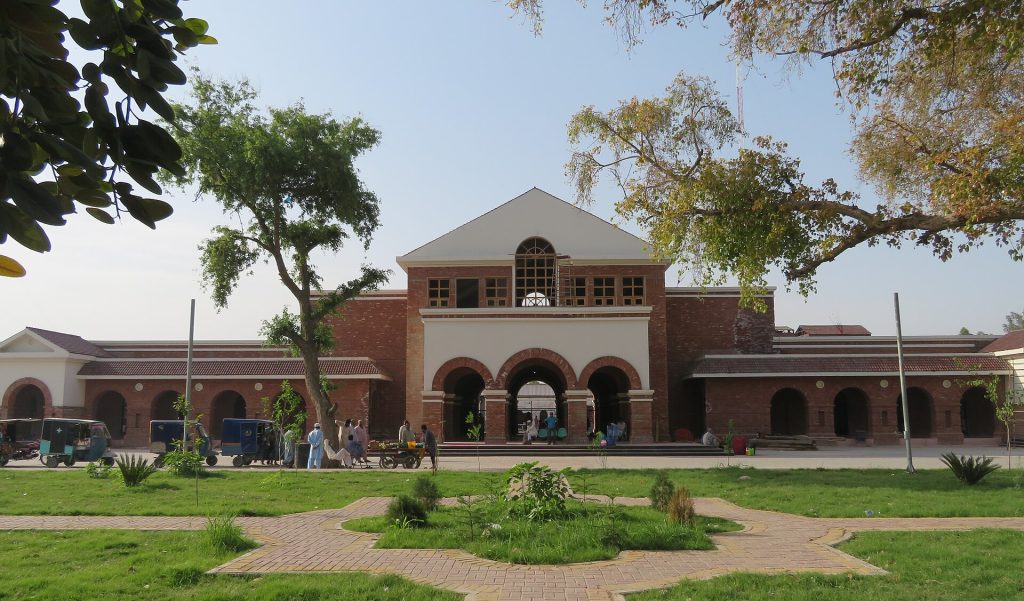
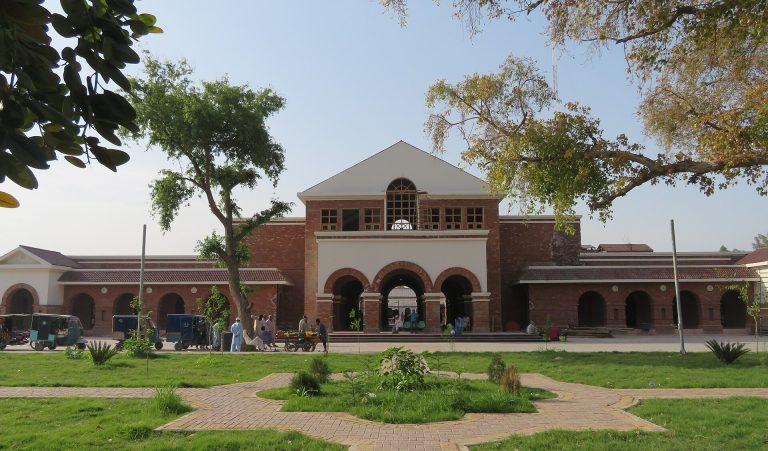 Sahiwal railway stationThe station that gave birth to the town still anchors it, with a colonial-era building on the main line between Lahore and Multan.
 Sahiwal coal power plantA 1,320 MW coal-fired power station built under the China–Pakistan Economic Corridor; its first 660 MW unit was inaugurated in May 2017. A landmark of the district's recent economy, though not open to visitors.
Food and Markets
Dairy-rich Punjabi cooking in a cattle and farming town.
 Milk, lassi and desi gheeIn a district famous for its dairy cattle, thick lassi, fresh milk and ghee-rich cooking are part of daily life.
 Halwa puri breakfastsFried puris with semolina halwa and chickpeas are the classic weekend breakfast at bazaar stalls.
 Karahi and tikkaWok-cooked karahi and charcoal-grilled tikka are the evening staples along the main roads and the GT Road.
Explore Sahiwal by Category

A Short History of Sahiwal
c. 3300–1300 BCE
Harappa flourishes
A settlement on the old course of the Ravi grows into one of the largest cities of the Indus Civilisation, covering more than 100 hectares at its height.
1856
Ruins dug for ballast
Bricks from Harappa's mounds are removed for railway ballast during construction of the Lahore–Multan line, destroying many later layers.
1865
Montgomery is founded
A railway station and town are laid out and named after Sir Robert Montgomery; a municipality follows in 1867.
1910s
Canal colony
The Lower Bari Doab Canal brings irrigation and settlers, turning the district into a major farming area.
1921
Harappa excavated
Systematic excavations begin, revealing the scale of the Bronze Age city.
1947
Partition
Montgomery District becomes part of Pakistan; many Hindu and Sikh residents leave and Muslim refugees settle.
1960s
Renamed Sahiwal
Montgomery town and district take the name Sahiwal.
2017
Power for the grid
The first unit of the Sahiwal coal power plant is inaugurated.
Getting There and Around
By rail
Sahiwal station
On Pakistan's main Karachi–Lahore–Peshawar line, so most express trains between Lahore and Multan stop here. Check current timetables with Pakistan Railways.
By road
N-5 / GT Road
The national highway links Sahiwal with Okara and Lahore to the north-east and Multan to the south-west; intercity coaches run frequently.
Nearest airports
Faisalabad, Lahore, Multan
Sahiwal has no airport of its own; travellers usually fly into one of these cities and continue by road or rail.
In the city
Rickshaws and ride-hailing
Auto-rickshaws and ride-hailing cars cover the city; hire a car or taxi for Harappa.
Plan Your Visit
Best time to visit
November to March
Cool, dry days are ideal for walking around Harappa's exposed mounds; winter mornings can be foggy.
Weather
Very hot summers
May and June are fiercely hot, and the monsoon brings humid heat and rain in July and August.
Visiting Harappa
Allow half a day
Bring water, a hat and good shoes. Check museum opening days and ticketing locally before you go.
Etiquette
Modest dress
Dress conservatively and ask before photographing people, especially women, in villages and markets.
Nearby
 PakpattanThe shrine of the 12th–13th-century Sufi saint Baba Farid draws pilgrims from across Punjab.
 OkaraA farming city to the north-east, known for potatoes, dairy farms and the 1925 Renala Khurd hydropower station.
 MultanThe City of Saints, with its blue-tiled shrines and old bazaars, lies further down the highway.
Frequently Asked Questions
What is the population of Sahiwal?
The 2023 Census counted 538,344 people in Sahiwal city and 2,881,811 in Sahiwal District.
What was Sahiwal's old name?
Montgomery. The town was founded as a railway station in 1865 and named after Sir Robert Montgomery, lieutenant-governor of Punjab; it was renamed Sahiwal in the 1960s.
How far is Harappa from Sahiwal?
The Department of Archaeology and Museums puts the site about 27 km south-west of Sahiwal, an easy half-day trip by car.
Why is Sahiwal famous?
For Harappa, one of the key cities of the Indus Valley Civilisation, for the Sahiwal breed of dairy cattle, and as a farming and market centre on the Lahore–Multan corridor.
When is the best time to visit Sahiwal?
November to March, when the weather is cool enough for sightseeing. Summers are very hot.
Keep Exploring
Related places and stories on DailyLife.pk
OkaraOkara city guide: Punjab's potato and dairy country, Depalpur, the Renala Khurd canal power stationPakpattanPakpattan city guide: Baba Farid's shrine and the Bahishti Darwaza during Muharram, Waris Shah's Malka HansMultanMultan city guide: Shah Rukn-e-Alam and other Sufi shrines, the walled city, blue pottery, sohan halwa LahoreLahore travel guide: Badshahi Mosque, Lahore Fort, Shalimar Gardens, the Walled City, food streets, neighbourhoods, metro
 FaisalabadFaisalabad city guide: the Clock Tower and its eight bazaars, textile industry, Lyallpur Museum, food, history
 Indus Valley CivilizationThe Indus or Harappan civilization (c.
How we know this
- Type Place guide
- Sources 8 (4 official/academic)
- Reviewed October 2026
- Disputed points None
8 sources
- Table 1: Area, population by sex, sex ratio, density, urban proportion: Punjab districts (Census 2023), Pakistan Bureau of Statistics
- Pakistan: Cities and Municipalities: 2023 Census, City Population (Thomas Brinkhoff), from PBS data
- Sahiwal, Encyclopaedia Britannica
- Archaeological Site of Harappa (Tentative List), UNESCO World Heritage Centre
- Harappa: protected site, Department of Archaeology and Museums, Government of Pakistan
- PM inaugurates first unit of Sahiwal coal power project, Profit by Pakistan Today
- Kenyan Sahiwal (breed origin), International Livestock Research Institute (ILRI)
- Sahiwal (overview used to locate primary sources), Wikipedia
Photo credits (9)
- View of Granary and Great Hall on Mound F - Archaeological site of Harappa.jpg, Muhammad Bin Naveed, CC BY-SA 3.0, via Wikimedia Commons
- SahiwalStation.jpg, Torbenbrinker, CC BY-SA 4.0, via Wikimedia Commons
- Making Lassi (White Beer) in Pakistan.jpg, Tahsin Shah, CC BY-SA 4.0, via Wikimedia Commons
- Halwa Puri, a traditional food made in Walled City of Lahore.jpg, Tahsin Shah, CC BY-SA 4.0, via Wikimedia Commons
- Chicken Karahi in Pakistan.jpg, Kskhh, CC BY-SA 4.0, via Wikimedia Commons
- PK Karachi asv2020-02 img47 container port.jpg, A.Savin, FAL, via Wikimedia Commons
- Darbar Hazrat Baba Farid ud Deen Ganj Shakar Rahmatullah Alaih - panoramio.jpg, Sunni Person, CC BY-SA 3.0, via Wikimedia Commons
- Company Bagh Chowk, Okara - panoramio.jpg, Sunni Person, CC BY-SA 3.0, via Wikimedia Commons
- Multan - Tomb of Shah Rukn-e-Alam 2014.jpg, Amirshafiquemughal, CC BY-SA 3.0, via Wikimedia Commons
