
City guide
Hafizabad: Rice Town of the Chenab Plains
A market city west of Gujranwala, named in Mughal legend after a holy man called Hafiz and known today for its rice mills and motorway towns.
- Central Punjab, east of the Chenab
- Rice-milling centre
- Three M-2 interchanges in the district
- Best season: October–March
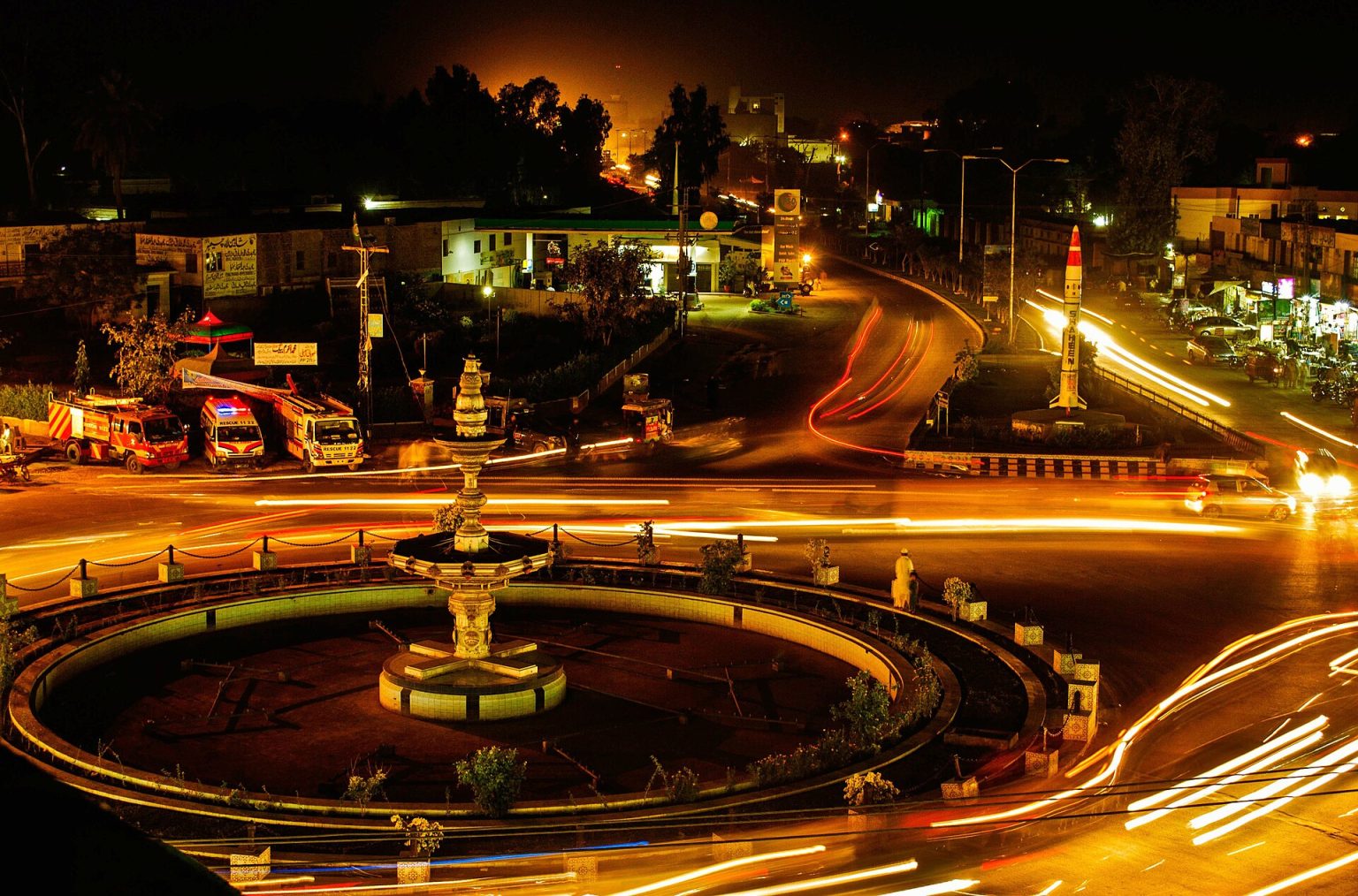
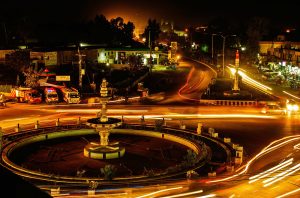
Fawara Chowk, Hafizabad
Hafizabad at a Glance
About Hafizabad
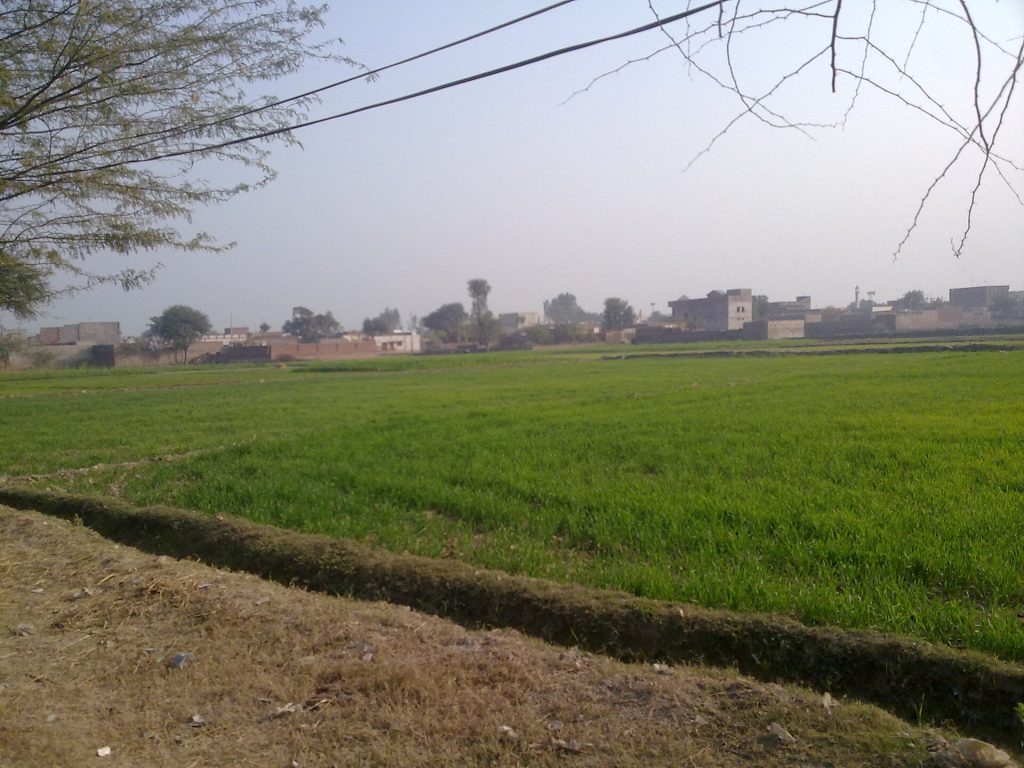
Hafizabad lies on the flat, canal-watered plains east of the Chenab, about 48 km west of Gujranwala. The river forms the district's north-western edge, separating it from Mandi Bahauddin. For centuries this was part of the Sandal Bar, the old grazing country between the rivers, and the area is recorded in the Ain-i-Akbari as the seat of a Mughal revenue division (mahal).
The 2023 Census counted 318,621 people in Hafizabad city and 1,319,909 in Hafizabad District, which covers 2,367 km² and is divided into two tehsils, Hafizabad and Pindi Bhattian. Hafizabad was a tehsil of Gujranwala District until it became a district in its own right on 1 July 1993.
The local economy rests on farming and on what is made from it. Rice shellers are among the district's main industries, alongside power looms, jute and flour mills and textile units, and Hafizabad is well known in Pakistan's rice trade. The Lahore–Islamabad Motorway crosses the district, with interchanges at Pindi Bhattian, Kot Sarwar and Khanqah Dogran.
Every Hafizabad story seems to begin with a thirsty emperor and a holy man who knew where to find water.
Things to See in Hafizabad
An old gate, a long bazaar and the chowks that define the city.
 Fawara ChowkThe fountain roundabout at the heart of the city and its best-known meeting point.
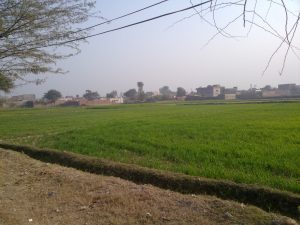
 The ChenabThe river runs along the district's north-western boundary, a broad, braided channel lined with farmland.
Food and Rice
A rice district with a Punjabi appetite.
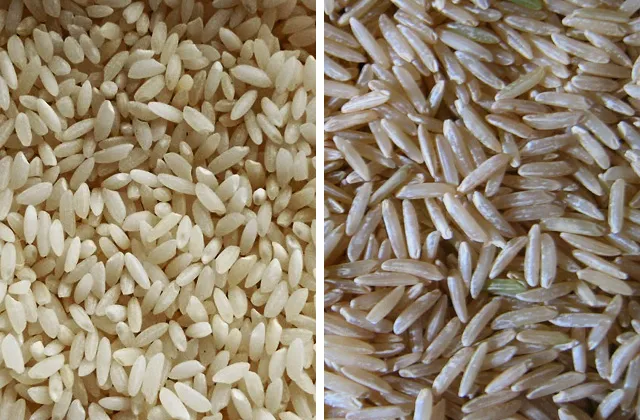 Rice dishesLong-grain rice from local mills finds its way into pulao, biryani and simple daal chawal in homes and restaurants.
 Halwa puriThe classic Punjabi weekend breakfast, with chickpeas and pickles.
 Karahi and tikkaMotorway service areas and city restaurants serve grilled and wok-cooked meats.
A Short History of Hafizabad
Delhi Sultanate
A lost city
A large settlement at Mehdiabad is later abandoned, according to local histories because of water shortages and raids.
16th century
Akbar's mahal
Under Akbar the area becomes a Mughal revenue division, recorded in the Ain-i-Akbari; legend names the town after a holy man, Hafiz.
18th century
Troubled times
The region suffers during the invasions of Ahmad Shah Abdali.
1849
British rule
Hafizabad becomes a tehsil of Gujranwala District.
1947
Partition
Hindu and Sikh families leave for India and Muslim refugees settle in the town.
1993
New district
Hafizabad District is created on 1 July.
2023
Census
The city counts 318,621 people and the district 1.32 million.
Towns, Clans and Legends
Beyond the city, the district is a patchwork of market towns and large villages, Pindi Bhattian, Jalalpur Bhattian, Kot Sarwar, Sukheke Mandi and the Tarar villages among them, many named after the Bhatti, Tarar and other clans that have long held land here.
Pindi Bhattian, the second tehsil headquarters and a busy motorway stop, is associated with Dulla Bhatti, the 16th-century Punjabi folk hero remembered for defying Mughal authority and protecting the poor. His story lives on in Punjabi ballads and in songs sung at the winter festival of Lohri on both sides of the border.
Everyday life revolves around the farming calendar, the grain and rice markets and family gatherings. Punjabi is spoken by the overwhelming majority of residents.
Getting There and Around
By motorway
M-2 Lahore–Islamabad
Interchanges at Pindi Bhattian, Kot Sarwar and Khanqah Dogran serve the district; roads link the city with Gujranwala, Sheikhupura and Jhang.
By rail
Wazirabad–Faisalabad line
Hafizabad station is on the branch between Wazirabad and Faisalabad, with a few daily trains. Check current timetables.
By air
Lahore or Sialkot
There is no airport in the district; Lahore and Sialkot are the closest international airports.
In the city
Rickshaws
Auto-rickshaws and motorbike taxis cover the compact centre; the bazaar is best on foot.
Plan Your Visit
Best time to visit
October to March
Pleasant days for the bazaars; winter mornings can be foggy on the motorway.
Weather
Hot summers, wet monsoon
The monsoon runs from about June to September, with July usually the wettest month.
Where to stay
Simple hotels
Accommodation is basic; Lahore and Gujranwala have far more choice.
Etiquette
Modest dress
Dress conservatively in the bazaar and ask before photographing people.
Frequently Asked Questions
What is the population of Hafizabad?
The 2023 Census counted 318,621 people in Hafizabad city and 1,319,909 in Hafizabad District.
How did Hafizabad get its name?
Local tradition links the name to a holy man called Hafiz in the time of Emperor Akbar, who is said to have guided the emperor's party to water. Another account credits a later courtier, Hafiz Muhammad Bhatti.
What is Hafizabad known for?
Rice milling and the rice trade, its old bazaar entered through the Akbar Gate, and its position on the Lahore–Islamabad Motorway.
When did Hafizabad become a district?
On 1 July 1993. Before that it was a tehsil of Gujranwala District.
How far is Hafizabad from Gujranwala?
About 48 km to the west of Gujranwala by road.
Keep Exploring
Related places and stories on DailyLife.pk
 GujranwalaGujranwala city guide: Sheranwala Bagh, Sikh-era heritage, industry, famous siri paye breakfasts, history
 SheikhupuraSheikhupura city guide: Hiran Minar and its water tank, Jahangir's fort, Nankana Sahib nearby, industry
 LahoreLahore travel guide: Badshahi Mosque, Lahore Fort, Shalimar Gardens, the Walled City, food streets, neighbourhoods, metro
 Mandi BahauddinMandi Bahauddin city guide: Chillianwala battlefield and memorial, Mong and the Hydaspes, Rasul Barrage
 The Mughal EraThe Mughal Empire in Pakistan: Babur to Aurangzeb, Lahore Fort, Shalamar Gardens
 The Partition of 1947The 1947 Partition of British India: the 3 June Plan, the Radcliffe Line
How we know this
- Type Place guide
- Sources 7 (3 official/academic)
- Reviewed October 2026
- Disputed points None
7 sources
- Table 1: Area, population by sex, sex ratio, density, urban proportion: Punjab districts (Census 2023), Pakistan Bureau of Statistics
- Pakistan: Provinces and Major Cities: 2023 Census, City Population (Thomas Brinkhoff), from PBS data
- Geography of District Hafizabad, District Police Hafizabad, Punjab Police
- Important Places, District Hafizabad, Government of the Punjab
- Hafizabad District (overview used to locate primary sources), Wikipedia
- Hafizabad (overview used to locate primary sources), Wikipedia
- Dulla Bhatti (overview used to locate primary sources), Wikipedia
Photo credits (8)
- Chock Fawara.jpg, Arslanbukharii, CC BY-SA 4.0, via Wikimedia Commons
- Greenery around jallan - panoramio.jpg, chsufyan8, CC BY 3.0, via Wikimedia Commons
- Khyma and Basmati rice.jpg, nagualdesign, CC BY-SA 3.0, via Wikimedia Commons
- Halwa Puri, a traditional food made in Walled City of Lahore.jpg, Tahsin Shah, CC BY-SA 4.0, via Wikimedia Commons
- Chicken Karahi in Pakistan.jpg, Kskhh, CC BY-SA 4.0, via Wikimedia Commons
- Baradari - Sheranwala Bagh, Gujranwala.jpg, Noorrathore, CC BY-SA 4.0, via Wikimedia Commons
- Qila Sheikhupura (Sheikhupura fort) @ Pakistan (15298805188).jpg, Guilhem Vellut from Annecy, France, CC BY 2.0, via Wikimedia Commons
- Night View of Badshahi Mosque (King’s Mosque).jpg, Muhammad Ashar, CC BY-SA 3.0, via Wikimedia Commons
