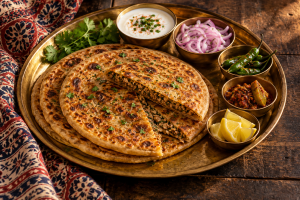
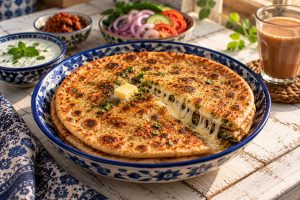
Warqi Paratha
ورقی پراٹھا
Heavy tawa / skillet
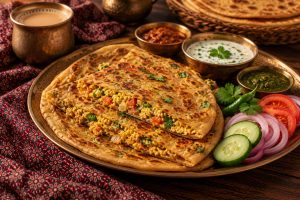
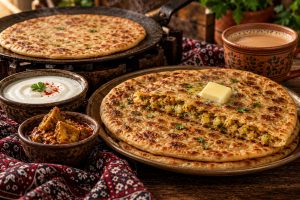
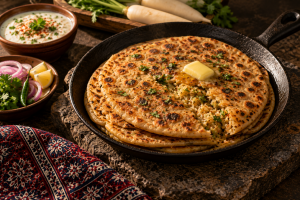
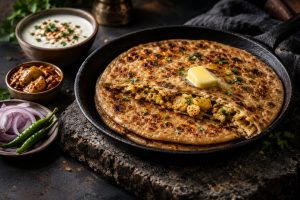
A rich, folded-layer paratha in which thin sheets are repeatedly brushed with ghee and folded over themselves to form a delicate, leaf-like stack. It is distinct from the spiral of Lachha Paratha

Total includes 40 min of passive time described in the preparation and method. One tablespoon = 15 ml; one teaspoon = 5 ml.
About Warqi Paratha
A rich, folded-layer paratha in which thin sheets are repeatedly brushed with ghee and folded over themselves to form a delicate, leaf-like stack. It is distinct from the spiral of Lachha Paratha
Personally cooked and tested by Zohair Fakhar for DailyLife.pk. Cooking times can vary with your stove, cookware and batch size; follow the texture and doneness cues in the method.
Make it work for your kitchen
Also known as Warki Paratha, Warqi Pratha, Varki Paratha, Layered Warqi Paratha.
Original quantities serve 4. Cooking times, pan size and frying-oil depth do not scale, cook in extra batches instead.
Before you start
Before you start
Prepare cool-soft ghee Use ghee soft enough to brush in a thin film. If molten-hot, allow to cool; greasy dough may tear during folding. 3 min No heat Mark dough portions Prepare four covered dough balls and keep a clean folding surface; work on one piece at a time. 2 min No heat
Set up the equipment
Have the following tools ready before starting: Tawa or heavy skillet; Mixing bowl; Rolling pin and rolling board; Digital kitchen scale; Spatula; Cover or clean kitchen cloth.
Clean workspaceMeasure the ingredients
Measure the ingredient quantities for your selected servings before applying heat. Keep separately listed groups, such as dough, filling, sauce or garnish, in separate containers; keep any optional additions separate.
Use the ingredient list aboveCheck allergens and substitutions
Check ingredient labels and any substitutions against these notes: Contains wheat/gluten; contains milk if ghee is used (verify labels and individual tolerance).
Before cooking
Step-by-step cooking method
1 Mix and knead
Combine 280 g maida, ½ tsp salt, optional 1 tsp sugar and 12 g ghee. Add 150 ml water first and gradually up to 165 ml to form a soft, smooth dough. Knead 7–9 minutes.
2 Rest the covered dough
Cover 25–30 minutes for easier rolling, then divide into four equal balls. Prepare ghee and fold space while it rests.
3 Create the first thin sheet
Roll one ball into a thin rectangle about 22 × 18 cm. Use a very small portion of the dusting maida. Brush a quarter of the 64 g layer ghee evenly over the sheet.
4 Fold into a packet
Fold one third of the sheet toward the centre and the opposite third on top (letter fold). Rotate the packet 90 degrees; gently roll into a rectangle again. If sticky, chill the covered packet for 5–10 minutes before continuing.
5 Build successive flat layers
Brush lightly with the layer-ghee already allotted to this bread, fold again into thirds, and gently flatten; avoid squeezing all fat out. Work the remaining balls similarly, keeping finished packets covered and cool.
6 Rest and roll for cooking
Rest packets under cover 10 minutes, then roll each to roughly 15–17 cm square or rectangle, 4–5 mm thick; keep shape and layers intact.
7 Cook through over moderated heat
Heat a heavy tawa on medium-low to medium. Place one packet on uncovered tawa and cook the first side about 90 seconds, until set; turn, use part of its 5 g tawa-ghee allocation, and cook in several turns roughly 3–4 more minutes, pressing edges lightly. Cook until folded centre is not doughy; repeat by batches.
8 Serve carefully
Rest on a wire rack briefly if crispness is desired, or wrap loosely for softer texture. Serve warm; do not force the layers apart.
Chef’s tips
- Fold evenly with a cool, pliable dough so the corners do not develop extra-thick raw zones.
- Weigh the total ghee offered rather than adding extra freely while folding.
- When the surface browns too fast, reduce the heat and allow the centre longer to cook.
Common mistakes & quick fixes
- Layers merge into a single slab
- Keep a thin, even fat film and avoid high-pressure rolling.
- Raw folded middle
- Packet is too thick or heat too high: roll slightly thinner and extend skillet cooking.
- Greasy, tearing dough
- Pause and chill the packet briefly before continuing.
Variations & serving ideas
Variation: Atta blend Substitute some maida with atta, adjusting hydration; expect less delicate lamination.
Variation: No sugar Omit the optional sugar for a strictly savoury result.
Variation: Serving Rich curries, tea, egg dishes or yoghurt; sides are excluded from nutrition.
Perfect result check
| Check | Layers Several flat thin folded leaves, not a tight spiral. |
|---|---|
| Check | Centre Completely cooked without gummy flour streaks. |
| Check | Edges Tender and lightly crisp or flaky according to tawa time. |
Storage & reheating
| Storage | Best quality Eat fresh. Folded bread loses crispness as it cools; allow steam to escape if crispness is preferred. | |
|---|---|---|
| Fridge | Refrigeration safety For cooked leftovers, cool and refrigerate in a covered container within 2 hours (1 hour above 32°C). Store at 4°C or lower. | |
| Fridge | 3–4 days | Refrigerator duration USDA general cooked-leftovers guidance: 3–4 days maximum if handled safely; bread-specific texture deteriorates sooner. |
| Freezer | Freeze cooked breads promptly in airtight wrapping, separated so they can be removed individually. Label with the date; layers may lose crispness after thawing. | |
| Reheating | Reheating Use a moderate tawa until thoroughly hot; USDA conservative reheating guidance for cooked leftovers is 74°C (165°F) internally. Thick folded breads need extra care to heat the middle. |
Know when to change the heat
| Stage | Heat | What to look for |
|---|---|---|
| Tawa readiness | Medium-low to medium heat | The tawa should be hot enough to set the dough steadily, without smoking or blackening it at once. |
| Cooked paratha | Medium-low to medium; turn as needed | Look for golden spots and fully cooked folded seams, with no gummy raw-dough streaks in the centre. Lower the heat if the outside darkens too quickly. |
Helpful answers before you cook
Is Warqi identical to Lachha?
In the method shown here, Warqi is formed with repeated flat letter folds rather than pleating and winding a spiral. Keep each sheet even and roll the finished packet gently to preserve its layers.
Why does my Warqi remain uncooked inside?
Repeated folds accumulate thickness; make thin, even packets and use moderate heat long enough to cook the middle.
Why does the dough tear or leak ghee during folding?
Very warm ghee, sticky dough or forceful rolling can damage the layers. Keep the ghee cool-soft, rest the dough covered and chill a sticky covered packet briefly before rolling again. Share the listed layering-ghee allowance across the folds instead of adding a fresh full allowance at each fold.