French Toast
فرینچ ٹوسٹ
Pan-fried sweet egg-and-milk toast
Pakistani-style sweet pan-fried bread dipped in an egg, milk and sugar mixture, with optional cardamom for fragrance. The centre is cooked through but remains tender, while the outside browns in butter; unlike shahi tukray, it is not soaked in reduced sweet milk.
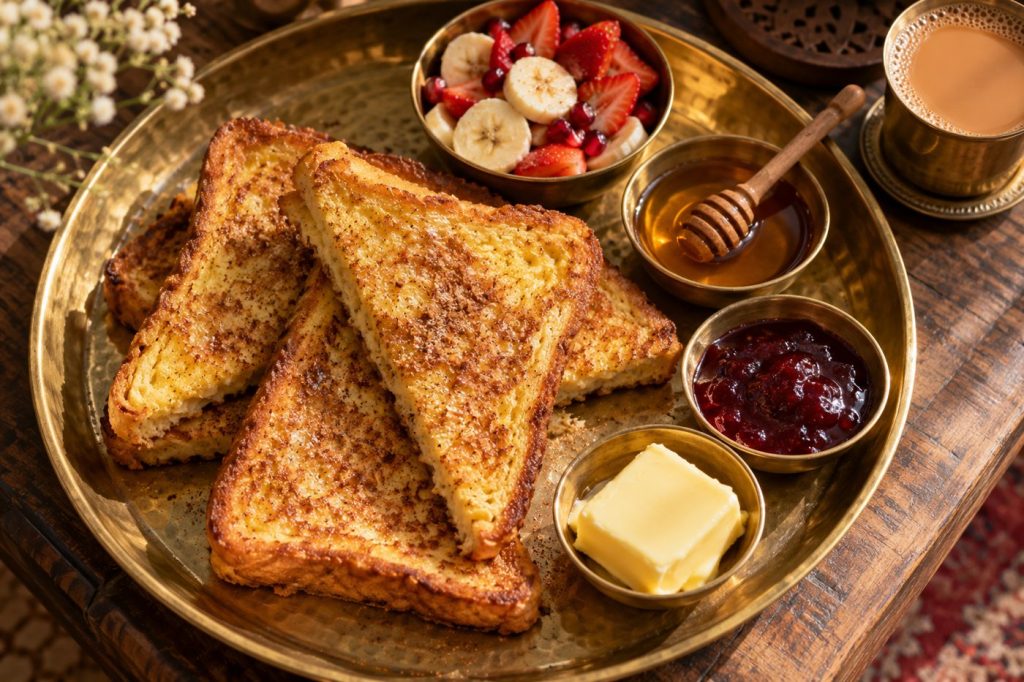
The 28-minute estimate is for the original eight slices, cooked in batches in one wide pan. Larger servings need more batches and may take longer. Bread thickness and heat affect each batch; use the centre-doneness check rather than the clock alone. One tablespoon = 15 ml; one teaspoon = 5 ml.
About French Toast
Pakistani-style sweet pan-fried bread dipped in an egg, milk and sugar mixture, with optional cardamom for fragrance. The centre is cooked through but remains tender, while the outside browns in butter; unlike shahi tukray, it is not soaked in reduced sweet milk.
Personally cooked and tested by Zohair Fakhar for DailyLife.pk. Cooking times can vary with your stove, cookware and batch size; follow the texture and doneness cues in the method.
Make it work for your kitchen
Also known as Pakistani French Toast, Sweet French Toast, Meetha French Toast, Anda Double Roti (ambiguous; verify local use).
Original quantities serve 4. Cooking times, pan size and frying-oil depth do not scale, cook in extra batches instead.
Before you start
Before you start
Measure the eggs, milk, sugar, salt, optional cardamom and butter for your selected servings. Set the bread on a rack while you prepare the dipping station; slightly dry, sturdy slices hold together better than very soft bread. Discard any mouldy bread. Set out a shallow bowl for the coating and keep raw-egg utensils separate from the clean serving plate.
Set up the equipment
Have the following tools ready before starting: Wide shallow bowl; Fork or whisk; Large nonstick frying pan; Spatula; Instant-read thermometer recommended.
Clean workspaceMeasure the ingredients
Measure the ingredient quantities for your selected servings before applying heat. Keep separately listed groups, such as dough, filling, sauce or garnish, in separate containers; keep any optional additions separate.
Use the ingredient list aboveCheck allergens and substitutions
Check ingredient labels and any substitutions against these notes: Egg, milk, wheat/gluten
Before cooking
Step-by-step cooking method
1 Whisk the coating
Beat eggs with milk, granulated sugar, salt and optional cardamom until uniform, with no separated white strands.
2 Warm the skillet
Warm a wide skillet over medium-low heat. Melt a small portion of the measured unsalted butter, reserving the rest for later batches. It should foam lightly rather than brown rapidly.
3 Dip the first slices
Coat both faces of two bread slices briefly. For thin sandwich bread, allow about 2–4 seconds per side.
4 Drain the coating
Lift the slices and let excess coating drip back into the bowl before placing them flat in the warm skillet.
5 Cook the first side
Fry for about 2–3 minutes until the underside is golden. Keep the heat moderate so the egg coating cooks before the sugar burns.
6 Turn and check the centre
Flip and cook for about 2 minutes more. The centre must be cooked with no liquid raw custard; egg-containing mixtures should reach 71°C. Thick bread needs additional time.
7 Cook the remaining batches
Repeat with the remaining bread, adding the reserved butter gradually between batches. Cook only as many slices as fit flat without crowding, using the same centre-doneness check for every batch. Lower the heat if the coating browns too quickly.
8 Divide and serve
Divide the cooked toast among the selected servings, allowing two slices per person. Serve warm, with any optional toppings added at the table.
Chef’s tips
- For very soft bread, use only a brief dip and lift with a spatula.
- For thicker bread, permit extra absorption but extend gentle pan cooking to set the middle.
- A slightly dry bread slice holds together better than just-baked airy sandwich bread.
Common mistakes & quick fixes
- Wet raw centre
- Reduce dipping time and cook longer on lower heat until centre is set.
- Burnt sugar coating
- Use medium-low heat and wipe scorched butter before next batch.
- Bread collapses
- Choose sturdier slices or air-dry bread briefly before dipping.
Variations & serving ideas
Variation: Cardamom-free Omit cardamom and add a small amount of vanilla if preferred; note any alcohol-containing flavourings.
Variation: Less sweet Reduce sugar in custard and serve without syrup.
Variation: Dairy-free Try unsweetened plant milk and suitable vegan frying fat, while noting the recipe still contains eggs and gluten.
Perfect result check
| Check | Exterior Even gold-brown without black sugar patches. |
|---|---|
| Check | Centre Tender, fully set, not raw or wet. |
| Check | Shape Slices remain intact and lift easily. |
Storage & reheating
| Storage | French toast is best freshly cooked, when the surface is lightly crisp and the centre is tender. Stored slices soften. | |
|---|---|---|
| Fridge | Refrigeration Cool rapidly in shallow sealed containers and refrigerate at 4°C or below within 2 hours; within 1 hour if ambient temperature exceeds 32°C. | |
| Fridge | 3–4 days | Leftover maximum FDA states properly refrigerated cooked egg dishes can be used within 3–4 days; for bread-based dishes, quality deteriorates sooner. |
| Reheating | Reheating Heat egg-containing leftovers thoroughly to 74°C (165°F) before eating; discard if temperature abuse is suspected. | |
| Raw coating | Discard any egg-and-milk coating left in the dipping bowl after use. Do not pour it over finished toast or save it as a ready-to-eat sauce. |
Know when to change the heat
| Stage | Heat | What to look for |
|---|---|---|
| Whisk the coating | No heat | The coating should be evenly combined without long strands of egg white; whisk before dipping if it separates. |
| Warm the skillet | Medium-low heat | Butter should foam gently, without smoke or rapidly darkening brown patches. |
| Dip the first slices | No heat | A brief dip coats thin sandwich bread without making it collapse; the slice should still hold its shape. |
| Drain the coating | Medium-low heat | Let loose coating drip away so the bread goes into the skillet without a puddle of raw mixture. |
| Cook the first side | Medium-low heat | Look for an even golden underside; lower the heat if dark sugar patches appear before the centre sets. |
| Turn and check the centre | Medium-low heat | Check that the centre is set with no runny raw coating; an egg mixture should reach 71°C. |
| Cook the remaining batches | Medium-low heat | Each new batch should brown gently; lower the heat as the pan becomes hotter over time. |
| Divide and serve | No heat | Serve two intact slices per person with a golden surface and a fully cooked tender middle. |
Helpful answers before you cook
Is this shahi tukray?
No. This is bread dipped in sweet egg-milk mixture and pan-cooked; shahi tukray uses a different fried-bread-and-milk-dessert approach.
Can I use thick bread?
Yes, but increase soaking only enough to absorb mixture and cook more gently for longer until the middle sets.
Should I add syrup?
Optional. The base coating is sweet already, and toppings are excluded from nutrition.