Bun Omelette
بن آملیٹ
A fully set masala omelette tucked into a toasted bun
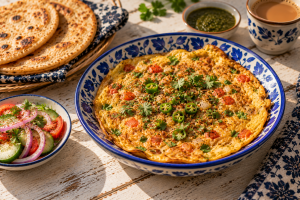
A toasted soft bun filled with a fully cooked desi omelette, sliced onion and coriander chutney. This is a home-style sandwich-style bun omelette, not a bun kebab (which uses a patty), and not the same as an unfilled plated omelette. Exact regional street-stall fillings vary.

One tablespoon = 15 ml; one teaspoon = 5 ml.
About Bun Omelette
A toasted soft bun filled with a fully cooked desi omelette, sliced onion and coriander chutney. This is a home-style sandwich-style bun omelette, not a bun kebab (which uses a patty), and not the same as an unfilled plated omelette. Exact regional street-stall fillings vary.
Personally cooked and tested by Zohair Fakhar for DailyLife.pk. Cooking times can vary with your stove, cookware and batch size; follow the texture and doneness cues in the method.
Make it work for your kitchen
Also known as Bun Omelet, Egg Omelette Bun, Anda Bun Omelette, Bun Anda.
Original quantities serve 4. Cooking times, pan size and frying-oil depth do not scale, cook in extra batches instead.
Before you start
Before you start
Measure and chop Drain finely diced tomato; chop omelette onion, coriander and chilli and slice garnish onion separately. 10 min No heat Slice the buns Split buns horizontally, leaving halves attached at one edge if preferred. Portion butter and chutney. 5 min No heat
Set up the equipment
Have the following tools ready before starting: 24 cm nonstick skillet; Wide spatula; Knife and board; Bowl and fork; Small spreading spoon.
Clean workspaceMeasure the ingredients
Measure the ingredient quantities for your selected servings before applying heat. Keep separately listed groups, such as dough, filling, sauce or garnish, in separate containers; keep any optional additions separate.
Use the ingredient list aboveCheck allergens and substitutions
Check ingredient labels and any substitutions against these notes: Egg, wheat/gluten, milk/butter; check buns and chutney for other allergens
Before cooking
Step-by-step cooking method
1 Mix the filling eggs
Whisk 8 eggs with chopped onion, tomato, coriander, salt, pepper and optional green chilli. Divide into four equal portions just before pouring.
2 Warm and grease the pan
Heat a nonstick skillet over medium-low; add roughly one-quarter of the 20 ml offered oil. It should gently shimmer, not smoke.
3 Cook omelettes in batches
Pour one quarter of the mixture; guide it into a bun-sized round.
4 Cook omelettes in batches (continued)
Cook 2–3 minutes uncovered until edges set, fold to fit and cook about 1 minute more until no liquid egg remains (71°C for egg dishes).
5 Cook omelettes in batches (continued)
Repeat 3 times, accounting for pan capacity.
6 Lightly toast the buns
In a second clean pan or after eggs are done, spread the 12 g butter across the 8 cut bun surfaces and toast cut-side down over medium-low heat for 30–60 seconds, just lightly golden.
7 Fill each bun
Spread optional chutney (40 g total) across the base bun halves, tuck in one cooked omelette and optional sliced raw onion, and close each bun.
8 Serve promptly
Serve four warm filled buns immediately. If transporting, cool safely and avoid leaving cooked egg sandwiches out for extended periods.
Chef’s tips
- Toast just before assembly; fully pre-assembled buns soften quickly.
- Use a bun label to record true weight and allergen information for nutrition.
- If chutney is not included, reduce its sugar/salt and nutrition assumptions rather than showing unchanged values.
Common mistakes & quick fixes
- Soggy bread
- Drain tomatoes and spread chutney thinly just before serving.
- Omelette too large
- Fold each cooked omelette to bun size instead of cutting raw centres.
- Burnt bun
- Toast only 30–60 seconds over medium-low heat and watch continually.
Variations & serving ideas
Variation: No chutney Serve dry or add a small amount of ketchup, updating nutrition and allergen notes.
Variation: More vegetables Add finely sliced capsicum but avoid overwhelming the egg.
Variation: No dairy butter Use a little oil to toast buns and check bun/chutney ingredient labels.
Perfect result check
| Check | Bun Cut faces lightly golden, exterior soft. |
|---|---|
| Check | Egg Firm cooked egg with evenly distributed vegetables. |
| Check | Assembly Filling fits without dripping or falling out. |
Storage & reheating
| Best texture | Serve soon after cooking, when the egg is fully set and the bun is lightly toasted. For advance preparation, keep cooked egg, buns and chutney separate so the bread does not become soggy. | |
|---|---|---|
| Cooling | Refrigerate promptly | Refrigeration Cool rapidly in shallow sealed containers and refrigerate at 4°C or below within 2 hours; within 1 hour if ambient temperature exceeds 32°C. |
| Fridge | 3–4 days | Leftover maximum FDA states properly refrigerated cooked egg dishes can be used within 3–4 days; for bread-based dishes, quality deteriorates sooner. |
| Reheating | Reheating Heat egg-containing leftovers thoroughly to 74°C (165°F) before eating; discard if temperature abuse is suspected. | |
| Freezer | If freezing for later, promptly cool and seal cooked omelettes in portions and keep the buns separate. Thaw the omelette in the fridge before reheating. The egg can become firmer and the bread softer, so fresh assembly gives the best texture. |
Know when to change the heat
| Stage | Heat | What to look for |
|---|---|---|
| Set the omelettes | Medium-low heat | Let the edges set, then fold and continue until no liquid egg remains. Check egg dishes reach 71°C/160°F; lower the heat if the base browns before the centre sets. |
| Toast and assemble | Medium-low, then off | Toast buttered cut surfaces briefly until lightly golden without scorching. Add the fully cooked omelette and optional chutney near serving time. |
Helpful answers before you cook
Is this the same as bun kebab?
This version uses a fully cooked omelette as the main filling. A bun kebab uses a patty, such as a daal-potato or meat-and-daal patty, with its own coating and chutneys. Keep the filling and its cooking method clear rather than treating the two as interchangeable names.
Can I prepare them for lunchboxes?
For a packed meal, chill the cooked components promptly and pack cold in an insulated bag with frozen ice packs. Keep chutney separate until eating if possible to protect the bread. Do not pack a warm egg sandwich and leave it at room temperature; follow the cooling and chilled-storage guidance below.
Is chutney required?
Chutney is optional. Serve it separately or spread a modest amount just before eating; a very wet chutney can soften the toasted bun. Check the ingredients in a bought chutney for allergens and keep any yogurt-based chutney safely chilled.